
“Exciting”, “surprising”, “encouraging” and “interesting”. Just four of the ways the group of buyers, importers and merchants who took part in the recent Virginia Wine debate used to describe wines that they also found to be “consistent”, “reliable”, “experimental” and “full of “quality”.
As feedback goes it certainly surpassed what many of the Virginia producers who took part in The Buyer debate were expecting, many of whom were visiting and showing their wines in the UK for the first time.
In fact, such was the positive response that they might have gone home to Virginia wishing they had looked to come to the UK sooner.
But then so much of doing business is about timing. Having the right wines, in the right styles at the right price at the right time.
This was actually the first time in 10 years that Virginia Wine has hosted a major promotional campaign for its producers in the UK and it was rightly delighted by its decision to come back.
What was particularly exciting for the producers who made the trip was the strong and warm response they received for their wines from buyers during The Buyer debate.This was replicated time and again over the three days of the London Wine Fair by the visitors who came to see and taste their wines on the Virginia Wine stand.
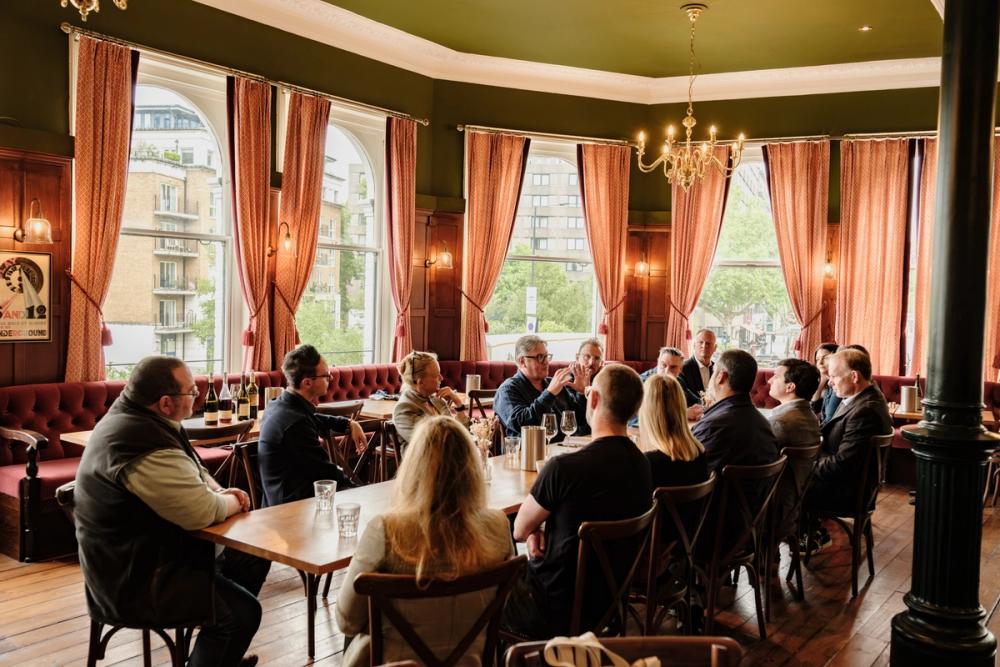
Virginia Wine returned to the UK in style in May with a major presence at the London Wine Fair and a producer debate with leading UK wine buyers hosted by The Buyer - 10 years on from a similar event
It was also 10 years since The Buyer worked with Virginia Wine to host a similar debate and tasting with key wine buyers and importers at the time. The feedback then was far more mixed, both for the styles of wine and, in particular, the price points they would have to be sold at in the UK.
Ten years on and the wines have moved far closer to the needs of the UK market with softer, more fruit forward and less oak-based styles which very much tick the boxes of premium on and off-trade wine buyers.
Crucially the buyers were also far more bullish and positive around the pricing for Virginia wines, arguing if the wines are good enough then there are customers out there to pay the right price for them.
Most of all the wines lived up to the “innovation, ambition, and quality” that Virginia Wine now believes “defines” Virginia’s wine industry. “Wines that sit halfway between Europe and California, with wines embodying this unique position in the world,” it says. “They are lush but structured; aromatic, expressive and beautifully balanced - blending the subtlety of the Old World with the boldness of the new.”
This was an opportunity to show how far its wines have evolved and developed in the last 10 years thanks to the investment that has taken place in its vineyards and winemaking styles. Petit Manseng and Cabernet Franc still lead the way, but they now potentially offer buyers a fresher, more expressive interpretation of these classic grape varieties, whilst leaving room for a number of emerging and experimental varietals.
The platform was there for the US’s oldest wine region to show what it can now do across its 3,000 acres of vineyards, covering 10 regions and eight AVAs.
The Buyers
The panel of buyers who took part in the event included:
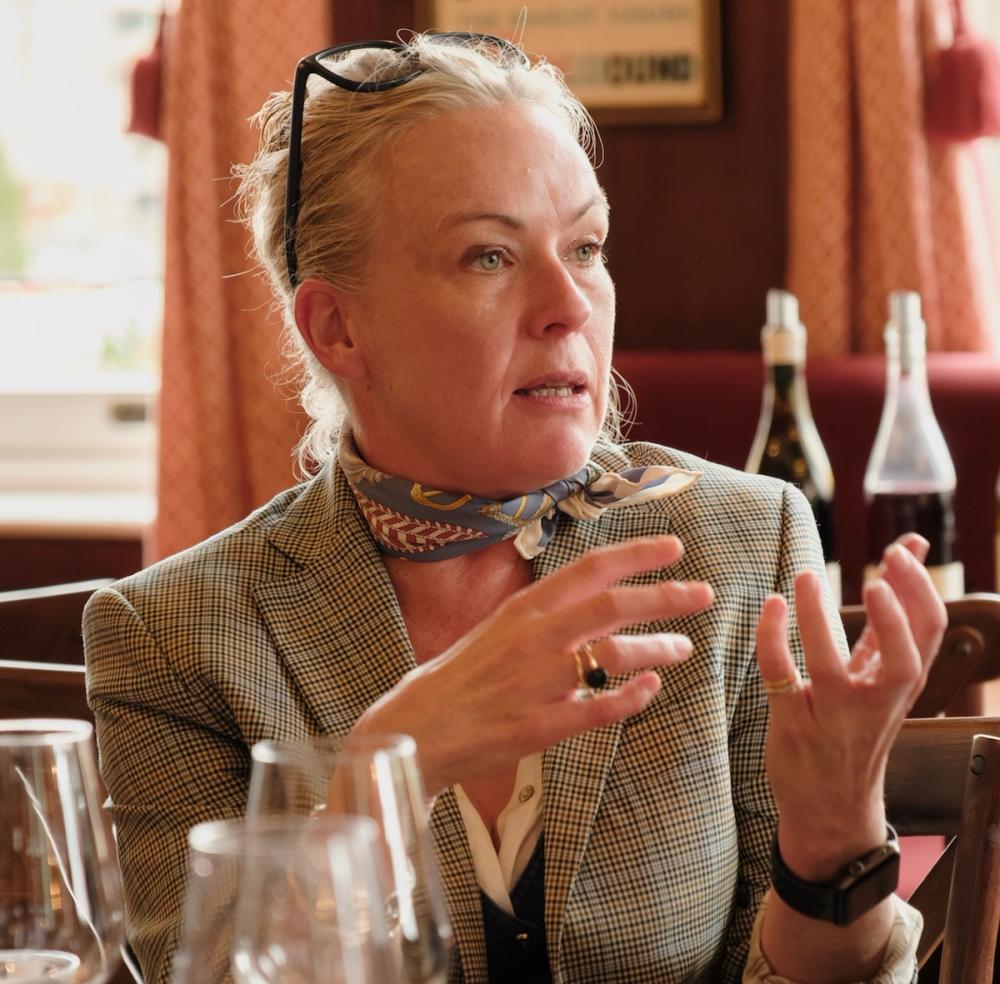
Victoria Sharples, Victoria’s Wine Secrets, restaurant wine consultant.
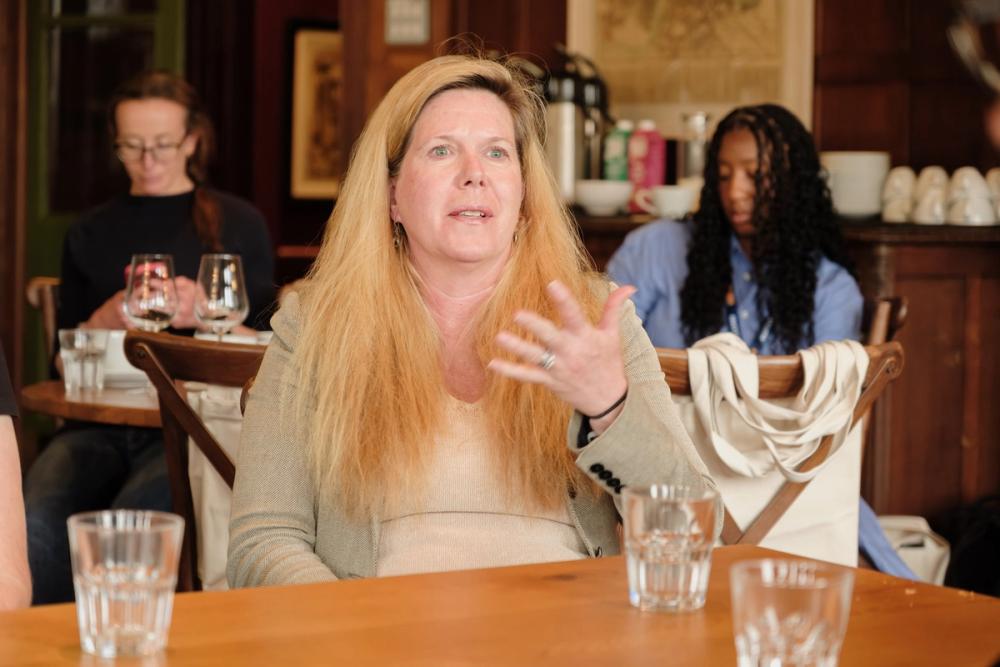
Jennifer Williams Bulkeley, founder and managing director, Ally Wines.

Will Hill, senior wine buyer Ocado Retail.

Dan Belmont, director and wine buyer, Good Wine Good People.

Andrew Clark, head of wine buying at Mitchells & Butlers.
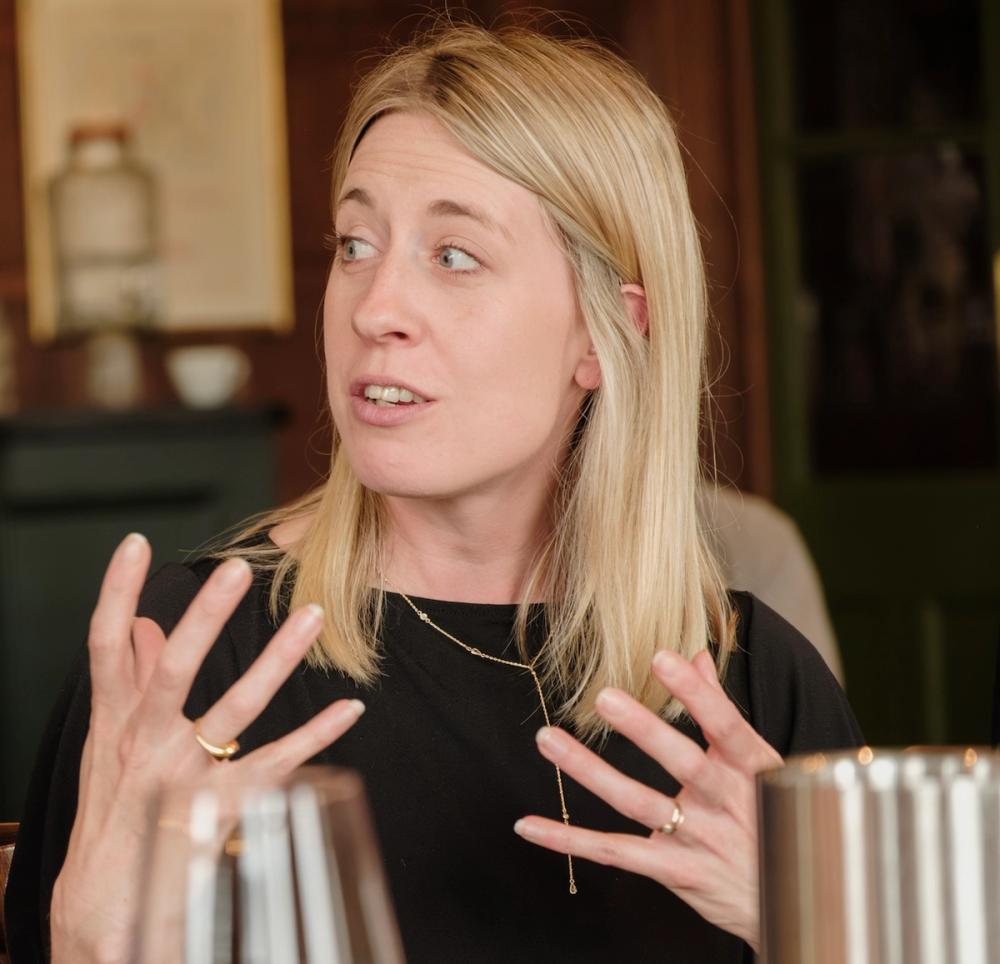
Emma Robinson, wine buyer, Jeroboams.

William Stephens, head of wine, Nectar and Asahi UK.

John Chapman, managing director, Oxford Wine Company.
The Producers
The producers who took part both in the debate and were at London Wine Fair included.

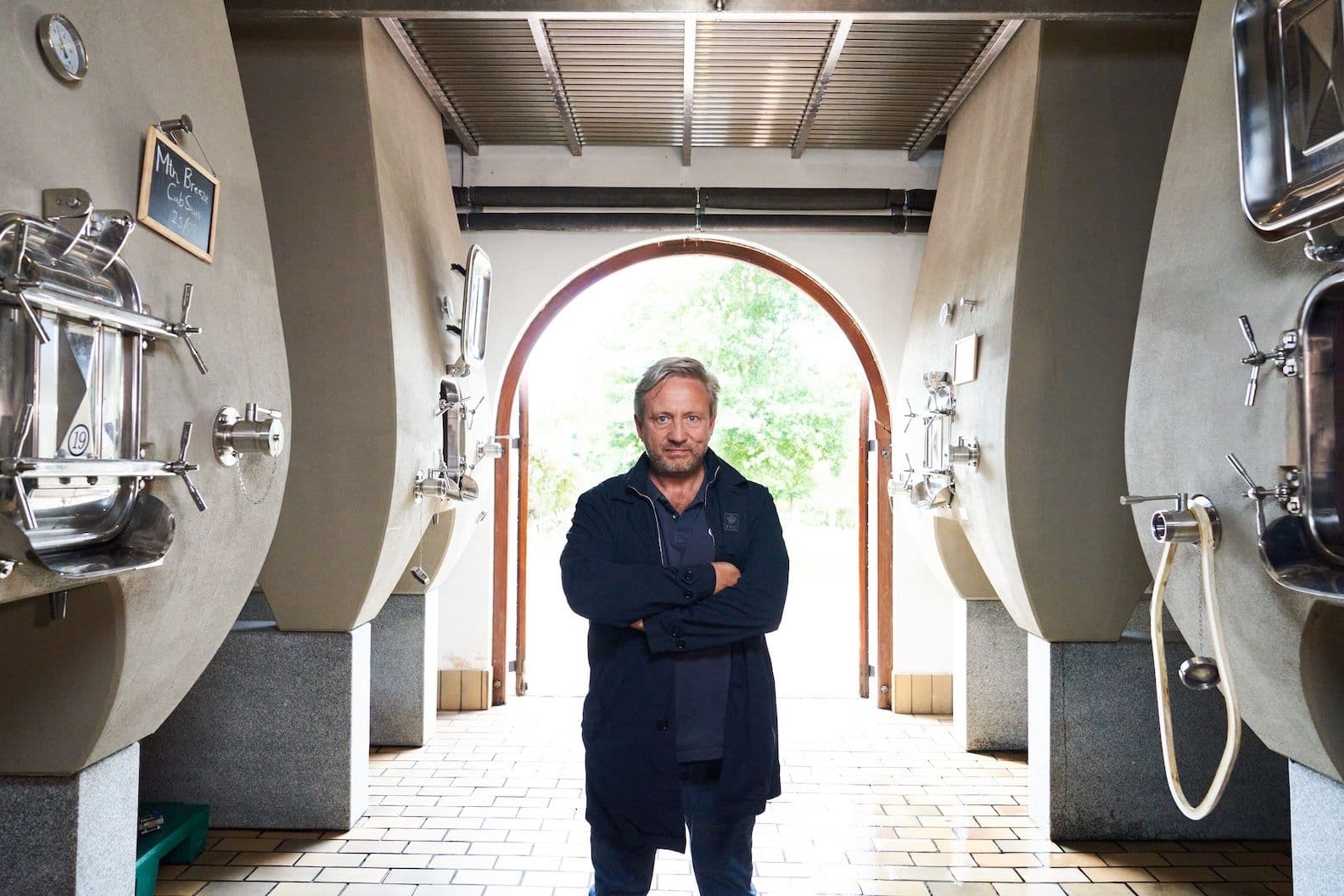
Matthieu Finot winemaker at King Family Vineyards

Boela Gerber, winemaker at South West Mountain Vineyards
Southwest Mountains Vineyards.

Kirk Wiles founder and chief executive of Paradise Springs Winery
Aubrey Rose, marketing and sales director at Rosemont of Virginia winery
What was interesting to hear at the start of the debate was just how far the wines surpassed the expectations of most of the UK buyers who took part. Particularly in terms of how more relevant they thought they would be for the UK market.
John Chapman at the Oxford Wine Company says he had tasted wines during the event “that I have never tasted that kind of profile before which is interesting and made me think”.
Jeroboam’s Emma Robinson admits she came to the debate “with low expectations” but having tasted all the wines on show “there is not a bad wine in the room” and all were extremely “light, juicy drinkable wines” with the right alcohol levels for the UK market.
William Stephens at Nectar says he came to the event because he knew very little about the wines, or the region “as there really are so few examples of Virginian wine currently available in the UK”.
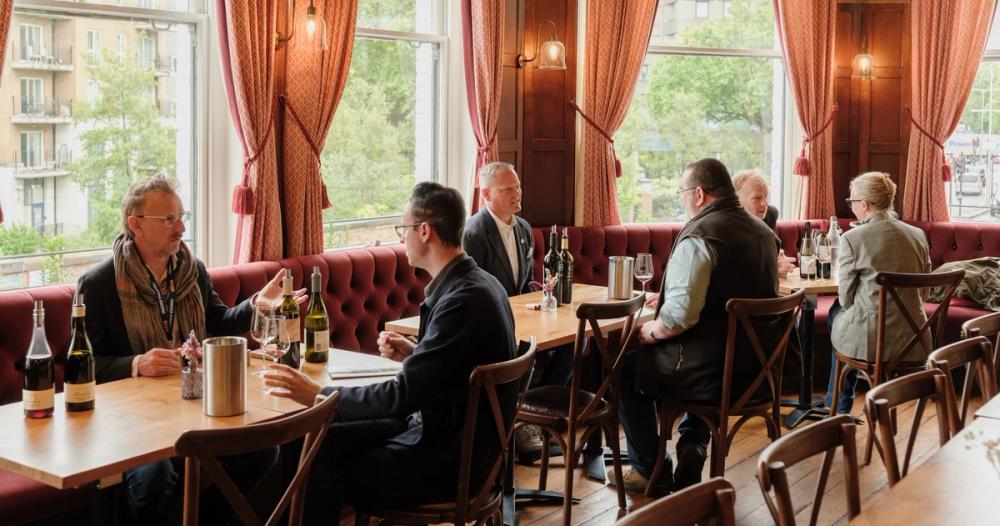
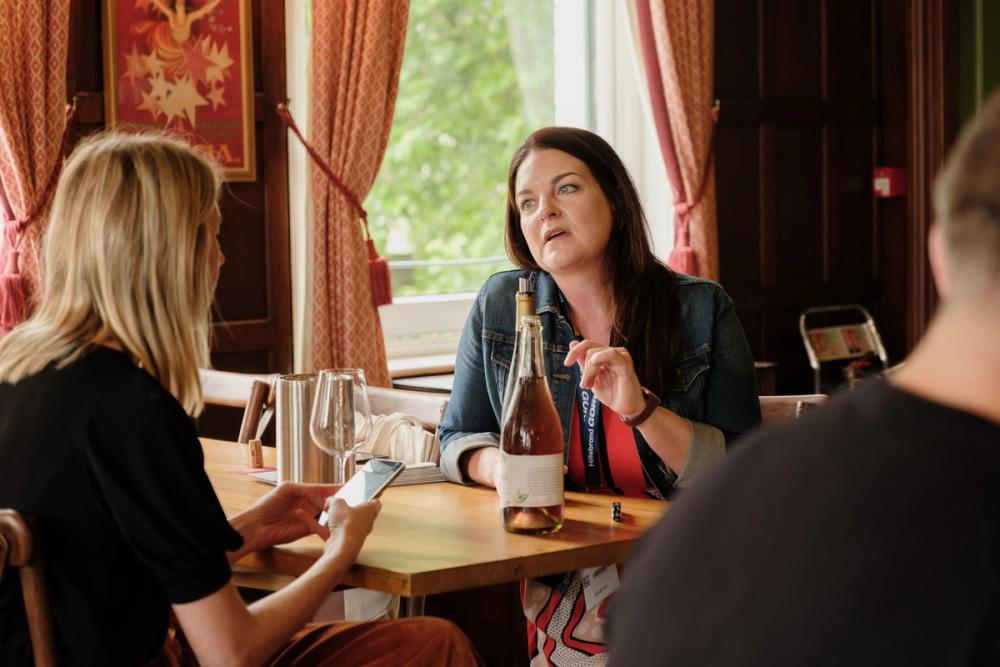
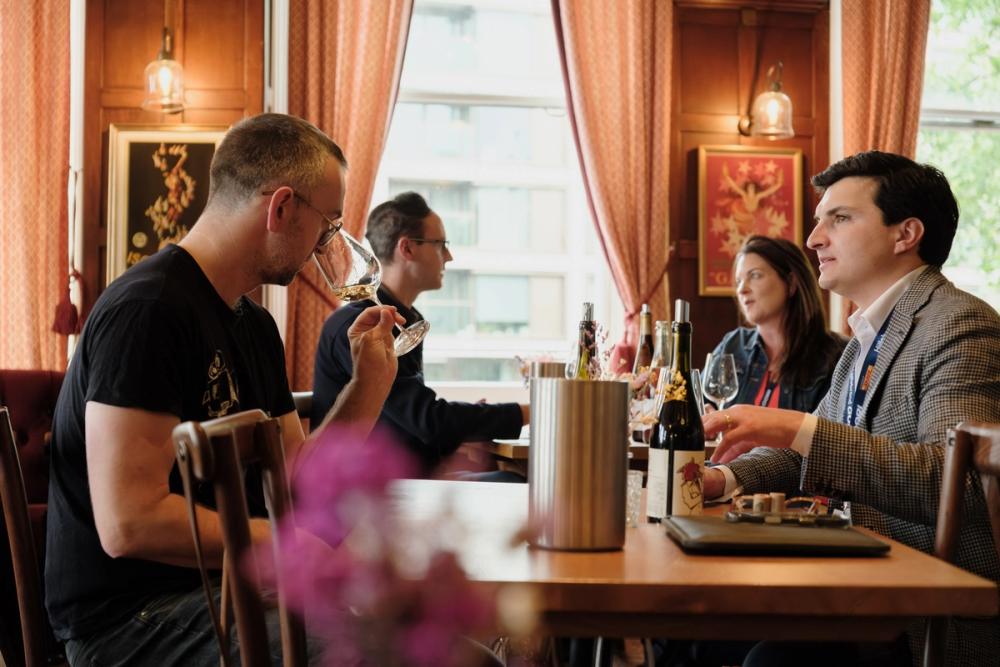
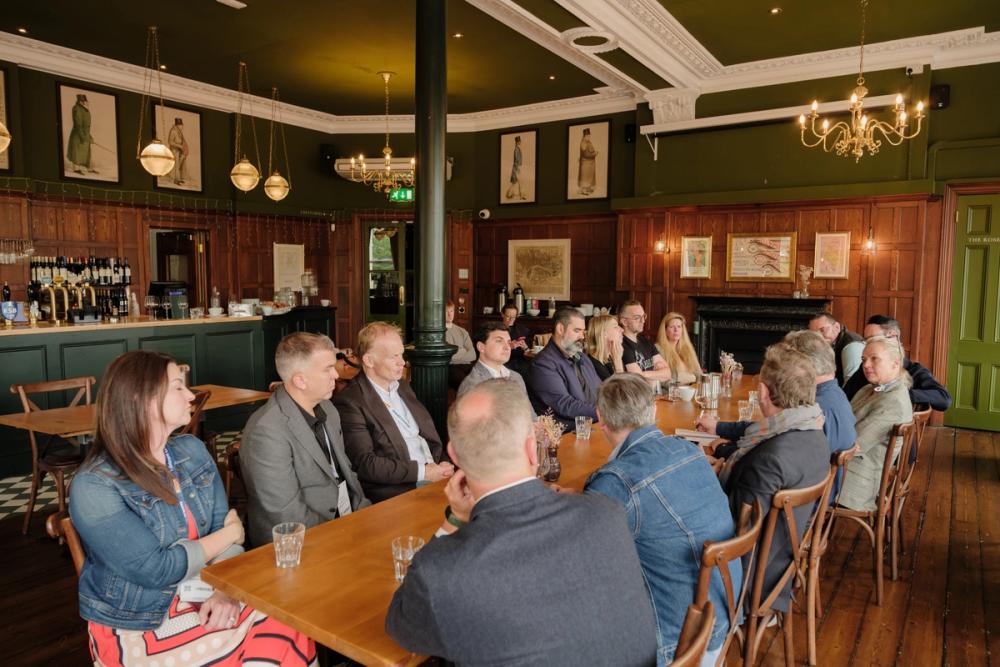
The Virginia Wine debate also gave the UK buyers the chance to sit down with each of the producers to taste and go through their wines and hear their respective stories
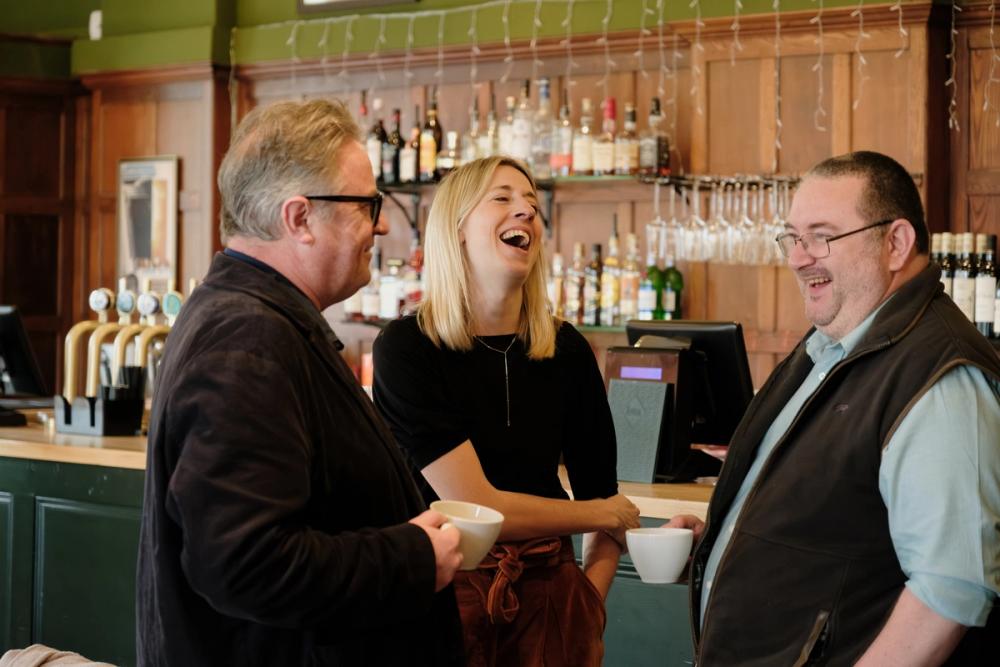
Dan Belmont says he was keen to attend and understand more about what Virginia could offer his already strong wine offer from North America, where he has already built a range that includes two producers from the east coast of Canada in Nova Scotia and Niagara and two wineries in New York State in the Hudson Valley and Finger Lakes.
“I like the idea of a complete picture of east coast North American portfolio so Virginia is of interest to me,” he says.
“I knew there was good quality to be found, however, I did not know how consistent it would be across many producers. The concern before coming to the event was that they would not have changed with the times, and still embraced out of touch heavier oaked classic production.”
But on meeting and tasting the producers those concerns were very much put to one side.
“It was very positive to see what steps they have taken. It was an impressive standard of quality throughout the room with a modern approach, embracing freshness, and even new varieties including hybrids. Virginia has a really strong winemaking footprint.”
Victoria Sharples agrees and says the time could well be right for Virginia to make its mark in the UK, particularly if it can build on the success we are now seeing across North America in the UK with far more interest in wines from areas of California, Washington State and Canadian regions such as Niagara.
“The market is always looking for the next big thing and Virginia shows me today something really exciting. The quality is very, very good,” she says.
Ocado's Will Hill says he was "impressed" by the overall quality of Virginia's wines
Will Hill at Ocado says he has always as a buyer “kept an eye on Virginia” even if the wines are not well represented in the UK.
“I was very impressed by the wines I tasted today. They are not looking to copy anyone else. They have their own distinct style. They have their own identity.”
He adds: “They also have a unique story to tell”
Jennifer Williams Bulkeley of Ally Wines believes "Virginia is one of the most exciting stories in wine in the US primarily because of it's global oeno and agro tourism position and long (relative) history of wine. I can see the attraction to trade and consumers wanting to know more about Virginia and all it has to offer.”
Right wine styles
In terms of styles of wine the buyers were very encouraged by how strong each of the flagship Virginia varieties were - the Petit Mansengs, Petit Verdots and Cabernet Franc wines they tasted.
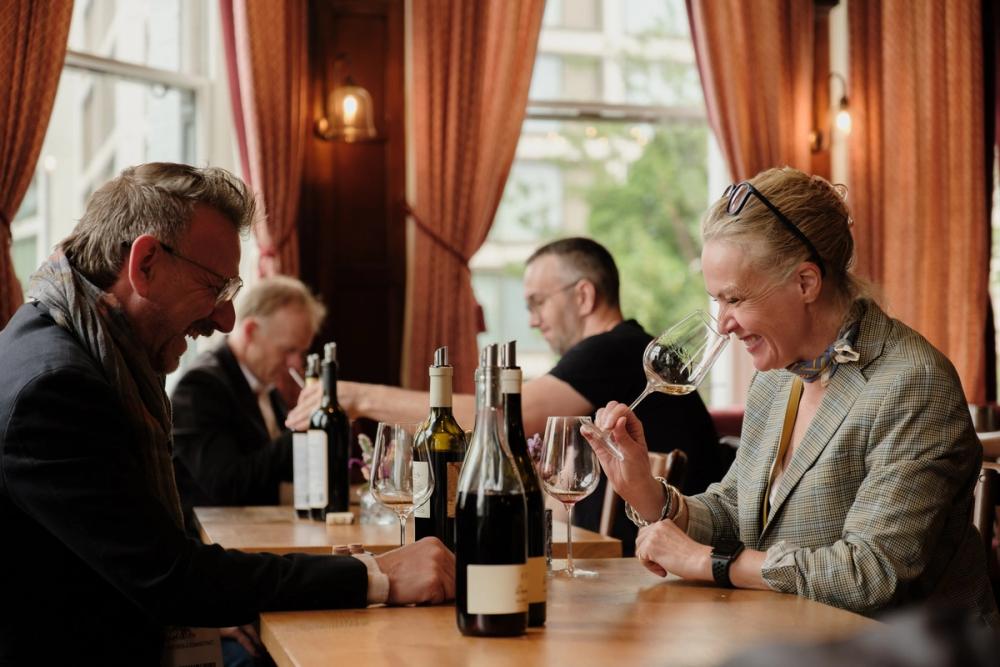
Victoria Sharples says the Virginia wines with the most chance of success in the UK are the ones that offer something genuinely different
Sharples says: “The Petit Manseng is a delight and it is not something we see very much of and when you do it is normally sweet, and blended away. So that is a really exciting and expressive wine.”
Those are the wines that have the chance to stand out, she says, as they are “not everywhere on wine lists across London and the UK” but are “easy to drink and go well with food”.
Similarly the Petit Verdots also stand out as offering something different to what the market is used to. “You are showing some really interesting expressions here.”
The Cabernet Franc style from Virginia could also work well in both the premium on and off-trade, says Robinson.
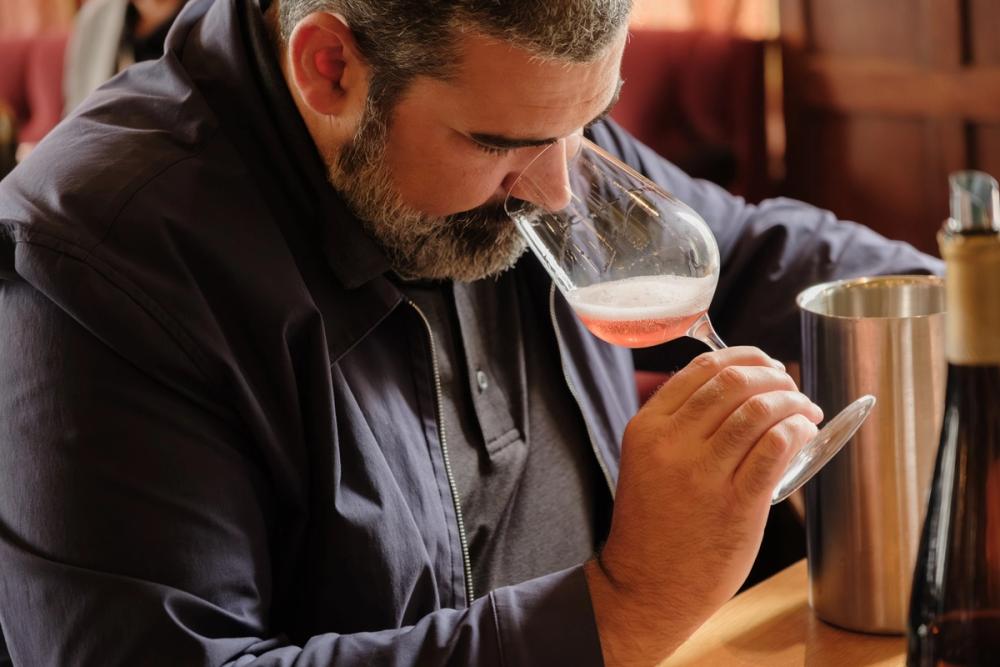
Good Wine Good People's Dan Belmont is keen to bring Virginia into its growing portfolio of North American wines
John Chapman says he is impressed by how far Virginia has gone to focus first on making wines that “are true to your terroir” rather than look to make wines that are suitable for a particular market like the UK.
“If a wine is showing enough interest from where it is being made and with enough passion for what it is then it will probably find a niche over here. If it is being worked too much then it will fail completely over here because we have got too much wine.”
But if a wine style does come along that stands out - like Virginia’s Petit Manseng and “exhibits what is in the vineyard” then there are enough consumers interested and looking for those kinds of wines, stresses Chapman.
Stephens agrees and says that “confidence” to makes wines that are true to the region really shone through both when tasting the wines, but in talking to each of the producers.
“They know which varieties work there, but are also looking to experiment, don’t have rules andare looking to see what they can do differently,” he adds.
Which is why the buyers were particularly interested in the hybrid styles coming out of Virginia using their own PIWI grapes
As Hill says: “I love how they are championing the right PIWIs for them, not just making wines for the sake of it,but really paying attention to what works for Virginia and owning it. This gives authenticity, identity, and will do so much more to help put themselves on the map rather than just producing 'another Merlot’.”
Make it simple, make it quality

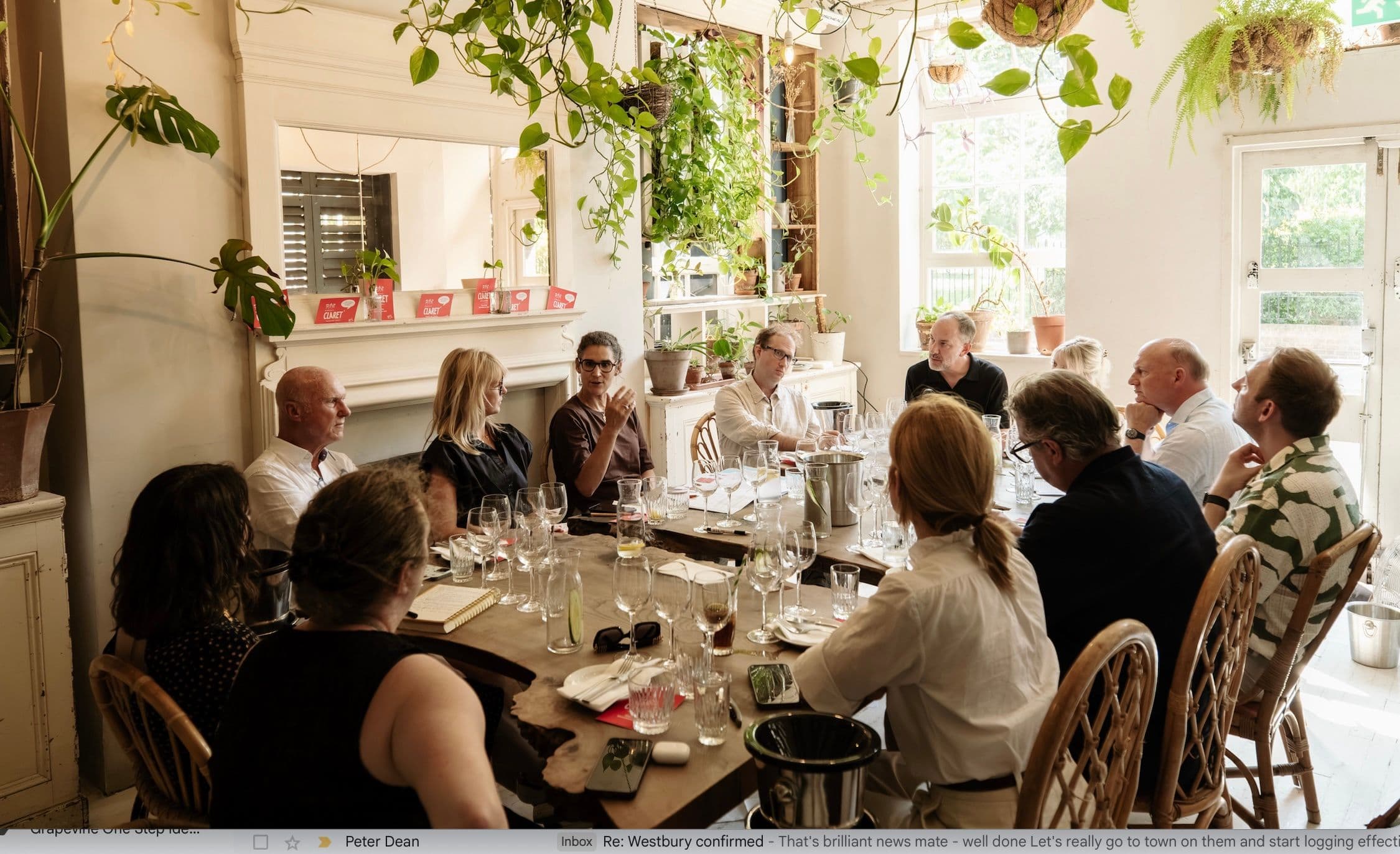
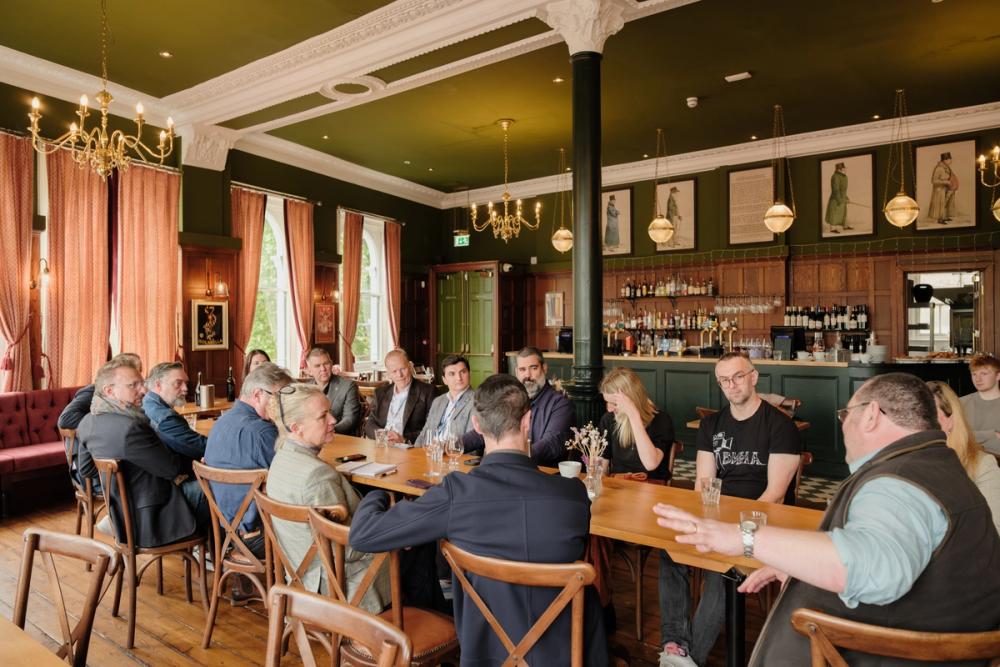
The Virginia Wine debate was held at the Hand & Flowers pub opposite London Olympia one morning before the London Wine Fair started
In fact for Hill it “does not matter at all that the wine comes from Virginia or anywhere else” it is the fact it has the quality, good value, the packaging and the look and feel to do well in the UK that is most important.
“The message isn’t come and buy Virginia wine, it’s come buy this good quality, good value wine,” he says.
Which is particularly the case at Ocado where all its wines are being sold online and “people need to buy with their eyes” so wines “need to look attractive or look like a quality” wine and and “that message of what the wine is has to be able to be conveyed through imagery because we don’t have that mode of storytelling that a sommelier or specialist independent would have - simplicity is key”.
It’s a “huge challenge” for Mitchells & Butlers where it has such limited space on its menus to sell the wine through the descriptors it can use, says Clark. If the only thing a customer is going to see is a three or four word descriptor then there is not often not the room to mention the wine region, when it is mainly being sold on taste.
William Stephens says the challenge any distributor has is being able to “distill” any country or region’s key characteristics into less than a minute when talking to a customer.
But with Virginia that is so hard to do as “there is loads going on” which is also a nice problem and advantage to have and he would talk to his customers about the fact that with Virginia you have so many selling points to go after.
Price factor
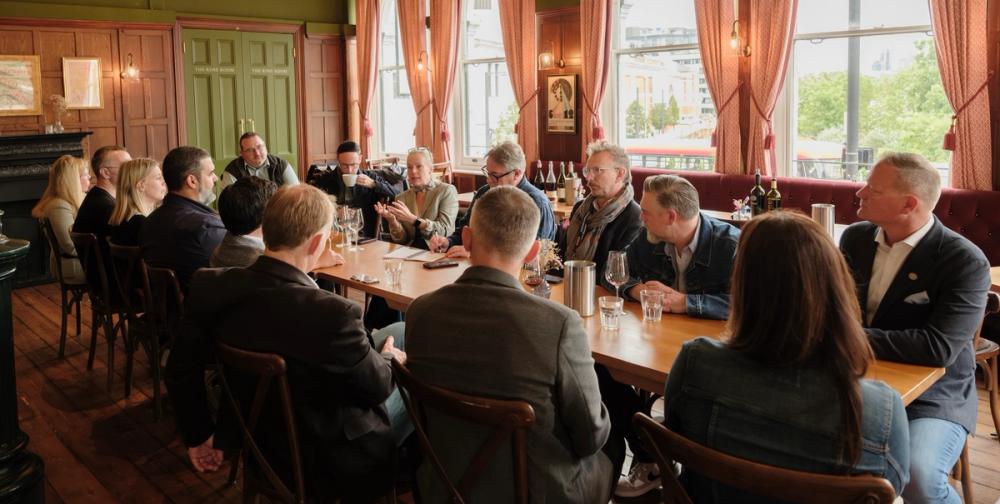
Virginia producers were able to hear first hand from major UK buyers and importers on how best to get their wines listed in the UK
The price factor is always going to be an issue for wines from right across North America and Virginia is no exception. But the fact there is now “such an interest” in the overall North American category means Virginia has a platform to build on and buyers and sommeliers are open to listing more premium wines, says Sharples.
It also has an opportunity to pick up sales from California where some producers are perhaps being a little “too confident” in the prices they want for their wines. “That’s where Virginia has an opportunity,” she adds.
Chapman says price will always play a part in a buyer’s decision, but the key is to make wines “that really sing” and provided you are “willing to bend over backwards a bit to get it to a level that means it is going to move boxes” then there should not be an issue.
“As long as it expresses what you have got in your dirt and what you are trying to achieve then that is what we want to see,” he adds.
Robinson says she was expecting the wines to be more expensive than they were.
“The quality and price does not concern me,” says Andrew Clark at Mitchells & Butlers, because if the wine is good enough then it will find the right market for itself. “We have got a diverse portfolio to be able to put good, well made, appropriately priced wines in regardless of how expensive they are.”
Stephens says from “an on-trade perspective” it is all about “drinkability and affordability” and the fact there is so much freedom to experiment in Virginia and you “have got all the different things going on” it means “from a price perspective it is something we can sell in the on-trade”.
Williams Bulkeley says the fact there is so much happening with Virginia has helped it be successful with its wines right across the country in major cities such as Liverpool, Manchester, Sheffield and Edinburgh. It is also much easier to cut through with buyers and sommeliers in those cities where the average demographic for drinking wine is so much younger.
“The north is for me very successful,” she adds.
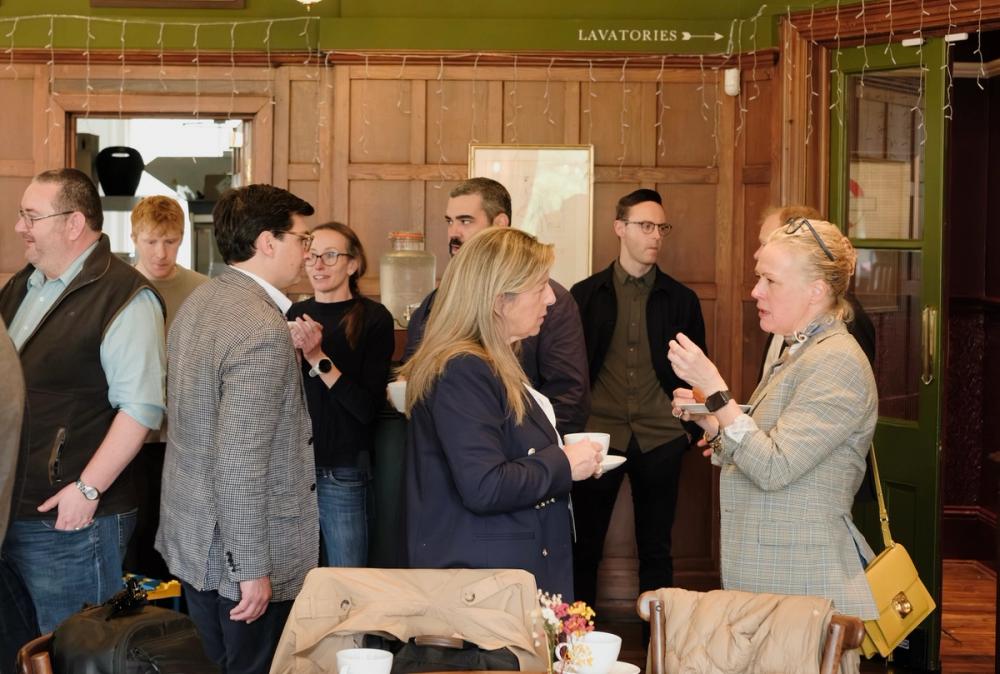
The event was a relaxed opportunity for the Virginian producers and buyers to meet and see what potential there is for their wines in the UK
The buyers were also able to pick out some potential pitfalls for Virginia wines, particularly in the on-trade and premium pub environment where perhaps more needs to be done about the overallpackaging and labelling of Virginia wines and how much they can cut through with consumers, says Stephens.
Lighter weight bottles are also becoming more important for UK buyers, says Clark.
Belmont’s biggest piece of advice for the producers was to really drill into their own story. “Why should a sommelier, or an end consumer, or a wine importer be excited by a Virginian wine? It needs to go beyond the fact you make good wine.”
Spreading the word
The common consensus amongst the buyers was both the challenge and opportunity for Virgina is simply spreading the word and holding more events like this so that more influential buyers and sommeliers get the chance to really understand what Virginia can offer.
Williams Bulkeley believes getting more buyers out to the region is going to be vital in really changing the perception and knowledge of Virginia in the UK.

You only have to see the success that Washington State wines are now having in the international market thanks to the sustained efforts there have been to get buyers out there on extensive trips, she adds.
There are also a lot of cultural connections between Virginia and the UK that could be exploited which are currently “under the radar,” she adds.
Chapman says there is much that Virginia could learn from a country such as Georgia in terms of raising its profile which thanks to a sustained programme of events, tastings and trips has really been able to gain more listings and influence in the UK market.
Robinson was able to share her experience of going on the Oregon Pinot Camp and how the experience means she “will forever be an Oregon ambassador” for its wines in the UK.
“Lots of key UK buyers have been on that trip and that is part of the reason why it has done so well in the UK,” she says.
Clark says there are also lessons to be learnt from how Portugal has been able to successfully promote its regions and lesser known varieties both in the grocery retail and on-trade sectors.

Boela Gerber winemaker at Southwest Mountains Vineyards talking to Mitchells & Butlers Andrew Clark
Boela Gerber, winemaker at Southwest Mountains Vineyards, says it was interesting to hear so many of the visitors that had come to their stand at the London Wine Fair were aware of Virginia’s wines as they had been featured in some of the latest WSET teaching guides and how crucial a factor that might be in raising its profile in the trade. Perhaps the same could be done in connecting with sommeliers through the Master Sommelier programme.
Clark says ultimately Virginia is competing with California in terms of the amount of “noise” it is able to make about its wines.
“At the moment America is Californian wines as far as our guests are concerned. You have to make your presence known,” he says.
Which might be a harder challenge in the mainstream pub market where “esoteric” and lesser known grape varieties find it harder to sell sitting on a pub wine list where you don’t have a sommelier to hand sell them, he adds. “A louder voice would help that.”
“It also comes down to packaging and what it looks like on the back bar,” adds Clark.
Belmont argues that if Virginia is to really move the dial in the UK it also needs to be fully aware of the changes in the UK tax and packaging laws that disadvantages wines with higher ABVs and heavier bottles.
That is going to be particularly the case in more commercially-driven venues, says Clark, where bottle weight and ABV levels will be even more important for buyers in choosing which wines to list.
Virginia’s route to market
The producers who took part in the debate were clearly delighted to hear such overall positive feedback and it certainly backed up their enthusiasm to come to the UK and try and get more of their wines into buyers’ hands.
They were keen to know where should they best invest their efforts in terms of spreading the word - is it more trade or consumer events - and to ultimately get more wines into the UK market.
Sharples says the first step needs to be investing in and engaging with the trade and making sure the most influential buyers and sommeliers know about their wines. “You don’t need consumers, you need to have the buyers,” she says. “That’s where you have to focus.”
It is also important to understand and get to know who the right and wrong people are to work with for your wines. You don’t have the volumes to be making mistakes when it comes to distribution, she argues.
“You are not just trying to pump out wine. You are discerning and you really want to be working with people that you relate to. You want to be working with those that think you are important and will get your story to the right people.”
Belmont was also keen to stress how different it is to have wines listed in a major retailer like Majestic - where you will need to have the volumes and marketing clout to make it work - than it is working with smaller importers where you can spend more time to bed them in with the right premium wine merchants and selective on-trade venues.
Long term consistency
But it is vital producers are willing to do the hard work to get their wines and the region of Virginia known in the UK, says Belmont.
Particularly based on his experience trying to import New York State wines. As he explains: “I have presented New York State wines to importers who have said they don’t have the resource to introduce a new region to all of our sales team. That’s when that ambassador bit comes along. You need to have someone who does want to tell your story. You need companies that are willing to invest that time in education to introduce a new region to their team.”
You also have to work hard, he argues, to ensure there is a “consistency in the market” for the quality of wine you are seeing here from that region - which is what it has done with New York State.
“We have set a quality bar here that if you see a wine from New York you are pretty confident it’s not going to be shit. It’s been a decade to get to that point,” he adds.
That’s the opportunity - and the challenge - that Virginia has, he stresses. You need to get to the point when a sommelier will see a Virginian wine and they just know it is going to work here.
“That’s the kind of messaging you need to do.”
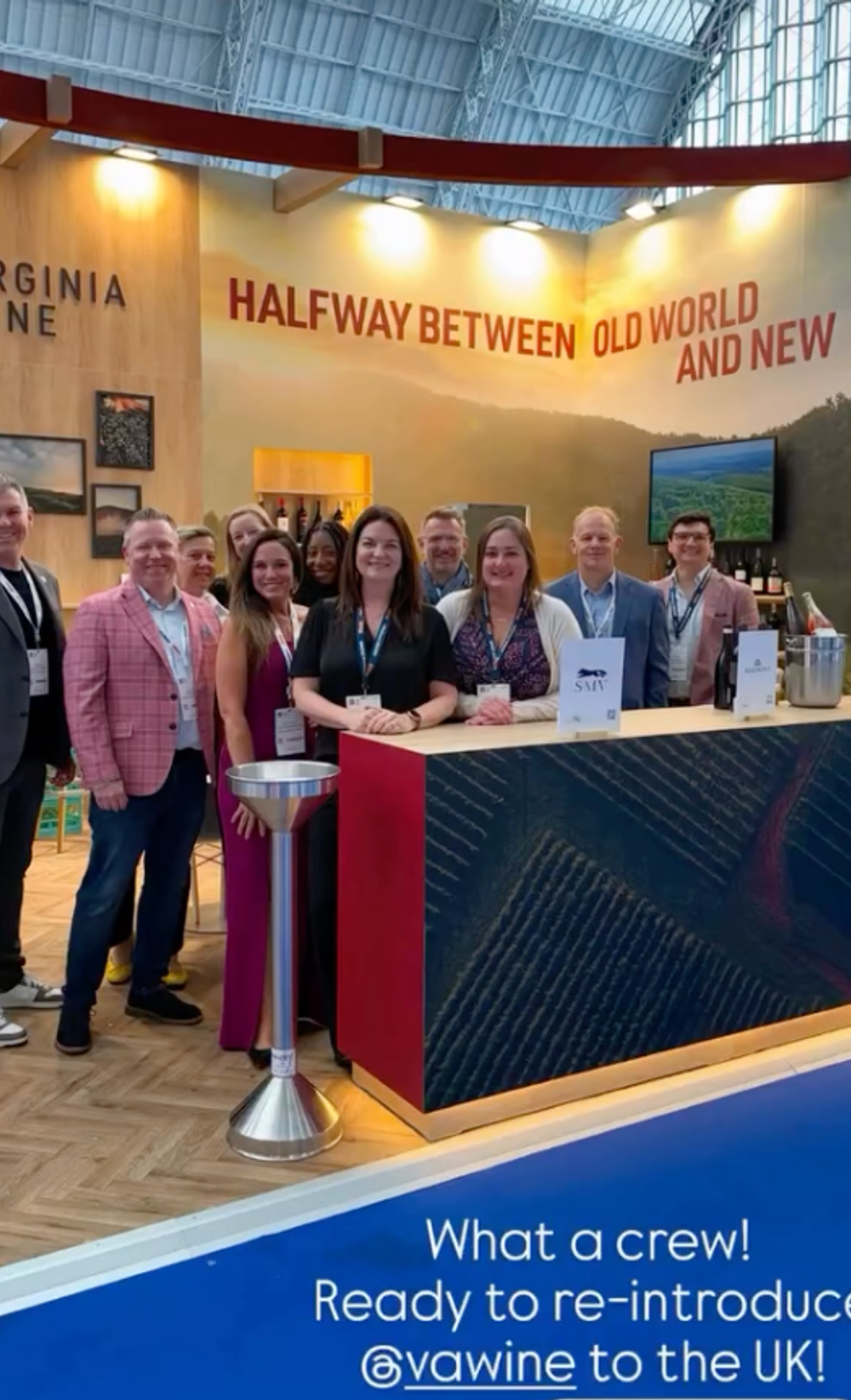
The Virginian wine producers on the Virginia Wine stand at London Wine Fair
Organising a couple of buyers trips a year to the region, and then backing them up with a trade tasting and making sure you are regularly at key wine fairs such as Wine Paris or London Wine Fair is the way to go, argues Belmont.
“It’s just that repetition across different segments of the market is how it all comes together. If you just focus on importers it’s really hard just for us to get that information to inseminate down to the sommeliers and the consumers.”
Collaboration is key
The fact that Virginia Wine and its producers are back in the UK market after so long is the biggest positive of all was the overall conclusion from the buyers.
The feedback and response from the tasting and debate shows the opportunity is also very much there for Virginian wines to do well in the UK.
The hard work, though, comes now and it is vital the producers go back and look at how they can use the momentum from the London Wine Fair, and events such as The Buyer debate, to really take the next big step forward.
To do that needs and means a collective effort, says Sharples. Having grown up in Melbourne she knows first hand the power there is when all producers and winemakers are working together for a common goal like they do in the local Victoria wine region.
It is a question she always asks for any wine country or region: “Does your region talk to each other? Do you taste wine together? Ask questions like what is wrong with my wine, how can I make this better? I have only seen this happen in a handful of regions around the world. If you can promote that you work together - then that’s great,” she says.
The collective work you can do together to get as many trade ambassadors out there for your wines is vital, stresses Sharples.
“You are building a future not just for now. You have to look at the next five to 10 years. It takes time and is not going to happen overnight. But you really need to find the right people to work with and if you are knocking on a door and they are not answering then move on,” she adds.
Stephens agrees it is the collective impact you can have on the region as a whole by having “ambassadors and doing these tastings” that is so important.
“You as a collective have to work together. Having one win for Virginia is actually a win for all of you, because that is what opens the door to people like us.”
* You can find out more about Virginia Wine at its website here.
* Part two of our report of the debate will be published later in the week including the personal commentes from each of the buyers who took part.