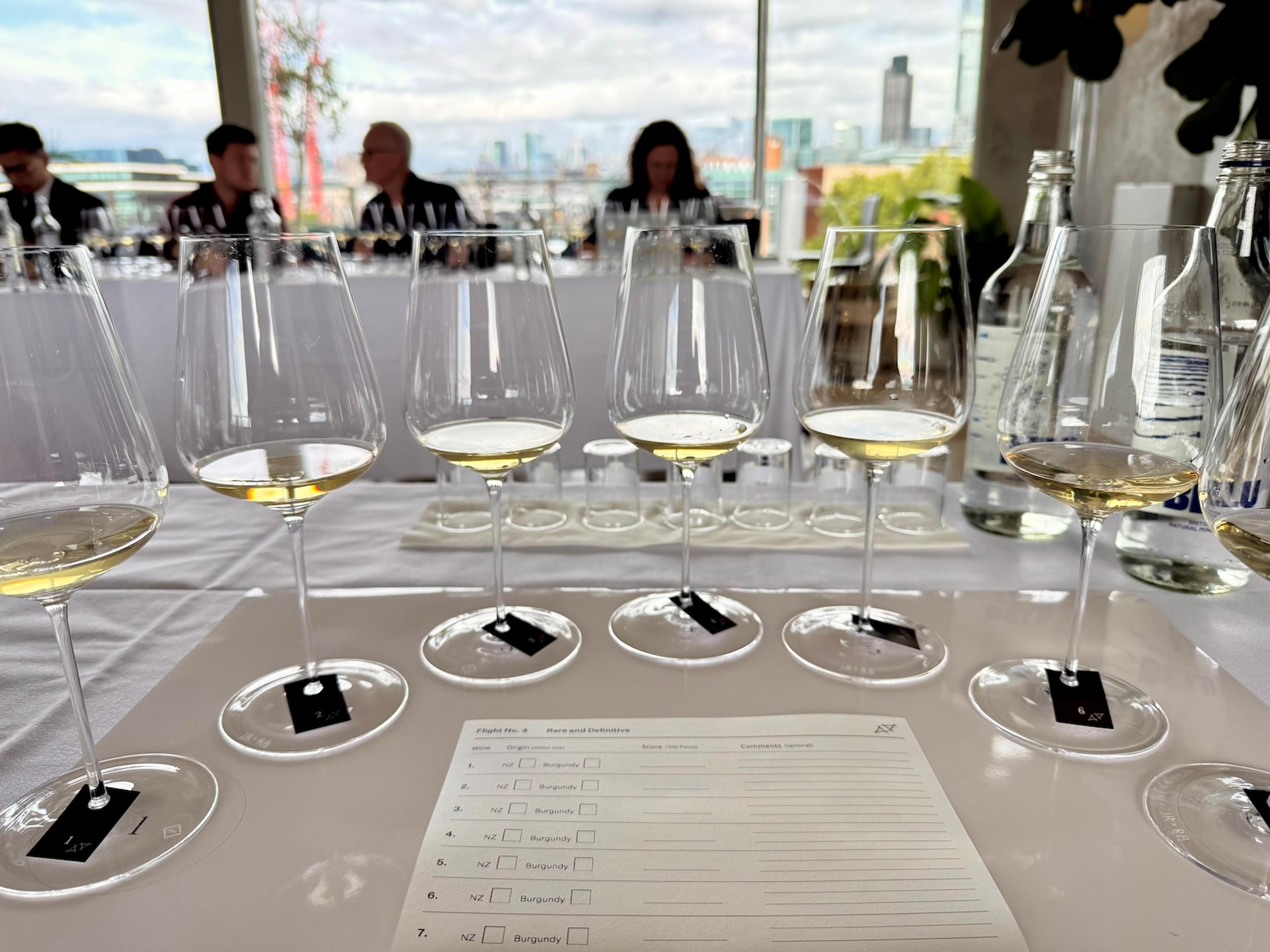
The Burgundy room was busy. Winemakers poured their own wines, the story came alive, and you could watch a buyer lean in. Here is the number behind it; premium Australian bottled wine grew 15% by volume in the UK last year, even as almost every other segment shrank. That is the Australia worth talking about right now - growing, quietly, at the top, while the headlines look the other way.
Because the headlines are real, and worth being honest about. Australian wine exports fell 8% in value and 6% in volume in 2025. The UK, still Australia’s biggest market by volume, took 9% less wine, and total UK off-trade wine sales slipped 4% over the year (Figures from Wine Australia’s export report for the 12 months to December 2025, published January 2026).
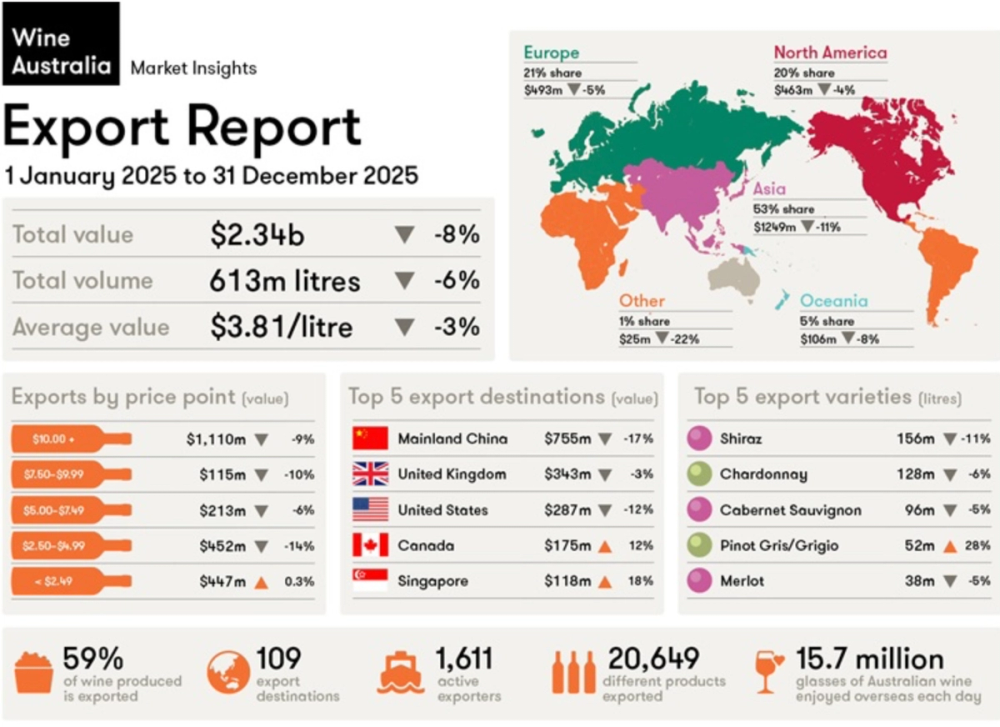
Some of that is no one’s fault: drinkers everywhere are cutting back, the cost of living bites, and rising duty adds to the squeeze. But much of it is a bulk-wine story. The cheap, tankered commodity that still accounts for the overwhelming majority of what Australia ships to the UK, steadily draining away. That is not a loss so much as a shedding: the part of the trade Australia has every reason to leave behind.
Dig into the same Wine Australia numbers and that growth holds up under scrutiny. The premium tier - anything shipped above A$7.50 a litre - spans varieties from Shiraz to Sauvignon Blanc rather than any single style, and Australia remains the biggest wine source in the UK off-trade.
Two stories are running in opposite directions here, and the trade has been reading the wrong one. The country is not being rejected. Its’ cheap end is contracting; its premium end, quietly, is not. It is a thin slice on a small base, not a flood, but the direction is the point.
That complicates the phrase “finding its footing again.” Australia did once command real fine-wine respect in the UK, then let the commodity end define it and quietly squander that standing - so the footing is less lost than misplaced.
Elevating Australia
The export data tells you premium Australian wine can still sell here; it does not, on its own, tell you which Australian wine.
I spent two afternoons this spring at Amelia Jukes’ Elevate Australia tastings - one setting Australian Grenache and white Rhône varieties against the southern Rhône, the other, today, pitching Australian Chardonnay and Pinot Noir against Burgundy.

Victoria Sharples says Amelia Jukes deserves huge praise for her breakthrough Elevating Australia tastings and shining the light on the country's premium wines and styles
Many of the producers were ones I have known and championed for years, and the wines were excellent. The case the room made was for cool-climate Chardonnay and Pinot Noir - most, though not all, from genuinely cool sites - as the category to rebuild on, at a price and quality tier Australia has rarely held here. The producers to do it are the ones at Jukes' tasting, not the labels stacked at the end of a supermarket aisle.
What stayed with me, though, had less to do with the quality in the glass than with the rooms themselves.
The Burgundy session drew a crowd; the Rhône one, back in May, was noticeably quieter. The weather played its part. But the bigger reason is that Burgundy is simply sexier than the Rhône, and a comparative tasting borrows the glamour of whatever it is held up against. The trade, in other words, still turns out for a name rather than a style and that instinct is a good part of Australia’s problem in this market.
If that is the opportunity, the obstacle is a story we keep telling on Australia’s behalf. Sunshine in the glass. Big, ripe, sun-soaked reds. It was clever positioning in 2003 and an albatross more or less ever since.
Australia moved past that style years ago; the wines now run to cool-climate Chardonnay with real tension, savoury Grenache, Pinot of genuine delicacy, and some of the best and longest-lived Riesling made anywhere. The trade has been slow to update the story to match.
Be smarter, be focused
Part of updating that story is being cannier about the comparisons we lean on — and the Burgundy benchmark cuts both ways. Used well, it is a genuinely useful on-ramp; a buyer wavering over an unfamiliar Australian Pinot will often take the leap if you set it beside a Burgundy they already trust, and there is no shame in that.
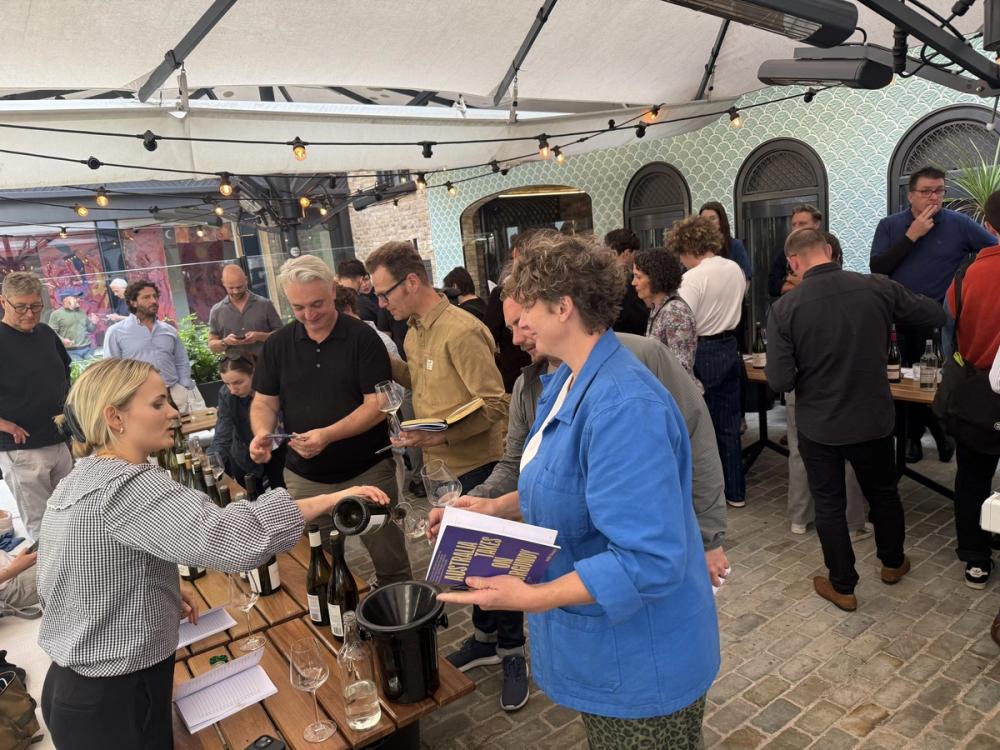
Amelia Jukes' Elevate Tastings focused on benchmarking Australian Grenache and white Rhône varieties against the southern Rhône and Australian Chardonnay and Pinot Noir against Burgundy
What Australia cannot afford is to rely on the comparison. Cast these wines permanently as the cheaper substitute and they stay permanently second, defined by a region that is not theirs. The best of them do not need the crutch. A fine Australian Chardonnay or Pinot can hold its own, and it offers something Burgundy increasingly cannot: a winemaker you can actually meet, a genuine story, and a price a sommelier can put by the glass without wincing.
The wines made the case better than any figure could. Retail prices ran from £19 to £125 - roughly £40 to £300 on a wine list, depending on where you are dining - spanning New South Wales, Western Australia, Tasmania, South Australia and Victoria. It is a proper spread, even if a few of the top numbers are ambitious for an independent to take on.
The sweet spot sat around £40 to £60 a bottle. There was more Chardonnay than Pinot on show, perhaps with summer in mind, and a real pleasure in tasting back to 2020 alongside the new 2025 releases.
Of the two grapes, the Pinot Noir did the most to dismantle the cliché. Almost all of it was deft and fresh - bright, supple, easy to drink now - though several had the acidity and structure to repay a few years’ patience. Plenty of red fruit, raspberry, a little spice.
From Tasmania, the category’s current darling, Dalrymple wore its cool origins lightly; its 33% new oak barely showed, and at £45 it is a lot of wine.
Ashton Hills, a cult name in the Piccadilly Valley 20-odd years ago, still has that bright fruit and savoury edge; at around £48 it joins the Dalrymple in a compelling mid-forties bracket - serious wine, fair value, and a match for good Burgundy on quality, if not on price.
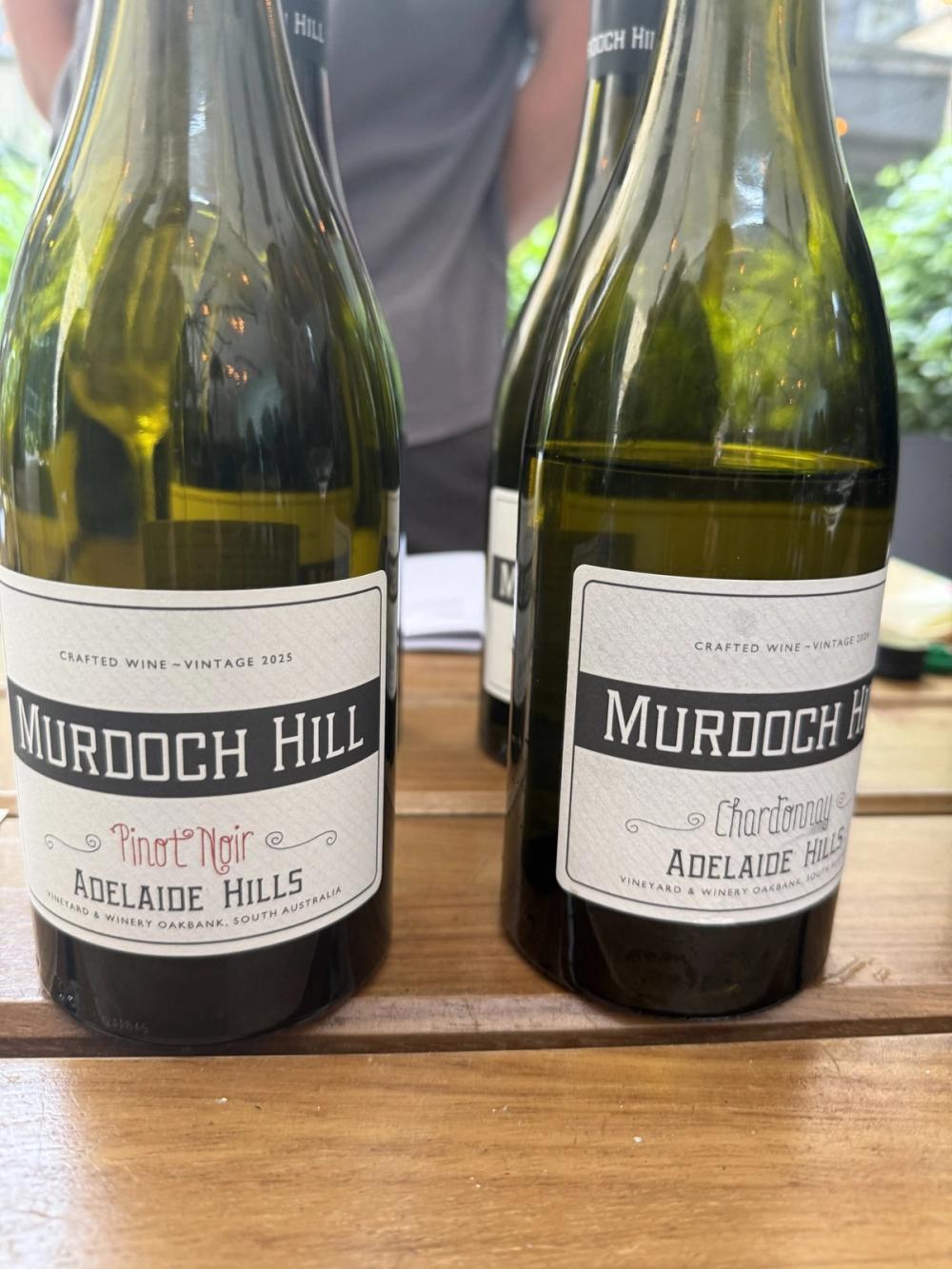
It and its Adelaide Hills neighbour Murdoch Hill are the sort of finds that win a place on a list. Yering Station’s Reserve Pinot, at £69, showed real finesse, but the better story was seeing the flagship on the table at all, when it is usually the cheaper cuvées that carry the name in the UK.
Leading with the best wine rather than the entry-level one is exactly the right instinct. Paringa Estate’s Single Vineyard The Paringa, off vines more than thirty years old, is a long-standing favourite of mine - at £89 it sits right at the top of the range, but the old-vine depth is the real thing.
Exploring Chardonnay
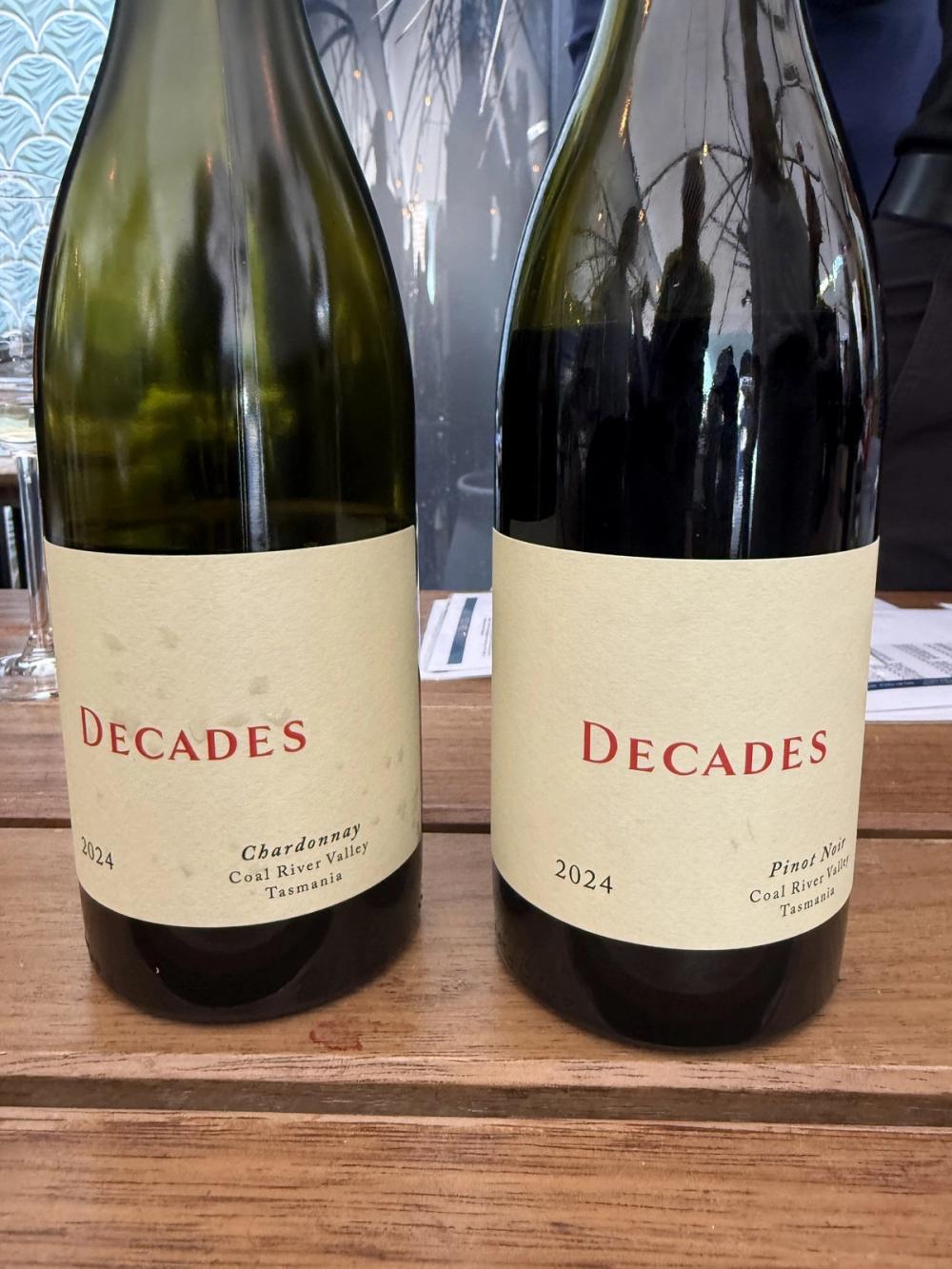
If the Pinots were about finesse, the Chardonnays were about range. Decades - a new Coal River Valley venture from Steve Flamsteed and Brad Rogers - leant linear and citrussy, almost Chablis-like; the Leeuwin Estate Art Series 2021 sat at the other, opulent, iconic end.
Some wines were pure expressions of place; others, like Sandro Mosele’s Elanto (he was at Kooyong and Port Phillip before this), carried the maker’s hand as clearly as the site. Patrick Sullivan’s Gippsland wines leant deliberately natural. And then the old hands — Mount Mary, Bass Phillip — doing what they have always done, beautifully.
Stories matter
There is a wider point the day brought home, and it is industry-wide rather than Australian: a wine only travels as far as the person pouring it can carry it. Where the winemakers poured their own today, it was a different thing entirely - the bottle came with a maker and a story attached, and it showed.
That is the bar. Across the trade, too often, the wine is instead left to speak for itself, with little sense conveyed of the producer or of how a bottle sits against everything around it. And no one can assume the room knows what they know. Plenty of perfectly engaged drinkers cannot place the regions, never mind the sub-regions, or say which state or city a wine has come from.
Whoever holds the bottle is the gateway, the one who turns a buyer’s glance into a listing, or a guest’s curiosity into a second glass. Arm them with the context, the backstory and a feel for everything else on show, and a decent wine becomes one somebody remembers and orders. It is the most fixable weak point in the chain, and a country fighting to be looked at afresh can least afford to leave it to luck.
Styles matter
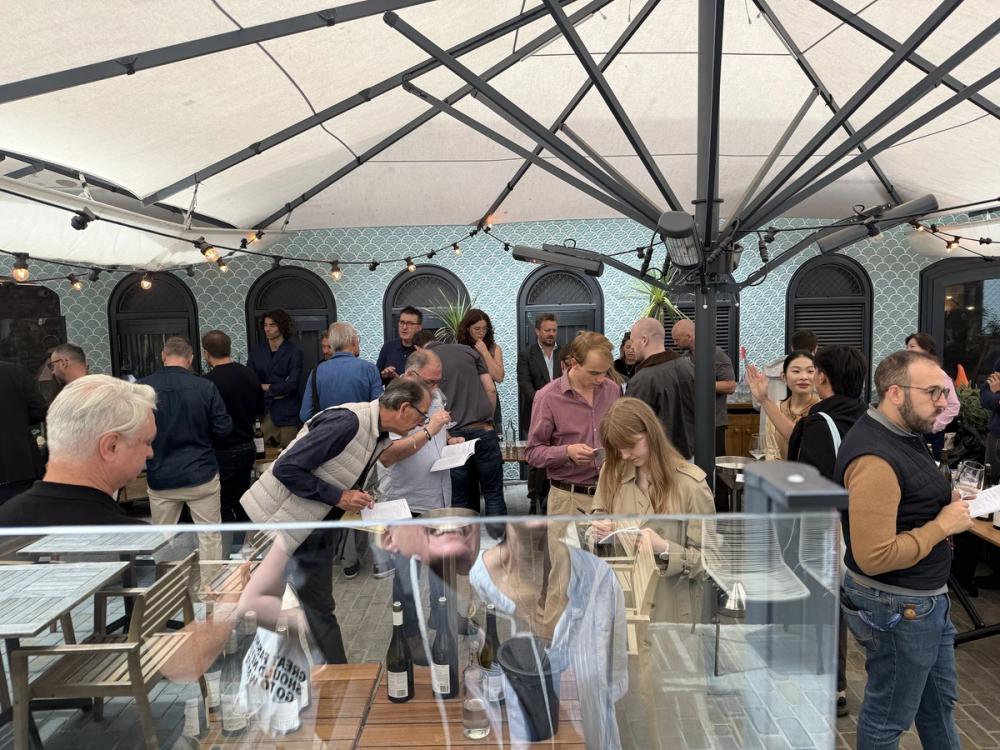
Amelia Jukes' tastings showed what Australia can do when its producers and winemakers come into the market and tell their stories directly to influential wine buyers
So what would actually move the needle? Not another geography lesson. Nobody in that room needed telling where the Adelaide Hills is. What sells is a style and a feeling, led by what is in the glass rather than the map reference.
In practice that means getting these producers in front of London’s on-trade and independent merchants, in rooms like Amelia Jukes’, again and again without apology; it means writers and educators describing Australia by style instead of forever defending it by region. And it means the wines being open and pourable by the glass, where curious drinkers can actually stumble on them.
The good news is that the shift is already under way, and the bodies that can drive it are already leading. Wine Australia’s Emma Symington MW, who heads its education programme, has been teaching London sommeliers — recently at 67 Pall Mall — about new-wave producers and alternative varieties, with Berry Bros & Rudd’s Trent Nettleton sourcing wines for the event.
Educating the people who actually pour is exactly the kind of thing that shifts opinion. Increasingly the emphasis is on the wines that are interesting and doing well rather than the tired old image.
Momentum matters
I know a levy-funded body has a whole sector to serve, much of it volume, and that generic campaigns will always have their place. But the end with the momentum is the premium, smaller-producer one - the part the export data shows is in growth - and it has earned a louder share of the voice.
The job now is reach; spreading that word deeply and widely enough, because still too few people in this market understand, or expect, the finesse and quality we tasted at Jukes’ events.
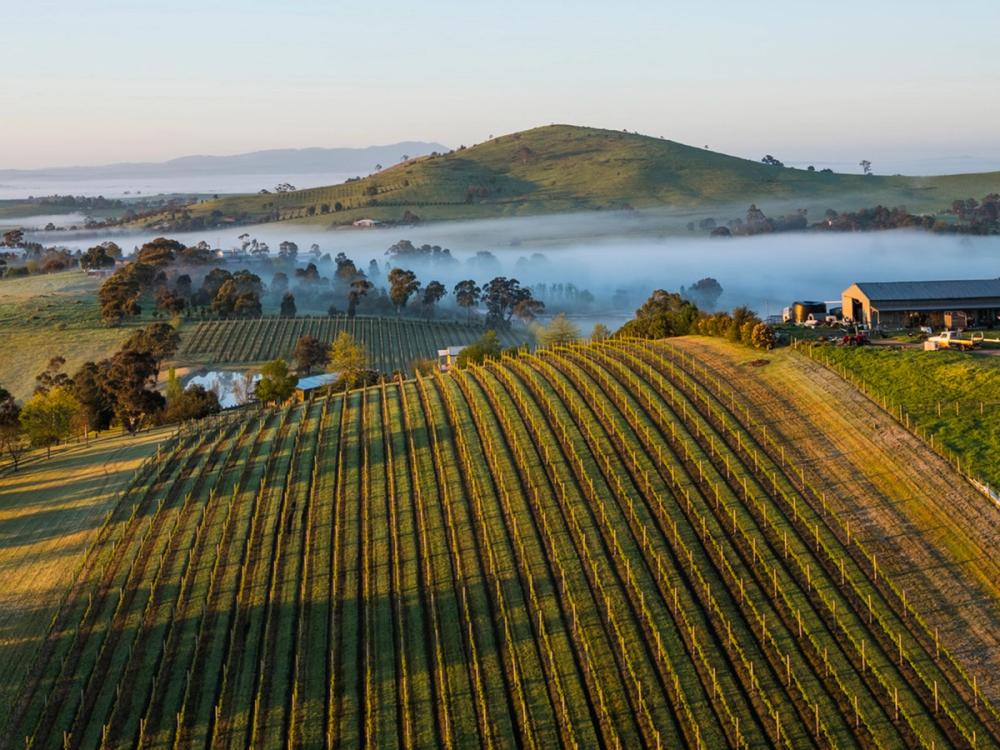
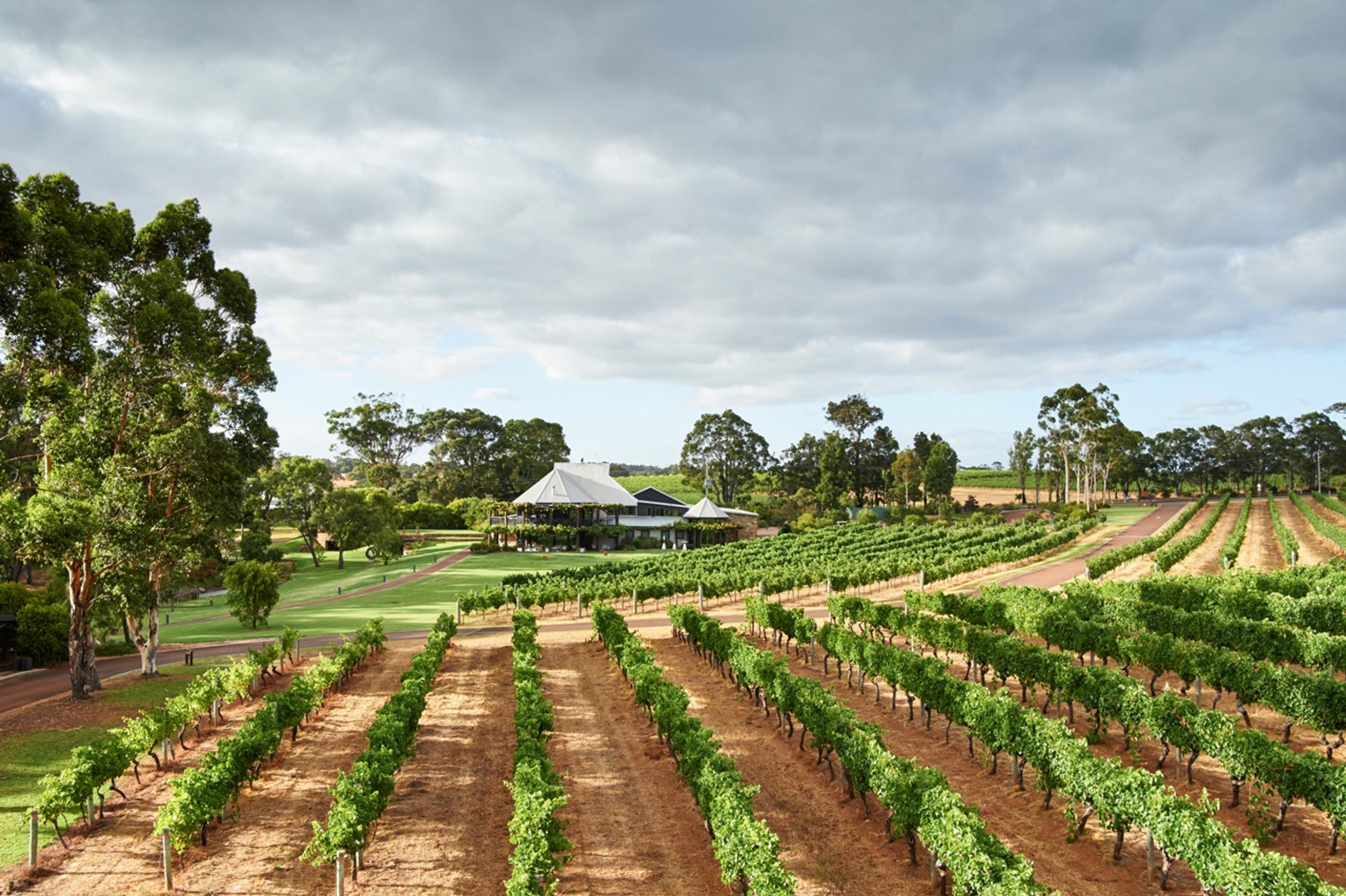
The Victoria wine region and its cool climate wines are what the UK wine trade needs to know so much more about says Victoria Sharples
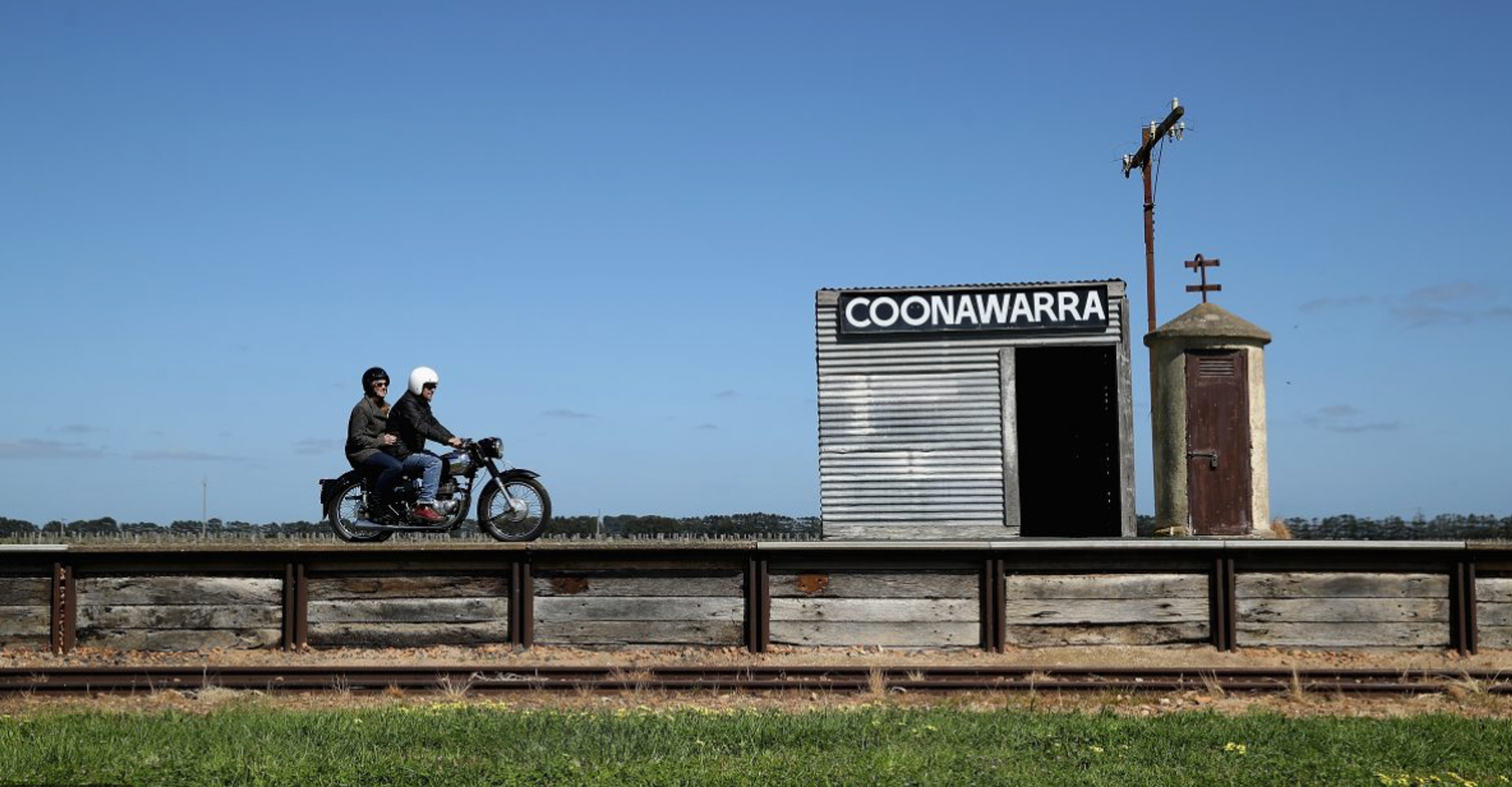
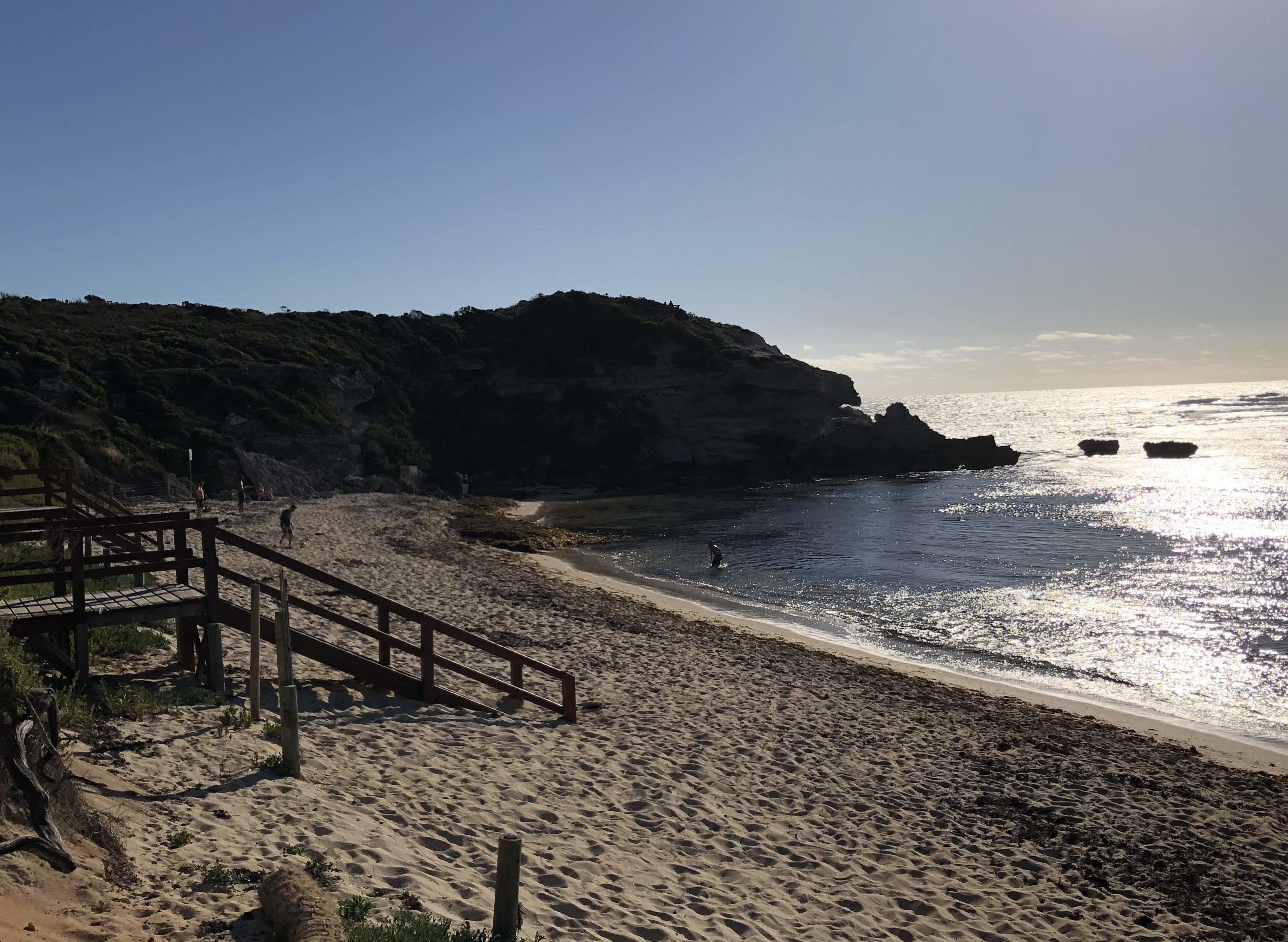
Victoria especially – its’ cool-climate story, from the Yarra through the Mornington Peninsula to Henty - is the natural rebuttal to the sunshine cliché, and London still hears far too little of it.
For all the gloom in the headlines, I am optimistic about this, and the latest numbers give some grounds for it. The final quarter turned up, with UK export value 7% ahead of the same period a year earlier. Premium own-label held firm at the big multiples and on-premise outlet numbers steadied after years of closures.
I have spent 25 years backing wines before anyone else had noticed them, and I have watched Australia fumble this in the UK for most of that time. The encouraging part is that the hard bit - making wine worth drinking - is long since sorted. What remains is a communication problem, and those can be fixed.
The trade just has to be willing to drop a cliché it finds comfortable and start showing up for the style rather than the name. The wines have earned that. So have the people making them.
* Victoria Sharples is an independent wine consultant, IWC Panel Chair and founder of Victoria’s Wine Secrets.