
Spend enough time in the wine trade and it is easy to assume that the biggest challenges facing senior leaders are commercial.
After all, ours is an industry that never seems to stand still. One year we are worrying about freight rates, the next it is duty reform, inflation, glass shortages, declining consumption, retailer pressure, changing consumer behaviour or the latest piece of legislation threatening to make life more complicated than it already is.
Walk around any major trade event, sit through any board meeting or spend time with a group of industry leaders over dinner and those are usually the topics that dominate the conversation.
They matter because they affect all of us.
Yet over the last year I have found myself reflecting on a very different challenge. One that rarely appears on an agenda and is seldom discussed openly, yet in my experience affects far more people than most of us realise.
Recently I spent time with the managing director of a highly successful wine business. This was not someone struggling to build a company or find a route to market. This was an experienced leader running a respected business with a strong team, a clear market position and a track record most people would envy.
From the outside, things looked exactly as they should. The business was performing. The team was capable. The future was positive.
Yet when we sat down to talk, the conversation did not revolve around margins, suppliers, distribution, pricing or strategy. Instead it focused on delegation, difficult conversations, work-life balance, stress, time management and the challenge of creating enough space to think.
What struck me was not that these issues existed. Every leadership role comes with its own pressures. What struck me was how familiar they sounded.
Under pressure

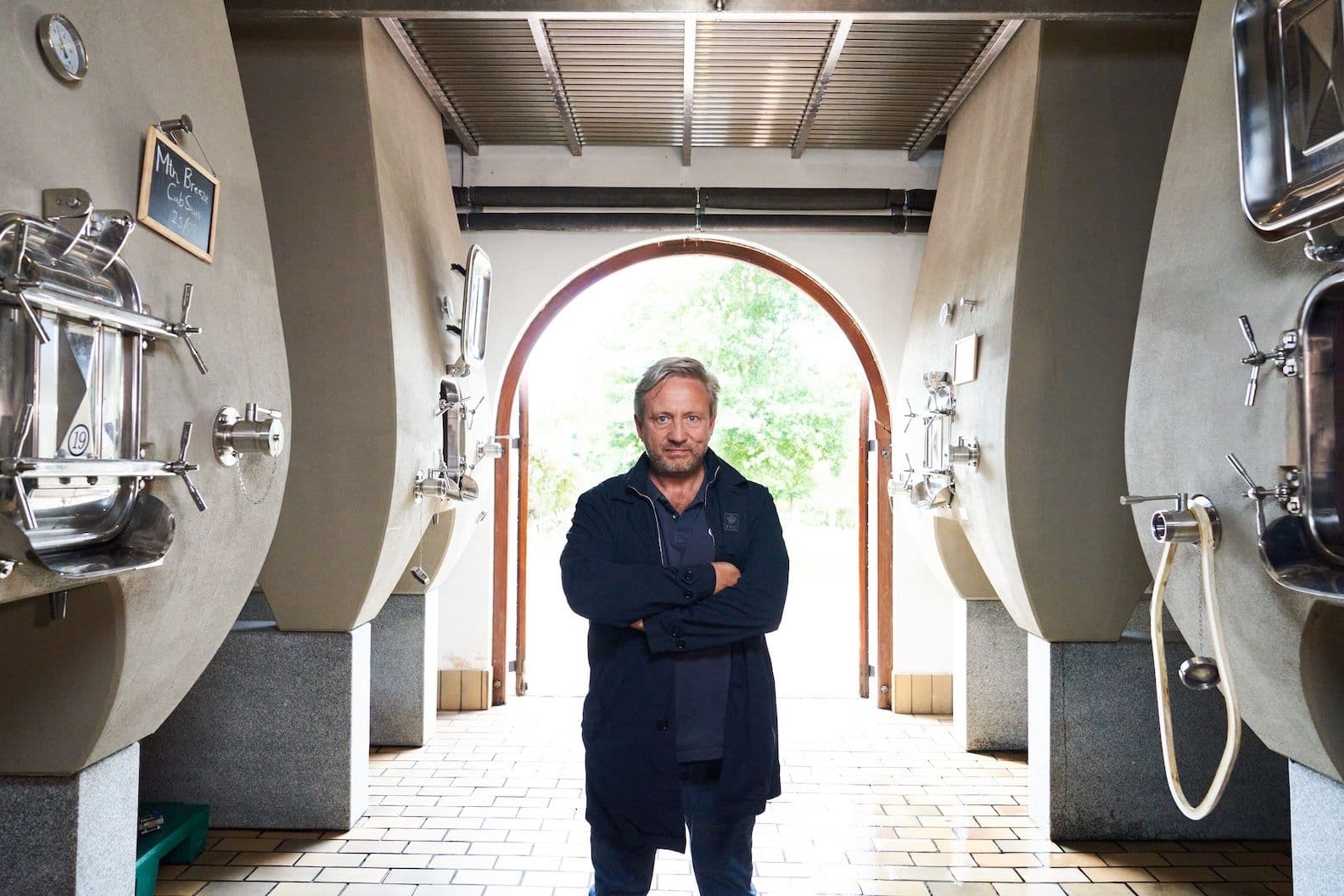
Being a manager or leader in a business can feel overwhelming unless you are trained to see beyond the day-to-day pressures says Ewan Lacey
Over the last 20 years I have heard variations of the same conversation again and again. Different businesses. Different personalities. Different stages of career. Yet remarkably similar themes.
The sales director trying to hold everything together. The founder who can no longer be involved in every decision but struggles to let go. The managing director who knows exactly what needs to happen but keeps postponing a difficult conversation. The senior leader who feels permanently busy but increasingly unsure whether they are spending their time on the things that matter most.
On paper, these people are successful.
In reality, many of them feel stuck.
That might sound surprising. Surely success should make things easier? Surely experience should bring confidence? Surely once you reach a certain level in an organisation the uncertainty begins to fade?
In my experience, the opposite is often true.
The challenges simply change.
Early in our careers the path tends to feel relatively straightforward. We learn the trade. We build expertise. We work hard. We prove ourselves. Success comes from knowing more, doing more and solving more problems than the people around us.
The wine trade rewards those qualities. Quite rightly. The people who build great businesses, strong brands and successful careers are rarely afraid of hard work.
The difficulty comes when those same qualities stop being the answer.
Management difficulties
At some point many leaders discover that the behaviours which helped them become successful are no longer the behaviours that will take them forward.
The ability to solve every problem becomes a bottleneck. The desire to stay involved in everything becomes exhausting. Leadership gradually shifts from doing the work yourself to creating the conditions for others to succeed.
That sounds straightforward. It rarely feels that way.
Particularly in the wine trade.
Ours is a relationship business. People stay in the industry for decades. Careers overlap. Competitors become customers. Suppliers become colleagues. Colleagues become friends. Decisions are rarely abstract and often affect people we know and respect.
One comment from that managing director stayed with me long after our conversation had finished.
He said he often knew the right decision. The problem was not deciding. The problem was doing.
There was always another priority. Another issue demanding attention. Another reason why next week might be a better time. I suspect many readers will recognise that feeling.
All consuming
What sort of business leader are you? Do you have the clarity of thought to be able to see beyond business storms or get dragged down with just surviving them?
Over the years I have become increasingly convinced that this is where many leaders become stuck. Not because they lack knowledge, capability or experience, but because the day-to-day demands of running a business gradually consume all available attention. The urgent crowds out the important. The immediate crowds out the strategic.
Before long, leadership becomes less about moving towards something and more about responding to whatever happens to be in front of you.
That shift is subtle, but it changes everything.
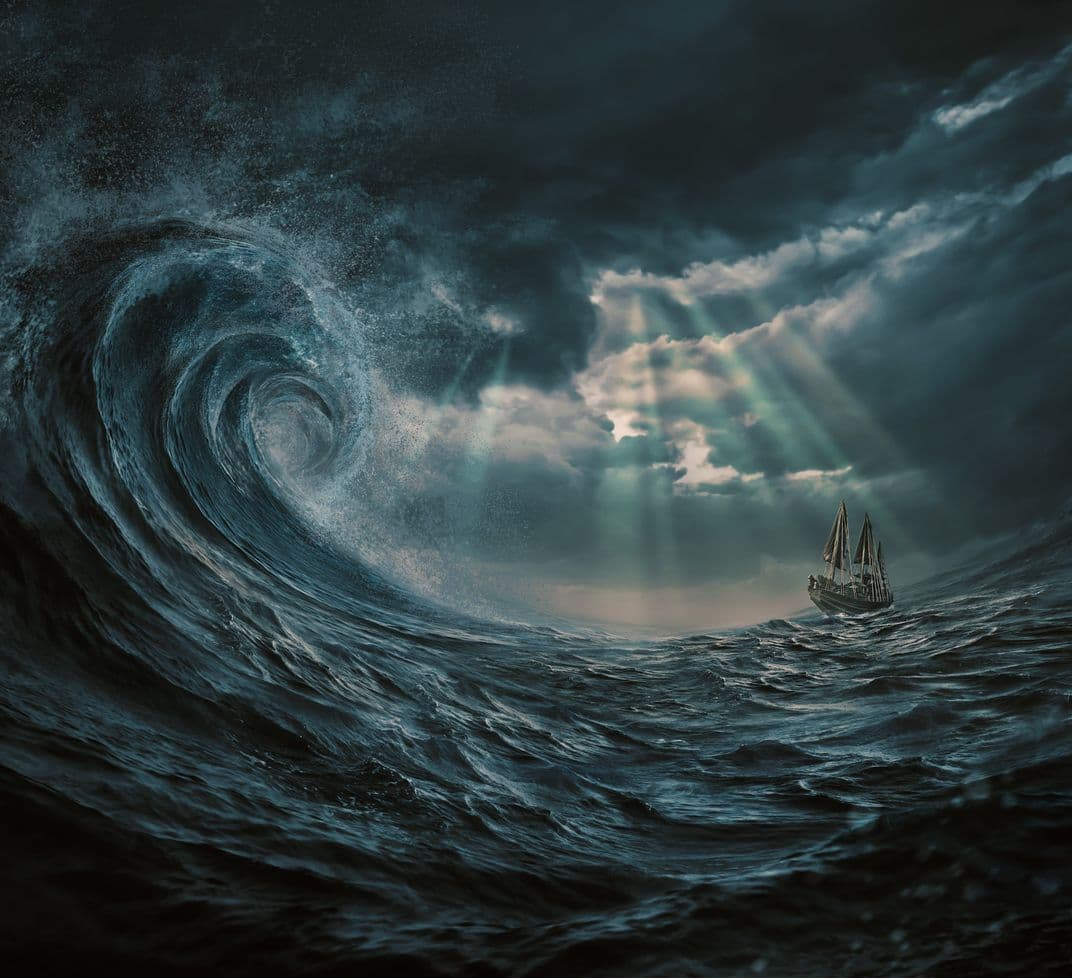
Imagine for a moment that you are the captain of a ship.
To undertake any voyage, you need two things. You need a destination, and you need the means to get there. The preparation, resources and planning required for a short journey from Southampton to the Isle of Wight are very different from those needed for a voyage from Southampton to Sydney. The longer and more ambitious the journey, the more likely it is that things will not go entirely according to plan.
Storms will come. Equipment will fail. You may be blown off course. You may need to stop unexpectedly for repairs. Crew members may leave, and new ones may need to come aboard.
None of those things is the problem.
They are simply the nature of the voyage.
The reason they do not define the journey is that you already know where you are going. If your destination is Cape Town, then a storm in the Bay of Biscay is not the destination. It is merely an event that occurs on the way. You deal with it, navigate through it and continue.
What strikes me is that many leaders gradually lose sight of this distinction. Over time their attention becomes consumed by the equivalent of storms, repairs and crew issues. The focus shifts from reaching Cape Town to simply making sure the ship does not sink.
Of course, keeping the ship afloat matters. It matters enormously. But it cannot become the purpose of the voyage.
When survival becomes the primary objective, every problem starts to feel equally important. Every challenge becomes urgent. Every decision carries more weight than it should. The horizon gradually disappears.
Reactive vs active
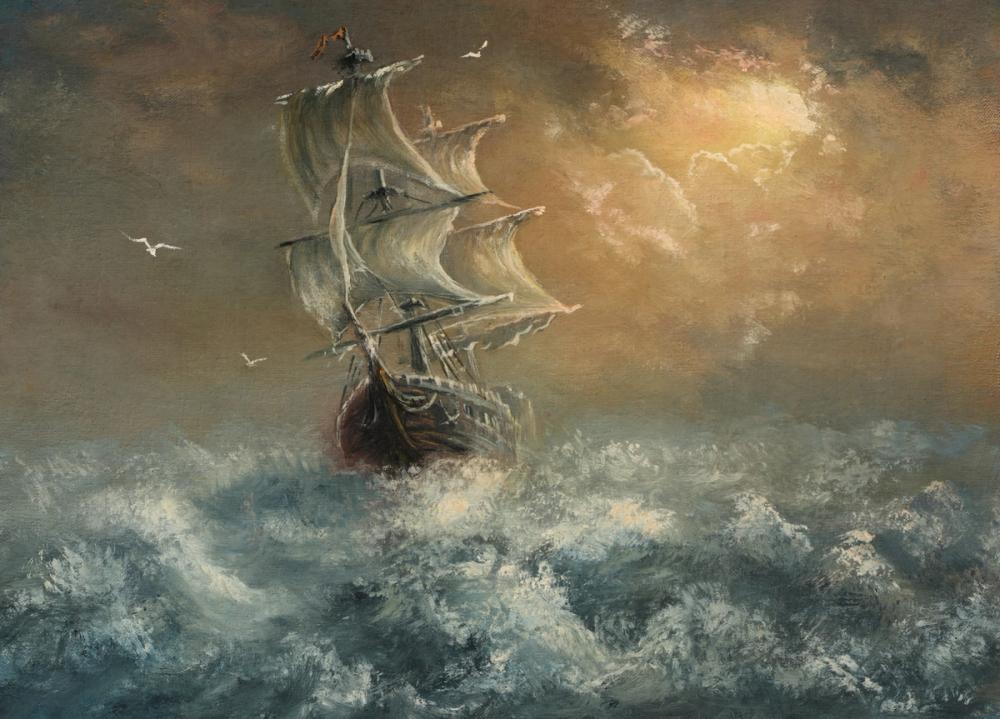
Ewan Lacey: "The voyage slowly becomes a series of reactions to events rather than a purposeful journey towards a destination."
Ironically, I do not think the most dangerous moment is in the middle of the storm. When conditions are at their worst, most people know exactly what they need to do.
The greater risk often comes as the storm clouds gather, when anxiety begins filling the gap between what might happen and what is happening. Or afterwards, when people are exhausted from getting through it and immediately turn their attention to the next issue without pausing to lift their eyes back towards the horizon.
That is often where people become stuck.
The voyage slowly becomes a series of reactions to events rather than a purposeful journey towards a destination.
When I reflect on the conversations I have had with successful people across the wine trade, this is often what I see. Not a lack of capability. Not a lack of effort. Not even a lack of expertise.
What I see are talented people who have become so focused on keeping the ship afloat that they have lost sight of where they were trying to sail in the first place.
The wine trade has never been short of intelligence, resilience or resourcefulness. If recent years have taught us anything, it is that this industry has an extraordinary ability to adapt.
But perhaps we spend too little time talking about the people responsible for navigating those challenges.
Every strategy ultimately passes through a human being. Someone making decisions, balancing competing priorities, managing relationships and trying to lead effectively in an increasingly complicated world.
In my experience, the leaders who make the greatest progress are not the ones who somehow eliminate every storm. That is impossible. They are the ones who periodically step back, reconnect with the destination and ask a simple question:
Does this move us closer to where we are trying to get to?
Or doesn't it?
The answer often provides more clarity than another month spent reacting to whatever happens to be in front of you. Which is why I keep coming back to one question: where were you trying to sail in the first place?"
* Ewan Lacey is a widely experienced wine industry executive with 20 years experience at senior and management director level. He now works with leaders and business owners to improve their performance — and the performance of their businesses. You can contact him at ewan@ewanlacey.com.