How it began
For the past few years, AI has been defined by the large language model. ChatGPT started it all, Anthropic taught it how to better learn for itself, and Google changed its iconic search bar to accommodate it. Now no one can imagine an interface without a prediction of the next word.
However powerful, simply predicting the next word is limited by nature – even outdated. Already the large language models (LLMs) have evolved, incorporating agentic functionality to drive commercial outcomes. Architectures for general intelligence are on the horizon.
Whatever its level of actual or perceived intelligence, AI is not and will not be as smart as people for a long while. However, without basic knowledge of how to use AI, industry will struggle. While there are ways to ease that struggle, let’s first understand what’s at its core.
Sense of self
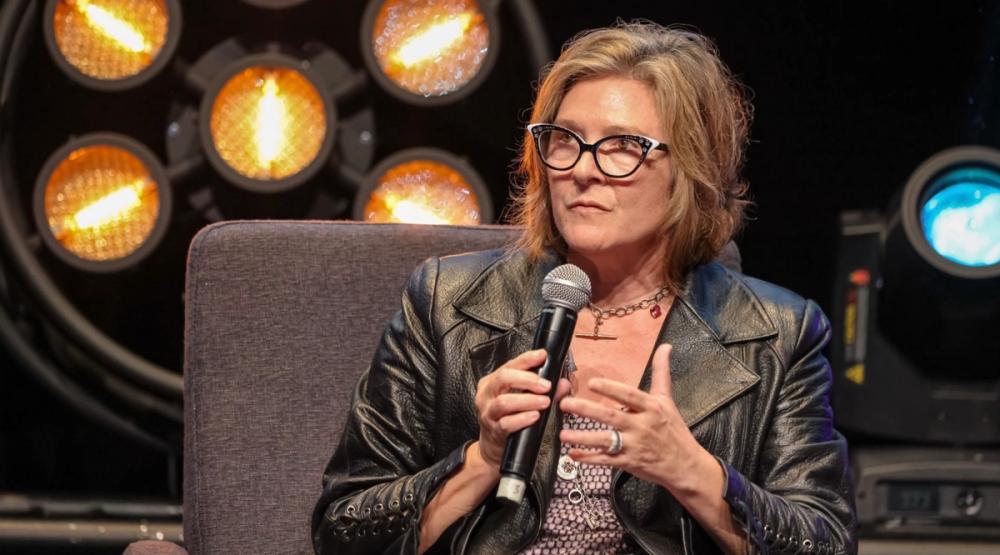
Pam Dillon is world recognised leader on AI in business and a specialist on its impact and use in the wine and spirits industry
Prior technological shifts mostly amplified human muscle and our ability to communicate. Before agricultural innovation, people hunted and gathered. Before the printing press, knowledge moved slowly. Before the industrial revolution, we worked all day because we had no choice.
AI amplifies cognition.That feels very different from prior technological shifts because while AI changes how we work and how we communicate, it also changes our sense of self. What it takes to evolve with this technology lies in the very same place it threatens though – in defining what it means to be human.
Any struggle to comprehend how large language models are different from people will ease by working with it. Playing with it. Seeing it as something to work alongside. Utilising it to broaden capability and increase speed. Using human life experience and sense of humour to keep it in line.
The jagged frontier
Notice the strange way that large language models look smart at one moment and dense the next, like autocorrect with odd mistakes. This is what engineers call the jagged frontier. The term, widely used by people building AI, reframes the dialog over whether AI is smarter than we are.
The jagged frontier in large language models is intuitively obvious, as only what is contained on the internet has been accessed. Think about how much human knowledge exists outside of the internet generally and in the wine and spirits industry specifically.
While tasting notes abound across large language models, they are wrong as often as they are right – and the models cannot tell the difference. Individual consumer taste preferences do not exist at all, and even if they did there is no functionality to do anything with them.
The jagged frontier explains why vertical AI, systems built for a specific industry, are having their moment. Vertical AI works alongside people in the industry, incorporating it into their workflow to get things done. Vertical AI also allows businesses to better control their brand and customer base.
Builders and sellers
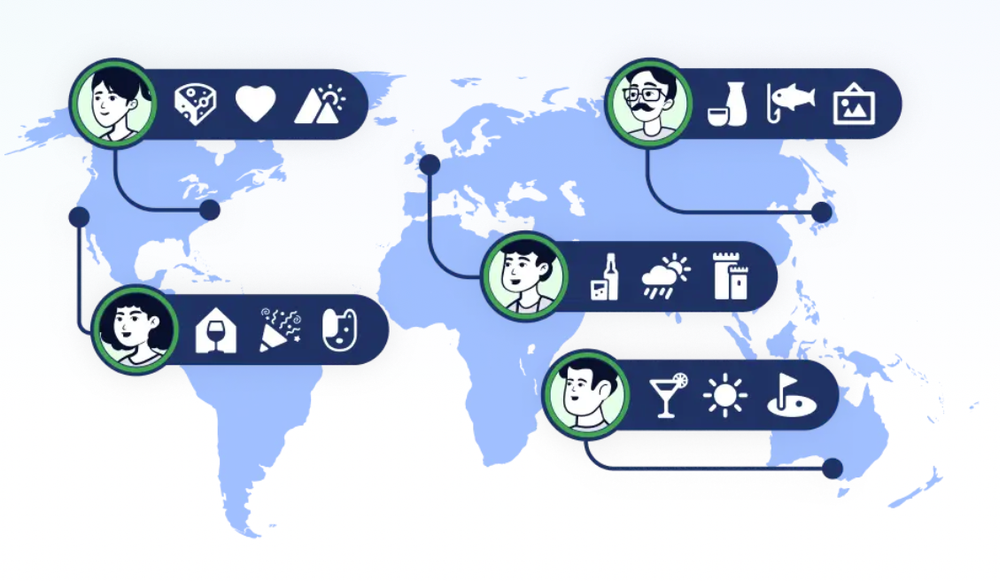
Preferabli works in over 100 countries helping retailers, restaurants and travel companies better understand the preferences of their consumers using patented AI-driven tools
All work will change near term. What seems to be misunderstood – at least so far – is the nature of the change. Builders create products. Sellers sell those products. Neither builders nor sellers are going anywhere. We need them to survive. We want them to live.
A little over half the workforce in wine and spirits make the product. About a quarter sell it, leading marketing and serving customers. The opportunity for the builders and sellers today is to create experiences, wherever they are in the supply chain, because people still very much want to work with other people.
Experience changes everything
Writing was invented 6,000 years ago, and viniculture 8,000 years ago. In other words, before we wrote our own history, we made wine and spirits to laugh and cry our way throughout it. Over those millennia, the wine and spirits industry was built on its ability to create meaningful moments.
The last few years have been marked by a sudden and strong demand for personalised experiences. Evidence is everywhere that the experience economy is booming. The most successful are bold and original in creating their experiences, as it is what consumers want.
The wine and spirits industry understands that people drink places, memories, aspirations and philosophies. They drink moments. A bottle on a shelf is a product like any other. A bottle contained within an experience is another place and time.
That feels human, and it feels true. AI can’t do that.
Pam Dillon, co-founder and CEO of Preferabli, has over 25 years of experience in digital technologies for the consumer retail and hospitality industries. Dillon, a named inventor on 15 patents in AI, was honoured by Goldman Sachs as one of the 100 Most Intriguing Entrepreneurs and has also been a featured speaker on AI for WSJ Tech Live.
Preferabli is the leading AI-driven B2B2C product discovery and recommendation software for sensory consumer products and experiences. Preferabli, which has business and consumer users in 100 countries, recently announced strategic partnerships with Virgin Wines and Marks & Spencer in the UK, and Marriott and Albertsons in the US.
Preferabli is a commercial partner to The Buyer. You can find out more about what it does here.
Wine Society announces AI partnership with Preferabli
The Wine Society has signed a partnership with Preferabli to develop personalised online wine experiences, starting with the launch of The Society’s ‘my taste match’.
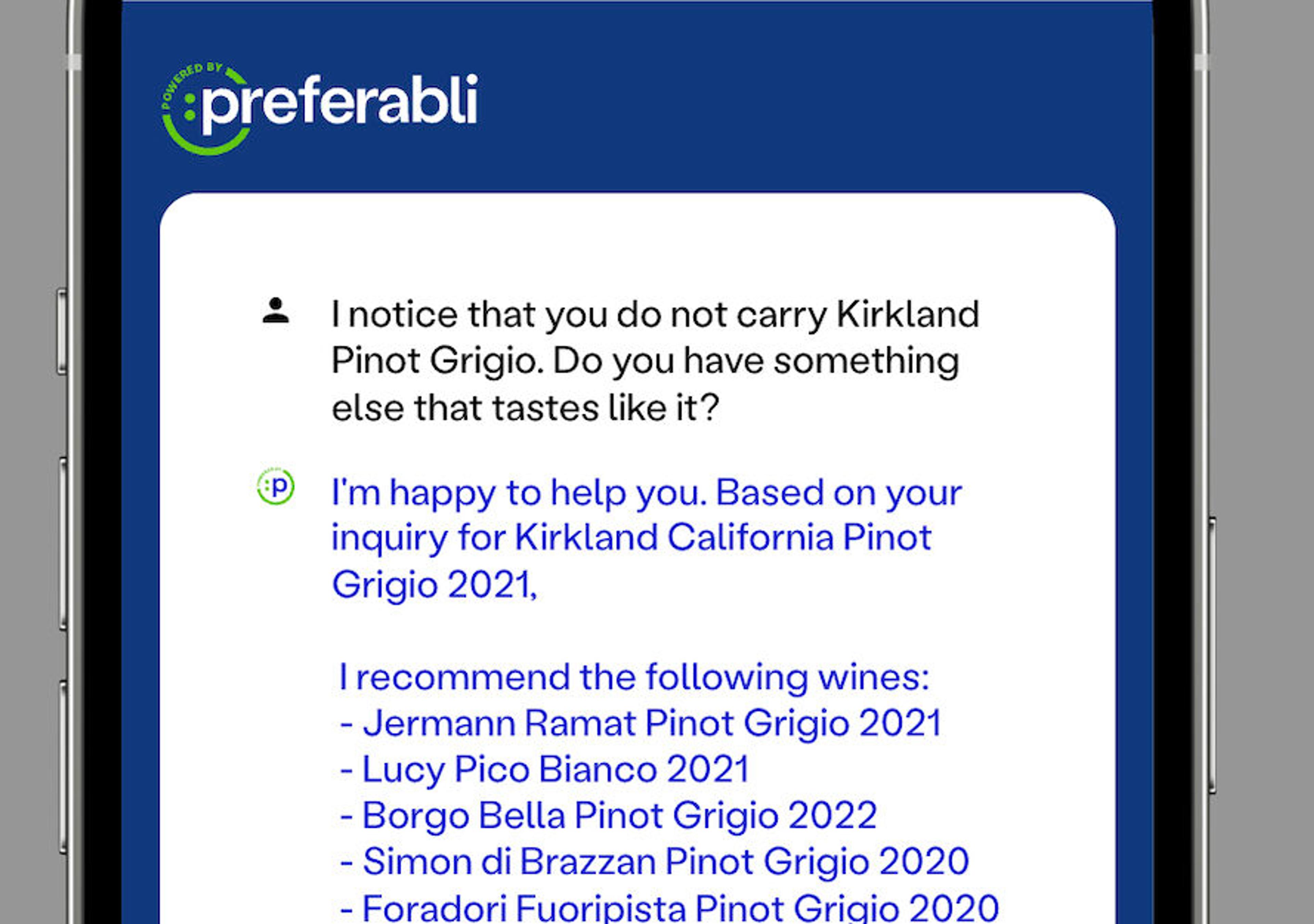
Live from June 4, The Society’s 'my wine match' is a new digital recommendation tool which will offer members personalised recommendations through a series of quick questions about their own preferences, developing a detailed taste profile.
Powered by true 1:1 recommendation technology, the new tool is designed to broaden members’ horizons by encouraging exploration across different regions, grape varieties and styles. Users will be able to explore a tailored selection of wines aligned to their personal taste from The Society’s range of more than 2,000 wines.
“I am very impressed with the approach that Preferabli has taken in evaluating each product and the purpose-built algorithms that generate the recommendations,” says Steve Finlan chief executive of The Wine Society.
Pam Dillon, CEO and co-founder of Preferabli, adds: “We’re imagining a world driven by individual preferences, using AI with a human touch. I am similarly impressed by the vision that The Wine Society holds for its members in building a digital experience that supports the many ways that people want to discover, including web, mobile and GenAI.”
The Preferabli technology has been developed by a team of PhDs in physiology and applied mathematics, in collaboration with the largest group of Masters of Wine and Master Sommeliers globally. Its recommendation engine is underpinned by a proprietary database that contains hundreds of characteristics for each wine.
For the wines that had not already been analysed by Preferabli’s team of experts, The Wine Society worked closely with Master of Wine Sheri Sauter Morano who noted the collection had a strong quality character overall, and a high ‘price-quality ratio’. Amongst listings in the range, the AI tool incorporates wines from The Wine Society’s award-winning own-label range.