
We might be able to plot wine styles, and the types of wine that consumers are going to like in the future, but drilling that down in to individual grape varieties is a risky business for producers, suppliers and buyers.
As (some) of the world went in to meltdown this week with the return of Game of Thrones to global TV screens next week we are reminded of one of its more basic, but memorable lines: “You know nothing, Jon Snow”.
I will leave those better versed in the tales of Westeros, Winterfell and King’s Landing to explain the full meaning of that, but it was a line picked up by the UK’s Channel 4 news presenter, who shares the same name, when reporting on the aftermath of the recent British General Election. He started the following evening’s report with the line: “Good evening. I know nothing. We the media, the pundits, the experts, know nothing. We simply didn’t spot it.”
He might have been talking about the state of British politics, but it also struck a chord with those of us tasked with trying to plot, predict and plan what is happening in the dynamics of the wine industry.
What was once a very steady, unremarkable industry in terms of who buys what wine from whom, and who then sells it in whatever market they operate in, is increasingly being turned on its head.
Failed forecasters
For all the forecasters, trendsetters, number crunchers and pollsters that make their living in the wine industry who has ever accurately predicted the “next big thing”? Which in global wine industry terms, over the last 10 years, has largely meant the huge booms in demand for Pinot Grigio, Prosecco, New Zealand Sauvignon Blanc and to a lesser extent Argentinian Malbec.
There is not a switched on retailer, bar, restaurant or hotel in the world that does not have at least two if not all four of them on their wine lists. Yet, in the mid 2000s the picture was very different.
Before that we were all dining out, literally, on heavy wooded Australian Chardonnay, anything big, chunky and red from California. Go further back and the world could not get enough of cheap and cheerful Italian Lambrusco, and where can you see that these days?
Planting for the future
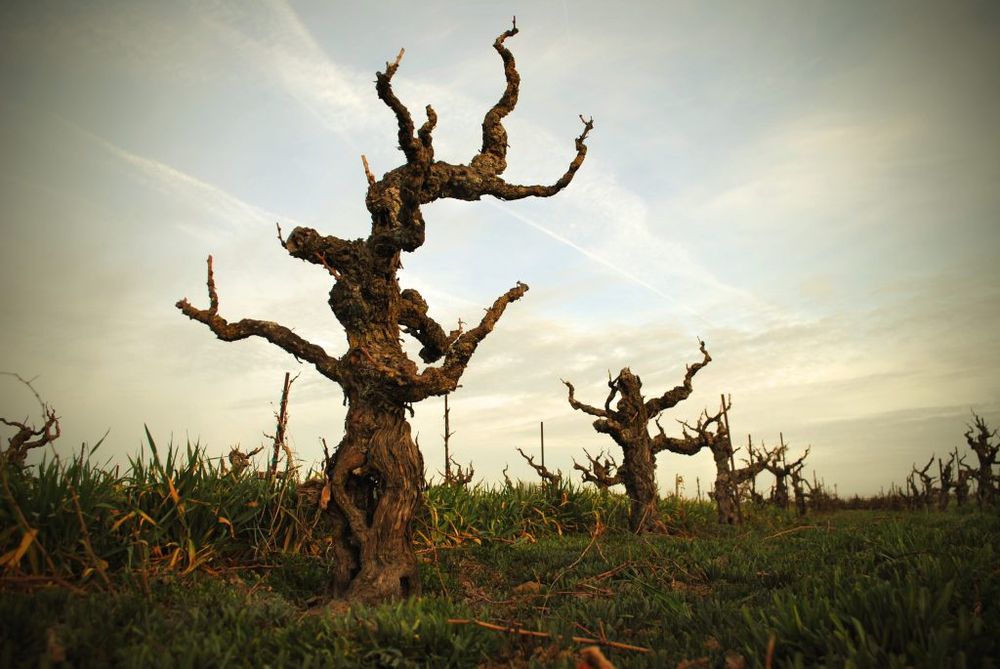
Cinsault vines in Lodi, California
What ends up in our glass is a little more important for winemakers and producers than it is for the buyers and sellers tasked with filling them. They are the ones that have to be thinking now about what is going to be selling five to 10 years down the line. They need to be ripping up vines and replacing them with whatever variety or style of wine is going to be the Prosecco of tomorrow. Not today.
For all the talk in the wine chattering classes of Italian or “alternative” grape varieties being the “next big thing” in, say, Australia who is going to be brave enough up to take out 1000s of hectares of Shiraz and replace it with Nero D’Avolo. Exactly.
If you look at the figures in most wine producing countries the big commercial grape varieties are literally thousands of hectares away from the new vines on the block.
In South Africa we have talked on The Buyer about the great interest in new wines being made from varieties such as Cinsault (1,767 hectares) and this week Cabernet Franc (835 hecatares), but they are both tiny compared to the number one planted variety Chenin Blanc (17,707/SAWIS in 2016). It does not make those wine any less exciting, it just demonstrates where the bulk of the industry is.
Just look at the commercial sense of planting one variety over another. In California, for example, the average grower can get a return of $1,052 a tonne of Sauvignon Blanc, compared to $392 for Chenin Blanc or $592 for Pinot Gris.
In 2016 there was 566,000 tonnes of Cabernet Sauvignon crushed in the Californian harvest compared to 38,7000 of Grenache or 10,000 tonnes of Cabernet Franc.
Unenviable task
It is an unenviable task for those whose jobs it is to make those decisions for as we know only too well big consumer wine drinking trends are not universally governed by the wine industry itself. Otherwise there would be a lot more millionaires out there who jumped on Pinot Grigio long before supermarket shoppers did.
If you are a City analyst looking at the global wine industry and trying to pick out where to place your money, then it would make a lot of sense to do what you might do in any other industry. Simply follow what the biggest players in the industry are doing and invest in that.

Yubeng Village in Deqin, Yunnan, the area in which Moët Hennessy is looking to make its own red wine.
Which in the last 10 years would have meant a lot of unrewarded investment in China. But give the likes of Pernod Ricard, Moëtt Hennessy, Concha y Toro, Torres or Australian Vintage their due. They have all been quietly either trying to sell their own wine in China, or even more pertinently plant vines and invest in wineries and winemakers across China.
Vineyard sites that might not turn a profit for many years yet, but they have had the foresight and the financial backing to predict a trend and then go and make it happen for themselves. Whether Moëtt Hennessy’s vines up close to Tibet border will ever make them any money is besides the point. It has put its flag in the ground, shown its commitment to China as a country and will have gained huge respect there as a result.
Global shift
It is fascinating looking at global export and import figures over the last 10 years. Just to see the huge shifts in power and demand for different countries and their wine.
It is then you can see how quickly China, for example, has moved from being an “emerging” wine country to one of the most important export markets in the world. Proving Pernod and co were right all along.
Take Bordeaux. Ten years ago the three biggest export markets for Bordeaux were Germany, with 327m h/l of wine a year, Belgium, 319m h/l and the UK with 281m h/l.
Fast forward to 2016 and China is suddenly number one importing a significantly bigger 553m h/l of wine a year, up from a tiny 43m h/l n 2007. The UK, meanwhile, is now only shipping 165m h/l a year with Germany faring even worse down to 162m h/l (Source: CIVB/French customs).
Impact of Prosecco
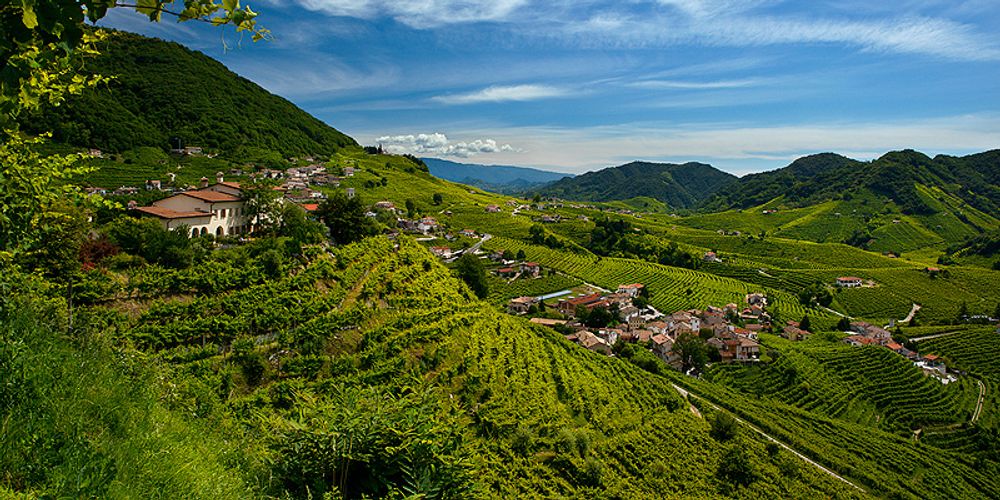
Prosecco’s dominance in Italy is a worry if the market moves away from its style of sparkling wine
Equally fascinating it to look at what impact a global trend like Prosecco can have on the stats from the country in question. Namely Italy. The production value of Prosecco is staggeringly ahead of the rest of the wine produced in the country reaching €750m. Even in second place sits the Prosecco-style sparkling region of Conegliano/Valdobbiadene at €170m, Asti in third with €113m and Trentino fourth with €98m.
If the world turns its back on Prosecco then Italy has got a serious problem on its hands.
So what in 10 years time will be talking about? Will the world’s dominant grape varieties and regions still be the talk of the globe or will climate change or consumer tastes have changed so much that we are all looking at a very different world map.
If only I could tell you now what that will look like..or even predict the end of Game of Thrones.
- This is an adapted version of an article that was first published on Vinex the global bulk wine trading platform.