
Irrigation, open-top fermenters, lower yields and picking times – just some of the ways that Spring Mountain has managed to achieve better balance in its wines.
In America bigger is better, right? That’s what the whole nation is built upon. Huge cars, massive plates of food, immense landscapes, big ideas, bigger egos… the rest of the world looks on in awe.
Okay, so maybe not, but it’s true that scale is important is many areas of American life and culture. It’s prevalent in the wine scene too, which is why the adjective ‘big’ is so often used when talking about American wines; particularly red wines, and specifically those from the Napa Valley.
‘Big Napa Red’ is a style in itself, a broad-stroke that captures the body, fruit and high alcohol levels of red wines from America’s most famous wine producing region. Many producers – and even more consumers – are very happy with this style and association, but increasingly there are winemakers in Napa and beyond who want to kick back against ‘big’ wines and introduce more elegance and finesse to their work.
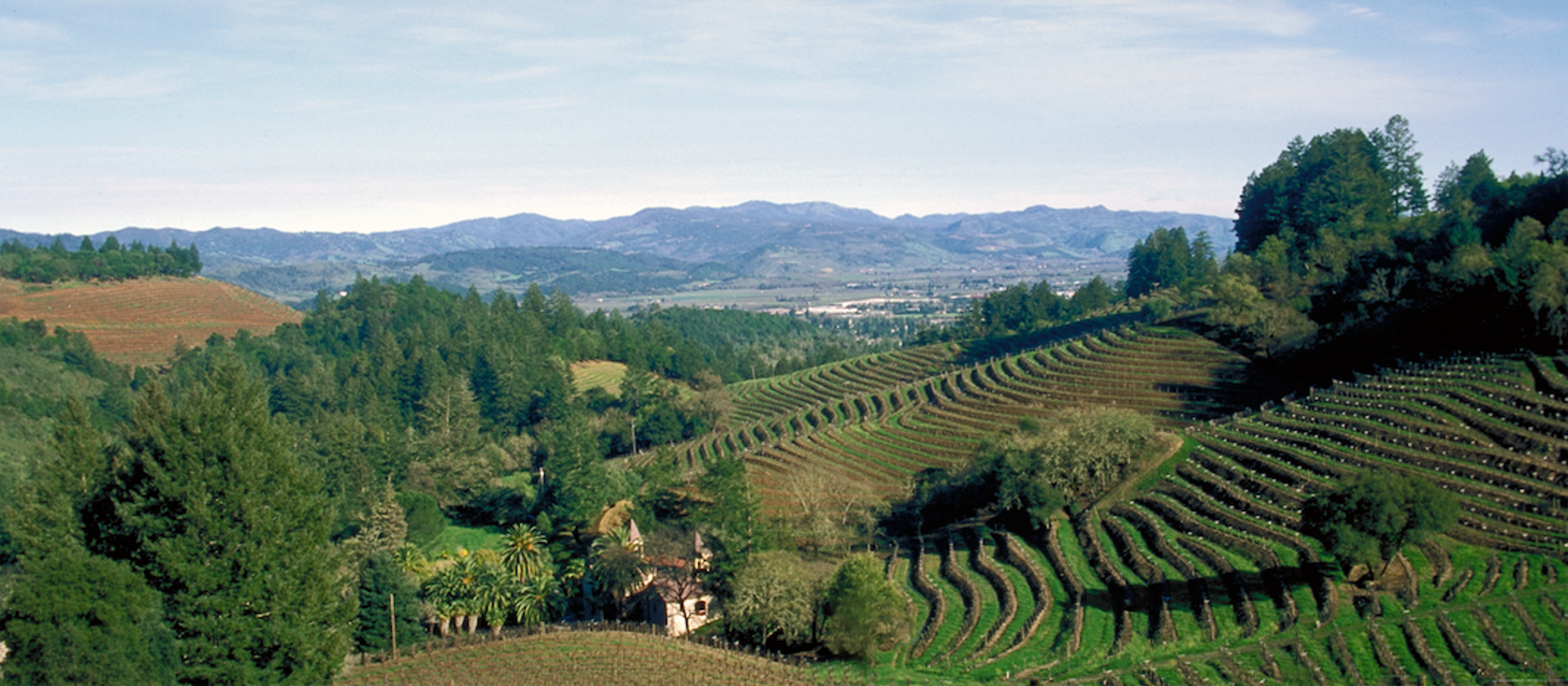
One such outfit is Spring Mountain Vineyard, who over the past decade has made it a mission to tune down the alcohol and jamminess of its wines and to introduce more structure and finesse to its offering; mirroring perhaps the great reds of Bordeaux in style but all the while keeping the wines unmistakably Californian.
At the turn of the century Spring Mountain’s style was typical of the region; big, bold, ripe and round. Tasting the wines today it’s clear that things have moved on considerably; the red wines are developed and powerful with blue and red fruit and a hint to the unique-terroir of the rocky mountainside where the vineyards lie.

Susan Doyle
But how did this turnaround occur, and what went on behind the scenes to formulate such a shift in style and outlook? I caught up with Spring Mountain’s winemaker Susan Doyle to find out. She begins by explaining the winery’s production ethos and what she and her team hope to achieve in this little pocket of Napa Valley.
“We’re looking for balance, we’re not looking for big, long hang-time, jammy wines,” says Doyle. “My aim is to work out how we can maintain lower alcohols through the use of viticulture techniques, fermentation techniques and being mountain side.
“We work with the terroir and allow the expression of the fruit to come through; we are looking more for the blue and red fruits like red cherries, redcurrant, blueberries and we are not looking for the dark plum, jammy, Christmas pudding characteristics in our wines.”
Doyle goes on to highlight six areas which are key to producing wines in this style and help to explain the transformation in Spring Mountain’s wines and approach to viticulture and winemaking over the past decade.
- Lower Yields
“We don’t look to hang huge tonnages. On the valley floor they typically hang 4.5-6 tonne/acre, we are lucky if we can hang ¼ tonne to 2 tonnes tops. This way the fruit is more balanced and not as concentrated and raisin-ed as you can find on the valley floor.”
- Intelligent Picking
“We pick on tannin and sugar levels as well as the flavours of the berries. The aim is not to have big alcoholic wines and it’s been a struggle over the years with the fruit as global changes are occurring. I’ve gone in and changed a lot of the viticultural practices so that we have healthier vines and, crucially, can pick earlier.
“Because we are 100% estate if we need to pick part of the block then return in two weeks’ time and pick the other side of the vine, we do. We don’t just wait until everything is ready and pick it in one hit like other people are forced to.”
- Open-Top Fermenters
“We utilise wooden fermenters which are open-topped so that we can blow off alcohol during fermentation. We find that mountain fruit has more natural tannins too, so fermenting in oak helps with the integration of these angular tannins.”
- Natural Fermentations
“I’m moving more towards natural ferments because they give you lower alcohol levels as well. A lot of the commercial yeasts tend to give you higher alcohol and a lot of wineries which use them then cheat by coming back in and taking alcohol out of the wines. I don’t like the way de-alcoholisation strips wines.”
- Blending
“To me, because we are terroir-based, blending is very important. We have 135 individual blocks so we try and match the blocks to each other pre-fermentation so we can put several blocks in together, but still have up to 80 different separate lots at the end of harvest. There is a lot of work that goes on trying to put the right ones together early on so that you’ve got that right balance.
“We are looking at not adding back any acid to the wines but by blending we utilise the Cabernet Franc and the Petit Verdot which gives you the colour and acidity that we wouldn’t necessarily see from the Cabernet. It gives you a blending opportunity when you finally come to put the blends together, so if it’s a hot year then you might put in a little more Cab Franc or Petit Verdot. That’s why we like the fact that we have all the Bordeaux varieties; we have the ability to play with the blend and it’s not done to a recipe. It changes every year.”
- Water and Irrigation
“We have built a reservoir and are looking at new methods of drip irrigation alongside UC Davis – we don’t flood irrigate and are a lot more conservative about how much water we give the vines. A lot of the other Napa Valley wineries have really been suffering because they don’t have water so they are seeing a lot more raisins and a lot more ‘big’ wines. With this comes a lot more ‘winery adjustments’. We are in a better position because we are on a slightly wetter part of the range and have access to our own water. This helps with maintaining lower alcohols and to achieve our desired styles of wine.”
It’s clear that Doyle has worked hard both in the vineyard and winery to achieve a new style for Spring Mountain and clearly her background in cool-climate winemaking in Tasmania and New Zealand has helped in this regard, but there’s still a long way to go.
“We are always looking to improve further,” she says. “We are looking at better canopy management, I’m looking to utilise the old St George rootstock with new plantings as it takes less water, there’s still lots to do…”
For now though the wines are very impressive. There’s structure, balance, a lightness of touch and – importantly – an absence of that spirit-y alcohol hit at the top end. Refreshing, in every sense.