A decade ago, shortly after its launch The Buyer needed to justify to sceptical readers an assertion that Franciacorta, unlike inferior Italian sparklers, was Premier League material. Today that seems more than a touch quaint. True, some people might still describe the metodo classico (traditional method) fizz from Lombardy as flying under the radar. But familiarity has risen fast in export markets like the UK and there is, frankly, no argument today about its high quality: entry-level wines consistently rack up expert tasting scores of 90 points while the top are Champions League material which boast 97 points or more.
To understand Franciacorta better – and see the beautiful scenery of the region just 70km east of Milan – siblings Lucia and Giulio Barzanò have invited us to their Mosnel winery. Though this is celebrating its 190th anniversary, it is only more recently – in the 1950s in fact – that the winery was a pioneer of what was then the new sparkling Franciacorta style. (The “ia’ is pronounced as one syllable, so it roughly sounds in English like fran/ca/cort/a.)
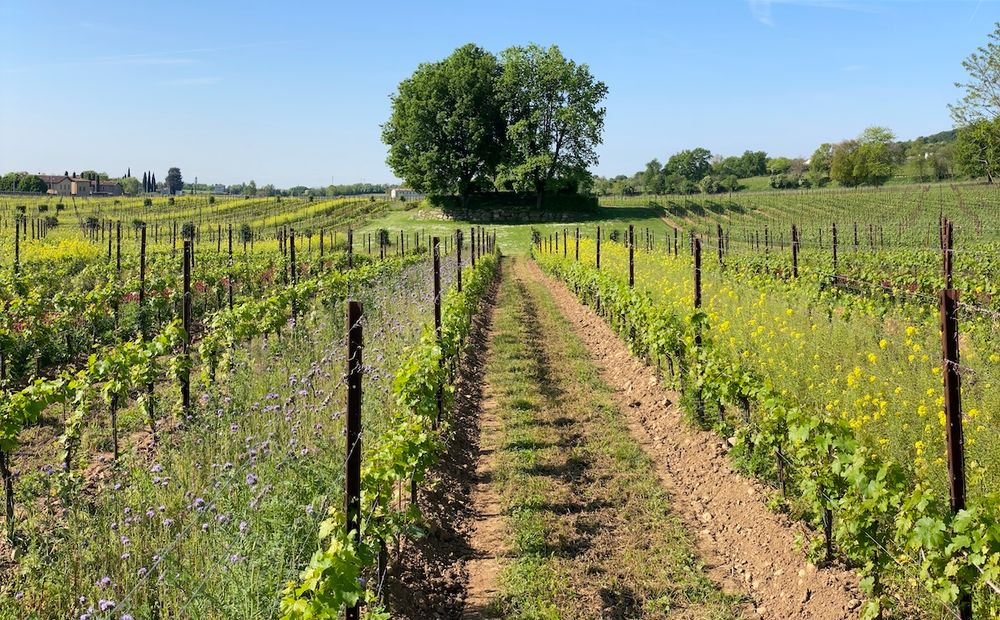
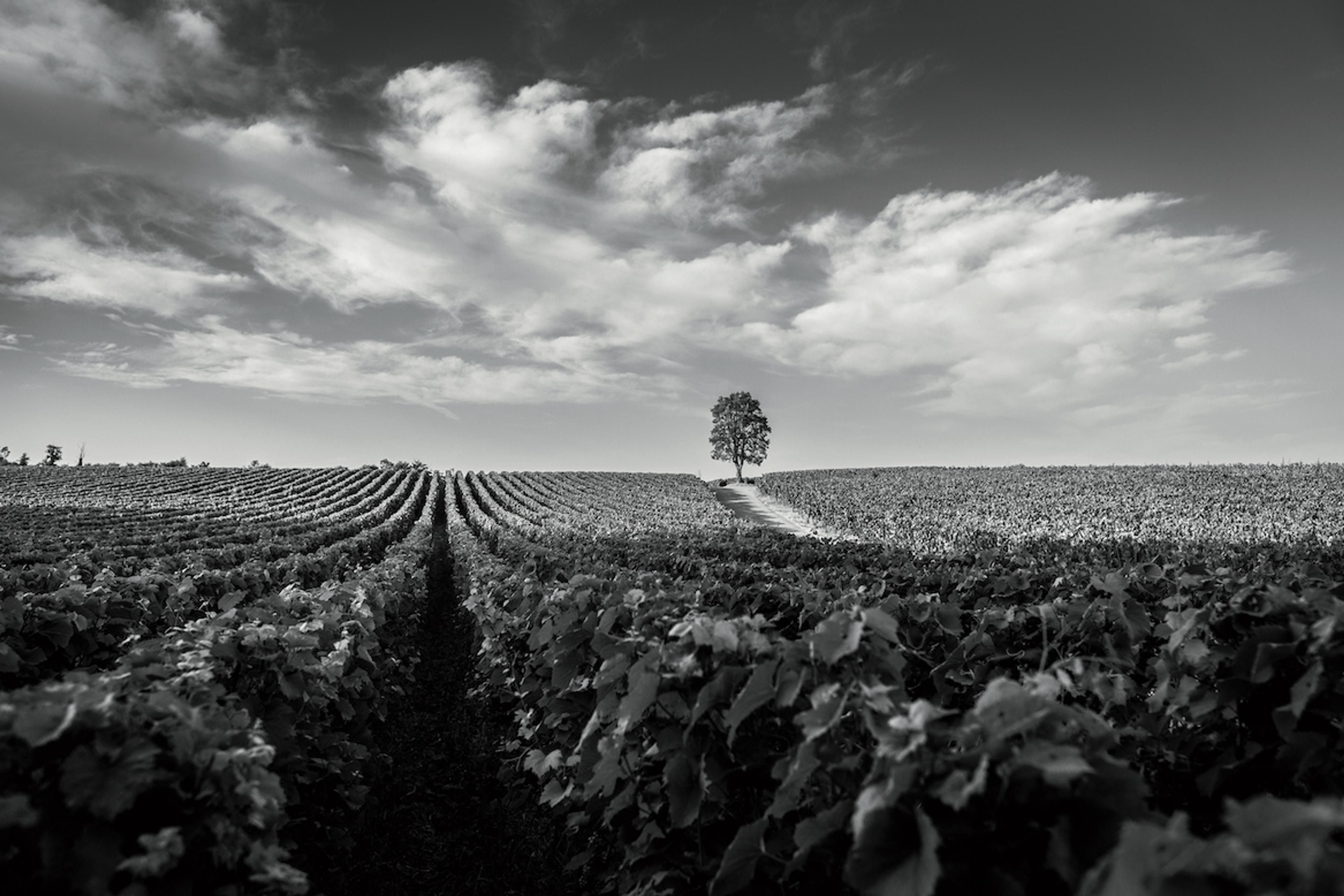
Franciacortra Mosnel's location is a stunning natural ampitheatre
If you could bottle the sense of place, Franciacorta would get a near-perfect score. It’s a small DOCG immediately east of Brescia located in a stunning natural amphitheatre of low mountains, ideal for a holiday trip. Over the last 30 years the area under vine has grown from 800 ha to 2,500 ha in 2020, producing 16 million bottles of fizz a year.
The moraine soils are particularly rich in minerals and allow for high water retention, particularly during dry periods. Sited in the foothills of the Italian Alps, it benefits from a warm continental climate, moderated by the picture-postcard Lake Iseo, on whose shores it sits.
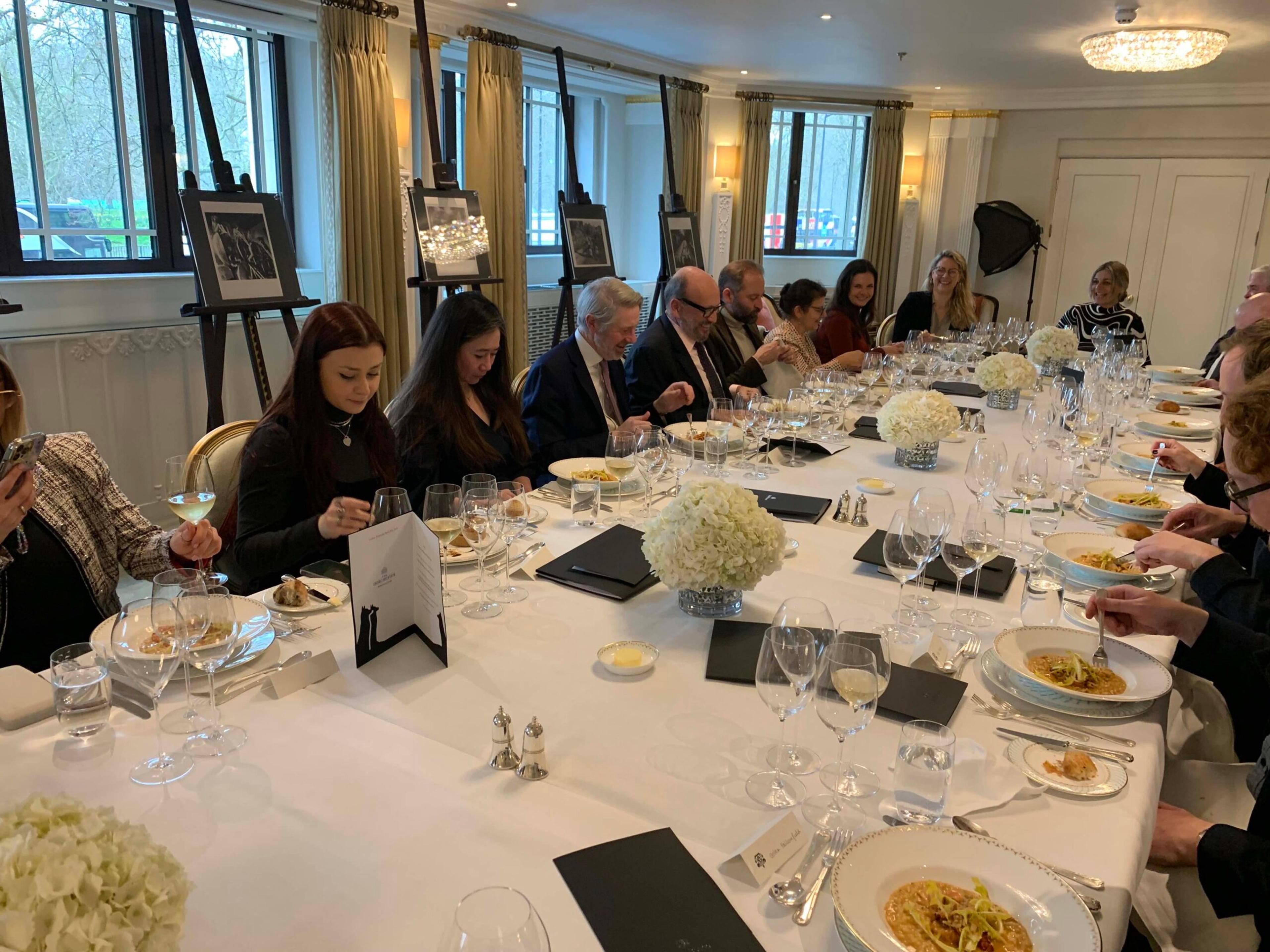
The heraldic hall where the tasting takes place for more than 50 expert imbibers is all redolent of Italy’s fading aristocratic families with a huge display of medieval weaponry on the walls.
But that vibe is misleading. Lucia and Giulio are thoroughly modern in their outlook. The wines are organically and regeneratively farmed with the vines incorporating biodiversity corridors and so on.
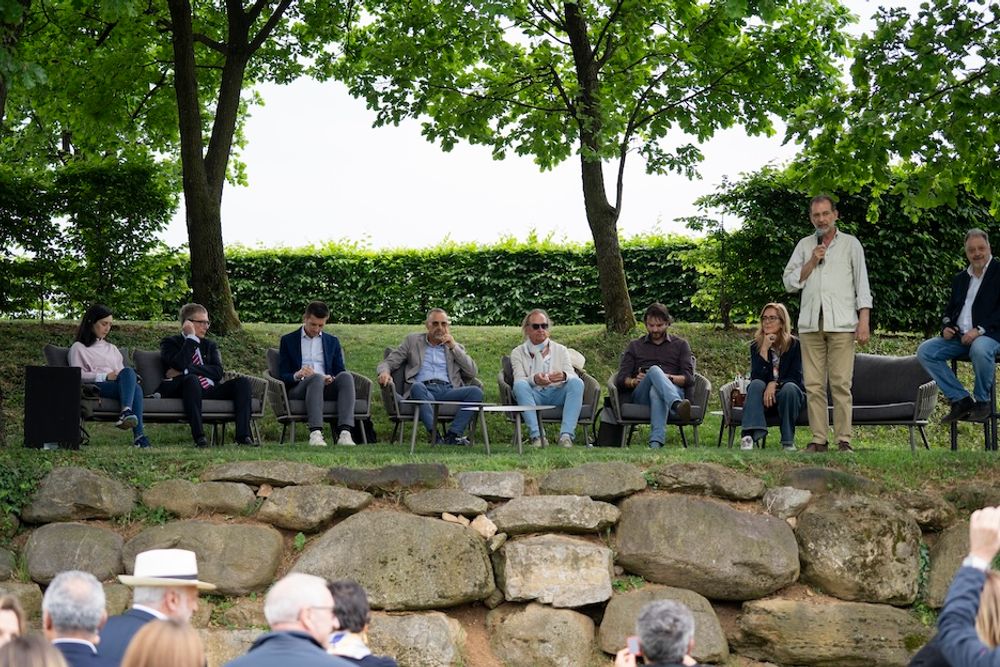
Mosnel's 190 years conference on agro-forestry – In search of the viticulture of tomorrow
And we are invited to an outdoor session sited between the vines as a prelude to the tasting. The topic is ‘The Viticulture of the Future’. The general ethos is that we need to work with nature, not subdue it. At Mosnel, as in construction of ancient cathedrals, they want an impact that lasts decades or centuries even rather than snatching at short-lived returns.
The history of the Franciacorta begins in 1961 with the sparkler made from Chardonnay and Pinot Noir with some Pinot Bianco. Since 2017, Erbamat, an indigenous grape known for its high acidity and late ripening, has been revived to offer balance to the wine’s structure and help combat climate change.
Franciacorta styles follow Champagne’s, if a little stricter in its ageing requirements of 18 months on the lees for non-vintage wines. Rosé and Santèn (a Franciacorta bottled at lower pressure) must age for 24 months, the vintage for at least 30 and Riserva for 60 months.
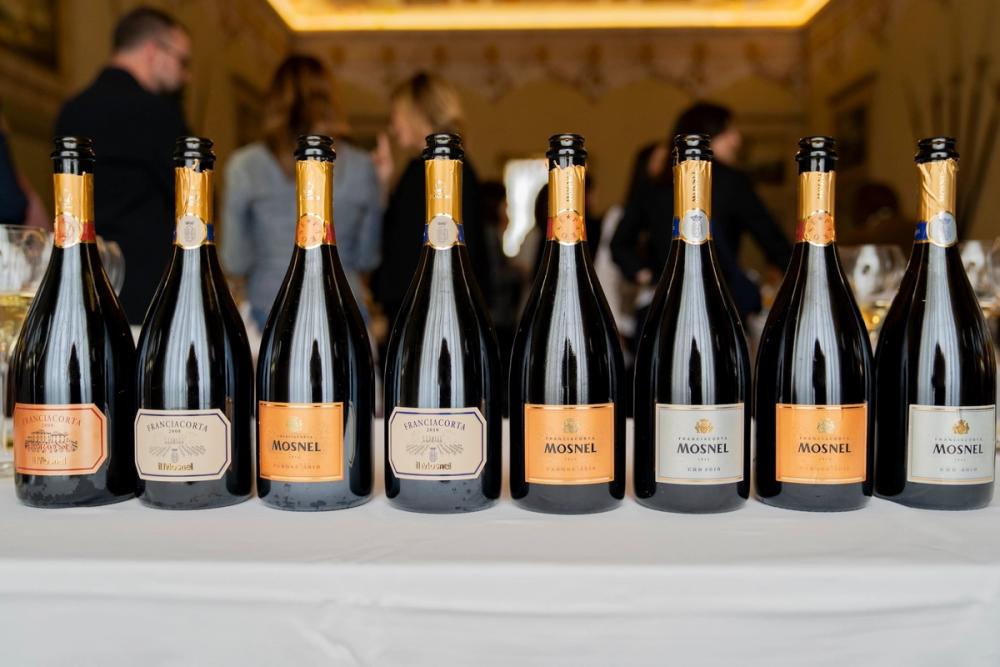
Mosnel 190 year milestone tasting of Franciacorta EBB and Parosé
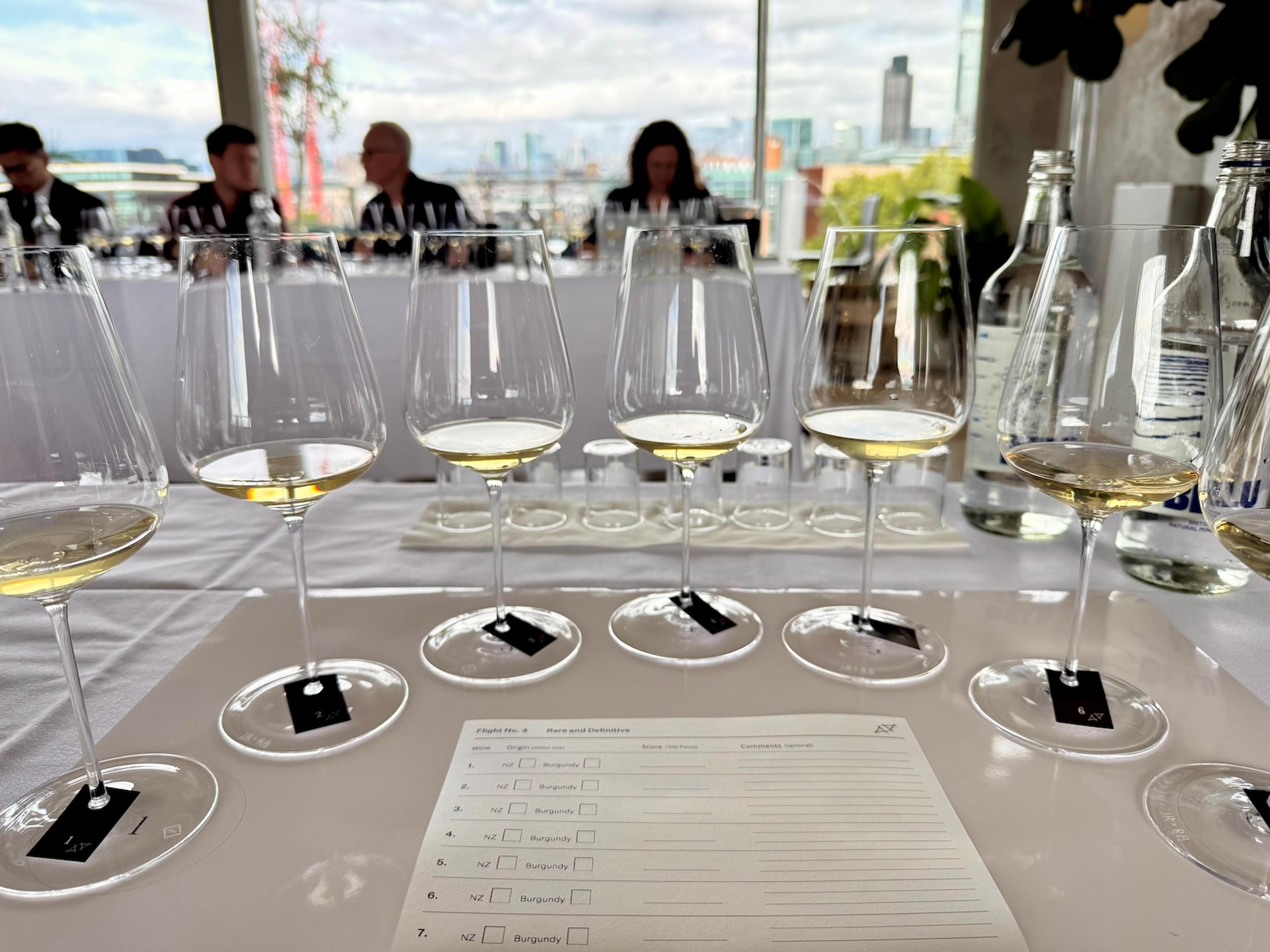
The tasting’s flight comprises two wines, the Extra Brut and Parosé, from the vintages of 2019, 2016, 2010 and finally 2008. This is billed as a story through “time, awareness and sensibility”.Lucia’s watchword is balance – “balance in the vineyards, balance in the cellar, balance in the glass”. And all the wines are marked by the particular warmth of their stone-fruit character, the influence of Lake Iseo on the terroir.
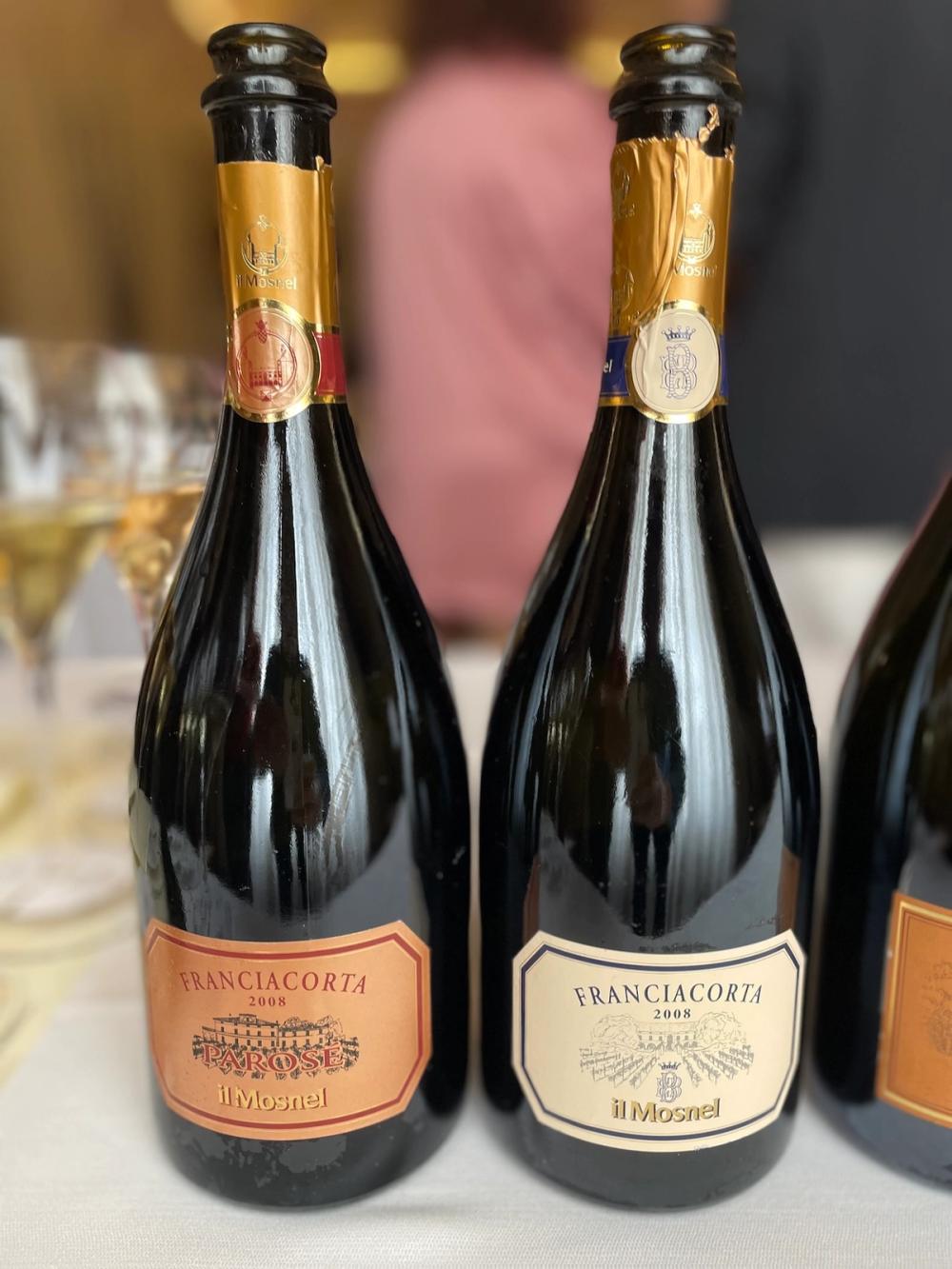
The Mosnel Franciacorta Extra Brut EBB DOCG 2019 (abv 12%), 100% Chardonnay, has just been released. It has a dosage of 1.5g/l. It introduces us to Mosnel’s signature tiny bubbles, which are delight to watch as much as drink. EBB stands for Emanuela Barboglio Barzanò, in honour of Lucia’s and Giulio’s mother. The wine is bright and crisp with a lovely mineral finish and notes of orchard fruits predominating. It’s not just drinkable but also classy – close enough to Champagne to satisfy anyone wanting that style, different enough to satisfy anyone seeking something new.
The 2016, my favourite, has more structure and complexity and the nose is more evolved. There are notes of peach and flowers evident and a decent salinity with the 2010 and 2008 showing how far the ageing potential can be pushed.
Meanwhile, there is the Franciacorta Rosé Pas Dosé DOCG (abv 12%) known as the Parosé. This is a tricky play on words, borrowing pas dosé and combining it with rosé. So it’s a pas dosé rosé, if you like. The most immediately striking thing about the wine is the colour, which is indeed the palest of the pale – so much so that the wine is likely to disappoint those who drink with their eyes and are yearning for that very particular Provençal pink hue.
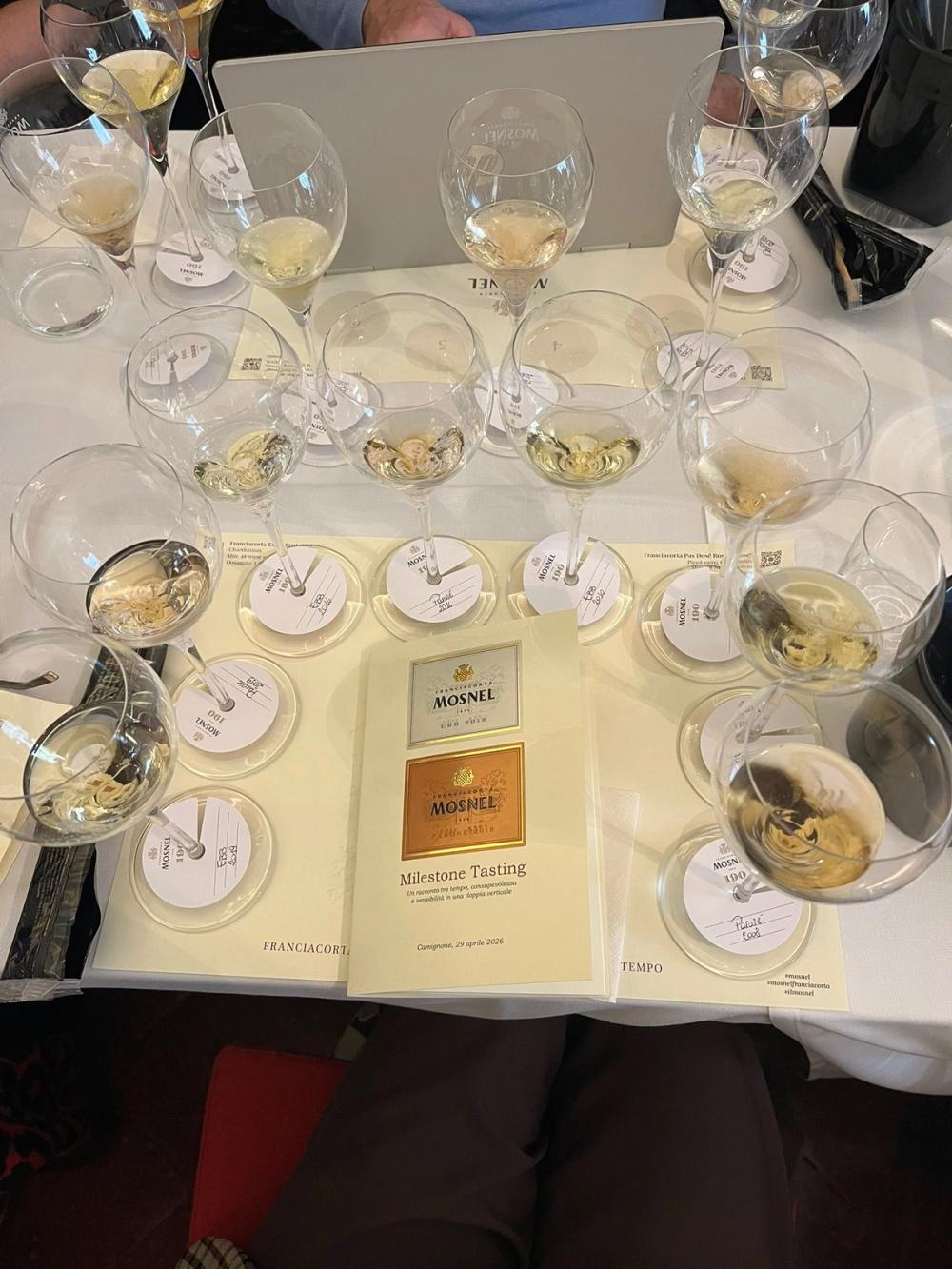
Parosé (first produced in 1980) is made from 60% Chardonnay, 30% Pinot Blanc, and 10% Pinot Noir. There is, of course, no dosage, and one-third matures in barriques for approximately six months before being bottled and spending at least 36 months on the lees.
The 2019 has the attractive salinity shared by all three vintages. The dominance of the Pinot Noir shows with pink grapefruit and pomegranate and marked sapidity. With cream and strawberries on the nose and with a hint of liquorice, the wine is impressive on the palate.
The 2016 Parosé has some ginger on the nose and the depth of flavour and complexity is certain to score with those who take an intellectual approach to their wines. The 2010 comes from perhaps the best vintage. It has the same fresh acidity as the 2019 but is more mature, riper and richer with the Pinot Noir more to the fore.
Also worth a mention is the Franciacorta Brut Satèn. 100% Chardonnay and dosage of 4.5 g/l, this is literally a low-pressure drink, having fewer bubbles and an extra creaminess as a result, plus complex notes of fruit and pastry. Made from 100% Chardonnay, 40% of the cuvée ferments in barriques; after tirage, it ages on the lees for at least 36 months. Satèn means ‘satin’ and this a relaxing drink. Ideal for those times when full-on bubbles seem just a bit too much.