
I’m not entirely sure whether sherry made me fall in love with Jerez, or Jerez made me fall in love with sherry, but I know my adoration of the city and its eponymous wines has remained undimmed since I first visited more than three decades ago.
This adoration reached its zenith on a visit last month when I found myself spontaneously performing the sign of the cross on myself (once a Catholic, always a Catholic etc) before tasting Tío Pepe’s extraordinary 1846 Pío IX, a moscatel created to mark the election of Pope Pius IX in that year. I was moved to tears as I took the wine, viscous as honey and dark as my now-heathen soul, from a porcelain spoon.
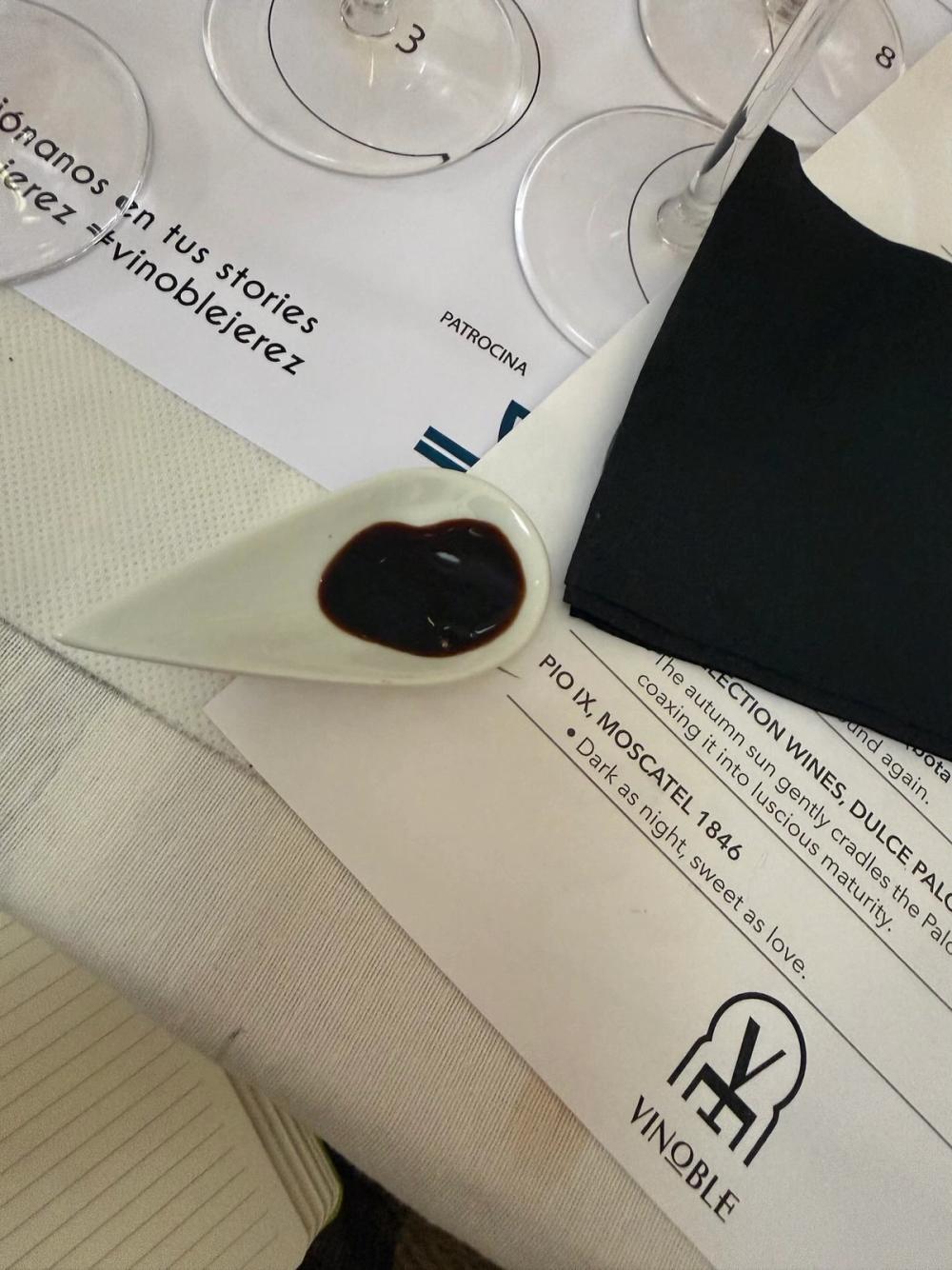
Tasting a 1846 Pío IX Moscatel was a "near religious experience."
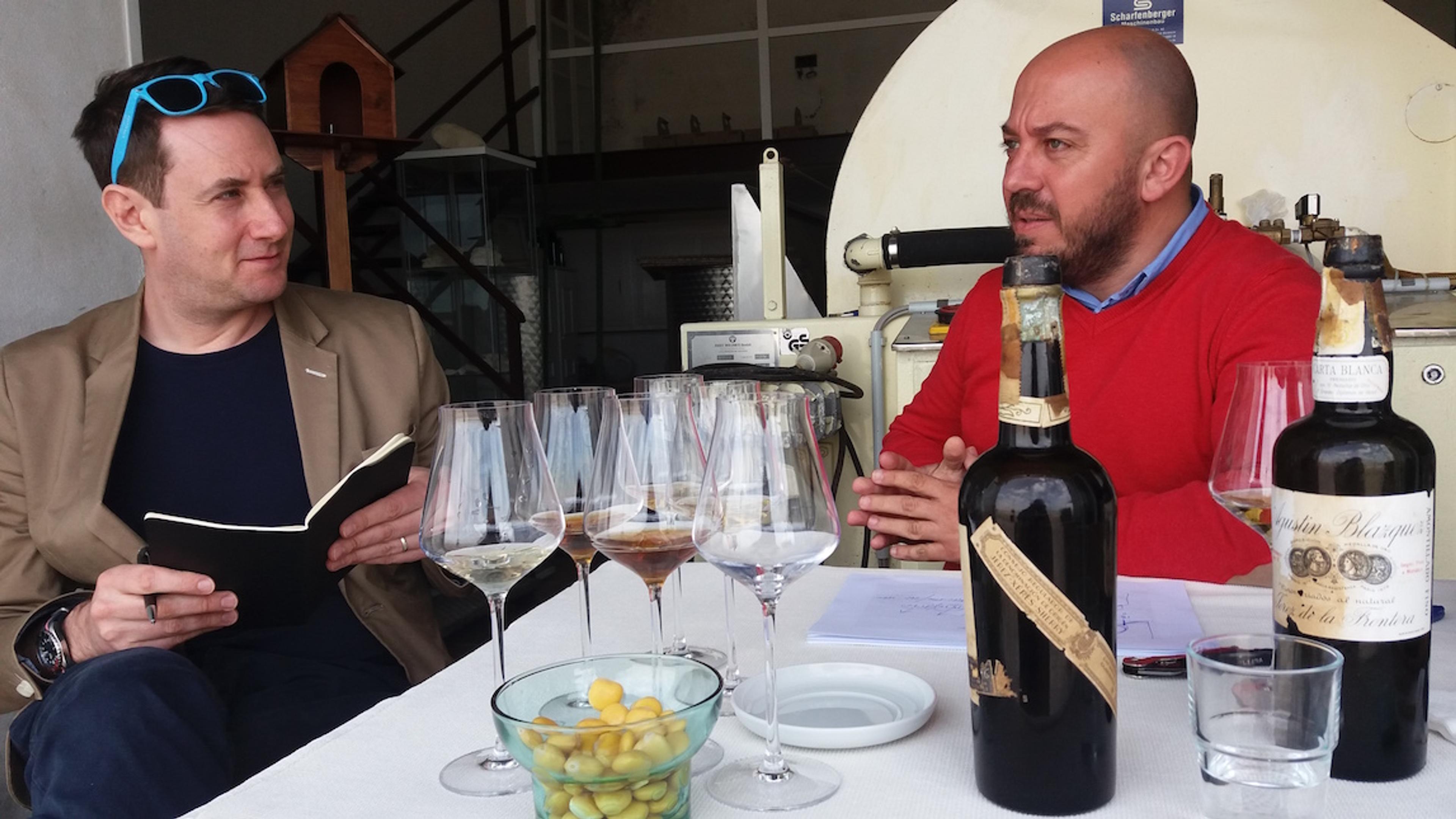
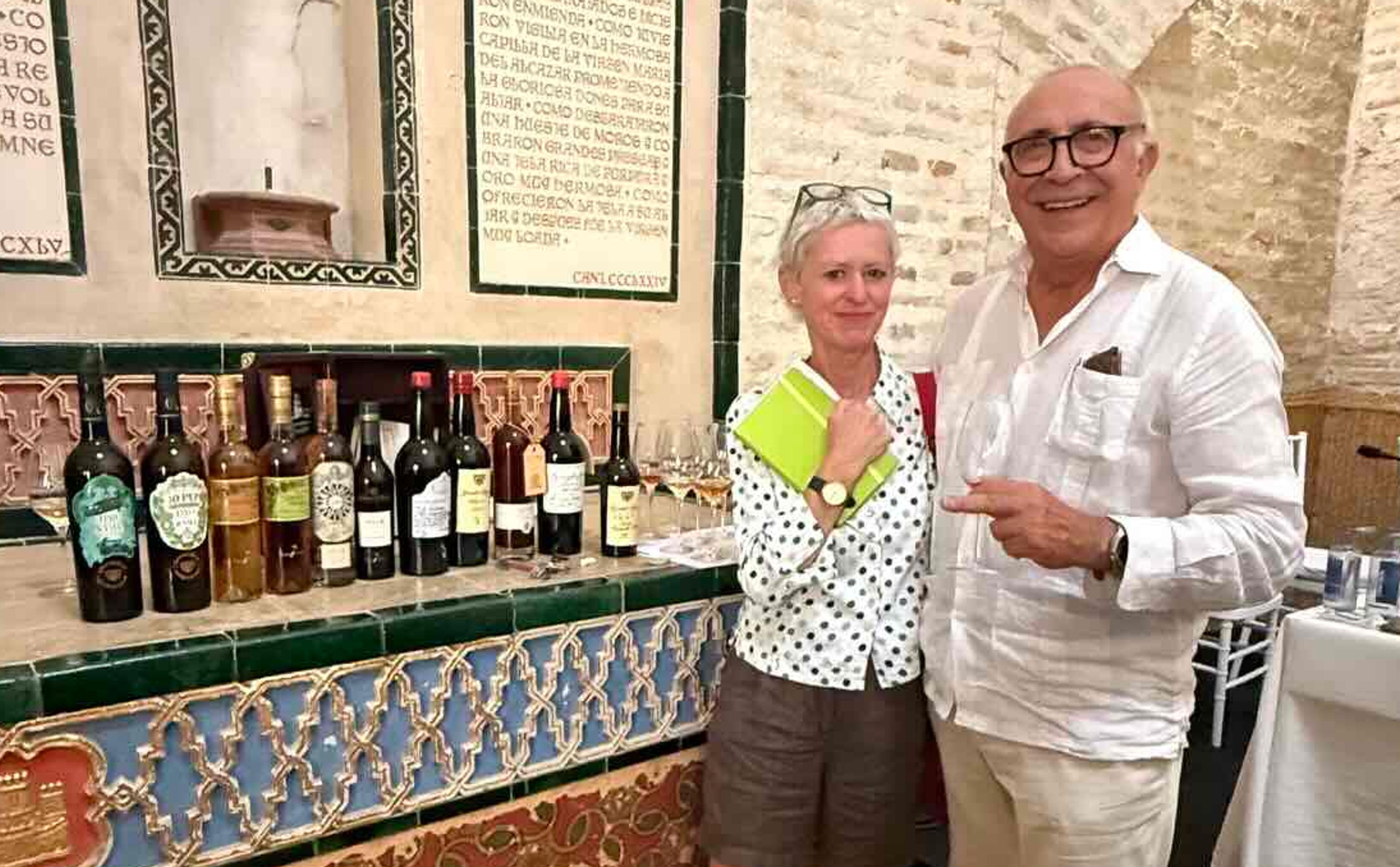
The wine was the last in a tasting of incredible bottles led by González Byass’s head winemaker and master blender, Antonio Flores. It took place in the 10th Century mezquita, the former mosque that’s a part of Jerez’s alcázar, so a fitting spot for this near-religious experience.
Flores spoke with passion and poetry, beginning the tasting by showing us the large iron key to the door of González Byass’s historic archives housed in a Moorish water cistern on the site of the Tío Pepe bodega and which contains the largest and most important collection of bottled sherries in the world. “This cellar is where the everlasting dreams of good wine sleep,” pronounced Flores. “With this key, we can taste glory.” And so indeed we did.
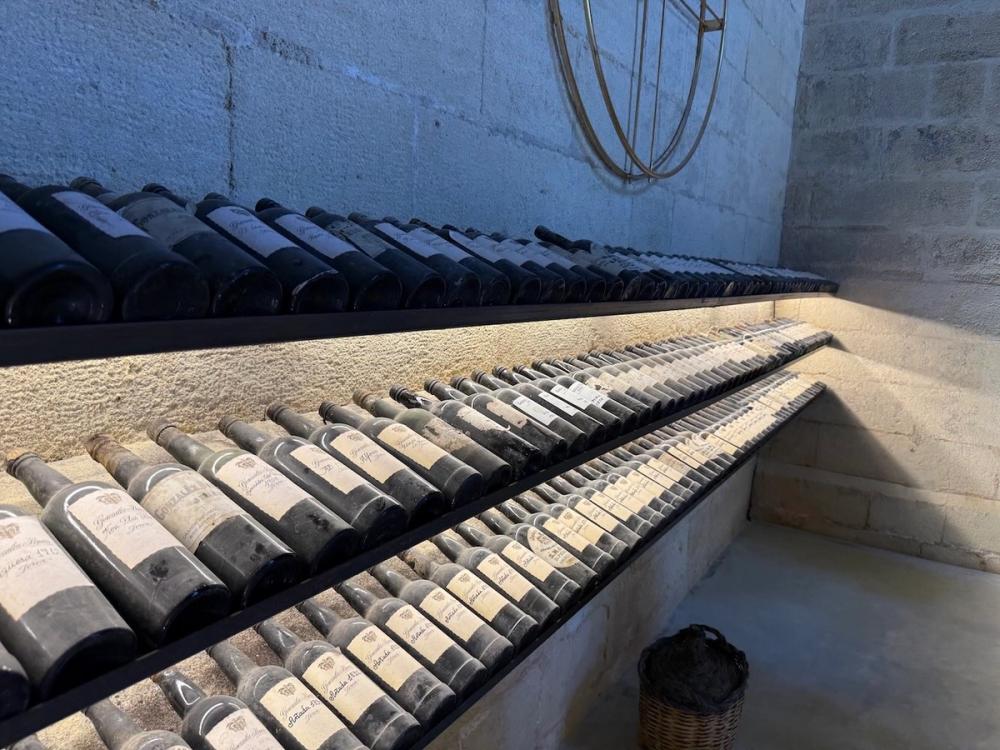
The Tío Pepe bodega contains the largest and most important collection of bottled sherries in the world.
Among the wines we tasted was Viña AB Estrella de los Mares “De Ida Y Vuelta”an amontillado which, following 12 years in solera, was sent on a round-the-world voyage on a sailing ship which left the nearby port of Cadiz in August 2020 and returned the following June. This was to commemorate the 500th anniversary of the first circumnavigation of the world by Spanish navigator Magellan (who, incidentally, spent more on wines for his voyage than he did on arms).
“On the wine’s return we found a treasure, with vanilla, cloves, the foam of the sea and a sky full of stars; a child who has been long gone and returned changed for the better,” Flores told us. “Here we innovate by looking backwards; the past will always be part of our future.” Amen to that.
Partnership with Christie’s
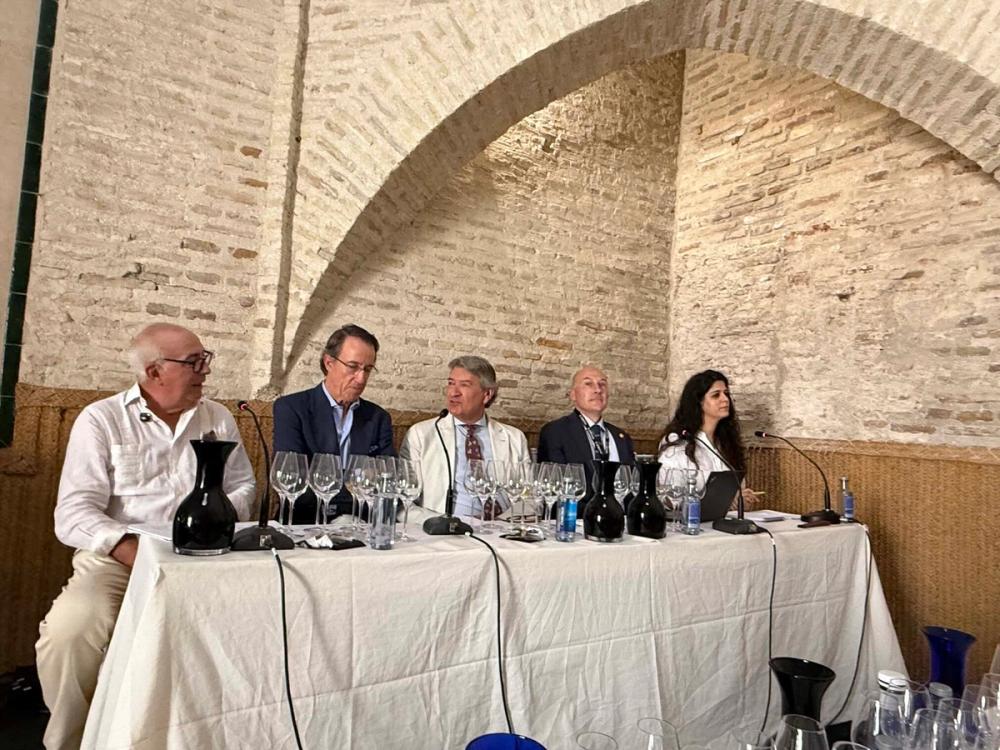
Antonio Flores, Mauricio González-Gordon, César Saldaña, president of the regulatory council of the Jerez-Xérès-Sherry, Tim Triptree MW, translator
There were also some of the bottlings currently being auctioned at Christie’s in an online sale that finishes on 19th June and which represent the most important sale of González Byass’s sherries since Michael Broadbent, then Christie’s head of Fine Wines, arranged an auction in 1994. That sale bought old and rare sherries to the attention of the international fine wine market for the first time, and the current auction of nine lots will undoubtably also attract interest from serious collectors around the world.
Tim Triptree MW, Christie’s current international director of Wines & Spirits, also participated in the tasting having personally selected the wines to be auctioned. They include the Pio IX, a Manuel María González oloroso, bottled in 1886 to commemorate the birth of the grandson of the founder of González Byass, and three Matusalem cream sherries that were bottled in 1908, 1909 and 1911, as well as more recent references including verticals of Tío Pepe en Ramas and Tío Pepe Finos Palmas.
“Christie’s are thrilled to be offering exceptionally rare sherries direct from the cellars of one of Spain’s finest and historic wineries,” he said. “It is a unique opportunity to acquire some vinous gems that have never been offered for sale before.”
Multi-generational expertise
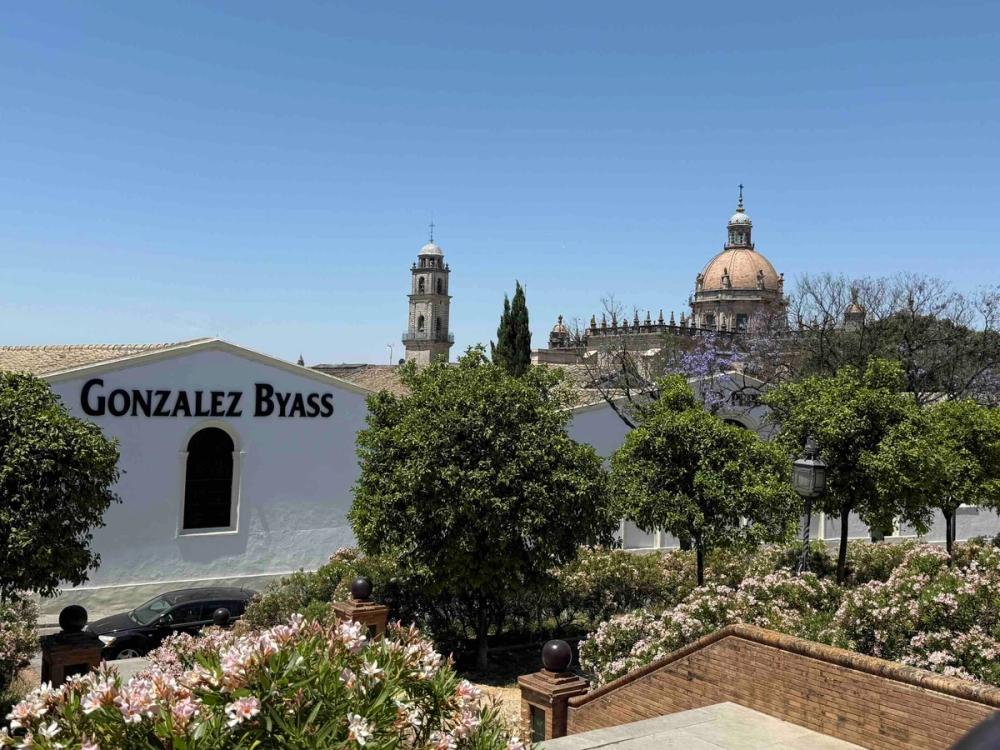
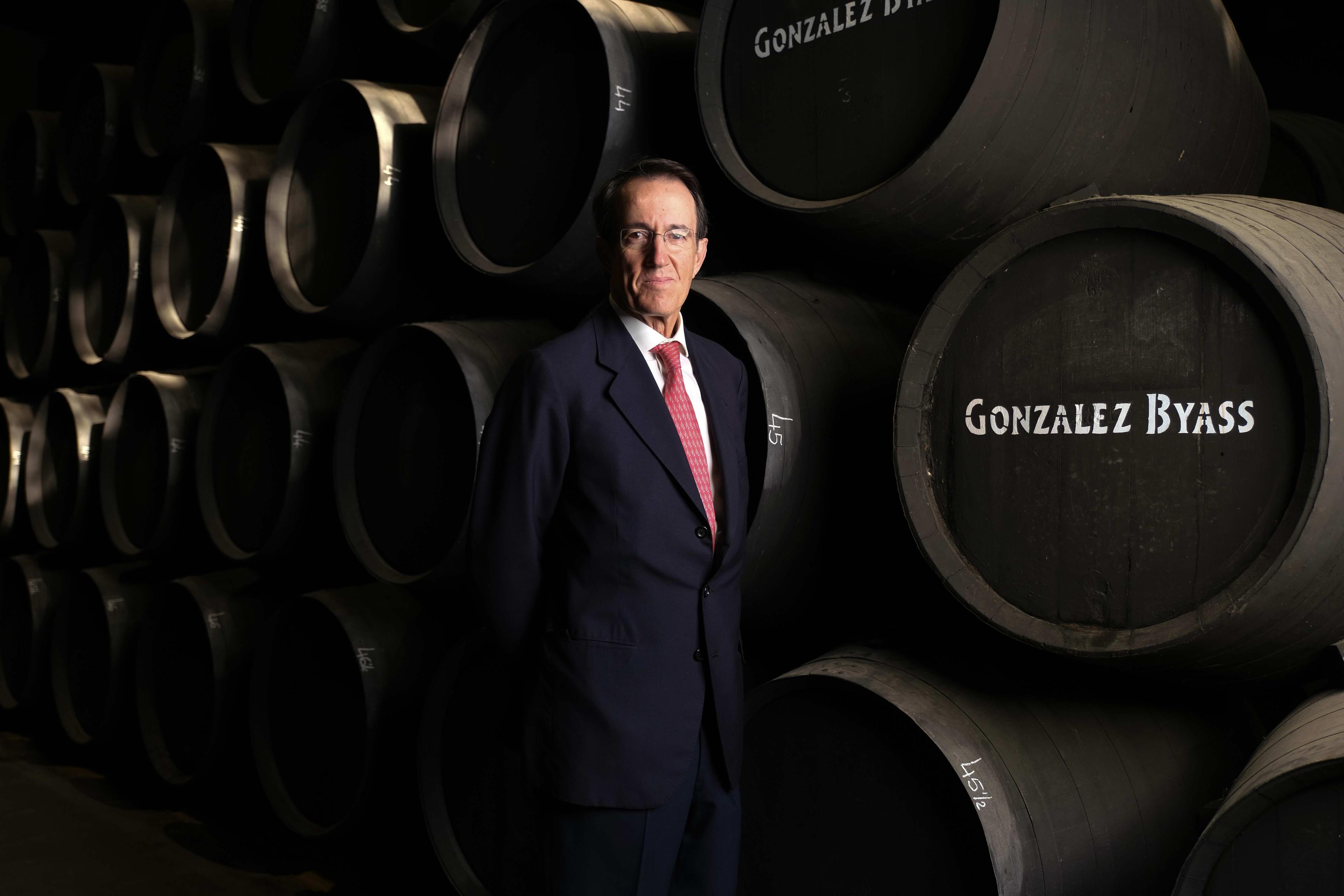
González Byass was founded in 1835 and still remains fully in the hands of the family. Its current president is Mauricio González-Gordon of the fifth generation who joined the business after a career working for General Motors and AT&T in the US. He expects one of the sixth generation, of which there are 85 members, will take over his role when the time comes, although whoever it is will be expected to earn their professional stripes elsewhere first.
Although Flores is not part of the family, he was born in the winery, in what is now room 15 of the gorgeous Tío Pepe hotel, because his father was the technical director there and his job came with on-site accommodation.
“When we were children, my brother and I would pray our father would leave the door to the bodega open,” he told me. “We would go in there and pretend to be kings of an enchanted world.” His daughter Silvia now works as assistant winemaker and is due to take over from him when he retires, not that looks like happening anytime soon.
Market value
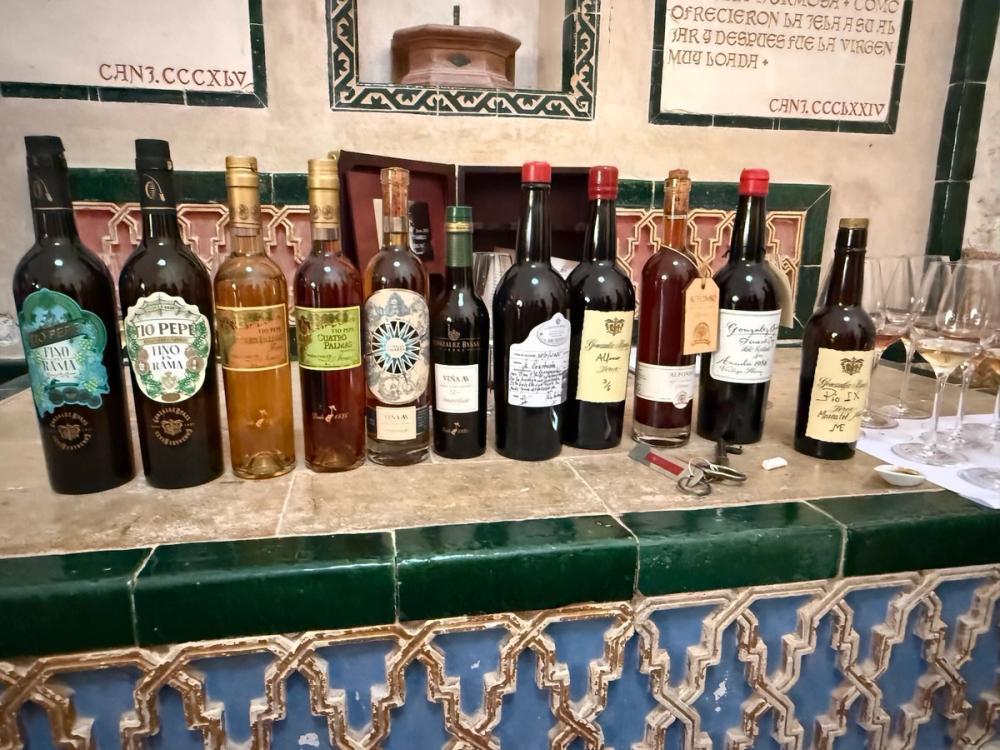
“These are wines that deserve to be in the world’s finest cellars,” says Triptree.
Triptree reports that the market for fine and rare sherries has grown considerably over the past decade or so, although they still remain comparatively undervalued, as collectors recognise their unique qualities and astonishing ability to age. “These are wines that deserve to be in the world’s finest cellars,” he says.
It is not just these wines that are catching the eyes of the world’s sherry lovers. After many years of stagnant or declining sales, there is now also very welcome growth at the less rarified end of the market.
“Sherry is a complex category of wines that’s happily gaining momentum as customers are becoming more conscious of their different styles and versatility,” said González-Gordon. “There certainly seems to be a sherry revolution going on in Spain.”
Volumes of sales are increasing not just locally but also in the bars of Madrid, Valencia, Barcelona and beyond where, until not long ago, a request for a manzanilla would usually result in being served a cup of chamomile tea, ‘manzanilla’ being the Spanish word for ‘chamomile’ as well as referring to the famous dry sherry made in the coastal town of Sanlucar de Barrameda near Jerez.
Since 2024 sales have also been increasing in emerging new markets including the USA, Mexico, Japan and South Korea, as well as in the UK, which remains González Byass’s biggest market outside of Spain, taking around 30% of its total production.
Magic of Jerez
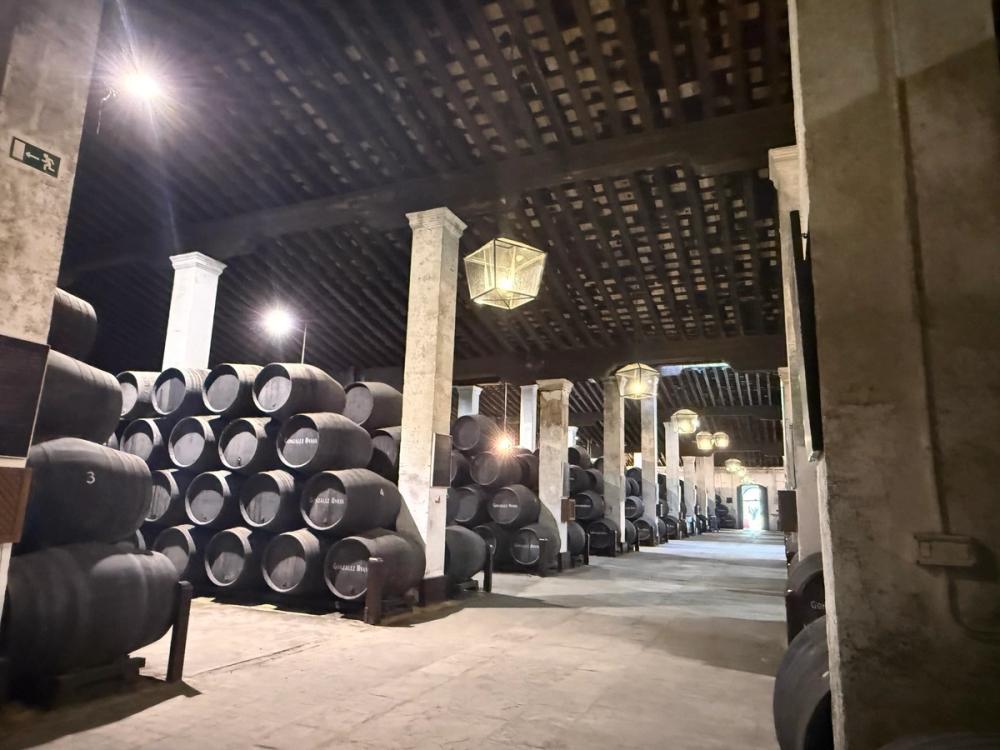
“When we were children, my brother and I would pray our father would leave the door to the bodega open,” Antonio Flores
This growth is doubtless connected to the huge increase in wine tourism in Jerez over the past 10 years. It’s a beautiful, elegant city, much smaller and less riddled with tourists than Seville, and still retains the charms I fell in love with all those years ago. Tío Pepe is now one of Spain’s most visited wineries, and since 2014 has run a music and comedy festival every July and August. Past performers have included Ben Harper, Pat Metheny and Take That; among this year’s line-up are The Coors and latest incarnation of Deep Purple, no less.
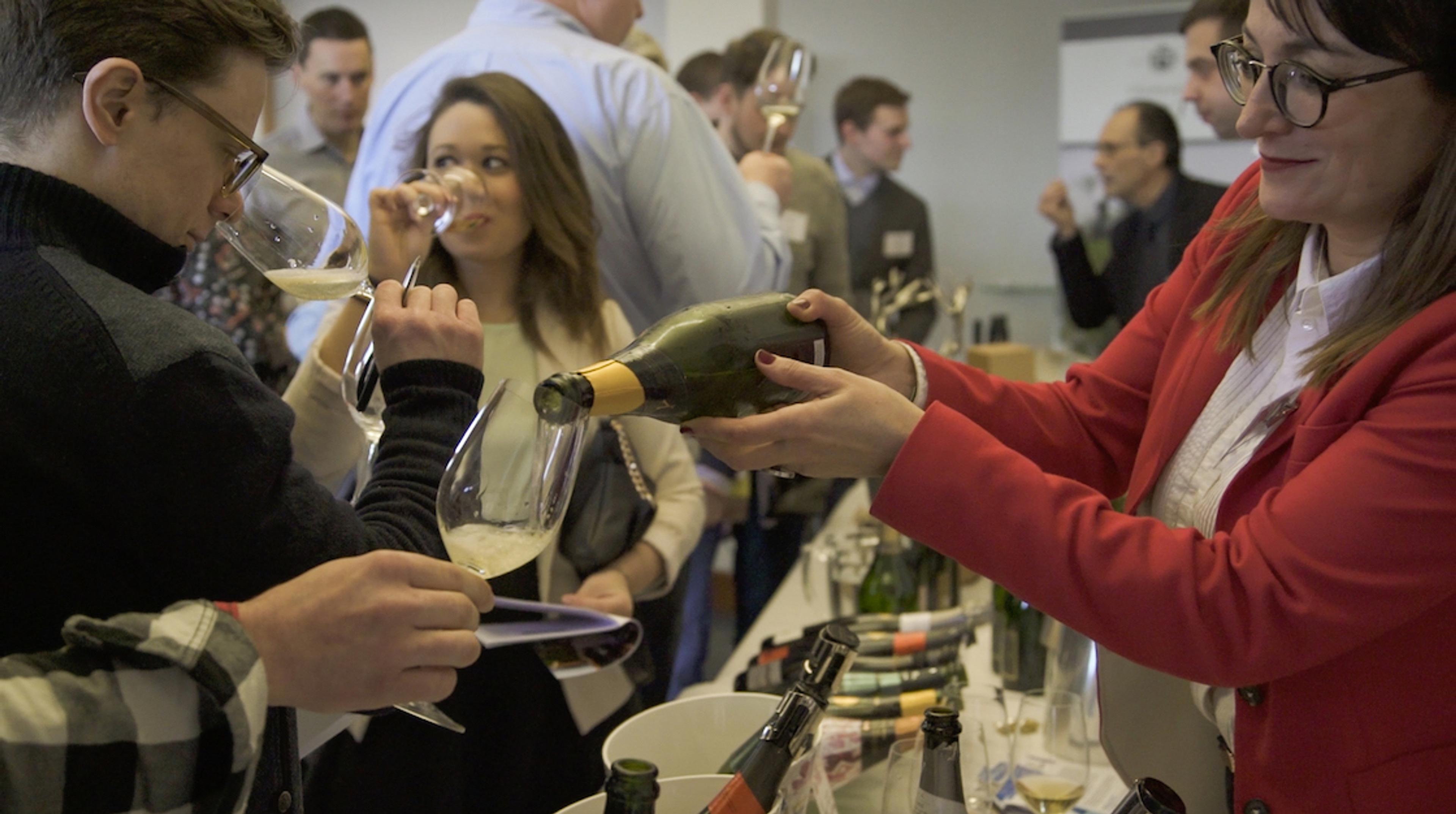
The Feria del Caballo, held each May, is now well established as an attraction for both locals and tourists alike, while the Spanish Motorcycle Grand Prix takes place here every April and draws around 250,000 visitors. More to my taste (and next on my bucket list) is the Zambombas Festival in December, named after the traditional flamenco drum made from clay and animal skin, which sees the jerezanos singing and dancing in the street in the run-up to Christmas and is the second biggest festival in the city. (Flamenco is another of my Spanish passions, forged by a flounced, red polka-dot dress more than half a century ago, but that’s another story). Then, of course, there’s Vinoble, the biennial exhibition of fortified and sweet wines by over 100 producers from around the world, which coincided with our visit and is an absolute must for all sherry lovers.
Like so many wine writers, I’ve been singing the praises of sherry in all its forms for longer than I care to remember, so I’m absolutely delighted to see a wider audience from all walks of life now discovering its many, many charms.
Viva Jerez; viva sherry; viva la revolución.
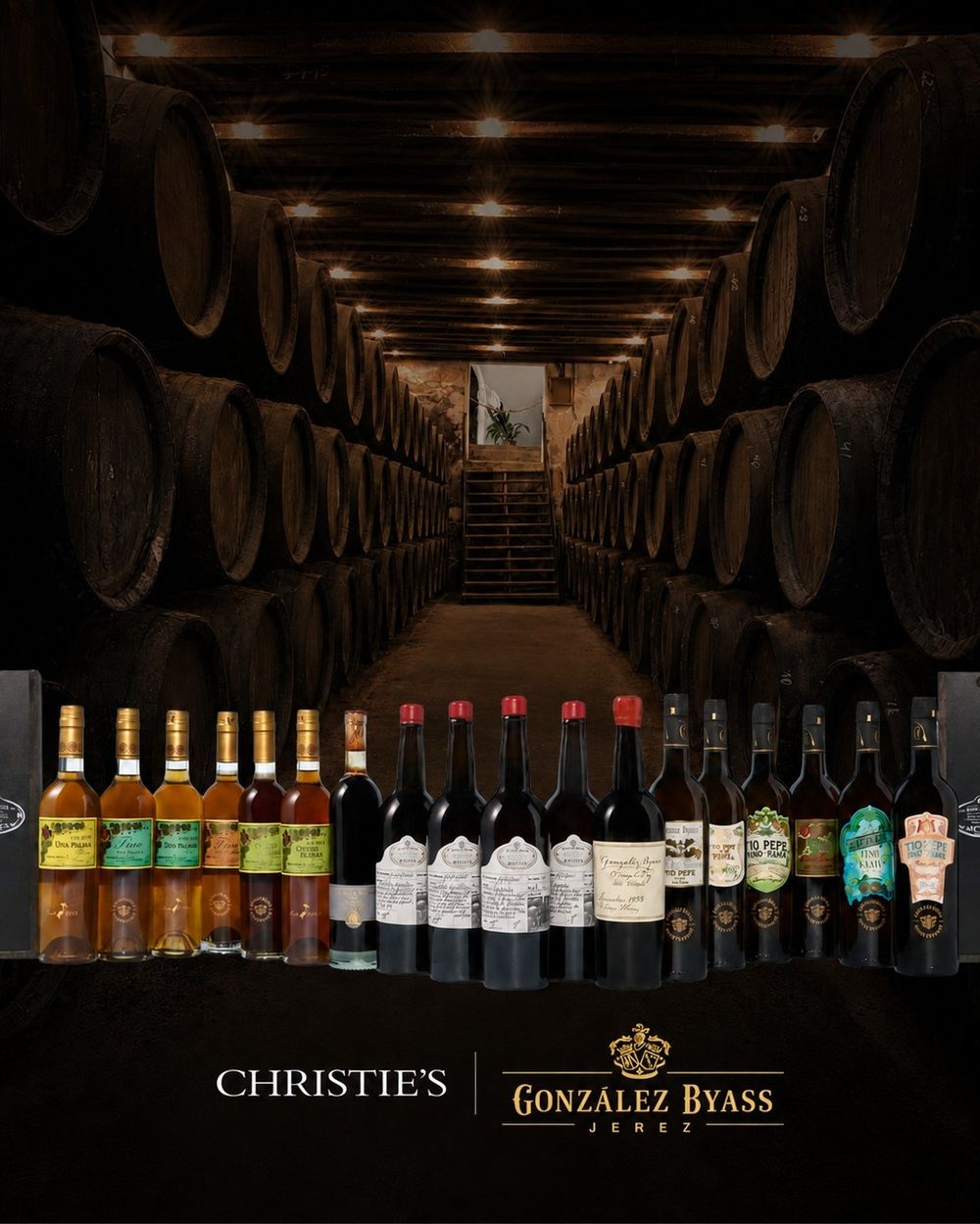
Details of the Christie’s sale can be found here
We stayed as guests of González Byass at the Tio Pepe hotel which overlooks the spectacular cathedral; highly recommended
Visitors to Jerez should not miss the sherry and flamenco at Tabanco El Pasaje where you’ll bump into other tourists but also with many locals including, as I did, Antonio Flores himself.