
There is no more serious country in the world when it comes to wine’s place on the dinner table than France. In fact, no meal is ready to be eaten unless there is an appropriate bottle of wine to be enjoyed alongside it.
Arguably a key part in the huge success that Provence has had as a wine region is its wines are not just an ideal partner for food, but they have helped capture what it is to be French, and, in particular the idyllic imagery of life and the lifestyle of the south of France - all neatly packaged up in a bottle.
That’s essentially what we are buying into when we place a bottle of Provence rosé wine on our dinner table. But how do its wines perform when paired with other cuisines? How well do they travel outside their comfort zone?

Welcome to The Buyer & Vins de Provence Manchester Restaurant Tour
That was the challenge set for The Buyer Vins de Provence Manchester Restaurant Tour that saw a large selection of wines chosen for local buyers to taste and assess. A chance for them to also share what Provence rosé wines mean for their respective businesses and how important and relevant they are compared to the rest of their range.
An opportunity for them to better understand just what Provence rosé can offer thanks to its varied terroirs and climatic changes across its key wine appellations. Differences that result in wide expressions of Provence rosé that have helped the overall category develop, mature and arguably set the global benchmark for rosé and what it stands for. A style of wine that hopefully suits all importers, retailers and restaurants’ needs.
The Restaurants
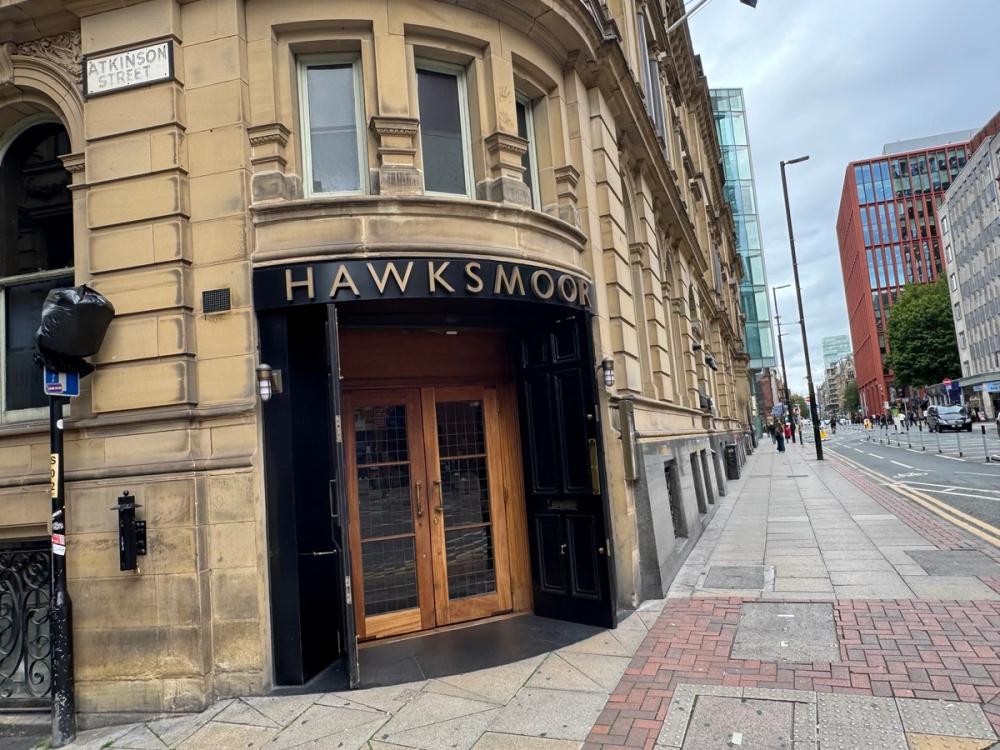
The Provence Restaurant Tour was the chance to visit three premium Manchester restaurants that, in turn, would present a wide selection of dishes to be paired with different styles of Provence rosé. The restaurants chosen were the Manchester branch of leading steakhouse chain Hawksmoor, the award-winning Greek restaurant Kallos Manchester and Asian fine-dining restaurant Lucky Cat by Gordon Ramsay.
Hawksmoor
https://thehawksmoor.com/locations/manchester/
184-186 Deansgate
Manchester
M3 3WB
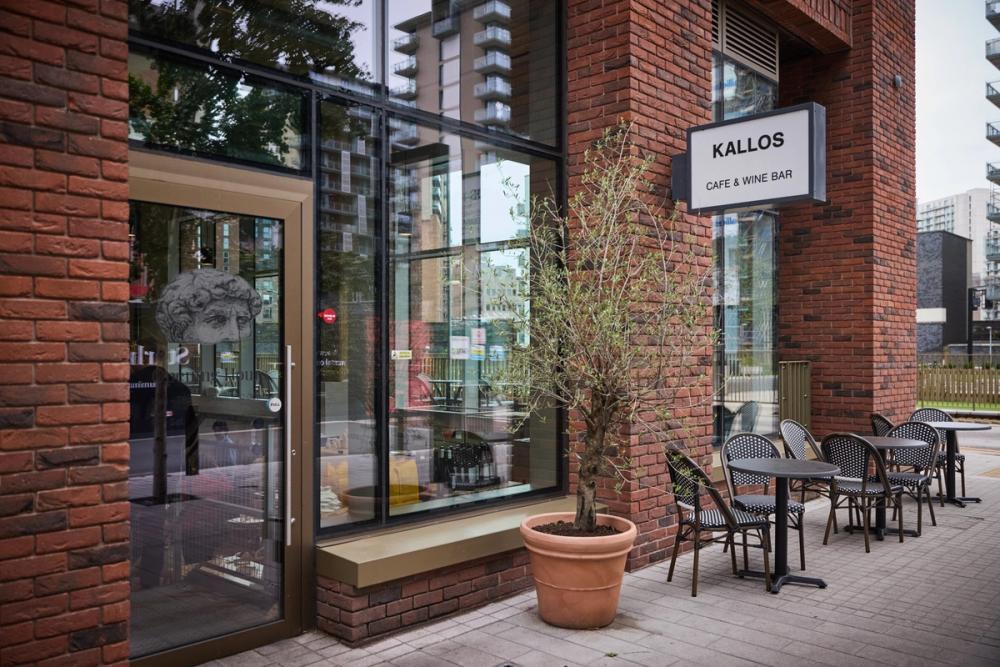
Kallos Cafe & Wine bar
10 Queen Street
M3 7DQ,
Manchester
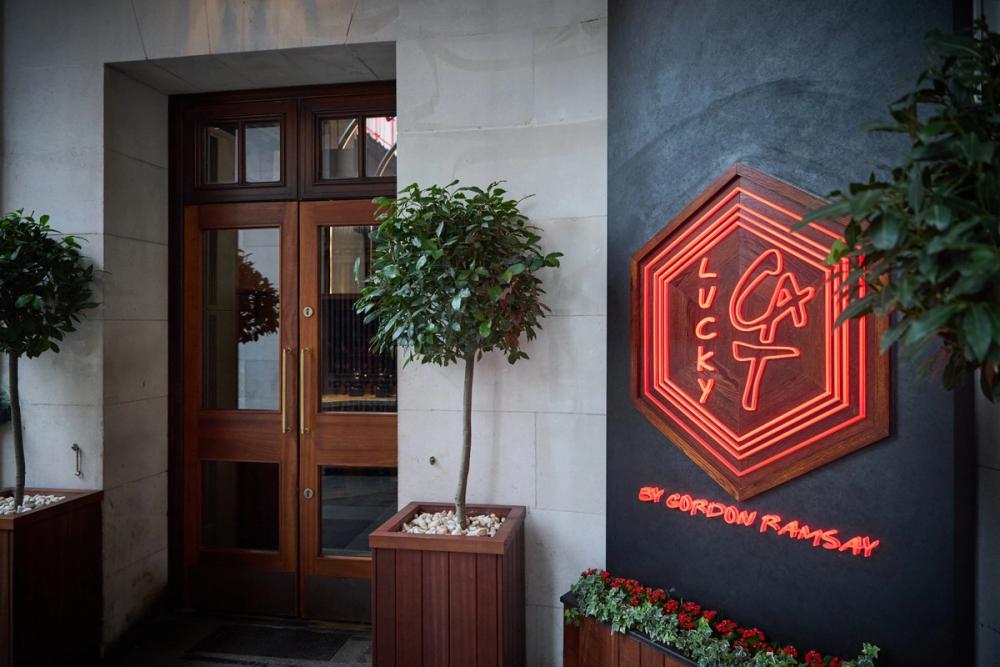
Lucky Cat Manchester
https://www.gordonramsayrestaurants.com/lucky-cat-manchester/
100 King Street
Manchester
M2 4WUHawksmoor
The Panel
Frances Bentley, senior wine buyer, C&C Group
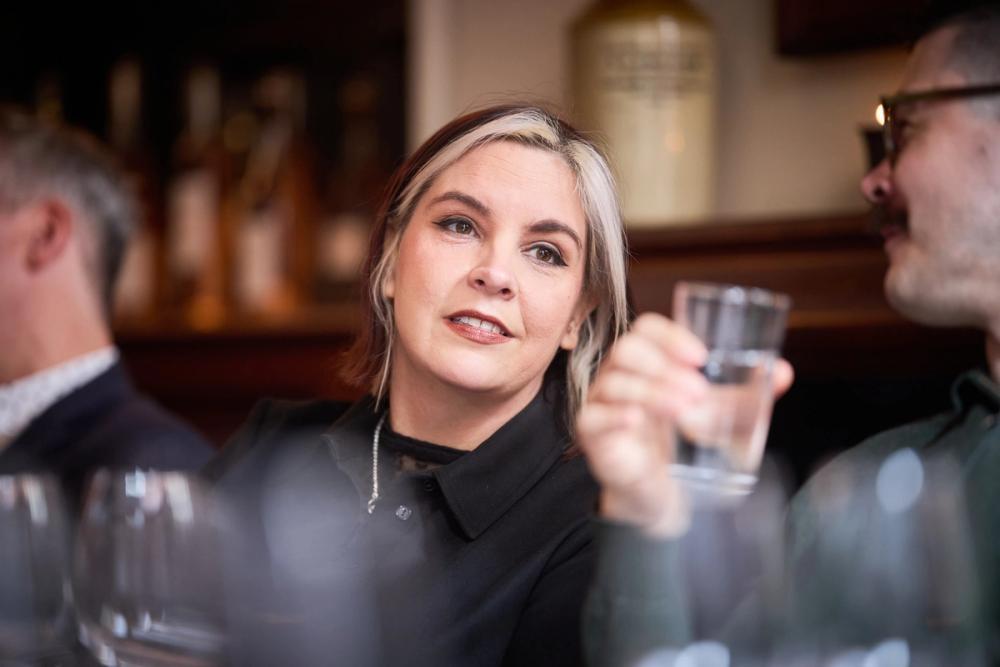
Frances Bentley has recently taken on a senior wine buying role at C&C Group, and Matthew Clark and Bibendum after a long and respected career at LWC Drinks.
Noel Reid, founder, Rediscover Wines

Noel Reid works tirelessly to create a bespoke range of wines at Reserve Wines where he has built up a strong portfolio of producers from around the world.
Phil Crozier, sales director, Ucopia Wines

One of the UK’s most respected buyers and influences for Argentine wines, Phil Crozier is now looking to help Ucopia Wines spread its influence and wine buying to more regions and countries around the world, including France and Provence rosé.
James Gulliver-Cameron, head of wine, Hammonds of Knutsford

James Gulliver-Cameron first forged a career as a successful sommelier, including head sommelier role at the prestigious Northcote Hotel and the Wood Restaurant Group before switching to the supplier side of the fence first at Propeller and now heading up the wine arm of Hammonds of Knutsford.
Simon Cairns, wine buyer and consultant, WSTA and Myliko Wines

Simon Cairns has a wealth of experience as a senior grocery retail buyer and is now sharing that expertise on a consultancy basis. He is also a trade advisor to the Wine & Spirit Trade Association.
Andy Leathley, account manager, Hallgarten & Novum Wines
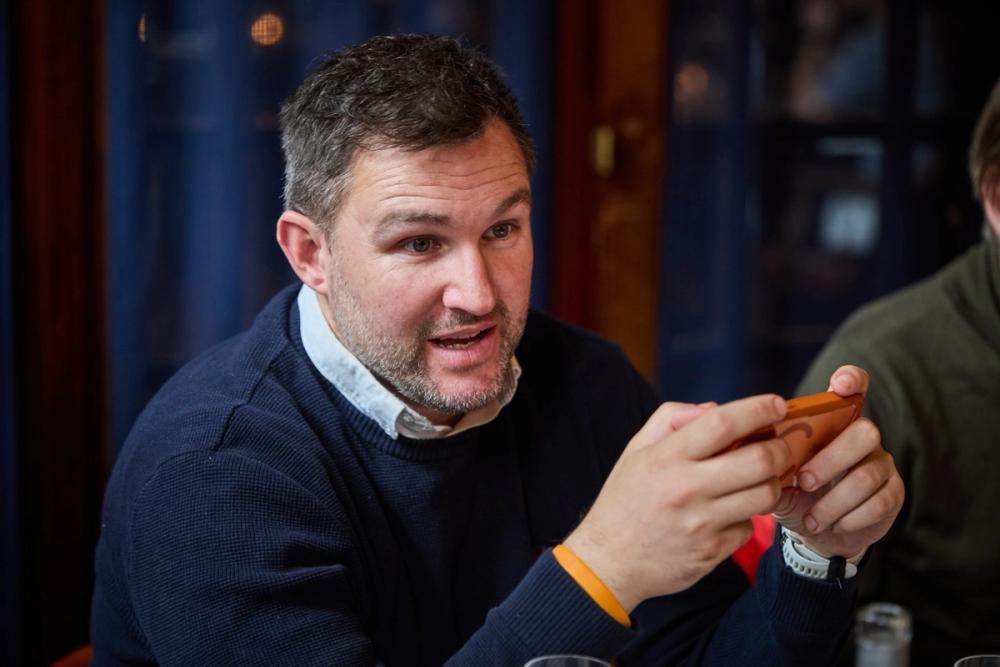
Andy Leathley is a key member of the regional account team for Hallgarten & Novum Wines with particular focus on the north and north west.
Laura Bennett, account manager, Enotria
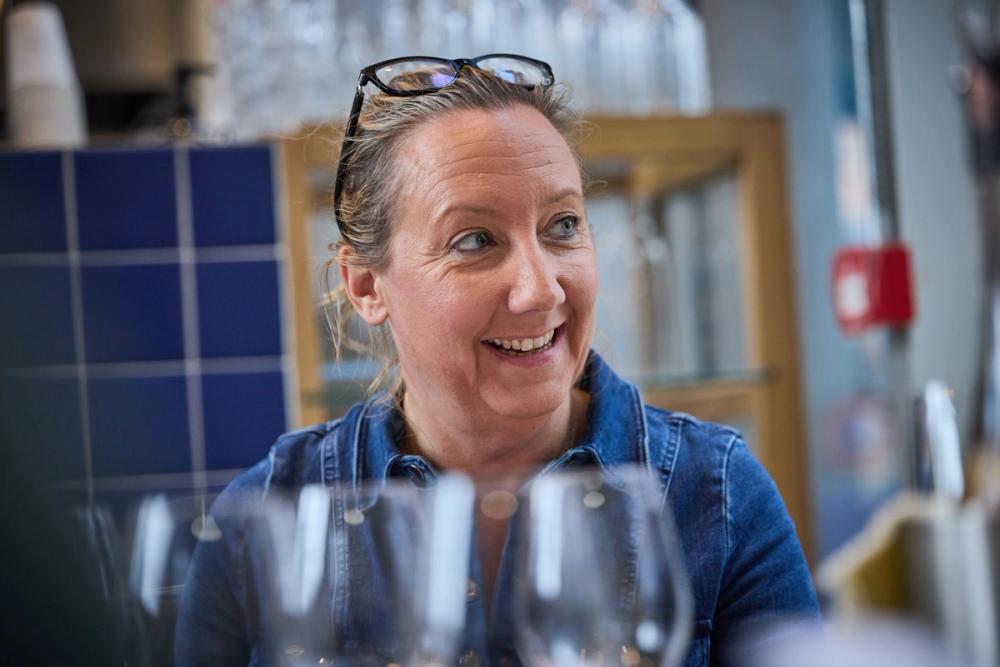
Laura Bennett helps manage customers for Enotria across the north of England up to the borders of Scotland.
Nic Rezzouk, wine and spirits buyer, Reserve Wines

Nic Rezzouk has helped build a strong, award-winning wine range for Reserve Wines, one of the country’s most respected regional wine merchants.
Tom Shelbourn, account manager, Milestone Wines

Tom Shelbourn is an integral part of the growing and respected Milestone Wines team and one of the key suppliers in the north of England.
Ciaran Keaney, director of Carrington Wines
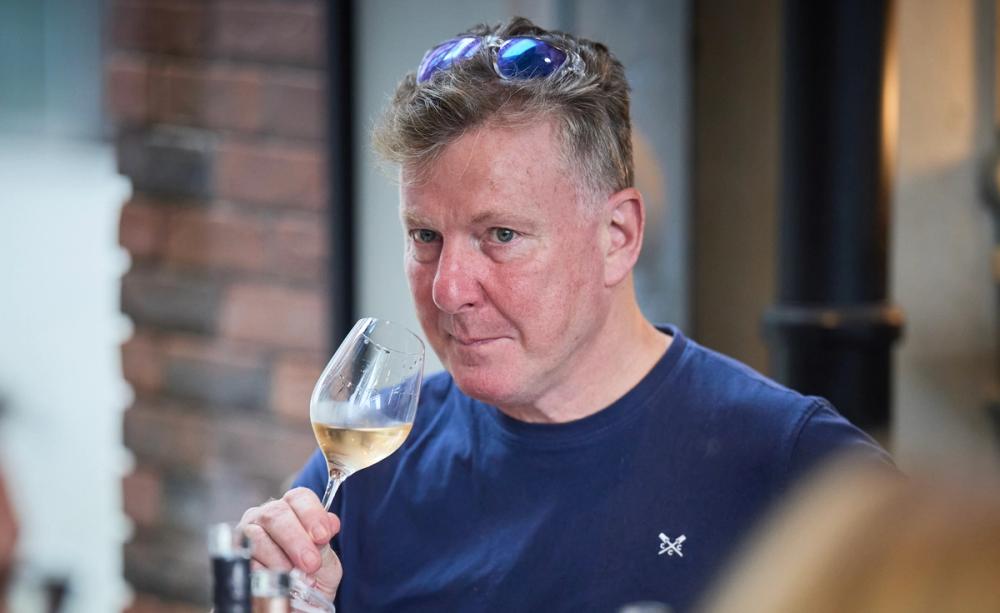
Ciaran Keaney has helped build a strong range at Carringtons Wines, an award-winning, independent bottle shop and merchant based in Chorlton, South Manchester.k
Jane Clare, founder One Foot in the Grapes, wine writer and educator
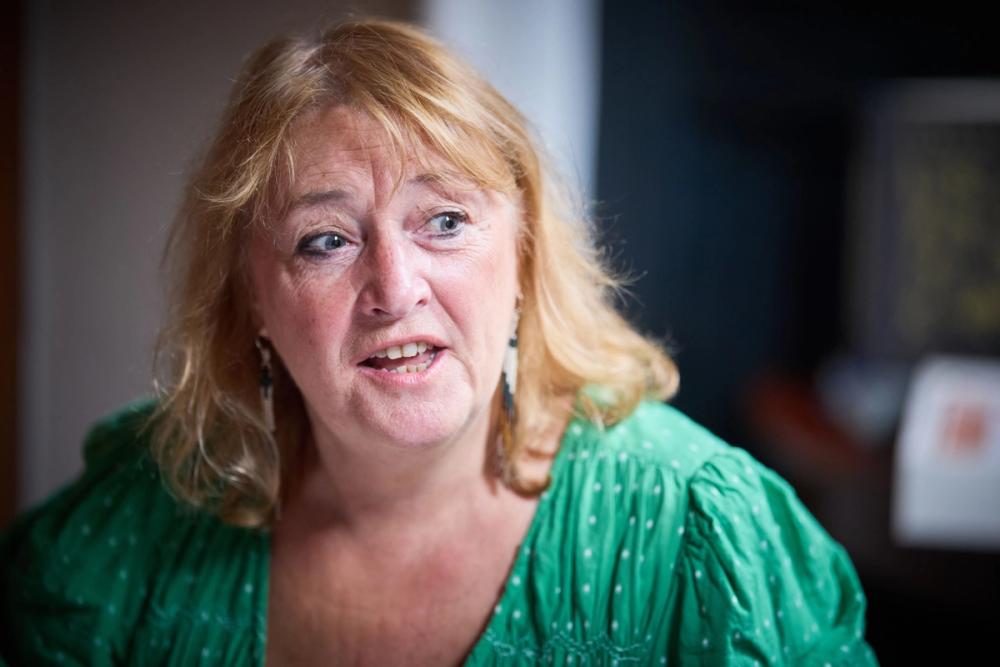
Liverpool’s most prolific wine writer with a syndicated wine column that appears in local and regional newspapers across the UK. She also runs her own WSET wine school and fun, but focused wine tastings through her consultancy One Foot in the Grapes.
Richard Kilian, Cargo Wines

Richard Kilian set up and runs Cargo Wines a hybrid wine shop in Leeds.
Ray O’Connor MW, co-host and Vins de Provence ambassador

Ray O’Connor MW has switched his head of wine buying role at Naked Wines to share his expertise on a consultancy basis as well as making wine and acts as the UK ambassador for Vins de Provence.
Introducing Provence
Ray O’Connor MW and UK ambassador for Vins de Provence wines in the UK was able to set the scene and give the panel of buyers an overview of the region, its different appellations, and an analysis of just why its different terroirs, soil types and local climate conditions are so important in the styles of wine different producers can make.
First and foremost, stresses O’Connor, Provence is the only wine region in the world to specialise in rosé - accounting for close to 90% of all the wines it produces. It’s why it’s proud of its international reputation for setting the benchmark for what rosé is and what it can become.
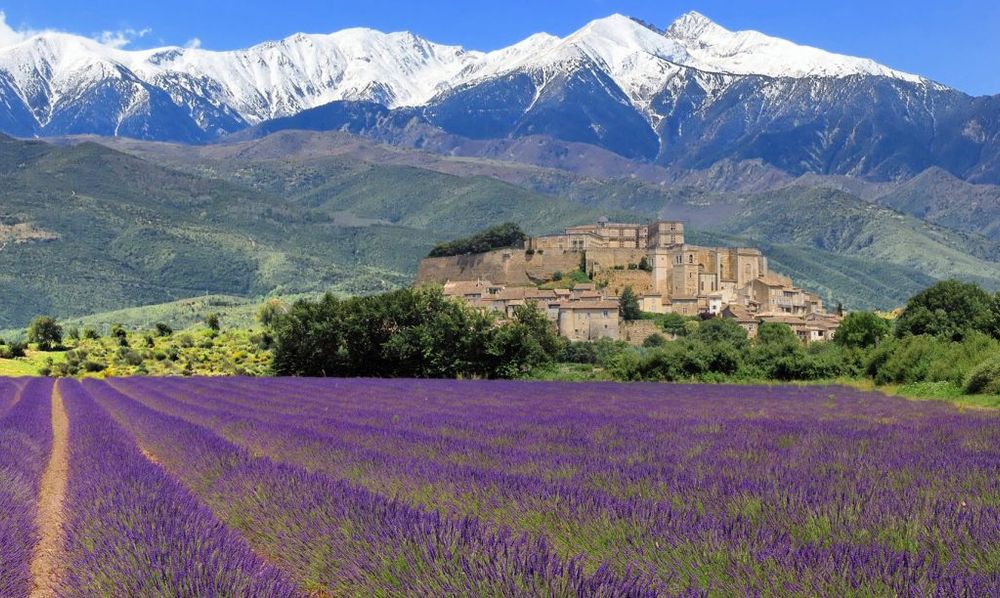
The idyllic countryside of Provence that plays a huge role in the popularity of its rosé wines
Such is the dedication to only producing premium, quality wines that its producers and regulatory bodies work together to better understand the wines they are collectively making and how they can make them better still. In 1999 it set up the Centre du Rosé — the world’s only research and development centre devoted exclusively to rosé.
“The centre’s mission is clear,” said O’Connor. “It’s to make everything better. It has one purpose: how to consistently produce the best rosé wines in the world.”
He added: “Provence’s commitment to premium-quality rosé is underpinned by close collaboration between producers and regulatory bodies. In 1999, they established the Centre du Rosé, the world’s only research and development centre devoted exclusively to rosé, to deepen their understanding of the wines and continually improve them.
“Much of what we see in Provence rosé today can be traced back to the 1970s, with innovation accelerating around 25 years ago. Its success did not happen overnight; it reflects Provence’s unwavering commitment to quality.”
Early research focused on the cellar rather than the vineyard, investigating temperature control, extraction, juice yield and colour. Once this winemaking expertise had been established, it was shared with growers and estates across the region.
Year after year, advances in viticulture and winemaking, including night-time harvesting, precise temperature control, direct pressing, cold maceration and expert blending, continue to raise quality. As O’Connor stressed, every stage of production is purposefully designed for rosé.
It is that collaborative approach that has helped Provence become a leader in sustainability and it is well on track to reach its target of having all its vineyards under some level of environmental control by 2030 with nearly a third of its vines certified organic.
The appellations
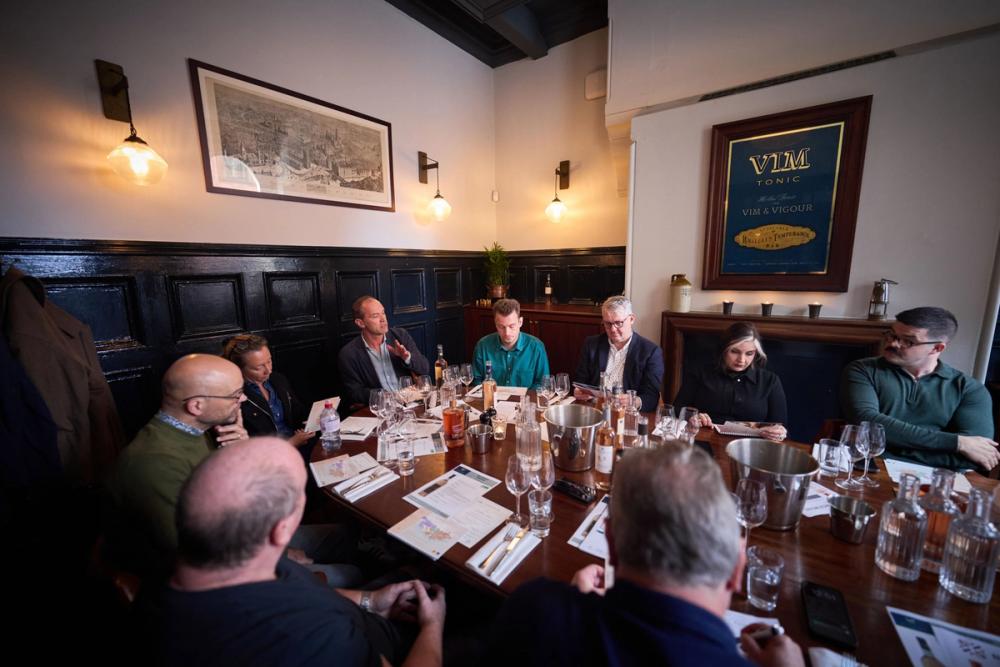
Ray O'Connor was able to introduce the Provence wine region, its appelations and its wines to the panel of buyers and importers
O’Connor explained the significance of its three main AOP wine appellations:
- Côtes de Provence, the region’s largest wine production area which runs closest to the sea, where O’Connor says you can expect softer, more textured, rounded wines. It also includes five DGCs (Dénomination Géographique Complémentaire). These include Sainte-Victoire, La Londe, Pierrefeu, Notre Dame des Anges and Fréjus.
- Coteaux d’Aix-en-Provence which is at higher altitude and makes lighter, fresher, more crisp wines that benefit from the cooler climate.
- Coteaux Varois en Provence where close to half the production is organic or HVE and where there is a “real tension and energy to the wines,” said O’Connor.
Vineyards that stretch from the foothills of the Alps, ideal for late ripening, strongly structured wines, right down to the shores of the Mediterranean sea where the maritime helps make rounded wines with subtle saline notes of the Côtes de Provence .
It is that difference in elevation that has helped carve out the varied landscapes and microclimates that, in effect, have created a mosaic of terroirs ideally suited to crafting high-quality rosé, he added.
He said that out of all the travels he has done to wine regions around the world he has not seen “vineyards teeming with life as much as I have in Provence”.
“They have very good, naturally rich vines,” he said, helped enormously by the fact that already over 67% are organically and environmentally farmed, with a target to reach 100% by 2030.
The grape varieties that grow across Provence are ones that can work well in both good and poor soils and can stand up to both the intense heat of the long Provence summer, but also the strong multiple winds that sweep down the mountains across the valley floors. All of which help combine to make grapes with the right balance of fresh, bright juice and the skin needed to make fine rosé wines, said O’Connor.
Provence wines are dominated by blends of mainly Grenache, Cinsault, Syrah and Rolle. Grenache brings floral, fruity elegance, Cinsault adds freshness and finesse and Syrah contributes intensity and fine acidity.
But with the advent of climate change the region is now opening up the number of grape varieties that can be planted that are more heat resistant like Agiorgitiko and Xinomavro from Greece and develop their own hybrids that can stand up to drought and heat stress, added O’Connor.

For all of the diversity in the region, the vast majority of Provence rosé wines all share the same hallmarks of producing pale hued wines, with fruity-floral aromas that are bright, fresh and dry to drink that has captured the imagination of the wine drinking public.
They are also mostly made un-oaked using stainless steel tanks with an increased use of amphora and other oak free vessels, said O’Connor.
The beauty of the region, he believes, is that even though the winemaking is pretty similar across the board, each region and sub-climate “offers that little bit more” which can be found on the palate and makes Provence stand out against its peers.
“That bit more comes from a very unique place. It’s hot and dry and when it rains it pours. It also benefits from the constant wind with 32 names for different winds in the region. They are very present in what they do in the vineyard,” he explained.
Key numbers
• Rosé counted for 89% of wine production in Provence in 2025.
• 135 million bottles of Provence rosé were produced in 2025.
• The Provence wine region is made up of 456 independent producers, 53 cooperatives and 46 merchant producers, across 27,472 hectares.
• 67% of vineyards have an environmental label with the aim of reaching 100% by 2030; 27% of vineyards are certified organic and 40% have the HVE accreditation.
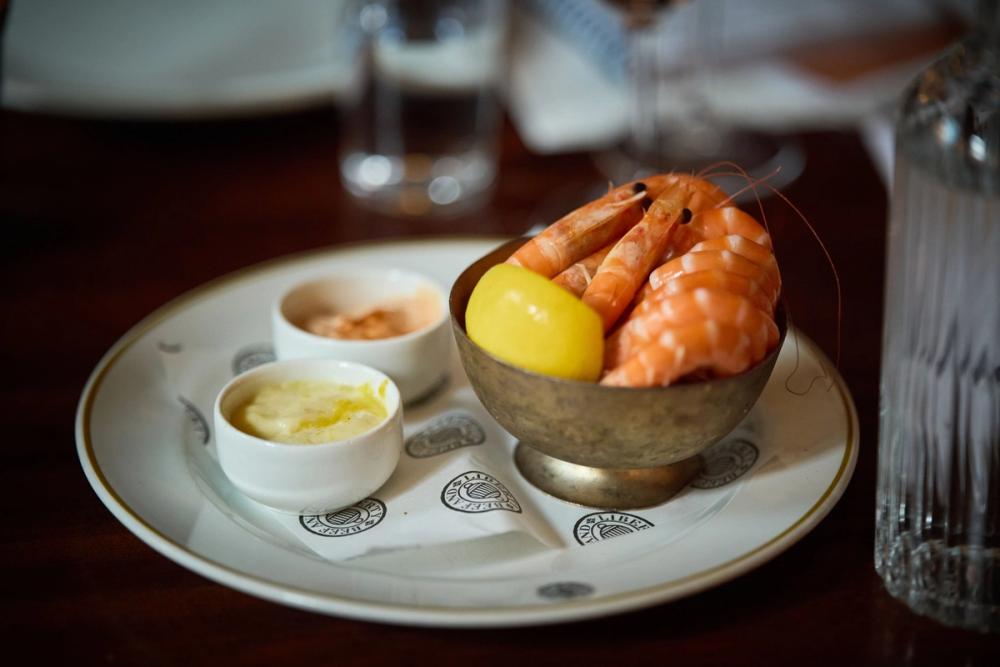
Hawksmoor - wines and food
The Wines
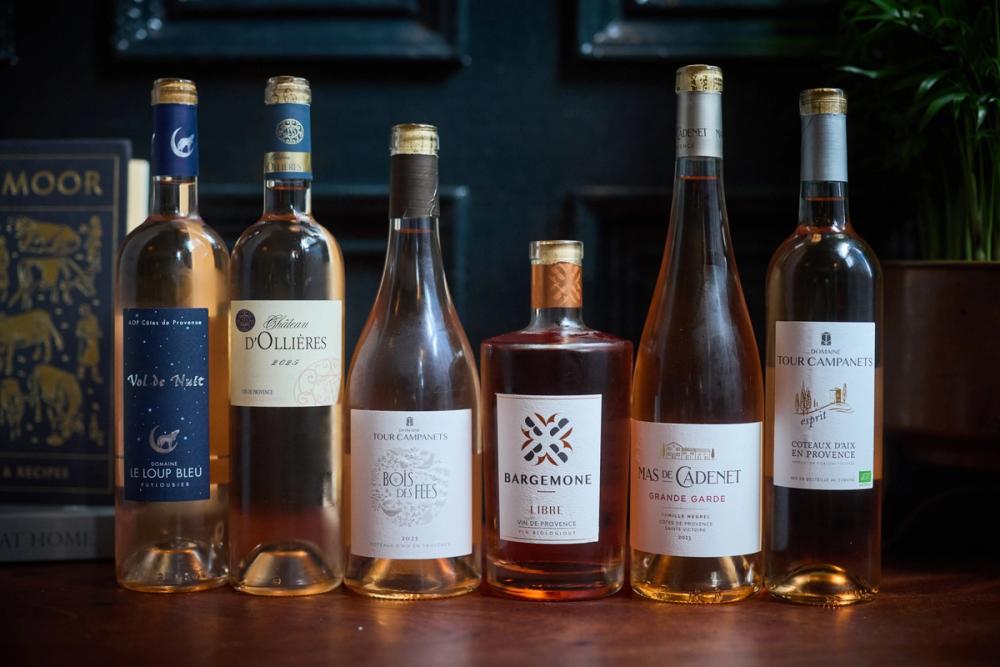
Domaine Bargemone, Libre, Coteaux d’Aix-en-Provence, 2025
Domaine Tour Campanets, Bois des Fées, Coteaux d’Aix-en-Provence, 2025
Domaine Tour Campanets, Esprit, Coteaux d’Aix-en-Provence, 2025
Château d’Ollières, Classique, Côtes de Provence, 2025
Mas de Cadenet, Grande Garde, Côtes de Provence, 2023
Domaine Le Loup Bleu, Vol de Nuit, Côtes de Provence, 2025
The Dishes
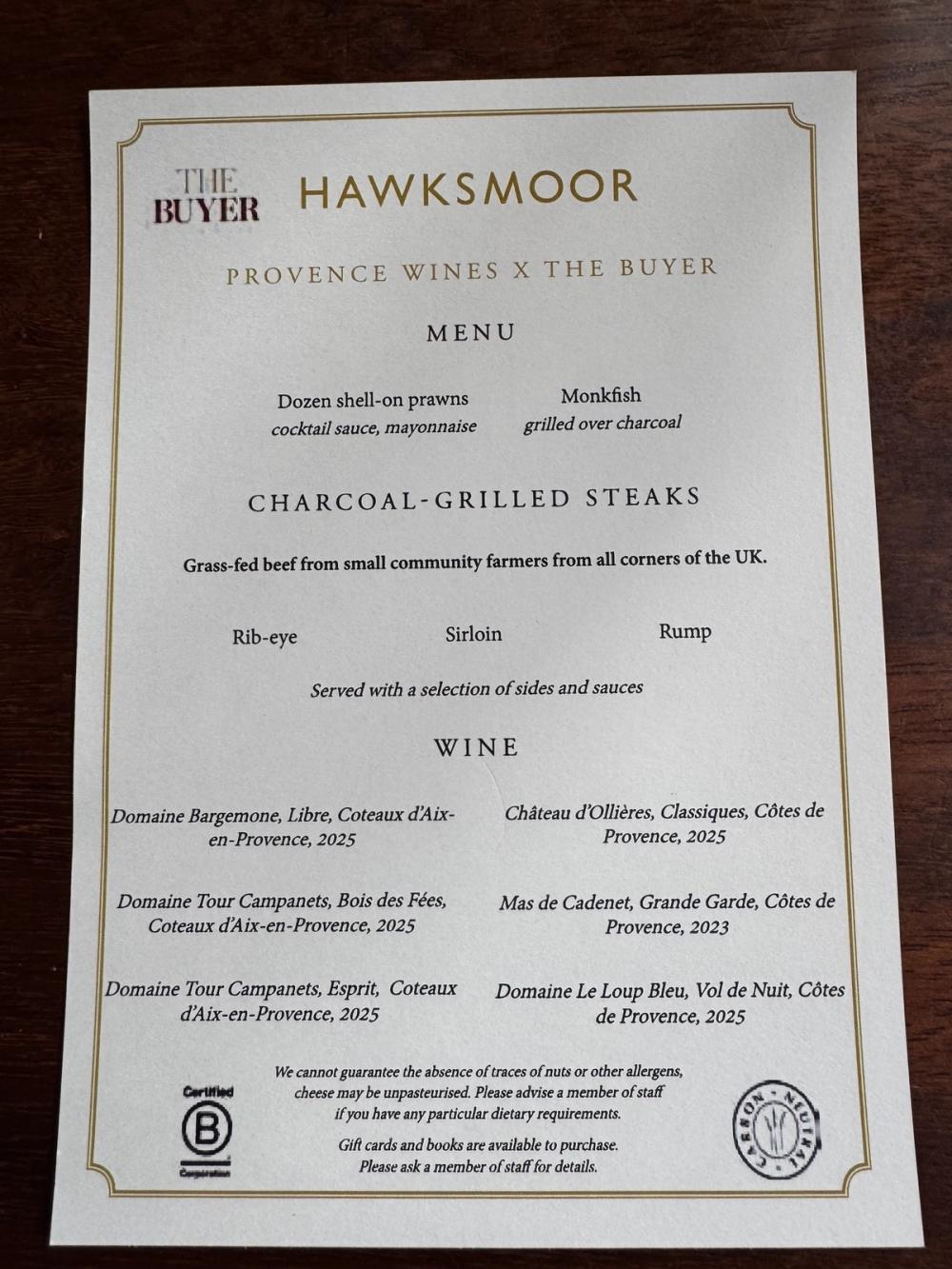
Shell-on prawns.
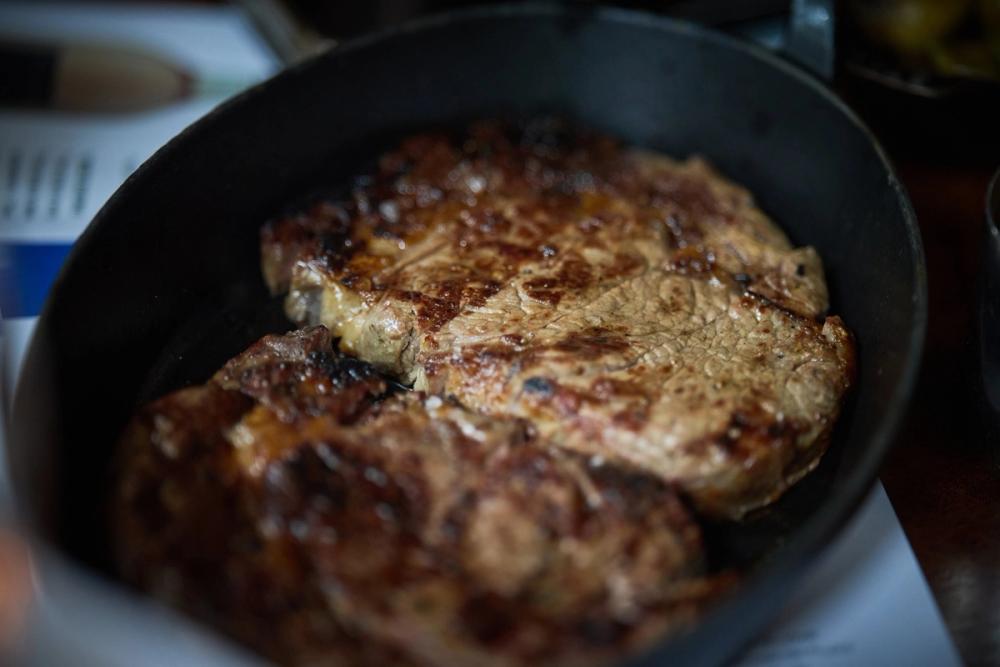
A combination of rib eye, sirloin and rump
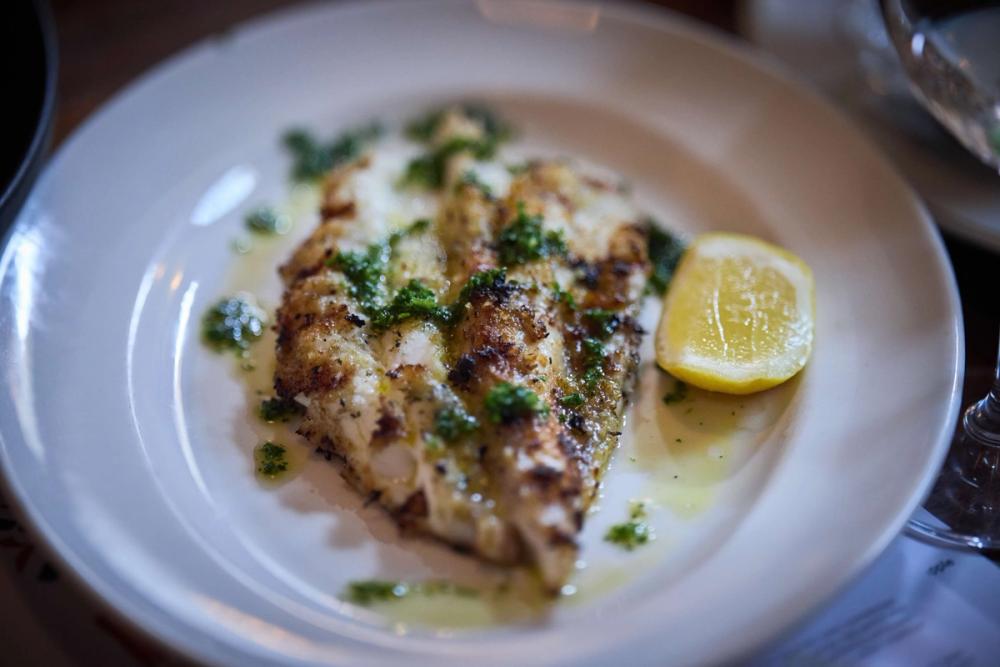
Monkfish
Dripping chips
Heritage tomatoes
Macaroni Cheese
Garlic Mushrooms
Kallos - wines and food
The Wines
The Wines
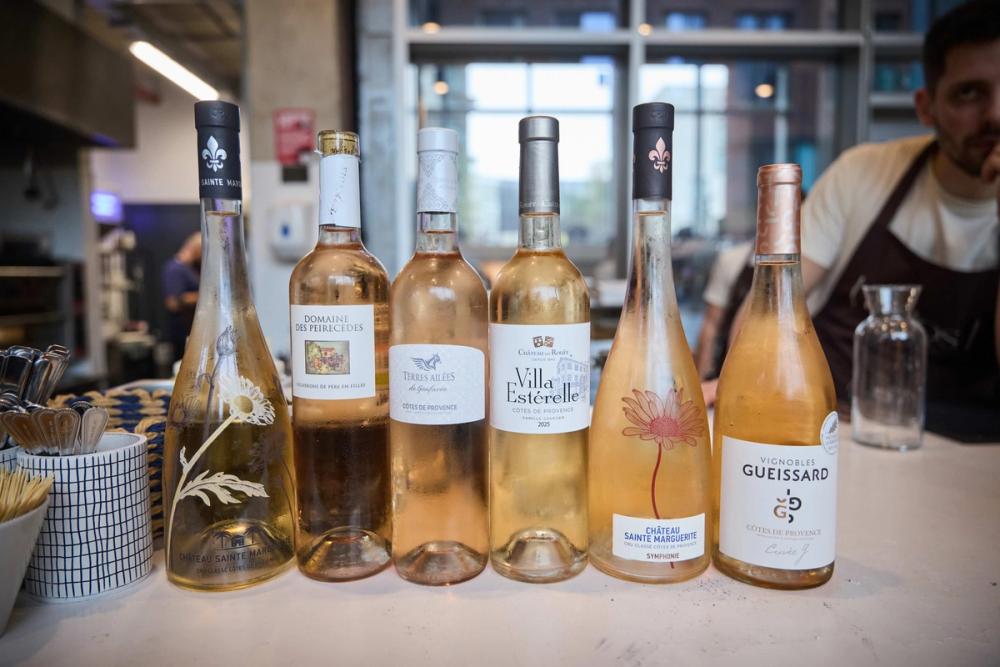
Château Sainte Marguerite, Symphonie, Côtes de Provence, 2025
Domaine des Peirecèdes, Le Fil d’Ariane, Côtes de Provence, 2025
Maîtres Vignerons de Gonfaron Terres Ailées de Gonfaron, Côtes de Provence 2025
Les Vignobles Gueissard, Cuvée G, Côtes de Provence, 2025
Château du Rouët, Villa Estérelle, Côtes de Provence, 2025
Château Sainte Marguerite, Collection Marguerites, Côtes de Provence La Londe, 2025
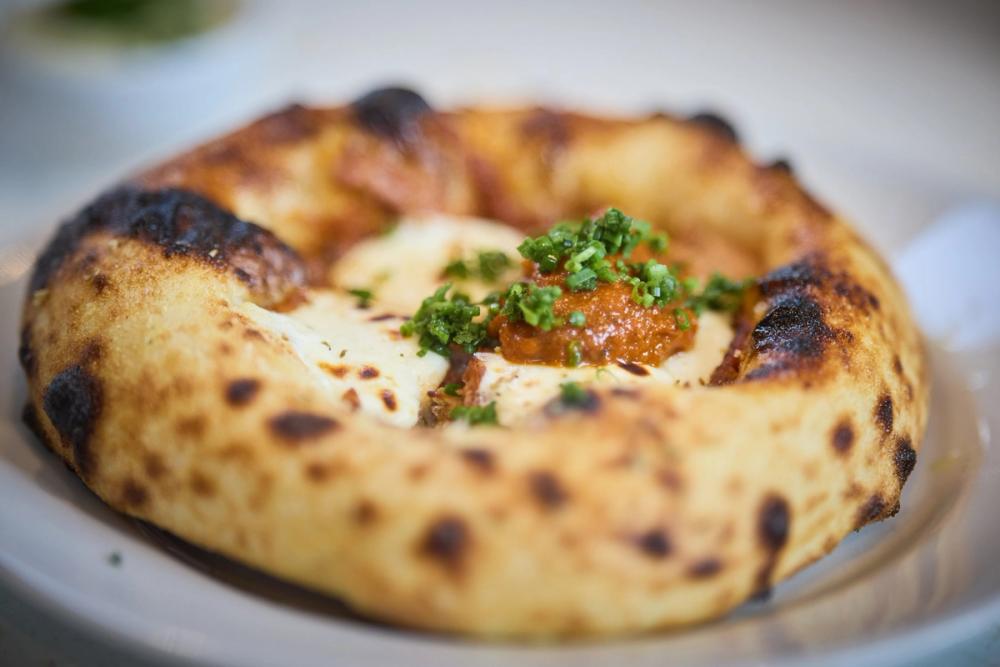
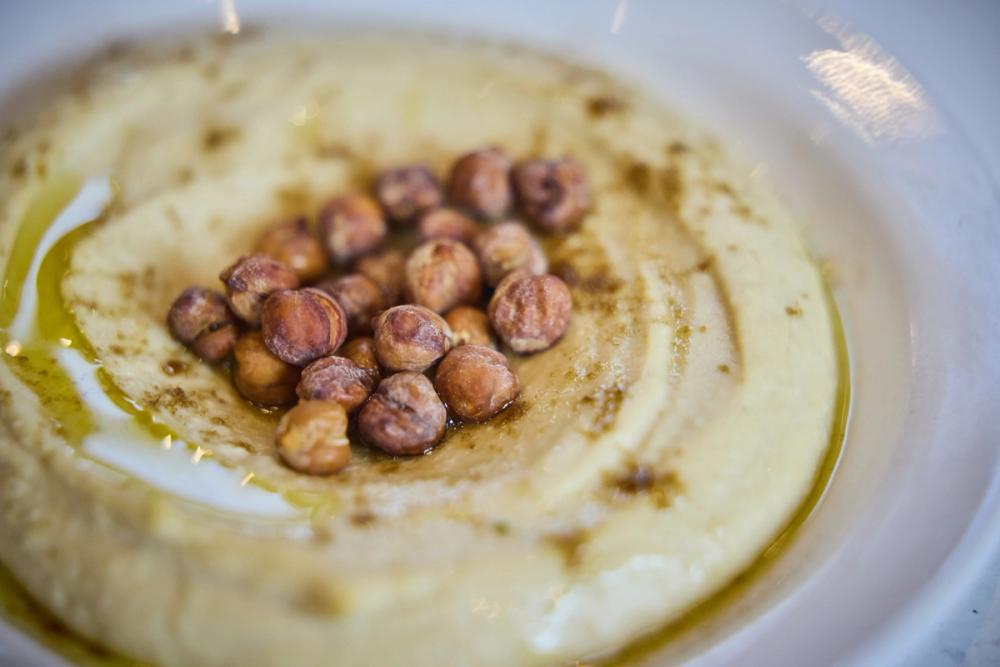
The Dishes
Taramosalata, pomegranate
Hummus, cumin, crispy chickpeas
Baba ganoush, herb crumb, chive oil
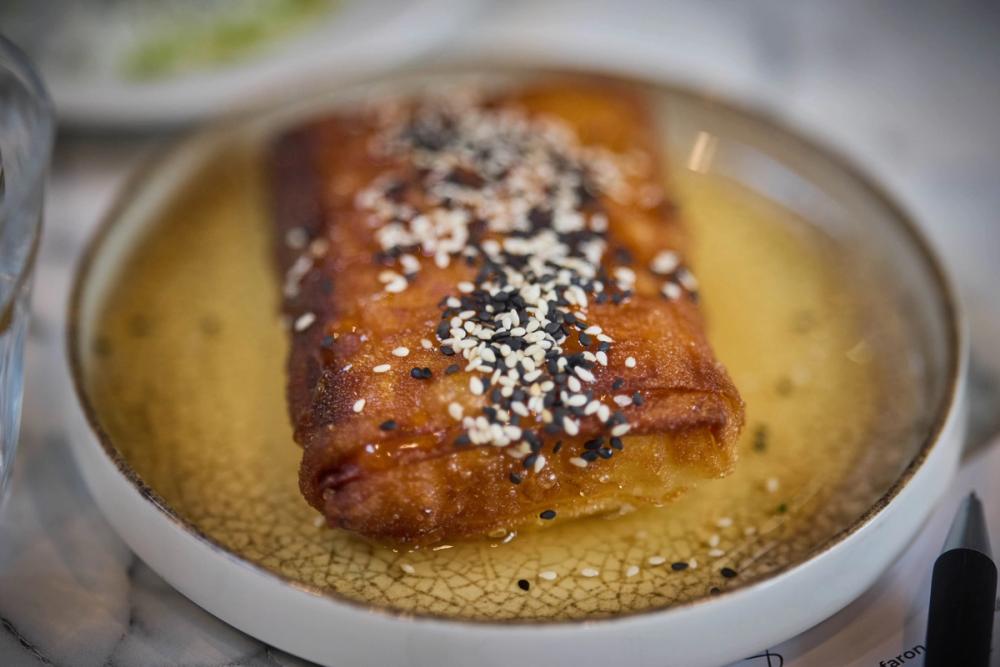
Dakos salad, IW Heritage tomatoes, gazpacho, whipped myzithra, carob rusks, capers Feta wrapped in filo, honey, sesame
Chickpea stew, Greek oregano, lemon
Roasted sujuk, red pepper orzo, labneh
Merguez sausage, labneh & harissa, chives
Lucky Cat by Gordon Ramsay - wines and food
The Wines
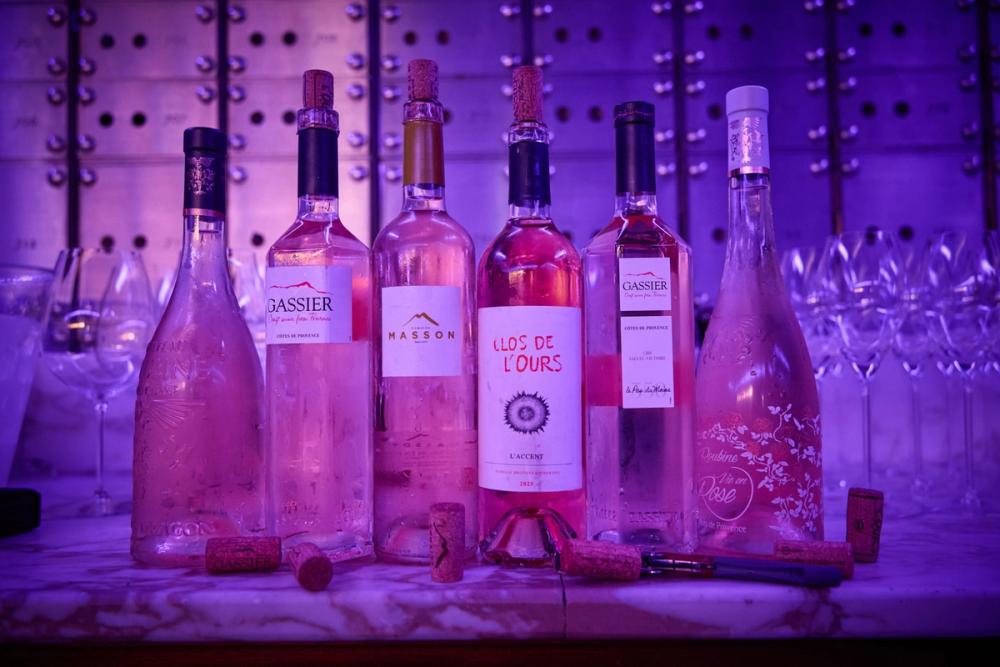
Clos de l’Ours, L’Accent, Côtes de Provence, 2025
Château Roubine, La Vie En Rosé, Côtes de Provence, 2025
Château Roubine, Lion & Dragon, Côtes de Provence, 2025
Domaine Masson, Masson, Coteaux Varois en Provence, 2025
Gassier, Gassier, Côtes de Provence, 2025
Gassier, Pas du Moine, Côtes de Provence Sainte-Victoire, 2025
The Dishes
Baby squid
G.F.C Tempura
Mixed mushroom bao
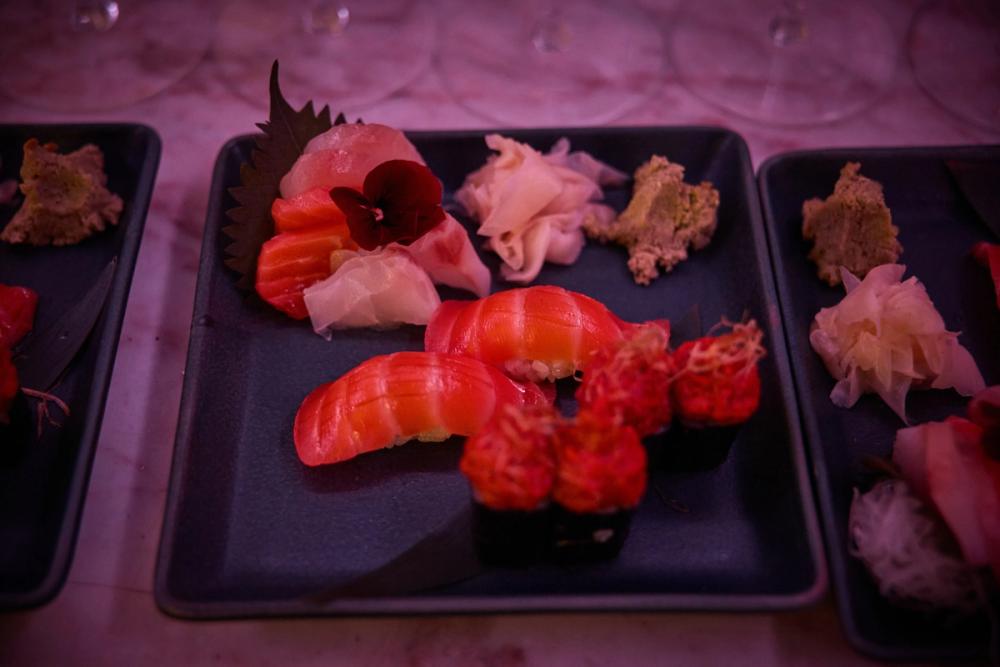
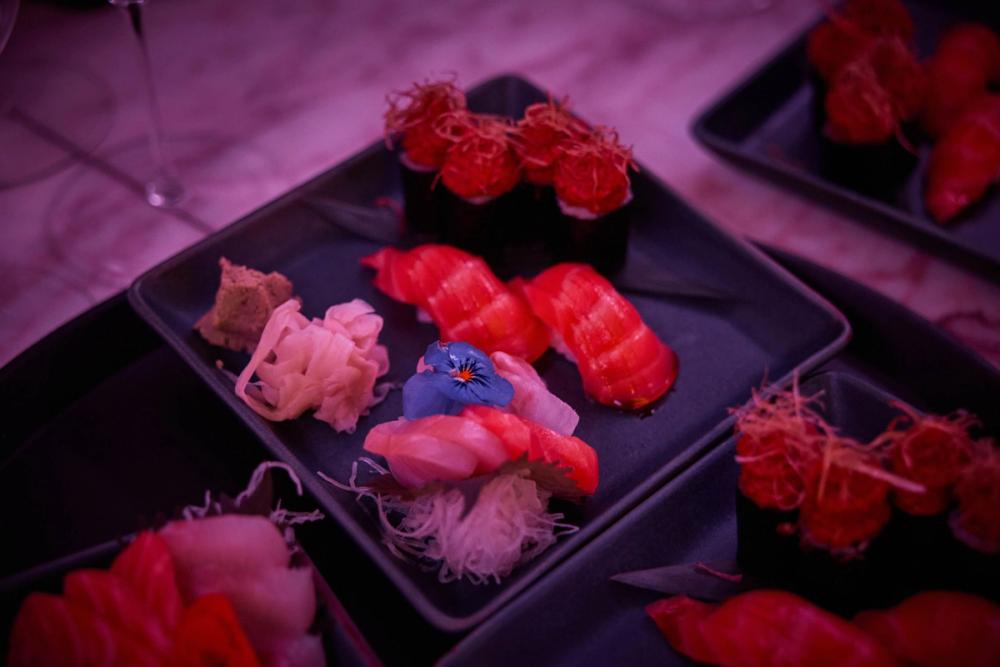
Sushi selection
Smoked BBQ aubergine
Cauliflower Tempura
Panel’s views
The panel’s views on the opportunities and potential for Provence rosé were as diverse as the wines they were tasting.
Phil Crozier kicked off the discussion by neatly summing up the appeal of rosé and Provence as “being the most democratic of all wines”.
Frances Bentley, who has recently joined the C&C Group as senior wine buyer, could not have been clearer about the significance of rosé in the UK market: “Rosé is crucial - in the on-trade it’s the only wine category in growth and its available at so many price points and in such varied packaging that there truly is something for everyone.”
Nic Rezzouk at Reserve Wines was quick to stress just how important Provence rosé, in particular, is as a category for its business.
"Provence is key for us - it’s a lifestyle choice for our customers,” he said. “The aesthetics and the brand matter as much, if not more than the taste. And Provence is the brand, like Champagne is the sparkling wine brand. Unlike most other wine regions.”

Nic Rezzouk said Provence rosé is "key" for Reserve Wines' business
The strength of the Provence brand means its producers “can express a clearer set of values”. “Very much like Champagne brands and Champagne growers,” he added.
He said that when it switched its rosé by the glass offering to be between a cheaper IGP Mediterannée brand and a more premium Provence brand it noticed “a sharp increase in revenue and profit”.
“People went for the more premium Provence a lot more and it’s worked in our favour significantly,” he added.
Brand power
Bentley agreed Provence’s brand power has such a big role to play.
She explained: “Provence as a region is beautiful and has a premium feel due to the towns along its coast. There's no other region which also invests so much in R&D on rosé so continuing to market itself as the world class rosé is the route to go down. What other rosé is as world famous?

Phil Crozier at Hawksmoor
Noel Reid said: “Provence rosé is a staple in the UK wine market and seen by many as their go to rosé of choice. It’s seen by the customer as a quality product across the full spectrum of wines offered, despite the area's large size and the huge range of products available.”
He added: “Consumers consider the name Provence rosé as almost a trademark for quality. In the same way they previously considered Chablis or New Zealand Sauvignon B Blanc.”
He said when he looks for a Provence rosé he is looking for ones that have different layers to work with. That might be a blend of Syrah, Cinsault and Grenache from both close to the sea and further inland so you get the “freshness and the fruitiness - and we would all be happy to drink it”.

Tom Shelbourn: “The main advantage Provence rosés have over their competitors is the prestige and brand recognition of the region itself."
Tom Shelbourn agreed that Provence is now a must-have on a wine list and in an importer’s range.
He said: “Provence wines have been and remain a staple to our business and feature on the overwhelming majority of the restaurant lists that we construct. Provence dominates the rosé market in the UK for a reason due to its consistent good quality and finesse, matched with its elegant labels, bottles, pale colour and glamorous associations.”
He added: “The main advantage Provence rosés have over their competitors is the prestige and brand recognition of the region itself. All wine drinkers know Provence as the premium rosé region of the world and there aren’t really any competitors that come close to its exposure. I think the key thing for Provence is that its wines are generally aspirational in price, but still attainable to normal people, which is not the case for the more premium red and white regions of the world.”
Benchmark for rosé

The restaurant tour was an opportunity for buyers, educators and suppliers to taste and experience Provence rosé with different styles of food

Simon Cairns said: “Provence has become a byword for pale, dry, fresh, fruity style of rosé. It has become the ‘bar call’ in the same way that Marlborough has for Sauvignon Blanc.”
He added: “It was encouraging to hear from Ray that so much work goes on behind the scenes to maintain quality and to constantly improve vineyard and winery practices. Maintaining this perception of quality will be key to preserving value within the category. Similarly to Champagne, customers like to be seen drinking or gifting something that has a perceived value. This value perception will be key to future success.”
Rezzouk said the wide range of wines tasted across the three restaurants supported what he had suspected for some time that a “textbook style of Provence doesn’t really exist”.
He explained: “Some are crisp and white-like, some give that strawberries-and-cream mouthfeel, some are fruit-forward, some are mineral. It’s a look, hue and price proposition, quality comes later and style will be specific to what consumers have experienced up to that point. Familiarity on the palate is key, whether it’s the crisp, dry style or the rounded, softer style.”
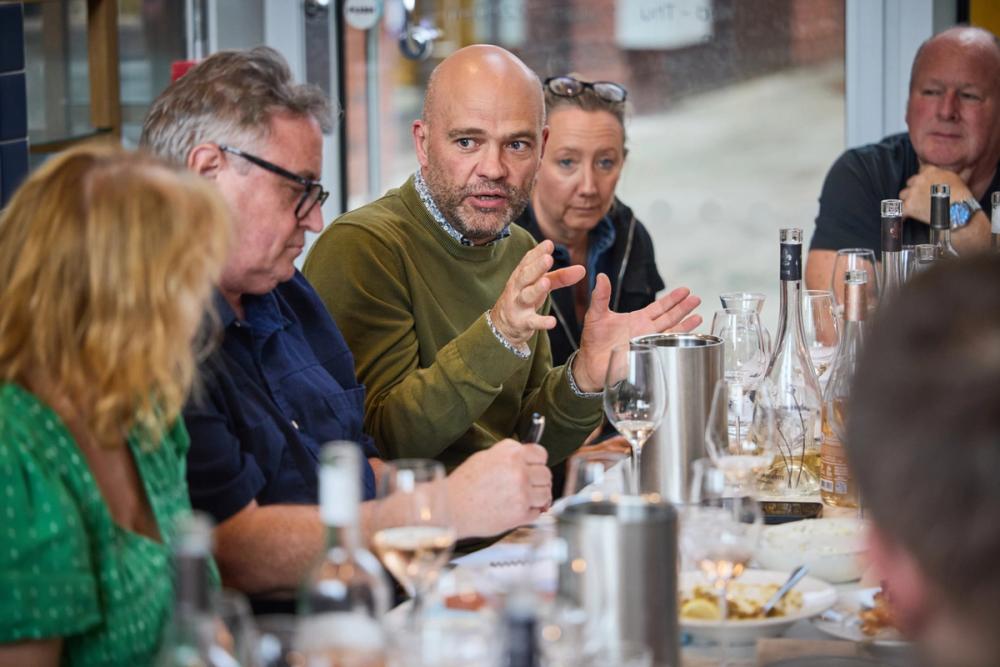
Richard Kilian was able to share his experiences with Provence rosé at his hybrid wine bar in Leeds
The restaurant tour was also an opportunity to introduce to the buyers to some wines from the additional five DGCs in the region that have been identified as being distinctive enough from other areas due to their terror and climate - like the high altitude Sainte-Victoire with its linear, crisp and vibrant wines from limestone soils and La Londe, right down on the coast, with its rounded style wines.
At Kallos, for example, there was one wine from La Londe (Château Sainte Marguerite, Collection Marguerites, Côtes de Provence La Londe, 2025) and one from Côtes de Provence Sainte-Victoire.
Market focus
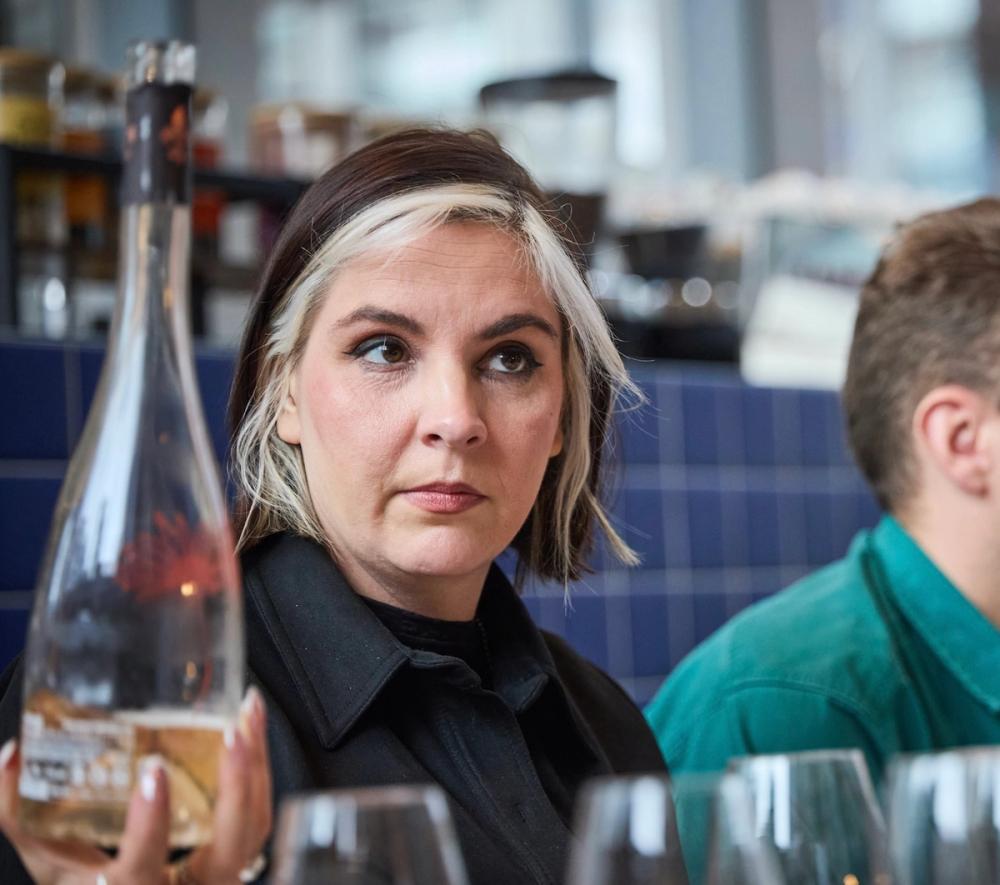
Frances Bentley said she is impressed by how market focused Provence producers are
Bentley said the region’s dedication to research and making wines that the market wants is also something that comes across loud and clear to her as a buyer with the producers she has worked with.
“Producers come to me and say what styles should we be making for the market rather than this is what we make. It is a region that wants to work collaboratively,” she said.
Richard Kilian said he was not surprised to hear the region has its own research centre by the fact its wines have increased in quality so much over the years. So much so that it is now very much a style of wine you can drink all year round, and is no longer just pigeon-holed as a “summer wine”.
Reid agreed and said that whilst it clearly has its “sweet spot in terms of sales” during the peak summer months where it is the go-to wine by-the-glass in the on-trade “it is now establishing itself as an option for wine drinkers throughout the year”.
Ciaran Keaney also said Provence rosé sales were not only strong for Carringtons Wine overall, but that they are now very much part of its annual trading plan and not just focused on a few months of the year.
Pricing strategy

Simon Cairns said its essential Provence producers maintain good value in the category
Cairns said the overall Provence rosé category is “still highly relevant” to a business like Myliko, but it is becoming increasingly important to get ranging and pricing right - particularly in the off-trade.
He explained: “Provence rosé ranges are starting to be consolidated by retailers as there is lots of duplication of price points. Having a clear price hierarchy really seems to help with entry price points being covered by IGP Med rosé, then own label and premium brand being covered by Provence. It’s great that the big brands, such as Whispering Angel, have managed to maintain their price point as it helps to keep this price hierarchy intact.”
It’s why it is so important that operators “maintain value in the offering and don’t fall into the trap of heavily discounting to chase short-term sales”.
“Retailers will continue to support Provence rosé if it’s margin accretive to their mix. If this starts to slip, the buyers will start to look for something else to help with their margin challenges,” he said.
He added: “I think that trying to over complicate the category by starting to talk about sub-regional styles is not relevant to the vast majority of UK customers. Stick to the price hierarchy of £8 entry; £12 mid-tier; and £18 premium. Most regions would kill to have this range of price points, so don’t throw it away.”

When in Manchester: Noel Reid with the infamous Manchester swagger...

Reid agreed it’s vital that Provence continues to get its pricing strategy right as there have been times in recent years where some producers and cooperatives have looked to push up prices higher than the market can sustain and with so many rosé alternatives out there the competition is intense. Both from with Provence itself and from other countries and regions around the world.
The consumer, he argued, will accept a more premium price point if that is “the norm” across the industry.
He would be looking to sell a Provence rosé into the on-trade, for example, that can sit at around £30 on a restaurant list.
Kearney also cautioned producers about their price points and the danger of some becoming too expensive.He said the wines that are most relevant for Carringtons Wines would be £20 or less a bottle.
Rezzouk said he would like to see Provence “focus on increasing quality at the lower price points (below £16 retail) if at all possible”.
“For indie merchants focused on quality, just having a pretty label is not enough. It is important, but not enough to compete with the bigger guys,” he stressed.
“Dry, crisp, fruity rosés work best at £12-13 a bottle, softer, fruitier but still very much dry, citrus finish wines at £15-16 ideally organic, strawberries and cream with lemon finish rosés at £20 a bottle - definitely organic. The latter one has to have a notably fancier presentation, special bottle, design branding on the label. You could push to £25-30 for extra quality, complexity and superior presentation,” he explained.

Frances Bentley, Phil Crozier and James Gulliver-Cameron on the march from Hawksmoor to Kallos
Bentley said: “It needs to retain the value at the premium end and continue to reassure people that the top end is worth spending on. I think spending time and money explaining the regional variances is irrelevant for 90% of consumers but they do respond to colour, packaging, complexity and brand awareness.”
She added: “There was a lot of chat on the day about preservation of the premium price but I disagree. Entry point Provence creates new category drinkers rather than steals from the established premium category drinkers. At least that is the case in the on-trade.”
Provence rosé is also part, she stressed, of one of the only growth areas in the on-trade and restaurants would be better off taking out a couple of red wines in order to list more rosé and recruit more and new consumers that way.
“It is building the drinkers we might have in 20 and 30 years time,” she added.
James Gulliver-Cameron says Hammonds of Knutsford has only recently taken on its first Côtes de Provence wine and admits it was attracted into the category primarily due to price point.
Reid said the impact and importance of what he calls the big “halo" Provence rosé wines with “enormous price tags and celebrity backing” can’t be overlooked.
“They help market the region as a premium wine region. They have done a great job in doing so, providing the backdrop for the region as a whole commercially,” he said.
Reid sees “the sweet spot” of £18 to £25 retail and £30 to £40 in the on-trade is where “the commercial numbers add up and build success in numbers of bottles sold”.
He added: “The bottom end of this is becoming very difficult, especially after rises maybe three years ago which saw Provence pricing rise above what the market I feel was ready for. Having a great product is one thing. Ensuring it is priced to sell in volume is equally important. The region seems to have looked to address this pricing in 2026 but it must be maintained if they wish to maintain their position."
Regional differences
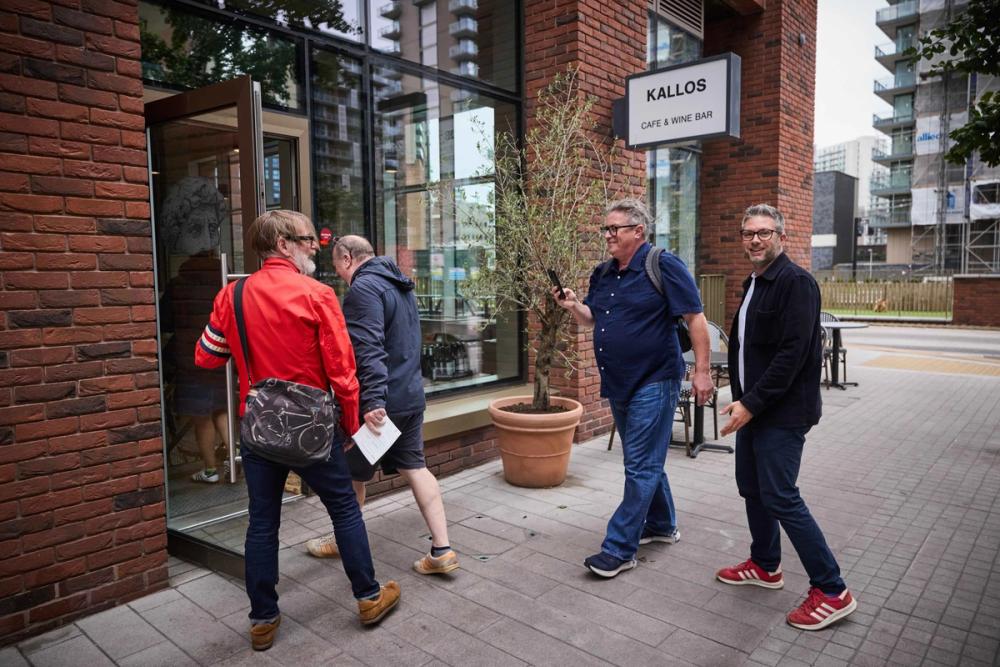
Arriving at Kallos...
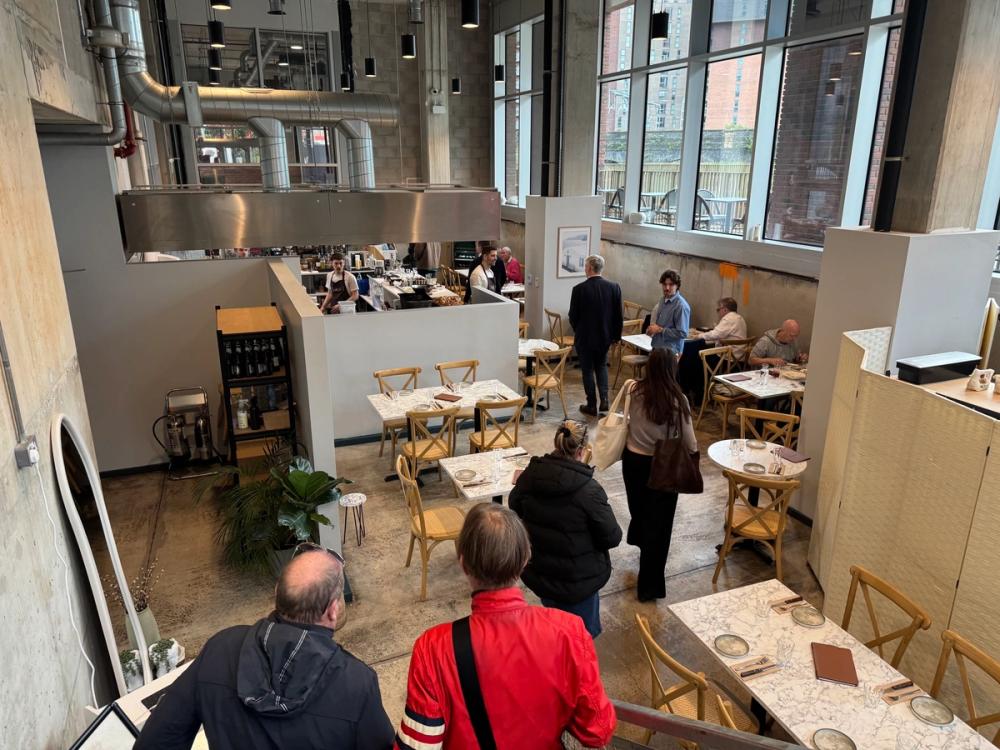
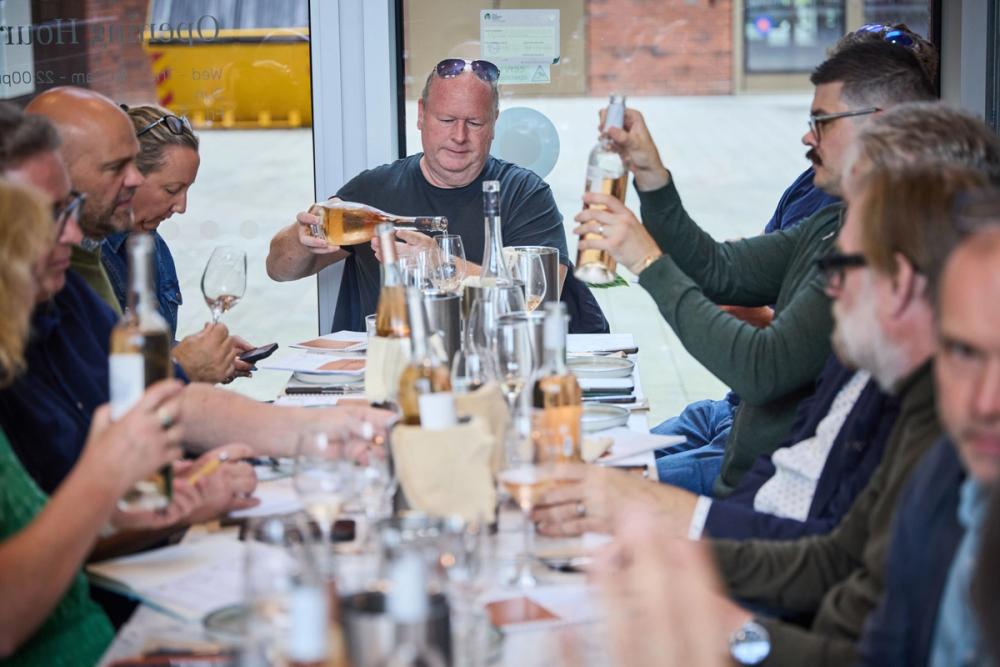
Shelbourn was particularly interested to see the regional and AOC differences in the wines.
He said: “The wines from the lesser-known Coteaux Varois were very distinguishable for their vibrancy from the fleshier rounded wines from Côtes de Provence which was a real positive and something I wasn’t expecting.”
He added: “Perhaps if Provence pushed the uniqueness of its different appellations there could be scope to have more than one on a mid-range restaurant list, but I think this would be a struggle to achieve.”
It is the “freshness” in the wines that really stand out and give Provence rosé the edge, stressed Kearney.
Food pairings
In terms of the favourite food pairings across the three restaurants Rezzouk was particularly taken by the sushi and maki dishes at Lucky Cat where the “delicate, creamy flavours had a little fat for the acidity to cut through - raw fish worked best”.
Reid felt “the structure of many of the wines with their delicate bright, crisp edge, helped many of the wines pair well with a number of fish and prawn dishes [particularly those with Cinsault]”. He added: “The light red fruit notes helped complement some of the dishes with a spicy note, allowing them to work well with a number of the Mediterranean dishes we tried.”
All of which “confirmed Provence rosé as a wine to enjoy with your lunch or dinner, rather than as just a social summer glass of wine,” he added.
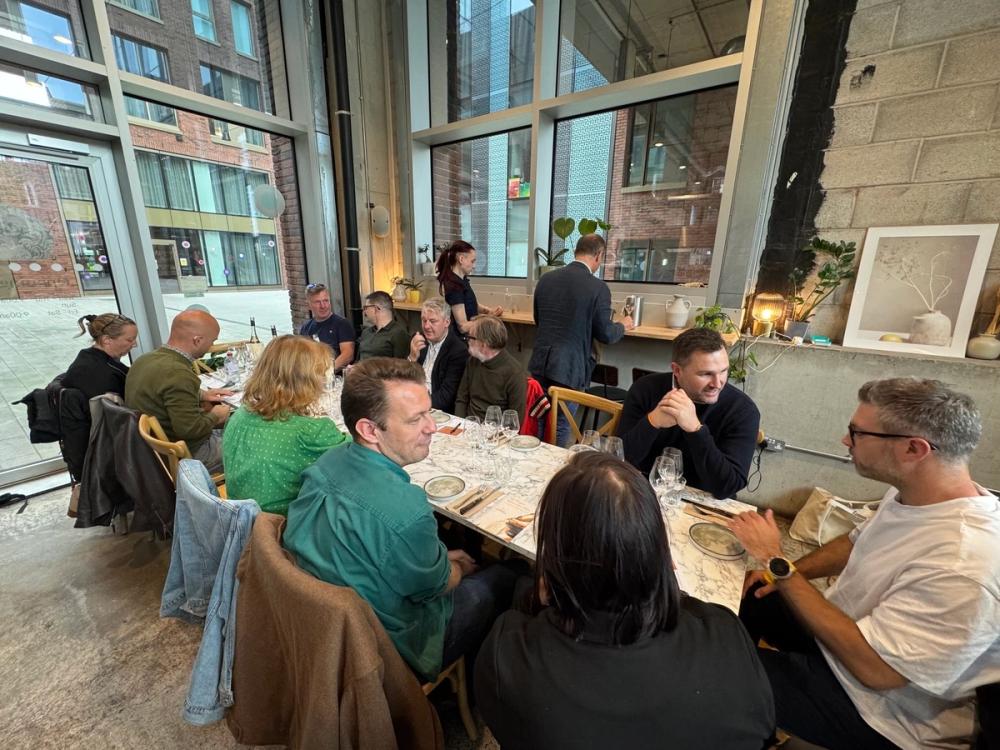
The panel had the chance to pair Provence rosé wines with Kallos' mediterranean dishes
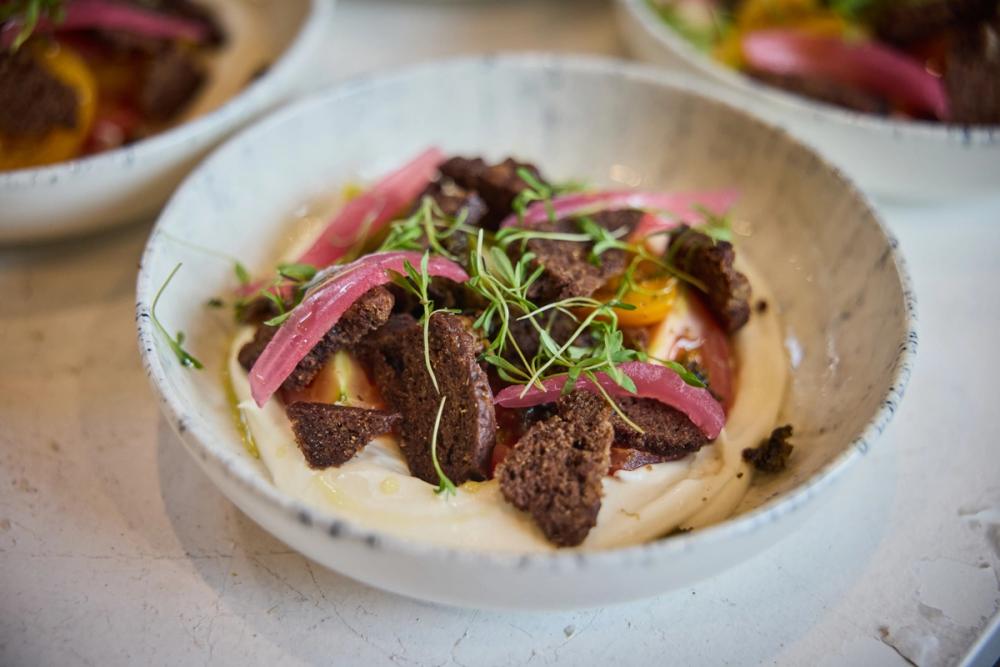
Bentley said she knew “Provence rosé was good with food but this cemented there was a wider range of food it complemented than I previously thought”. She added: “Not everything was a hit, but it was so much fun it didn’t matter. I particularly liked the pairings with monkfish, the Asian squid and the deep-fried feta.”
Shelbourn said it was good to see the wines standing up to styles of food “you normally wouldn’t pair with Provence and were very enjoyable, but I wouldn’t go as far as saying they enhanced those dishes”.
He added: “Unsurprisingly I thought the wines were best with the lighter and fresher Greek dishes at Kallos. I think a big part of Provence’s success is its association with sunshine and holidays so when the food matches this vibe you’re on to a winner.”
Cairns added: "I was surprised at how well the wines stood up to the Greek foods, but I would say that success will be more associated with occasion, rather than traditional food pairings.”
Kearney felt the Asian food at Lucky Cat paired the best the wines overall.
What next for Provence?

Sheltering from the rain in a taxi ride from Kallos to Lucky Cat
In terms of where Provence goes next, Rezzouk believes the region and its producers have a big part to play in helping the overall wine category re-connect with consumers.
He said: “Provence can be the one French region to contribute significantly to making the wine category cool and desirable for the new generation. It has that association with good times on the Côte d’Azur coast. A clear super premium category for lifestyle, status and a medium premium (around £20 retail) strong presentation that is accessible to everyone.”
Reid said the challenge for Provence rosé is to ensure it “continues to provide value in a competitive market” particularly in terms of “ensuring by-the-glass listings, which is essential for volume growth”.Keeping it accessible will be key,” he added.
Most of all she urges Provence to “keep its fun image - and publish more information from its rose research centre”.
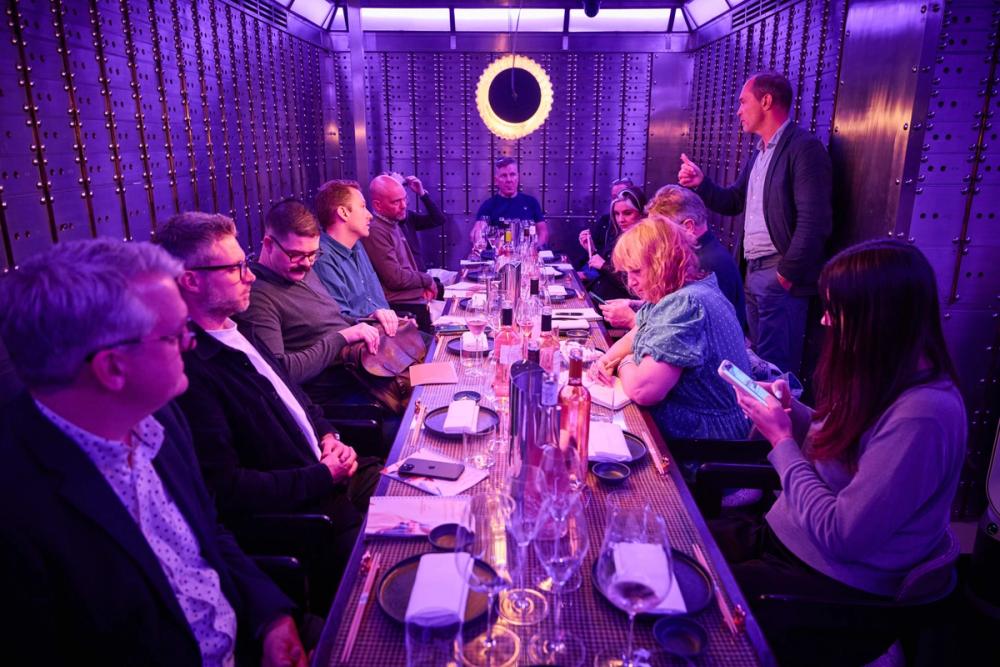
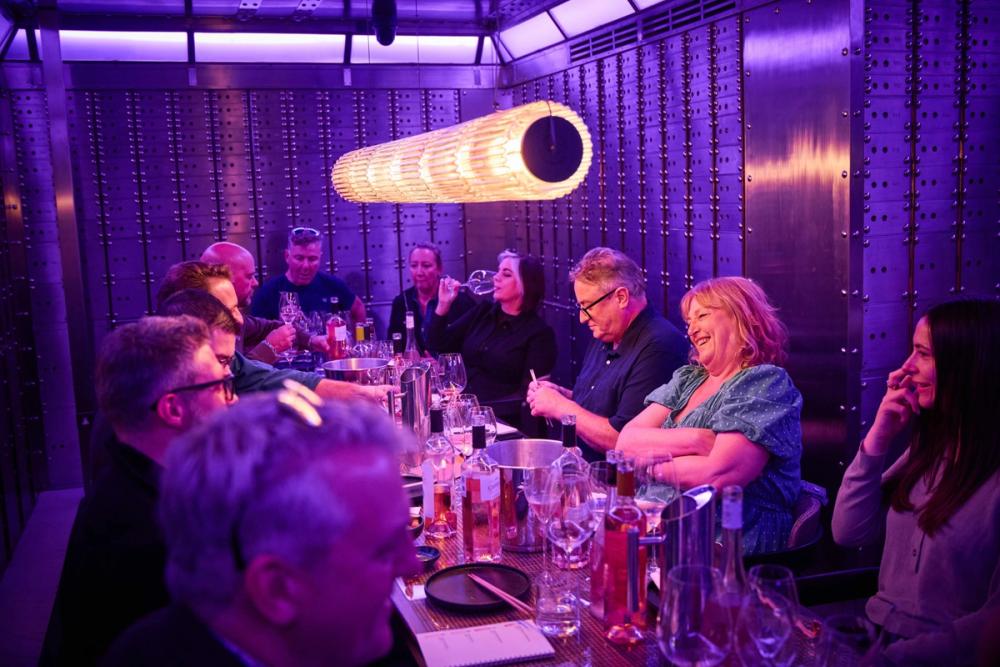
Lucky Cat's impressive private dining room in the vault of a former bank

Lucky Cat's head sommelier Piotr Stepien was able to explain the restaurant's Asian concept
In terms of which Provence rosé wines work best for Reserve Wines, Rezzouk said it has to be the “pale salmon colour” and then broke down style by price point.
Cairns said that “colour and bottle presentation is all important for the customer that is buying Provence rosé.”
In terms of next steps for Provence, Cairns said: "Look at the Champagne category – own occasions. Be relevant for gifting. Make sure the Provence brand is associated with indulgence and treating.”
Shelbourn added: “In terms of price points most restaurants will tend to have a more ‘entry level’ Provence either as their top rosé offering anywhere between £35-£55, whilst the more premium outlets will have a couple of options above this. So really all of the wines are useful in the market.”
Reid said the opportunity is there for Provence to build on its already very strong position.


Don't shut the door!
“It has the brand already. The consumer likes its wines and has considered them worthy of their premium pricing compared to most other rosé wines. The wines themselves hold a level of complexity you don't often see in rosé wines, with its use typically of Cinsault, Grenache and Syrah bringing these elegant wines to life.
He added: “Not many can offer that poise and maintain that lovely light touch of fruit. They do feel unique. The wineries are old hands at producing true quality wines that just happen to be rosé. It's certainly a strong position to be in.”
“That delicious, subtle, fragrance of light red fruits, and the super clean, delicate palate Provence rosé can offer is always a winner for me. Just a little touch of minerality on the palate to add complexity to the glass allowing the light fruits to dance. We love a dry rosé with enough character to interest the wine lover.”
* You can find out more about Vins de Provence wines here.