
If you have been paying attention to the global drinks wine press in the last four to five years one of the consistent narratives that has played out is that millennials and Gen Z are not drinking as much as previous generations, most notably Gen X and boomers.
This narrative was backed by data sourced from esteemed publications such as the Silicon Valley Bank’s annual report which in 2021 which claimed:“The wine industry will need a marketing organisation to deliver a unified national consumer message as wine sales across all price segments have been in decline over the past few years.”
In its 2022 report it said: “In prior reports, we noted that the falling interest in wine among younger consumers, coupled with the encroaching retirement and decreasing consumption of baby boomers, poses a primary threat to the business. That issue has yet to be addressed or solved, and the negative consequences are increasingly evident.”

Ross Sleet challenges the widespread acceptance in the trade that older wine drinkers are not being replaced by younger consumers
Fast forward to 2026 and again its report says: “The older, wine-focused cohort is aging out, and younger adults aren’t replacing them at the same rate. Millennial and Gen Z drinkers are spread across more categories and drinking less overall, particularly under age 29.”
In 1994 the New Scientist examined the concept of nominative determinism, which is the view that people tend to “become” who they are based on their names.
Have we in the drinks trade similarly talked our way into believing that the sky is falling on our collective heads? Have we adopted Chicken Little syndrome without trying to figure out exactly what is happening with consumers and wine consumption per se? Have we fallen into the trap of looking at a few trends and then believing them to be universal not further interpreted them?
Many who have heard the “evidence” without actually reading the facts, have stuck their head in the sand and blamed the “woke” youth for their downward sales trends, or more worryingly, done nothing.
The simple fact is that consumers who drink alcohol’s habits have changed, and the drinks, and wine industry especially, has been painfully slow to realise this and adjust their own brand and sales behaviour accordingly.
The Prosecution
For the prosecution, Moven International’s well researched November 2025 report regarding “Big Alcohol” had the seismic headline that “more than $830 billion in market value has evaporated since 2021 - a staggering 46% decline in just four years.”
Numerous additional commentators including one from venerable Morgan Stanley added to this tone, which appeared to be backed up the WHO’s statement that “there is no safe level of alcohol use concerning cancer risk”.
Structural changes were underway or due to manifest and this did not augur well for large drinks businesses. These changes were deemed to be as a result of the “broken” nature of the drinks business.
Large corporates, or “Big Alcohol” were reported to be aware that “most profits come from heavy and high-risk alcohol use” and that iIndependent studies consistently show that the top 10% of alcohol users account for more than half of total sales in major markets such as the US, the UK and Australia.”
The Defence
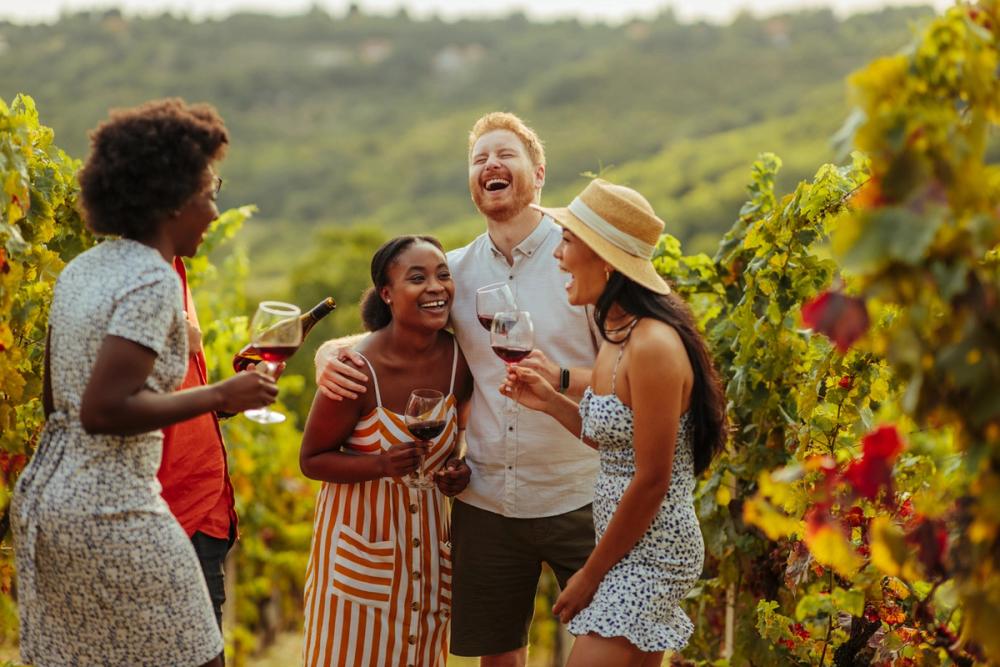
Millennials and Gen Z are continuing to drink - they just have different needs and habits than previous generations says Ross Sleet
All of the above, and much of what has been written hence seems to point to a global drinks crisis. Or does it?
Is it not rather demonstrative of an industry out of step with its consumer base? Let’s examine evidence for the defence: The July 2026 IWSR’s Bevtrac survey of consumer behaviour amongst Gen Z’s of legal drinking age conducted across 15 “key” markets noted that consumption had stabilised at 74%. This was up from 66% three years ago and close to the 76% rate for the total adult drinking population.
Boomers now registered the lowest drinking rate, at 71% and the lowest number of drinking occasions. Millennials are now the highest engaged segment at 81% and Gen X at 77%. So what has gone on here and why has much of the drinks industry missed these trends?
Being polite, my view is the tsunami of bad news swamped decision makers across multiple drinks segments. But being less diplomatic it’s clear, that with a few outstanding exceptions (more later), many brand owners, and this I feel is most prevalent in the wine industry, don’t look outside their own segment for information.
Wine folk look at other wine folk and deduce that if we are all experiencing the same phenomenon then it must be so. However wine is a cultural good as well as a commodity FMCG product so a truth in one sector cannot always be true across all sectors.

Drinking habits are going to be different across the world based on local cultures and consumer behaviour - it is our job to recognise and understand what those differences are then build a relevant drinks strategy for that market says Ross Sleet
A Gen Z wine drinker in New York City is not behaving the same as a Gen Z wine drinker in Mumbai. The wine offerings in both cities differ radically. Hanging out in a trendy East Side New York wine bar is not the same as hanging out in a Bandra West wine bar.
Johannesburg’s wine scene is not the same as Cape Towns, so how can one “truth” be the same globally.
This is not to ignore research in favour of assumptions as the IWSR has acknowledged that moderation is “now firmly embedded in society”, “participation in beverage alcohol across all markets surveyed remain consistent.”
It is the frequency of engagement that appears to have shifted most dramatically with drink occasions declining from 4.4 drinks per session in 2024 and 2025, to 3.9 drinks per session. It is these shifting sands that are challenging drinks’ brand owners the most as where and when alcohol is consumed has changed and continues to evolve.
The Reality
Whilst in traditional markets, such as the UK and US, beverage participation has remained largely steady, emerging markets, most especially India and China, are seeing a surge in urbanised, Gen Z consumers. Having witnessed this behaviour myself over the past 18 months this is where the evidence takes on reality.
Since February 2025 I have crisscrossed the globe travelling to Europe, the near East, South America, the US, Europe, the UK, Asia, and Walvis Bay (!) in the pursuit of selling wine, but more importantly, looking at what is happening wine-consumption wise in these diverse regions and cities.
Whilst my air miles balance is healthy and my carbon footprint less so, the biggest learning I have experienced is that “we”, the global wine and drinks trade, need to get out more. And by that I mean we need to get out of our comfort zone and be put into places where wine consumption is not a given, routes to market are complex and expensive, and our usual assumptions about what attracts a consumer to your wine brand are either way off the mark or non-existent.
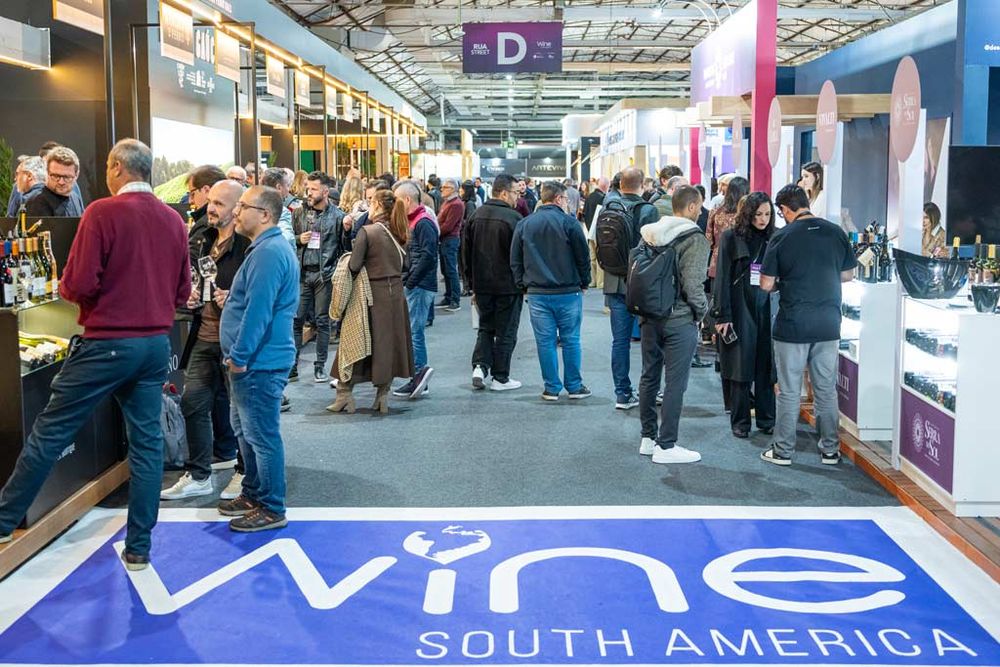
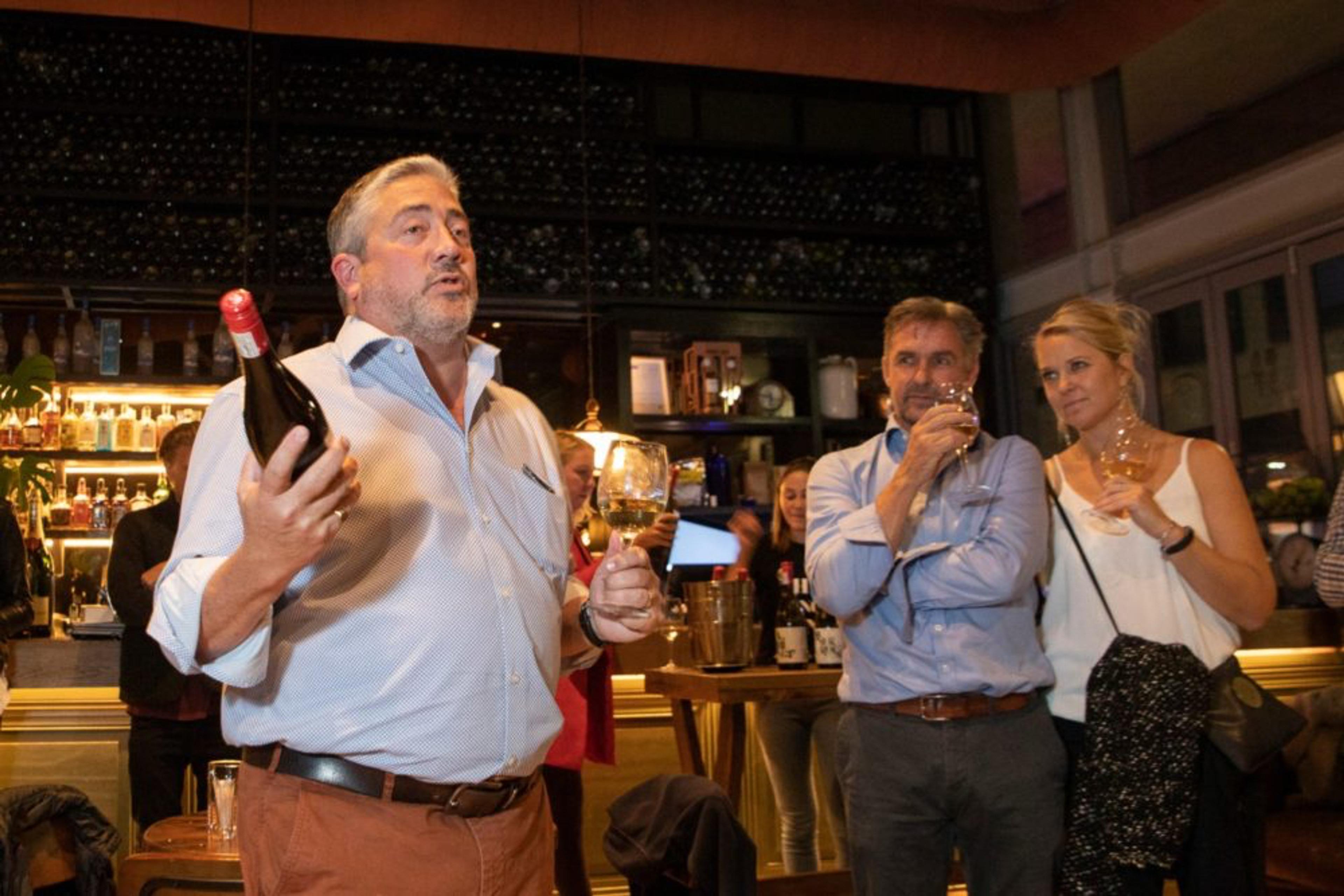
Only by travelling to events such as Wine South America can you keep up with wine trends around the world says Ross Sleet
I have been asked why I attended Wine South America earlier this year representing a South African brand owner and the answer is simply that in order to sell wine in Brazil (and South America for that matter), we have to understand how brands from South America and Europe are positioning their brands.
Similarly, why take in so much of Asia? The short answer was to hear from the wine trade in these markets how consumption patterns were changing, and how rapidly. The rise of the Asian, urbanised, financially independent female drinker is not only changing what is being drunk wine wise, but where it is being drunk.
Venue after venue I visited was well-lit, awash with groups of professional women enjoying their own and other women’s company and being welcomed by establishments as the future wine consumer.
Not unimportant was that the profit imperative in servicing this consumer base is 100% understood by sommeliers, venue owners, and management teams alike.
Wine consumption in much of the developing world is helping to shape an entirely new consumer engagement. Convenience is driving canned wine sales in Japan. Restaurants and venues across the Middle East, Africa, and Asia are investing in qualified wine service staff, business owners and managers are wine savvy and understand the revenue boost that it provides over beer.
Cocktails, sparkling wine, and still wine sit comfortably alongside each other as the new “ambidextrous” drinker engages with all of these categories during one occasionThe arrival of coffee culture in Shanghai where the largest coffee café brand is the Chinese owned Luckin brand, and where over 10,000 coffee outlets service this hungry market – for sure mirrors the rise of wine culture.
Both beverages are sensorial in their experience, are not “necessary” for life and therefore constantly cross over the boundaries between hedonic and commodity products, are inherently culturally experiential, and encourage experimentation and preference selection at the same time.
“I love Chenin Blanc and have to have my morning espresso” are sentences not out of kilter in any modern global developed city, let alone Nairobi or Shenzhen.
The Kylie factor
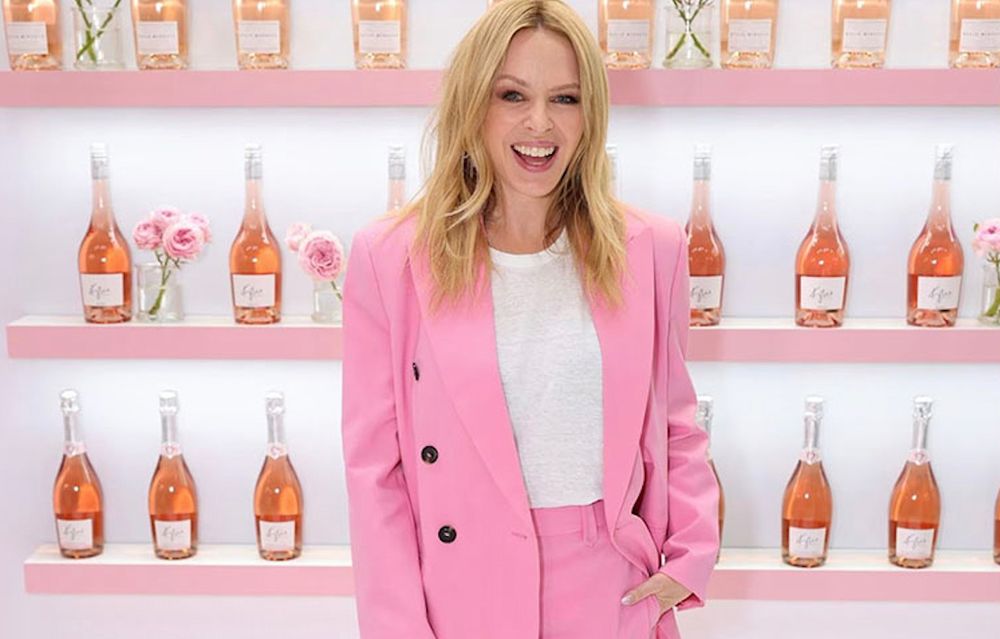
Kylie Minogue has now sold close to 30 million bottles of her wines that are now on sale in nearly 40 countries around the world
To really understand global wine consumption and Gen Z we don’t need to look any further than Kylie and what she has done with her wine brand. I always bring it up when lecturing students on wine marketing, something I have enjoyed doing for over a decade.
Kylie, the wine brand from the phenomenal Ms Minogue, is sold in over 36 markets around the world, with sales having topped 27 million bottles to date. Yet when I asked earlier this month in one of the classes that I teach (which was full of Gen Z and some Gen Alpha’s) if they knew of the Kylie brand, not one of them knew who the Australian legend was! Kylie Jenner yes, but of the Minogue variant, zero recognition.
To say I was shocked is an understatement. When I asked incredulously: “Are you saying that you have no idea who Kylie Minogue is?” everyone shook their head and said no. So is this a failure or an opportunity? Knowing the people behind the Kylie brand somewhat, they would say it’s an opportunity.
The fact that consumers are seeking new wine (and drinking) experiences, are changing their (wine) drinking habits to suit their lifestyles and pockets, are fashioning their perception of wine themselves and not waiting for older men to describe a wine or wine experience for them, and are demanding a different narrative, is an opportunity, not a cause for doomsaying.
Commercial wine buyers, brand owners, and wine market shape shifters need to pay attention – your consumer is growing up, are you prepared?
Ross Sleet is chief executive of Boland Cellar, a large-scale wine producer cellar base in Paarl, South Africa.