Tell us about your new book - A Measure of Britain - what can we expect?
It’s a love letter to Britain, told through the cocktails we love.
I’ve taken the nation’s favourite cocktails, from the margarita to the espresso martini to the piña colada, and used them as the lens to explore who we are as a nation. Our quirks, our eccentricities, questionable drinking habits and our never-failing ability to find something worth celebrating.
It’s also a celebration of the British bar industry, some of the most colourful and switched on people in the world of drinks.
There’s plenty of cocktail history, fascinating characters, some surprising revelations and my definitive recipes for each cocktail. But it’s not a traditional cocktail book, it’s really about the people behind the drinks and what our choices say about us as British people.
Hopefully, you will find yourself nodding in agreement, laughing along and learning a thing of too while you are at it.
Where did the idea of the book come from - what was the inspiration?

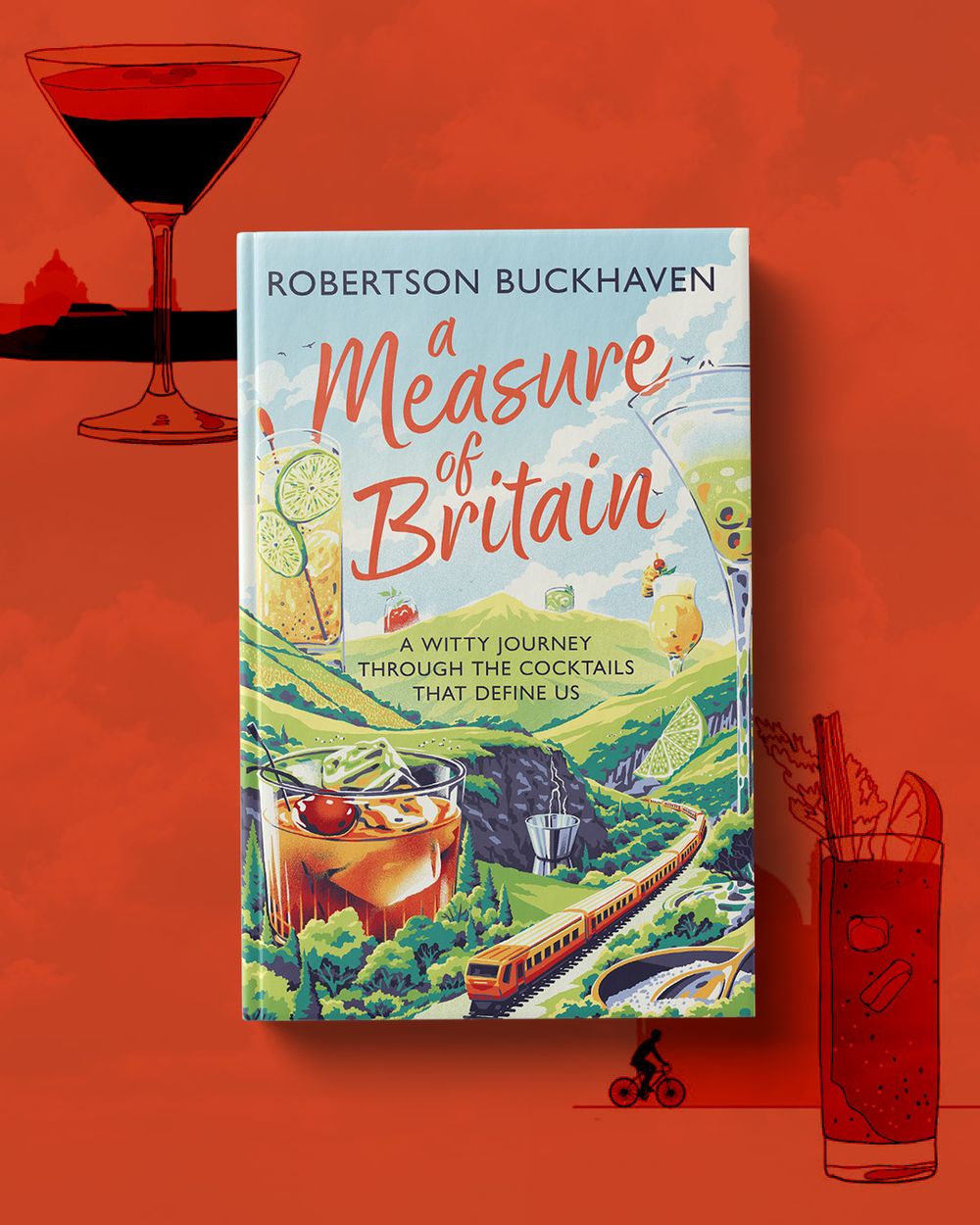
A Measure of Britain is published in the UK on November 5
The British public, really. I find us endlessly fascinating. We have this extraordinary relationship with drinking, have you noticed?
We can be reserved one minute, then after a couple of martinis, we behave as if we have known everyone in the room for years. I know, it’s called being tipsy, but we’re so good at it.
And I have always been fascinated by how certain cocktails have now become part of our national identity. How they are made in Leeds versus Bristol, and whether that’s different to how they’re made in Edinburgh.
I wanted to explore why we drink what we drink, how these cocktails have become so popular and what they reveal about us.
How have you gone about putting the book together in terms of the content you wanted to cover and then how you researched and pulled it together?
I started by identifying the top 10 cocktails in Britain. I wanted drinks people could relate to, the ones everyday drinkers have a relationship with and a good few stories about.
Then I found out who the movers and shakers were in the British bar scene, met up with them, chatted to them and drank with them. It’s a tough job.
I dug into the history of the cocktails, the people who created them and how they’ve become part of the British culture.
What I loved is that the research often pulled me in completely unexpected directions. I would start of with a cocktail and end up learning about a surprising detail or connection to that city or region. Like Brighton and its back story with tomatoes, the Bloody Mary and its brunch culture.
And each chapter finishes with my ‘Perfect Pour’, so readers can make the best possible version of the cocktail in question, according the me and the British bar industry.
You are pairing cocktails with different cities - how have you decided on what to pair with where?

Rob Buckhaven's day job is drinks writer for the Metro
I didn’t want to force the pairings, so there had to be at least a thread of connective tissue running through them. I wanted each one to tell us something interesting about the drinking culture there, the city and its people.
Take Edinburgh and the negroni. People will be surprised this wasn’t a whisky-based cocktail connection, but the Scots have to drink something while the whisky’s ageing. And that happens to be white sprits, they’re particularly partial to gin. Similarly, I have matched the G&T with Glasgow.
Then there’s Manchester and the margarita. Manchester has such a brilliant, energetic bar scene and an exciting relationship with agave sprits, the margarita was a natural fit there. Especially with all its tequila/mezcal-focussed bars.
Liverpool and the piña colada worked because of the city’s rum connection. Plus, there’s a flamboyancy and unashamed extravagance to both the city and the cocktail, unapologetic and determined to have a good time.
Same rum connection with the mojito and Bristol. Both cities were part of the trade links to the tropics, which you will see had a bit of a darker side.
Then, there’s London and the martini, where I compare how they are made east to west, with quite entertaining results.
The general idea was to use the drinks as a way to explore the personalities of the cities and the people who live there.
Who do you hope will enjoy the book - consumers or the trade?
Both, really. But I was conscious I didn’t want to write a book exclusively for the drinks trade.
There are enough hilarious anecdotes, observations and relatable stories for people who just love a Friday margarita night and a laugh. There’s humour, history, stories and practical advice.
At the same time, it will be fascinating for trade to see how their peers are preparing these drinks, what their tips, tricks and bugbears are. Some of them go into quite a bit of geeky depth, which I love. These bar industry professionals are an opinionated and extremely funny bunch.
And if someone finishes the book feeling a bit more confident about ordering a cocktail or making one at home, I will be thrilled.
What did you find the most challenging about writing the book?
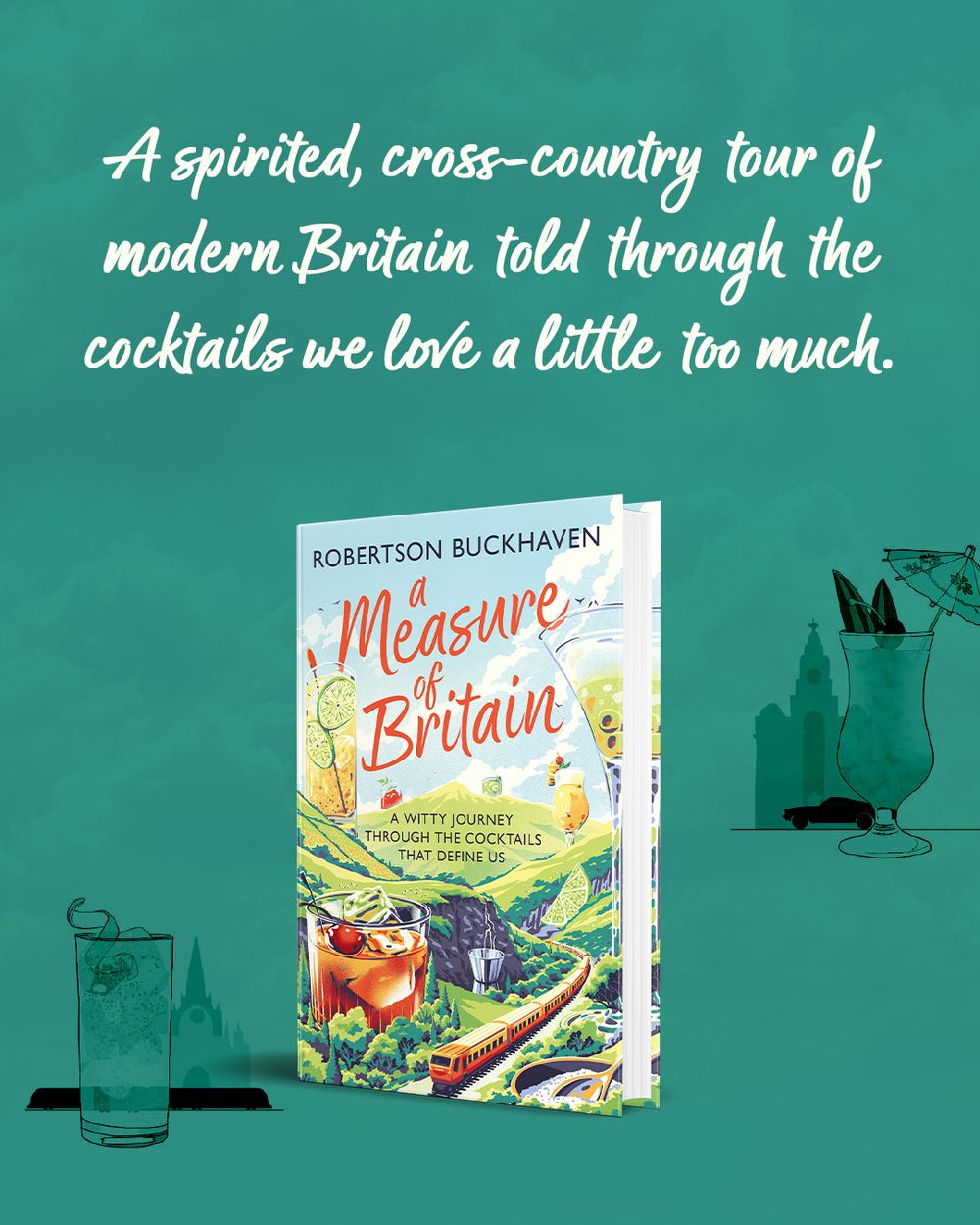
Find out which cocktail should be your favourite depending on the city you are from in A Measure of Britain
Knowing when to stop researching. Every time I thought I had finished a chapter, I would meet another fascinating bartender and just have to include another extraordinary detail.
The challenge was to make sure it stayed entertaining rather than becoming a cocktail encyclopaedia. I wanted to get the balance right between being informative and funny. There’s definitely some deep research behind the book, but it had to feel breezy.
I deliberately wanted it to have a narrative, almost travelogue style, as it’s the kind of writing that appeals to me. Particularly the likes of Bill Bryson and Felicity Cloake.
And of course, I had to try out a lot of versions of each cocktail, whilst remaining sober enough to actually write it.
What did you find the most rewarding / enjoyed the most?
Without question, it was meeting the people. We have some of the most talented, innovative and passionate people working in our bars, and I wanted to hear their stories.
What struck me was how generous everyone was with their time and knowledge. There was absolutely no gate-keeping, they were genuinely excited to share their insights. These are people who have dedicated their careers to making the perfect drink, and each one had something unique to add.
I also loved discovering the stories behind the cocktails I’ve been drinking for years. You think you know how to drink, then someone tells you something that completely changes the way you look at it.
And there is something incredibly rewarding about taking all those conversations, journeys and discoveries and turning them into something you can hold in your hands.
And that strangers all over the world will read it - hopefully a lot of them!
You say you look to celebrate how the Brits are able to turn any situation into an excuse for a drink - can you give us an example?
Err, where do I start! The sun comes our for approximately eight minutes and suddenly everyone is sipping negronis like they are in a piazza on the Amalfi coast. When in fact they are waiting for a train at Milton Keynes Central, chugging it out of a can.
We drink when our team wins, we commiserate with a drink when they lose. We celebrate a night in with an Old Fashioned on the couch, covered by a duvet and no plans to ever leave the house. We celebrate on a night out, pre-drinks (prinks) first, followed by a tree of Pornstar Martinis, because we are out-out.
I love that about us. We are a nation who can find an excuse to raise a glass in any situation. And it’s not necessarily about drinking more, it’s about the rituals, connections and occasions we create around a drink.
That’s really what A Measure of Britain is celebrating.
Any other things to say?
What differentiates A Measure of Britain from the many cocktail books already on the shelves is that it's primarily a book about Britain, with cocktails as the vehicle to tell the story.
I wanted to write something that made people laugh, made them think and perhaps made them look at fellow British people a little differently.
Because the more we learn about the cocktails we drink, the more we learn about ourselves, in theory. Or the whole thing could just be a good excuse for another drink.
* You can order a copy of A Measure of Britain which is published in the UK on November 5 here.