
Tell us about your expedition and how it came about.
Years ago, my family and I created the Planet Future Foundation because we believe the future of our society rests on two pillars. The first is the health of the planet our children will inherit. The second is the mental health of the people who will live on it. That’s why our work brings together environmental protection and the fight against bullying.
We use expeditions and extreme adventures to attract the attention of the media, parents, teachers and students. Diving beneath the ice in Greenland, diving with sharks in the Caribbean or jumping from a helicopter beside Everest gives a journalist a reason to call and a teenager a reason to watch.
Sooner or later, someone asks, “Why are you doing this?” That’s our opportunity to talk about bullying.
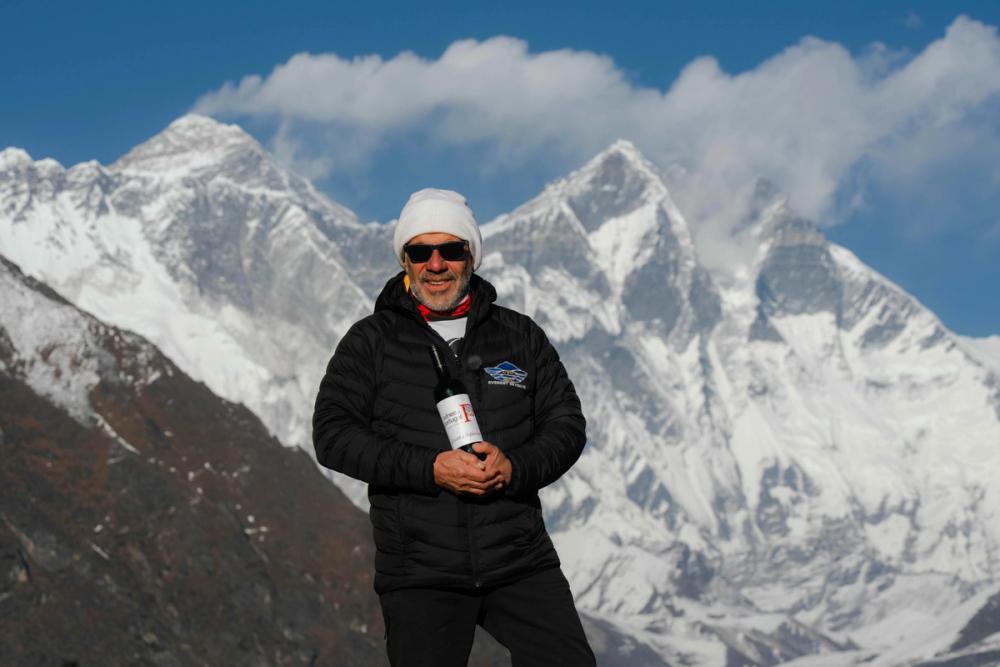
Pancho Campo on completing his skydiving expedition over Everest - thanks to the support of his main sponsor Wines of Portugal
The worst enemy of bullying is silence. The more noise our expeditions make, the more chances we have to reach a parent who starts a conversation at home, a teacher who raises the subject in class or a student who decides to speak up.
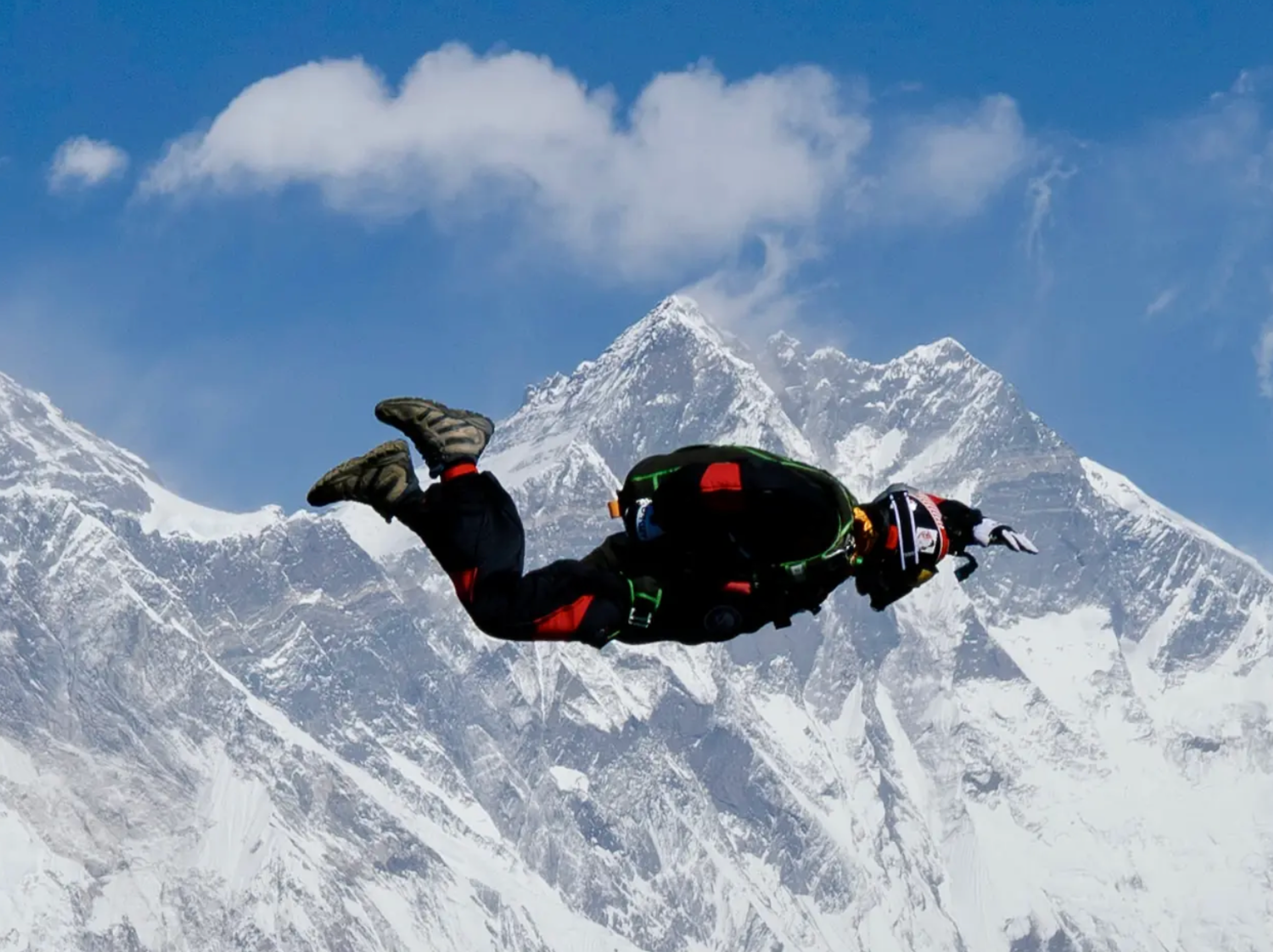
Everest was our tenth expedition. At 65, I became the first Spaniard to skydive beside Mount Everest. I made two solo jumps and dedicated both to Zero Bullying.
Why did you choose Everest for this particular challenge?
Ever since I was a boy, I’ve admired explorers. Tenzing Norgay and Edmund Hillary were childhood heroes of mine. I was fascinated by Roald Amundsen and Robert Falcon Scott and their journeys to the South Pole, and by the explorers who set out for the North Pole.
Everest had been on my bucket list for years. I suffer from vertigo, so climbing it never appealed to me, but I had always wanted to get at least as far as Everest Base Camp.
When we started thinking about our next expedition for Zero Bullying, that childhood dream came back to me. I thought two solo skydives beside Everest would capture the imagination of the young people we wanted to reach. I also thought journalists might want to know why a 65-year-old was jumping out of a helicopter in the Himalayas.
And here we are, talking about bullying, which is exactly what I had hoped for.
Why is the Zero Bullying campaign so important to you personally?
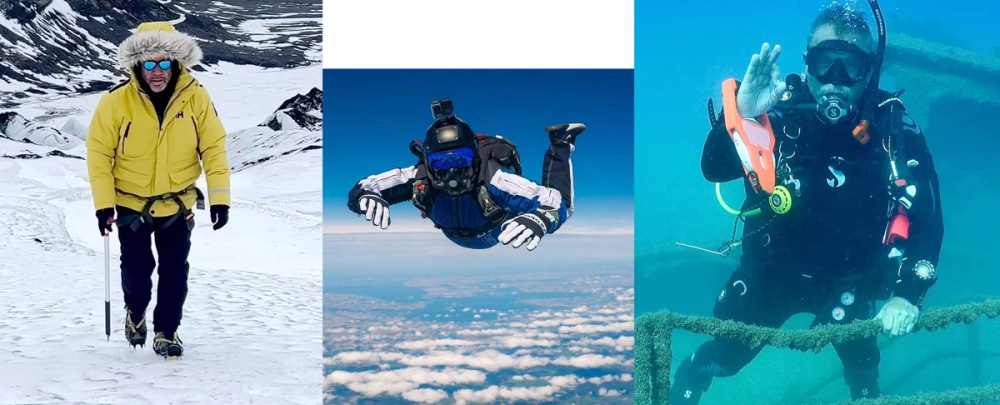
Pancho Campo's Everest skydive was the latest expedition he has done to raise awareness and provide a platform to talk about the issues of bullying and what steps we can all take to stop it
I was bullied when I was young. In my case it was fairly mild, but my daughter experienced severe bullying when she was 14, 15 and 16. Seeing her go through that for three years changed my understanding of what bullying does to a young person and to a family.
My wife founded the American College in Spain, where the Zero Bullying project was created in association with the Planet Future Foundation. As a family and as a college, we take bullying very seriously. We have zero tolerance for it. To me, that means listening when a young person finds the courage to tell you what’s happening, acting on what they’ve told you and checking back with them afterwards.
I also think about the student who sees a classmate being targeted and is afraid to get involved. Telling a trusted teacher what you saw gives an adult a chance to act. Sitting beside that classmate at lunch lets them know, that very day, that someone is on their side.
How much training did you do, and what did it involve?
I trained for six months. I spent more time on cardio to prepare for the trek, worked on flexibility and had physiotherapy. I also adjusted my diet to reduce my weight and the load on my parachute.
For about four months, I trained at Skydive Spain, jumping more frequently and getting used to a canopy roughly 70% larger than the one I normally fly. I practised controlling my breathing and mentally rehearsed the exit, opening and landing. That preparation helped when I was sitting in the helicopter on oxygen.
If I were doing it again, I would devote much more of those six months to walking uphill for hours on consecutive days.
Take us through the expedition. How difficult was the hiking?
The hiking was one of the hardest parts of the whole expedition. After technical briefings with HALO2 and Everest Skydive in Kathmandu, we flew into Lukla, a mountain airport known for its difficult approach. From there, we trekked through Phakding, climbed to Namche Bazaar and continued to Syangboche, where we’d take off and land for the jumps.
Even after six months of training, it wasn’t enough for that trek. I knew there would be steep climbs. What I underestimated was how it would feel to keep walking uphill for hours as the air got thinner. My legs were already tired, there was still climbing ahead of me, and the higher we went, the less oxygen I got with each breath.
We gave ourselves time to acclimatise, but those were tough days in the mountains.
When we reached Syangboche, I walked the landing strip. I remember standing there looking at the cliff on the right and the drop at the far end. After all the effort it had taken just to get there, I now had to picture myself coming in to land.
How were the skydives performed, and from what height?
Both were solo jumps from an Airbus H125 helicopter, and we used supplemental oxygen on board. The first was a hop-and-pop. I opened my parachute shortly after leaving the helicopter so I could get a feel for how the canopy handled in the thin air and fly my first approach to the strip.
On the second jump, my altimeter read 24,500 feet above sea level as I stepped through the helicopter door. Since the landing strip was already at about 12,400 feet, I was roughly 12,100 feet above the place where I would land.
I opened my parachute about 5,000 feet above the landing zone and spent around four minutes under canopy, with Everest, Lhotse and Ama Dablam in view.
Was it more challenging than you expected?
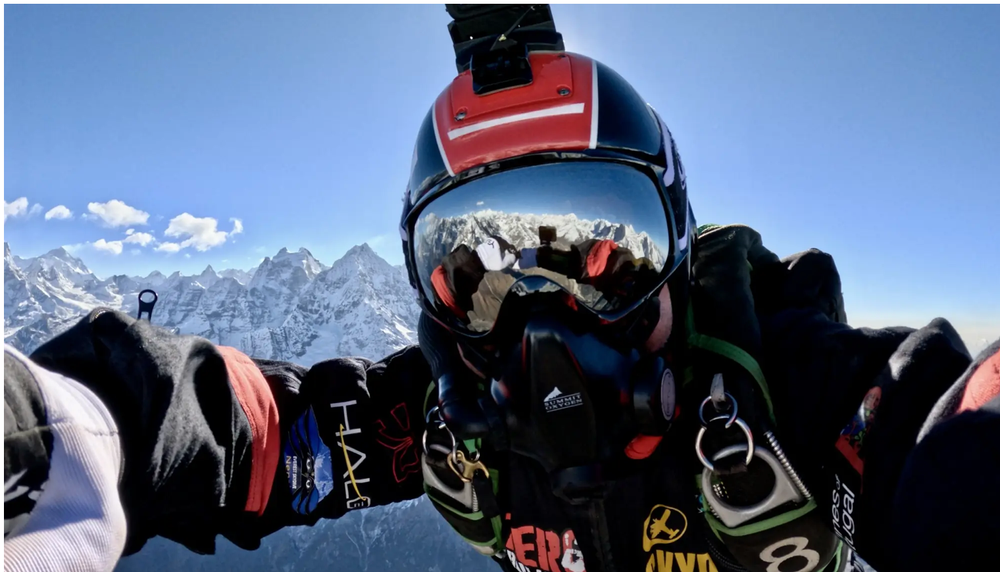
Pancho Campo's skydives were the result of months of training and hundreds of skydives he has done in his life
Yes. Physically, the trek was the biggest surprise. Mentally, one of the harder moments came when I was already aboard the helicopter, with my oxygen connected and ready to jump, and the clouds forced us to call it off. I knew it was the right decision, but I was disappointed.
Although I couldn’t jump that day, the helicopter took us to Kala Patthar, where we landed at about 5,660 metres, high above Everest Base Camp.
There, with Everest in view, I scattered the ashes of my nephew, Stefaan Bacque. He had worked alongside me at events and conferences for years and had died of cancer just six weeks before I arrived in Nepal. I had promised my family I would take him there.
When I think back on that day now, what I remember most is being able to keep that promise.
What were the hardest parts of the jumps themselves?
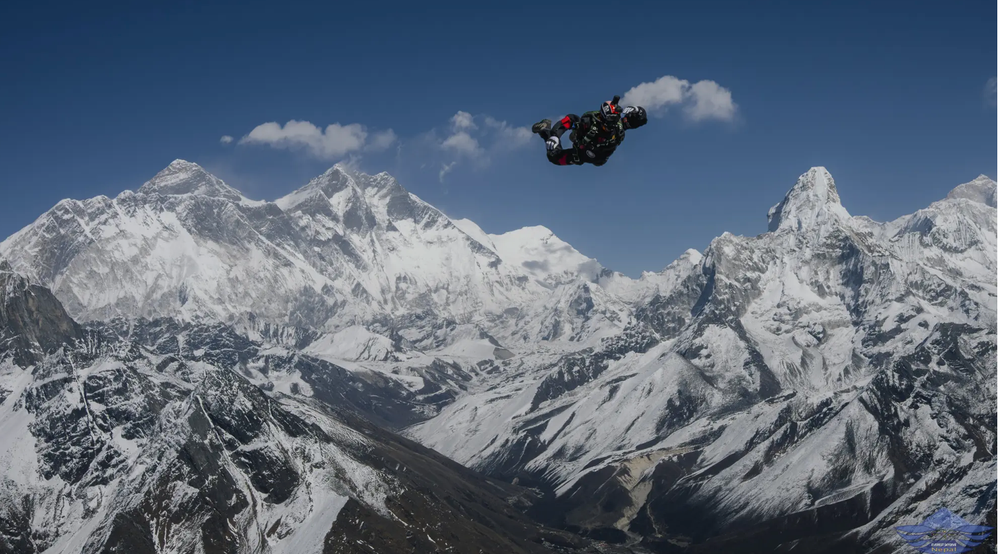
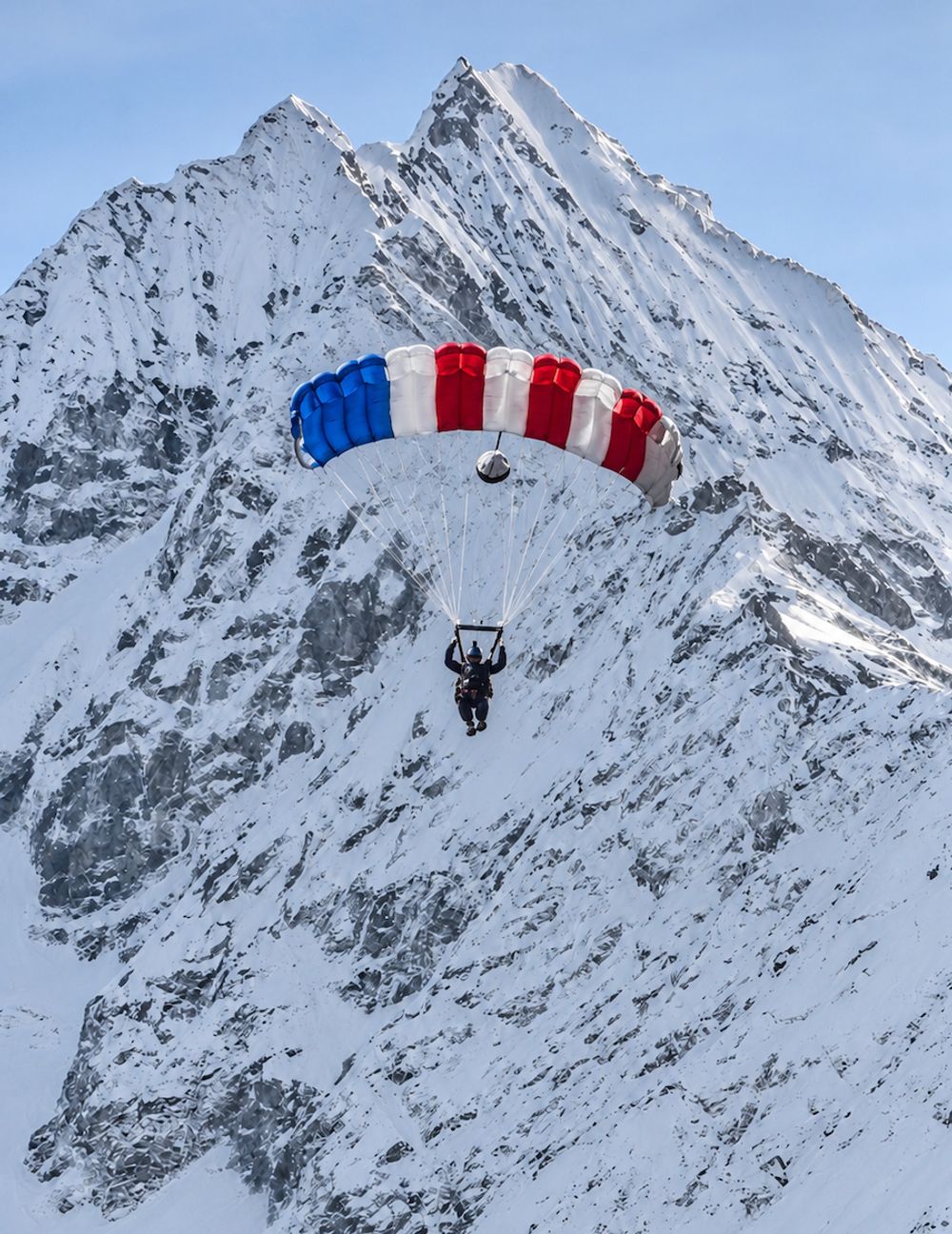
Pancho Campo skydiving by Everest
The landing demanded the most concentration. The strip at Syangboche is quite long, but with a cliff on the right and another at the far end, I had to judge my position carefully. Even under that much larger canopy, I was coming in faster than I was used to at home. Having walked the strip helped because I could recognise features on the ground as I came in.
Then there was a distraction I had never had at Skydive Spain. I had waited since childhood to see Everest, and there it was. I wanted to look at it for as long as I could, but I had a landing to make.
What was most rewarding?
For me, it was the whole experience. When my feet touched the ground after the second jump, I exploded with joy. But when I think about Nepal now, I also remember how it felt simply to be in those mountains. I had spent months thinking about the jumps. I hadn’t anticipated how much I’d enjoy getting to know Nepalese culture, learning about Buddhism and taking time for meditation.
The puja ceremony was especially meaningful. I had brought a photograph of Stefaan with me, and during the ceremony a lama blessed both his photograph and his ashes. That quiet moment has stayed with me just as clearly as the moment I landed at Syangboche.
There is a before and an after for me with this expedition. Both jumps were for Zero Bullying, and I came home with footage I hope will help young people. The journey also gave me a way to honour Stefaan’s memory in a place I had dreamed about all my life. Having those things come together made the experience tremendously special.
How did you feel during the jumps? What was going through your mind?
In the helicopter I was excited and nervous. Breathing slowly gave me something to concentrate on while I waited. Once I stepped through the door, my thoughts became very simple. Get stable. Check the altitude. Be ready to open.
Once the parachute was open and I had checked it, I could finally take a few seconds to look around. Then I looked down, recognised the strip I had walked and thought, “Right, Pancho, now you’ve got to land”.
When students ask whether I was afraid, I can answer honestly. I was, and I could still do the next thing I had practised.
You also had the support of Wines of Portugal. How important was that to the expedition?
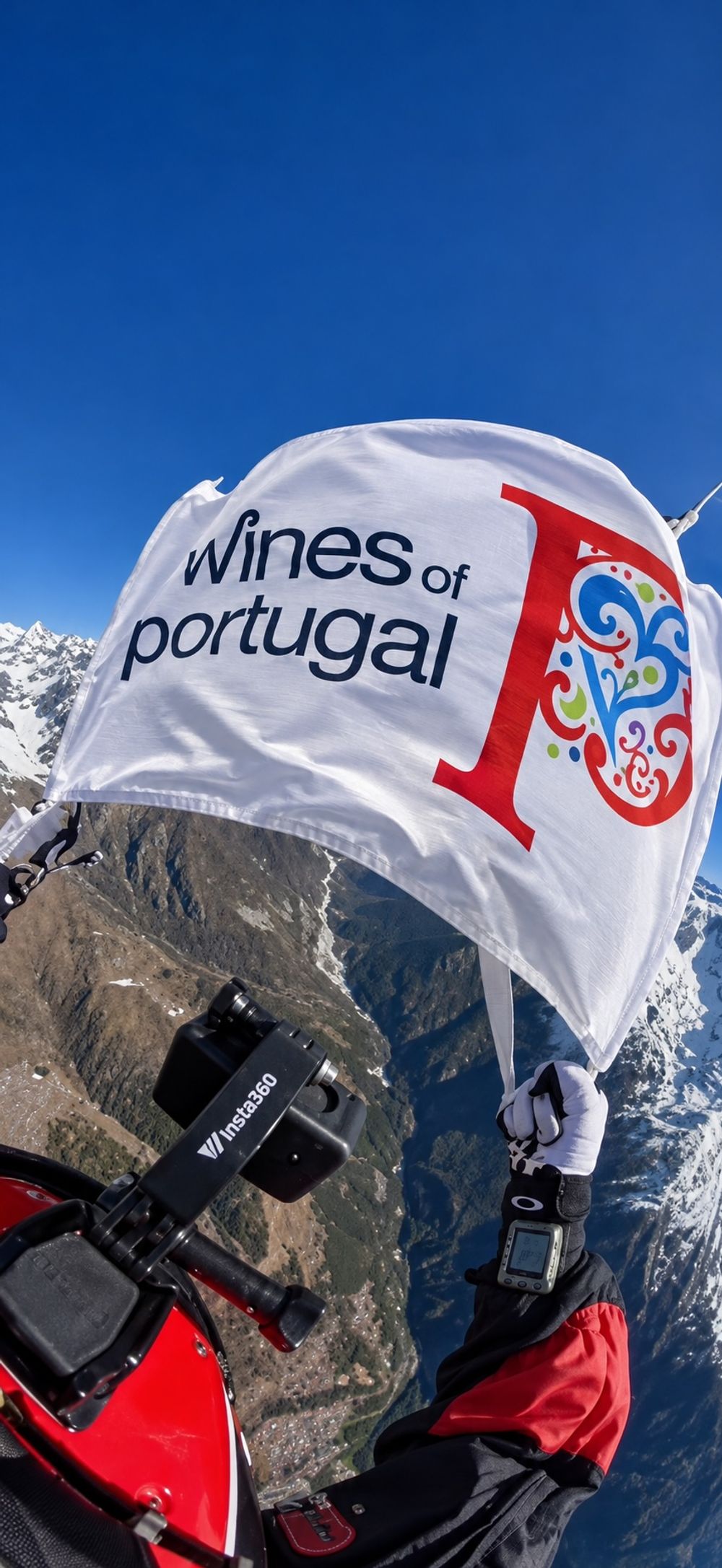
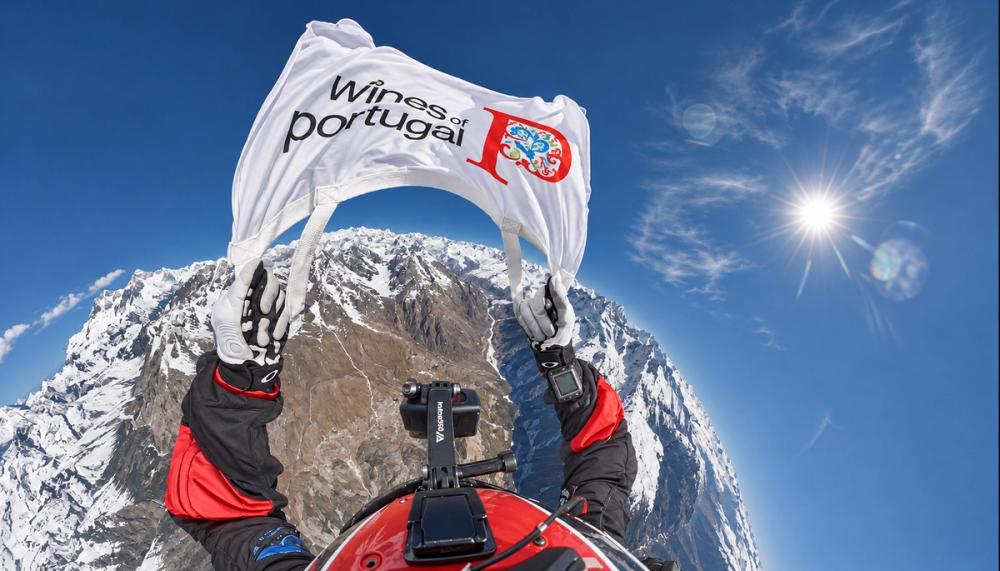
Wines of Portugal's sponsorship was vital in allowing Pancho Campo to achieve the Everest skydive
Their support was crucial. We’ve worked with Wines of Portugal for almost 15 years, and their financial backing helped make this expedition possible. It meant a great deal to me that people I’ve known for so long understood why we wanted to film those jumps and bring the footage home for our Zero Bullying talks.
I would also like to congratulate Wines of Portugal for the way they speak to adults about moderation and how wine can fit into the lives of people who value a healthy lifestyle, travel, adventure and extreme sports.
For us, that came down to a simple decision. We were taking part in a high-pressure sport at very high altitude, so we refrained from drinking alcohol until the entire expedition was over. Then we opened a few bottles of Portuguese wine and raised a glass together to the success of the expedition and to everyone who had helped make it possible.
What do you plan to do next with the experience and the campaign?
On December 3, at 12:30 p.m., the Ayuntamiento de Marbella will honour the expedition at the American College in Spain, where we will show some of the footage we filmed in Nepal. I will also be taking it into schools, universities and companies through the Planet Future Foundation and Zero Bullying.
In a classroom, I like to pause the film just before I step out of the helicopter and ask the students what they think I am afraid of. Once we’ve talked about that, I ask them something closer to home: “If you saw someone being bullied tomorrow, what might make it difficult to speak up? Who could help you?”
I like every student to leave knowing the name of someone they could go to.
Are there any more expeditions planned?
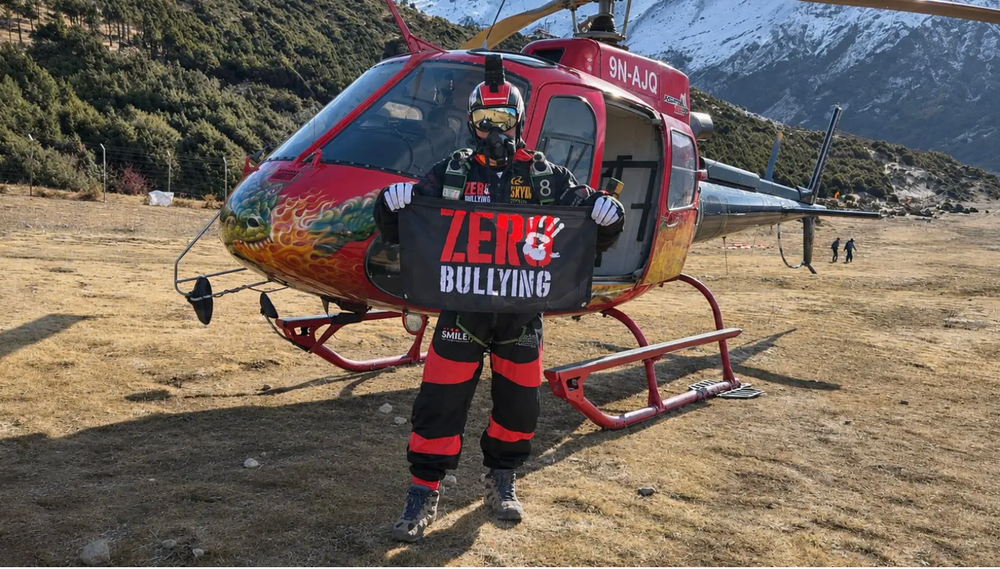
Pancho Campo plans to use his Everest skydive expedition as a platform to continue to spread the word around the dangers and impact of bullying both at school and in everyday life
I would love to go back to Greenland. On my first expedition there, I managed just one dive beneath the ice before I caught Covid and had to call off the remaining dives. We had hoped to film the Greenland shark, the longest-lived shark species we know of. Scientists estimated the age of one individual at around 400 years, possibly as much as 500.
I would love to finish what we set out to do and take that footage into schools. Imagine showing students a shark that could have been swimming in those waters centuries before any of us were born.
Looking further ahead, my dream for January 2028 is to visit Antarctica and skydive there. I’ve been fascinated by that part of the world since I was a boy reading about Amundsen and Scott. To see the Antarctic landscape with my own eyes, and then see it from under a parachute, would be the ultimate expedition for me.
Can we call you the Tom Cruise of the wine industry?
I’ll take it! I do wonder how much Tom knows about wine. I’m no actor and I’m certainly not rich, but I can guarantee you two things. I’m a better tennis player and a better scuba diver. If he ever wants to challenge me on either, I’ll bring the wine for afterwards!
* You can find our more about the work that Pancho Campo and his wife does as part of the Stop Bullying campaign and its The American College in Spain.