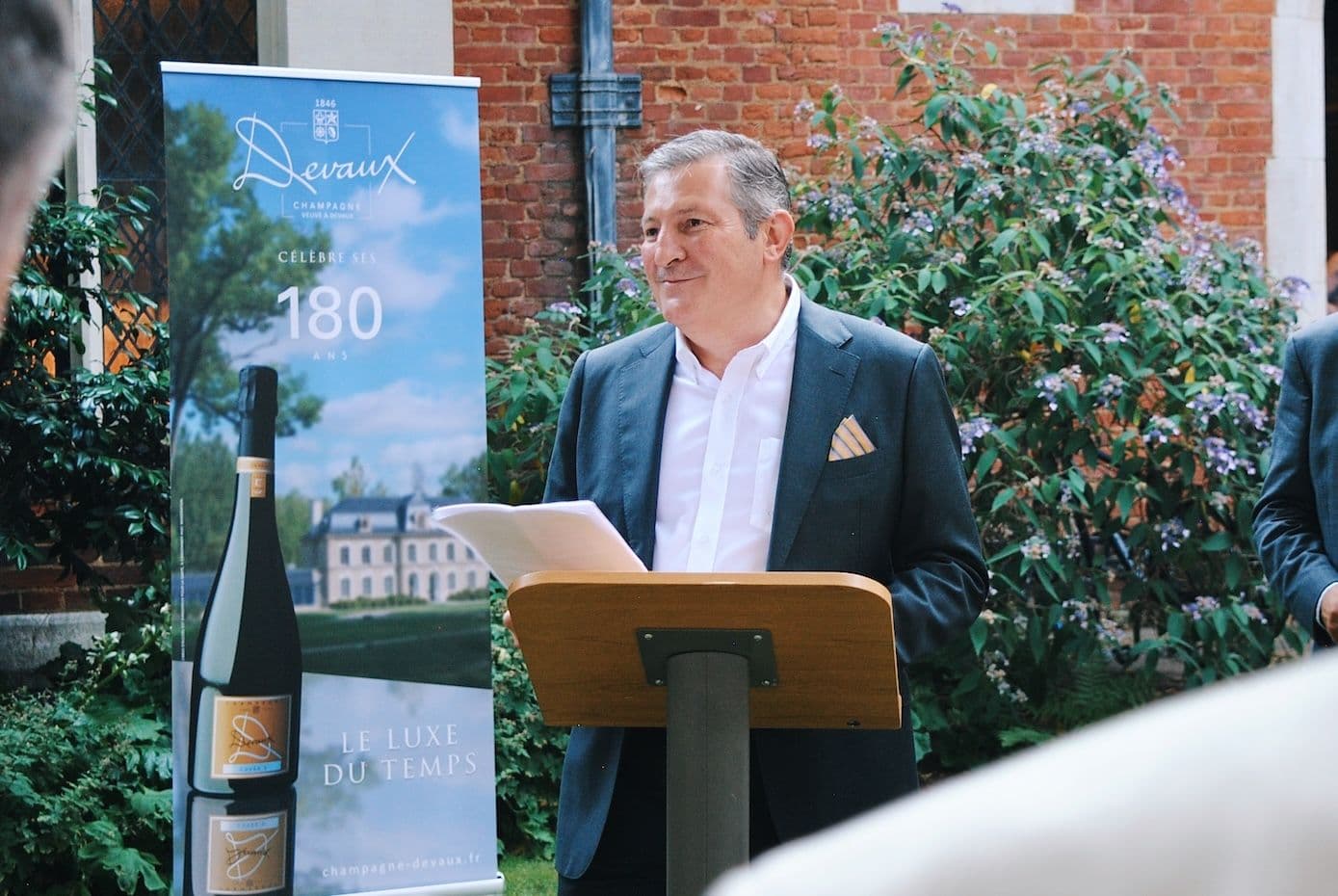

“It must be noted,” began Liberty Wines chairman David Gleave MW as he introduced Champagne Devaux, “that Pascal Dubois, CEO of Champagne Devaux, chose an excellent date for its 180th anniversary celebrations in London, not only because of the fabulous weather, but because there was no football on.”
Deputising for my editor, and with the caveat that I am no great football enthusiast either, I was entirely in favour of the sunshine, and the Champagne, naturally.
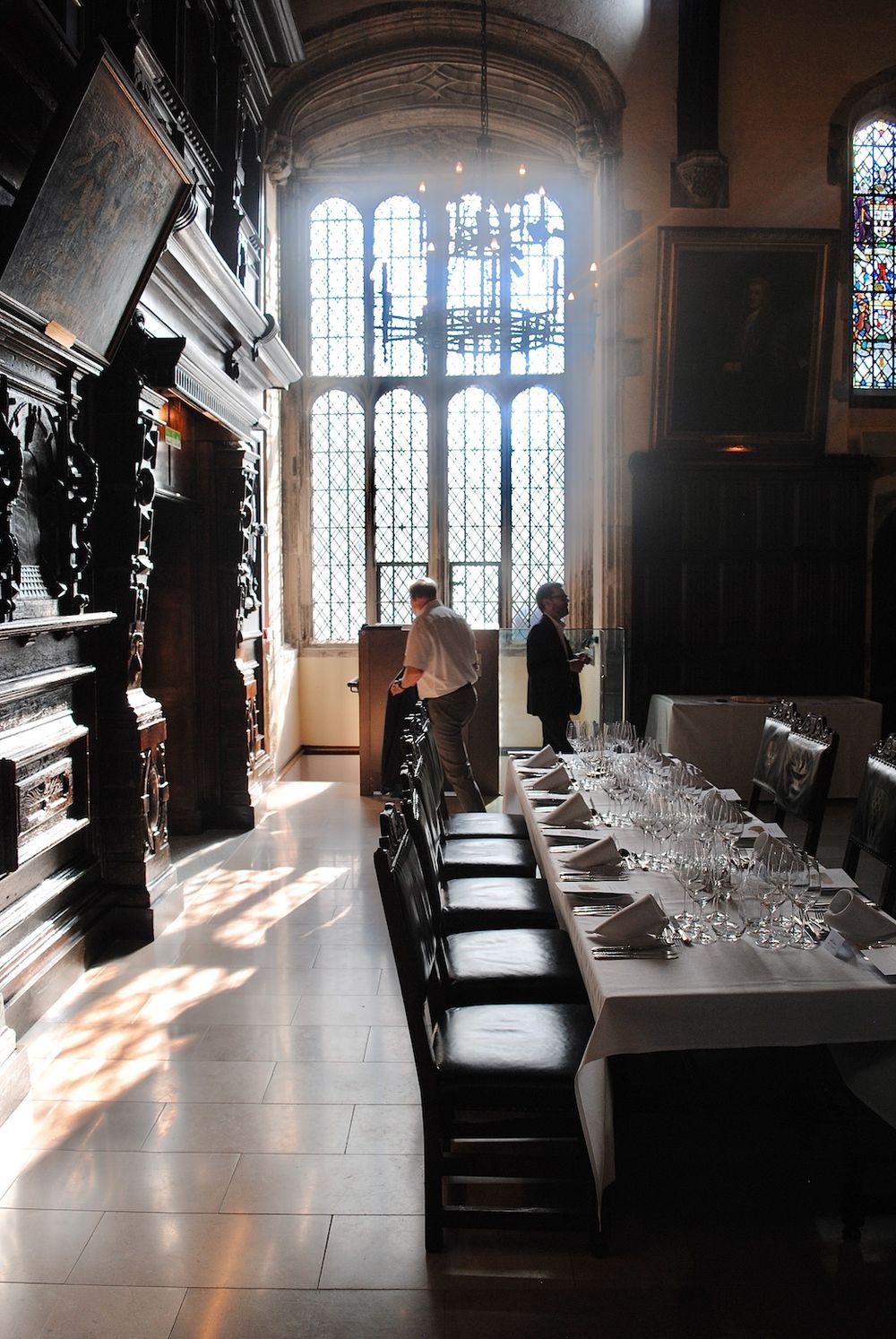
180 years of Champagne Devaux dinner, Honourable Society of Lincoln’s Inn, London
The dinner was held in the magnificent surroundings of the Honourable Society of Lincoln’s Inn. It was difficult to imagine a more fitting setting in which to celebrate a House whose reputation rests upon longevity, uncompromising quality, and a serene refusal to chase a passing fashion. To make the evening even more memorable, I found myself seated beside Devaux’s chef de cave, Michel Parisot, and it was duly noted in my journal as a treat to remember.
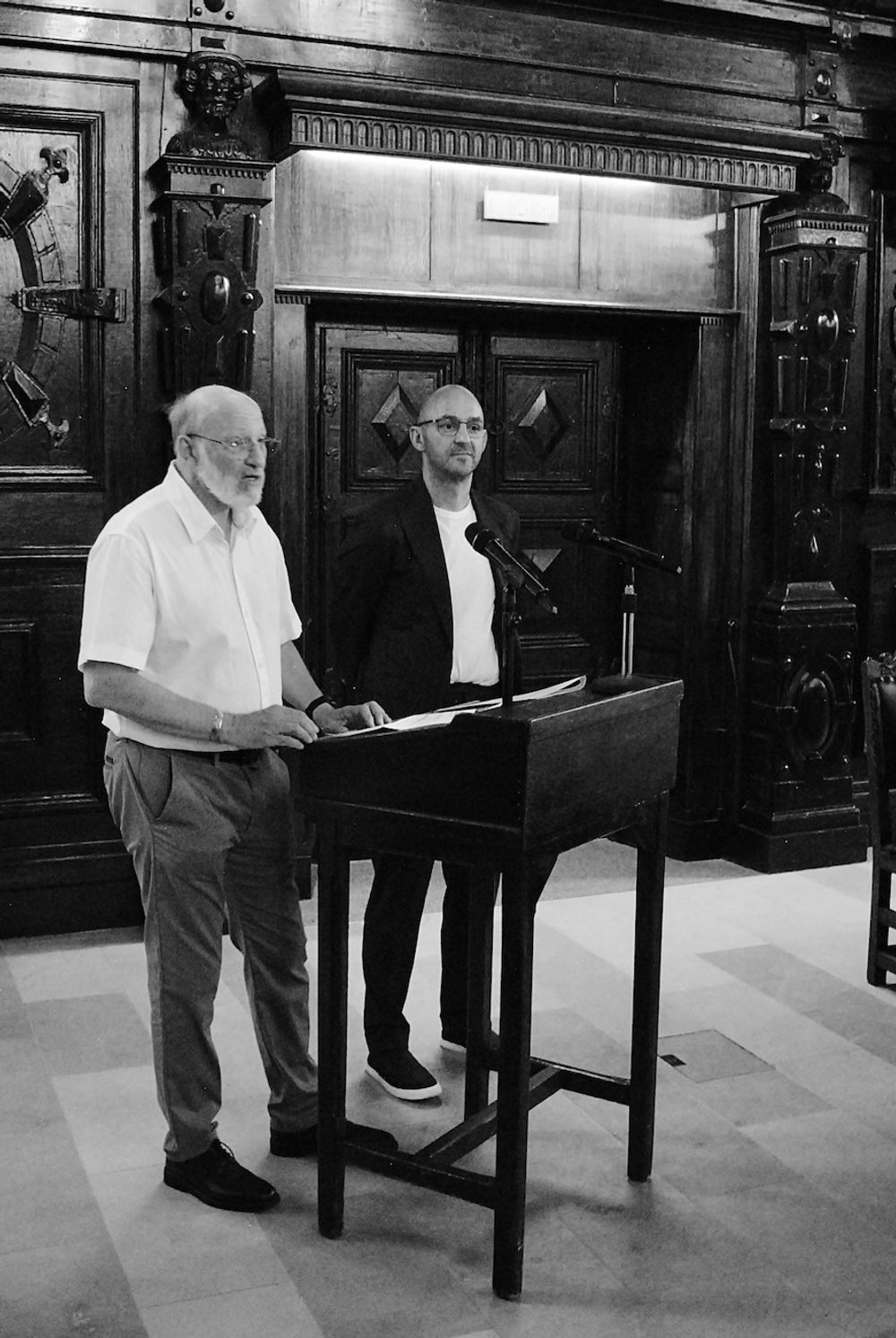
Using two soles - Michel Parisot, Champagne Devaux chef de cave
The chief winemaker
Parisot has spent more than three decades shaping Devaux's wines. In 2020, the International Wine Challenge named him Sparkling Winemaker of the Year.
His winemaking philosophy centres on freshness, patience and the preparation of base wines capable of evolving over many years. Acidity is guarded carefully, while decisions concerning malolactic fermentation, oak and reserve wines are made according to the requirements of each individual cuvée.
The perpetual reserves wines play a particularly fascinating role. “We have two soleras,” Parisot explained. “The Chardonnay solera started in 1995 and has always been kept in stainless steel. It is topped up each year with approximately 20% of wine from the same cru. The other, used for Cuvée D, has been maintained since 2002. Depending on the vintage, solera represents around 5% of the blend,” whilst only a quarter (25%) of the reserve wine is drawn from two perpetual soleras. The remaining three-quarters of the reserve wine is aged separately in large oak casks (foudres).
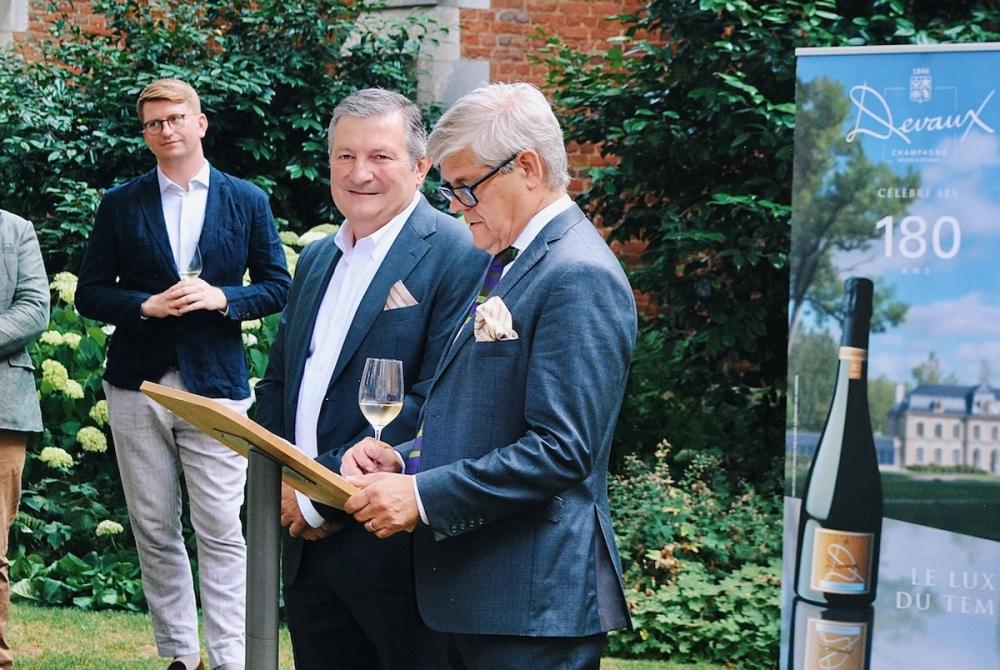
Pascal Dubois, CEO of Champagne Devaux and Liberty Wines chairman David Gleave MW (l-r)
Age before beauty
Aside from its fascinating solera system, Devaux remains intensely focused on producing wines with serious ageing potential. The house works exclusively with Pinot Noir and Chardonnay, sourced from selected sites across the Côte des Bar, Côte de Sézanne and Montagne de Reims, believing these two varieties offer greater longevity than Meunier. Much of that longevity is forged through barrel vinification and extended lees ageing. As Parisot explained, the lees does not merely impart texture but also protects the wines from unintended oxidation.
Despite the scale of the overarching cooperative backing them, Devaux’s individual cellar decisions are still made in a remarkably artisanal fashion, barrel by barrel.
“We start the selection for Cuvée D in June,” Michel noted. “We wait several months from harvest for the wine to mature, and then choose which barrels will be dedicated for the vintage cuvées, and which will remain for Cuvée D. The process is longer that way, but it brings real value and a deeper ability to understand the wine.”
Though the house produces roughly 650,000 bottles annually, this micro-management remains vital. It is a philosophy Michel is keen to pass on to the next generation of winemakers currently under his wing, which includes local university students, engineers, and PhD researchers.
“The difference between our generation and theirs is that they want to find a balance between work and home,” he reflected. “They utilise more digital techniques, but they share the exact same passion. The tools they use don't matter; it’s that they love to taste and share opinions.” Crucially, Michel resists the old cliché that things were inherently 'better before.' Instead, he is focused on mentoring his young team for the future, most notably his female assistant winemaker, who he is actively training to eventually take over the reins.
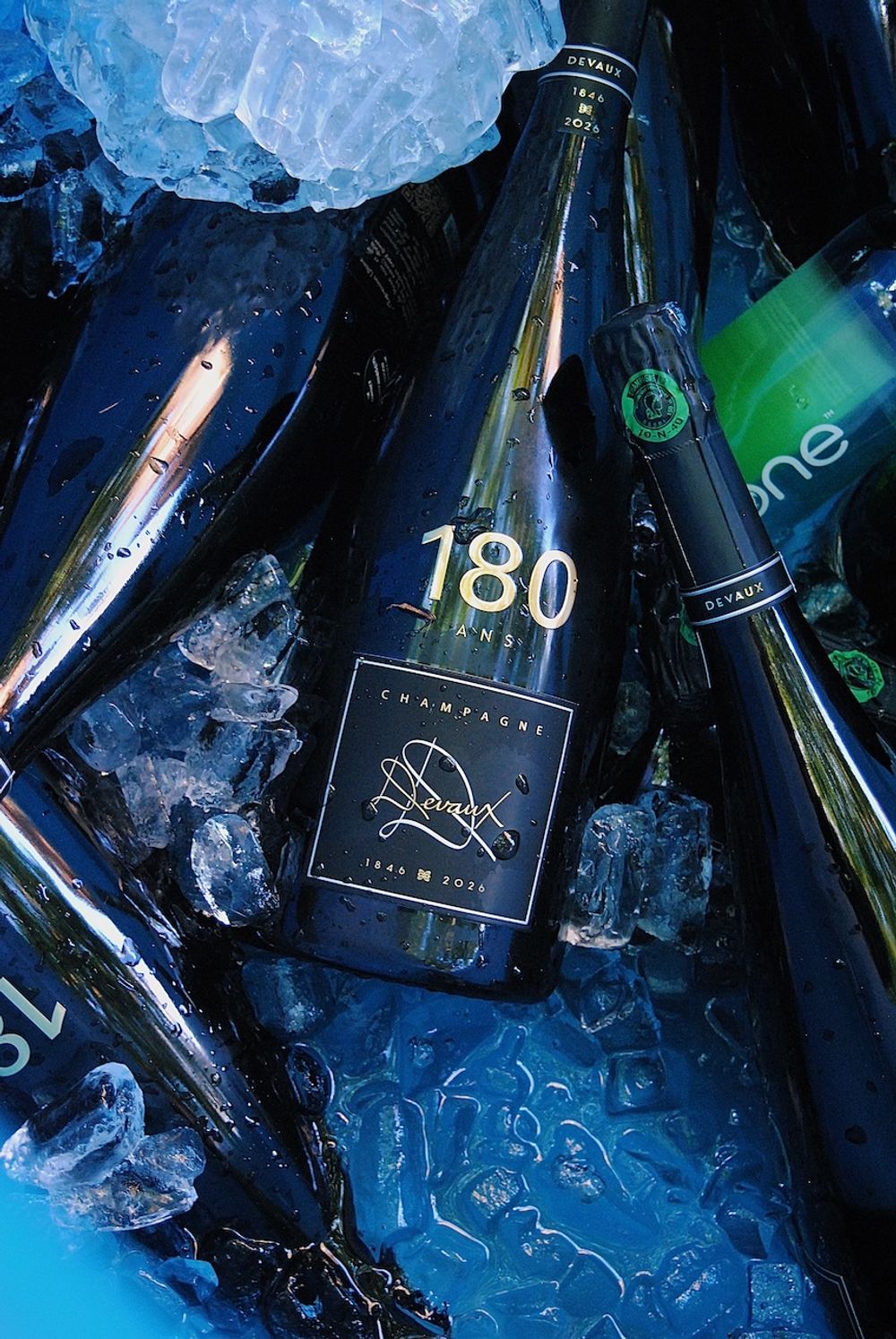
History for the books
That future winemaker to-be won’t be the only woman making her mark on the Devaux wines. It was founded in 1846 and developed under the successive leadership of three widows. Claude Josephte Devaux, widowed at 39, established Maison Veuve A. Devaux with her son François Auguste. When he died in 1879, his wife, Augusta Maria Herbin, became the second Devaux widow to lead the business, remaining at its helm until 1895.
By the turn of the century, Devaux was exporting approximately 75% of its production, particularly to Britain and other English-speaking markets, as well as Germany and Russia. In 1907, following the death of Charles Auguste Devaux, his widow Marguerite Marie Louise took control. She managed the House until her death in 1951, bringing the extraordinary era of the three Devaux widows to a close.
The House remained in family hands until 1987. With no direct heir to whom he could entrust its future, Jean Pol Auguste Devaux transferred it to the Union Auboise, a cooperative of local winegrowing families.
Far from diluting the house's identity, the move laid the groundwork for what Devaux is today: a grower-backed Champagne House with ironclad control over its fruit supply, driven by a clear ambition to compete directly with the region’s grand marques.
The dinner itself and poured wines
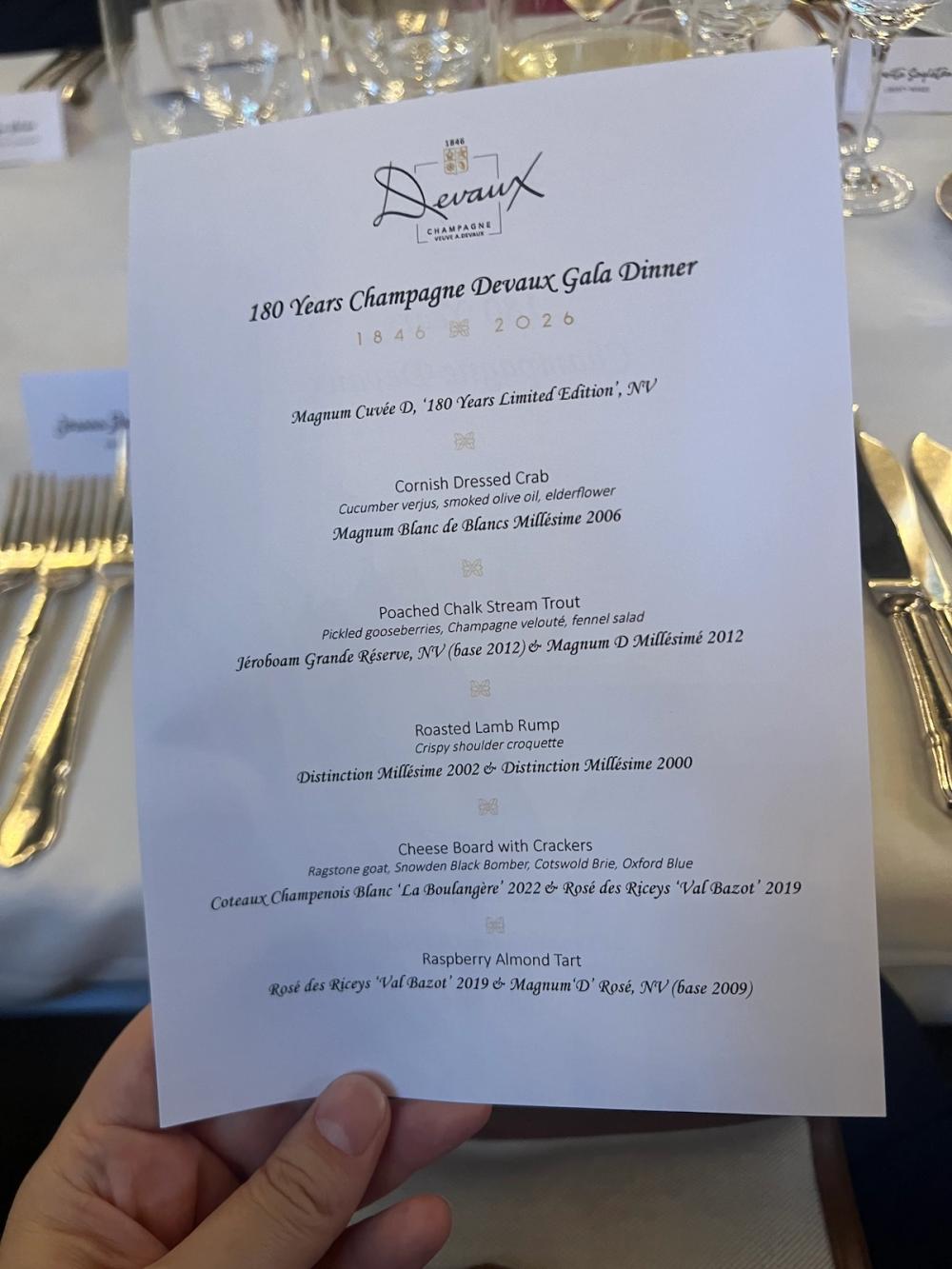
Since the evening found its way into my journal, it seems only fair to share a few highlights. Menu picture attached. I had no idea aged Champagne could withstand lamb, and almost everyone announced that Rosé des Riceys was indeed a discovery of the evening. I should probably be ashamed to admit that I finished this wine within seconds (I am not).
Onto the others:
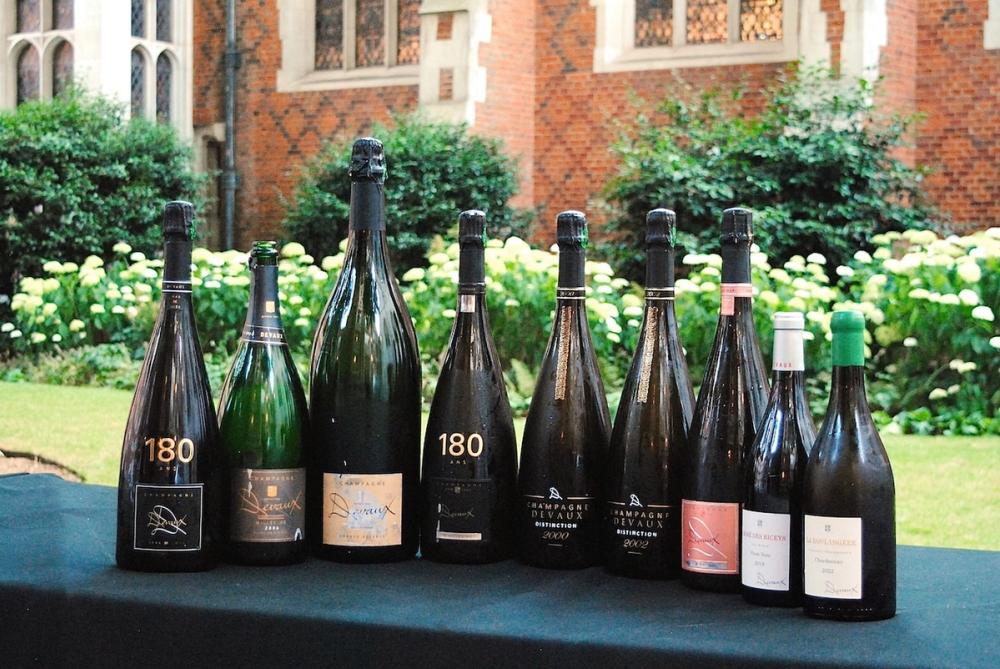
Magnum Cuvee D 180 Years Limited Edition NV - A perfect aperitif to start the evening of glorious celebration.
Magnum Blanc de Blancs Millesime 2006 - Superbly paired with crab; gorgeous acidity, creaminess, and complexity.
Jeroboam Grande Reserve NV base 2012 - According to Parisot, this was one of the best vintages. It wasn’t easy, but it yielded fantastic results. I concur; I would go back to this wine in every lifetime.
Magnum D Millesime 2012 - Similarly refreshing, a beautiful wine that was perfectly paired with trout.
Distinction Millesime 2002 - Superb acidity and freshness throughout the entire length; beautifully complex and standing strong alongside the lamb.
Distinction Millesieme 2000 - A gorgeous wine, full of mirabelle plum notes and very much in the style of an Alsatian vendanges tardives. This also stole my heart.
Coteaux Champenois Blanc La Boulangere 2022 - A superb Chardonnay, superbly refreshing with great texture and the acidity to withstand the local cheeseboard!
Rose des Riceys Val Bazot 2019 - The beauty of the season. It was full of strawberries, liquorice, and a touch of compote aromas, whilst maintaining fantastic acidity and a beautiful structure throughout. I absolutely loved it.
Magnum D Rose NV base 2009 - A perfect treat to finish the evening. Gorgeous acidity again, with refreshing fruit notes and a superb texture to support a tart made with fresh, seasonal fruits.
If the evening demonstrated anything, it was that Devaux has spent 180 years proving that beauty in Champagne comes with age. Rather than chasing passing fashions, the house has quietly built its reputation on patience, craftsmanship and wines that speak for themselves. Santé.