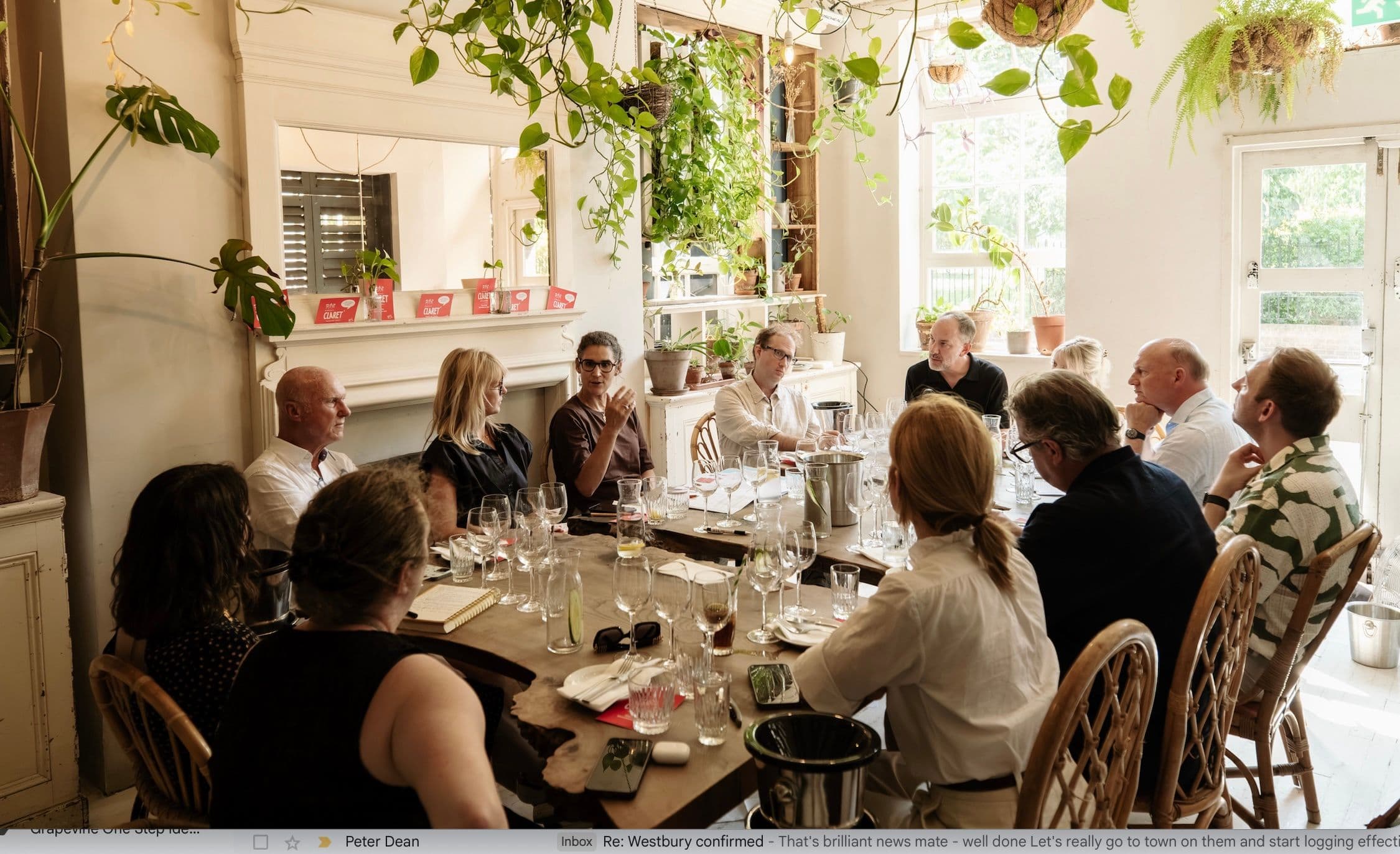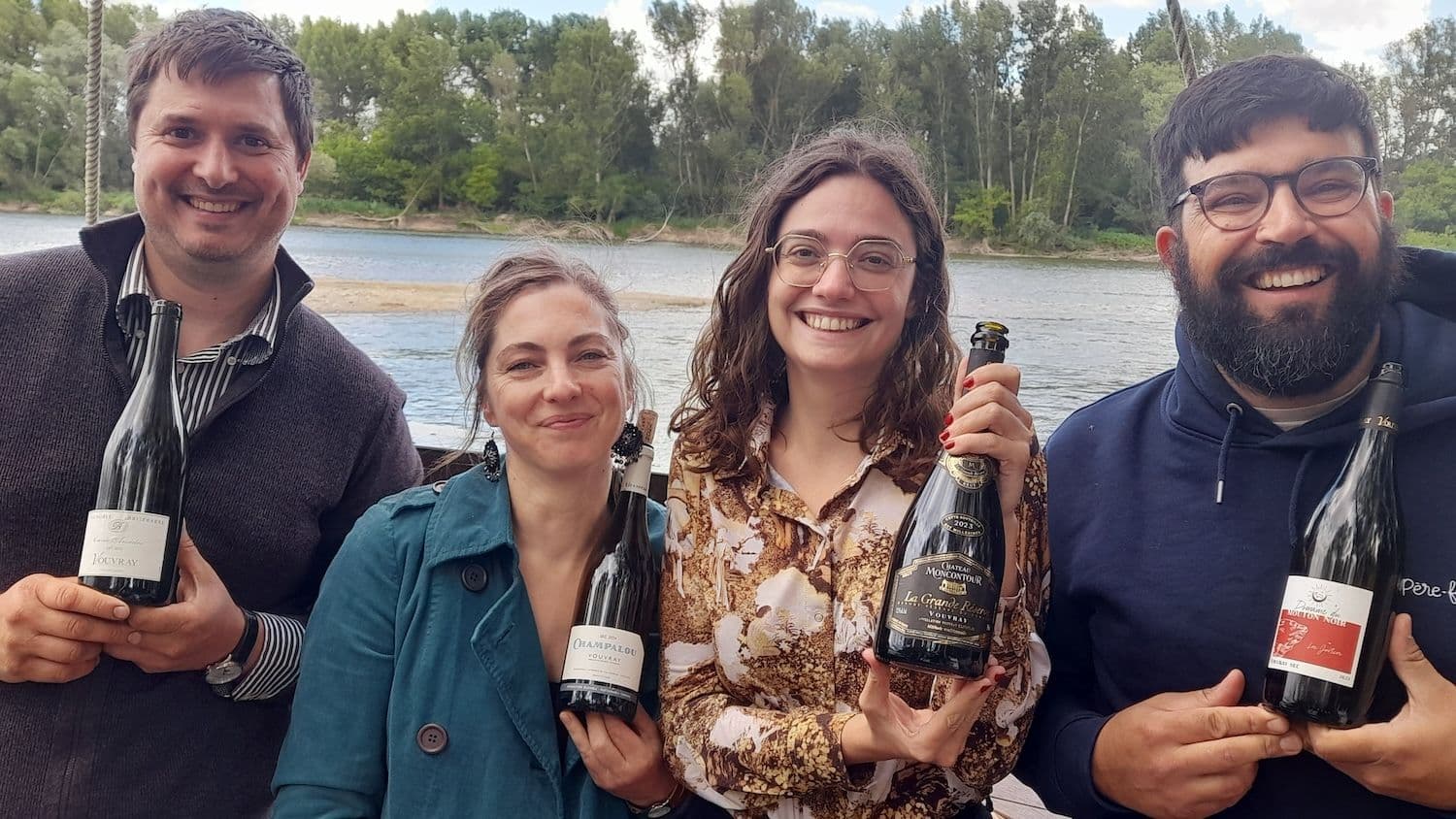

On July 11th, 500 guests assembled at Château Valmer near the village of Chançay in the Touraine district of the Loire Valley to celebrate the 90th anniversary of the creation of the Vouvray AOC. It was officially recognised on September 6 1936, and as such was one of the very first appellations to be established after the formation of the Institut National de l'Origine et de la Qualité (INAO). Winemaking in the area, though, can be traced to construction of the Marmoutier monastery in 372 AD.
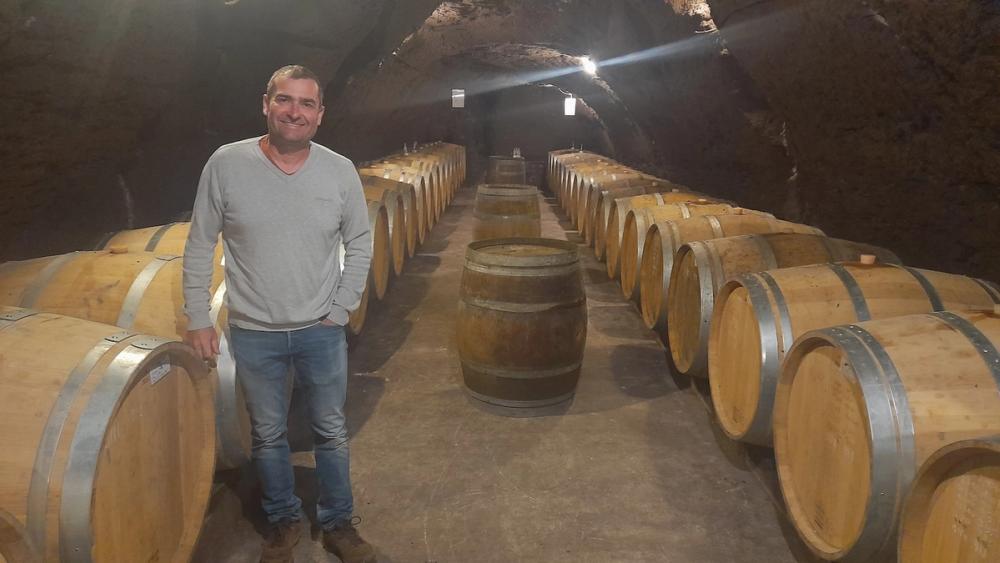
Vincent Caréme - higher sugar and less acidity every year
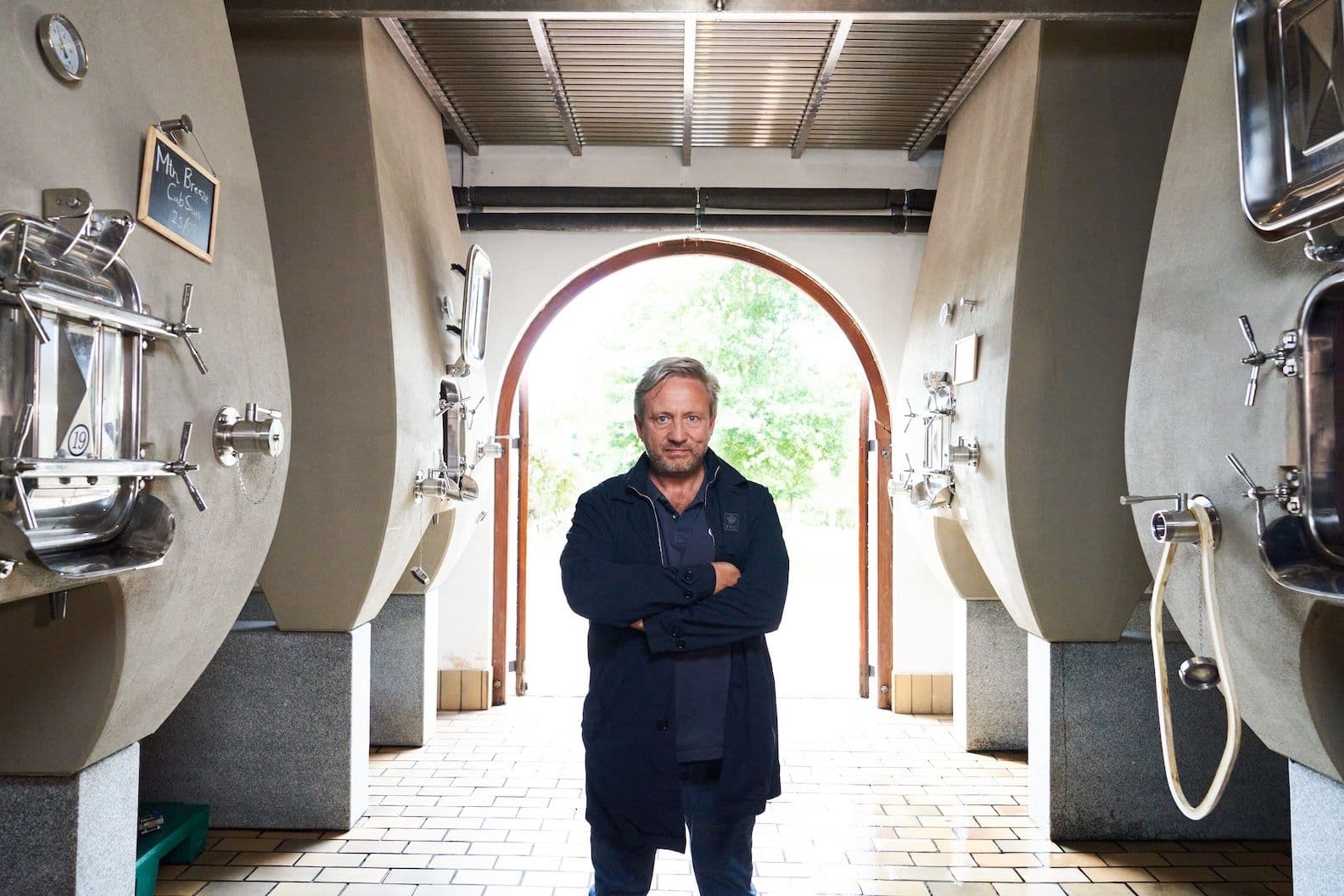
Viticulture, therefore, has been weaved into the fabric of Vouvray for centuries, but this year it will see its earliest harvest in living memory. Vincent Carème, one of the appellation’s best-known producers, told me while visiting there in early June that he would begin picking in August for the first time. “Last year, it was September 5, which was the earliest ever, but this year it will definitely be before the end of August,” he said. “I’ll even have to increase SO2 additions as the recent heatwave in late May affected wines in the cellar.”
Chenin Blanc harvests usually last three weeks in Vouvray, so Carème will not finish picking until September, but it was a sobering reminder of the effects of global warming. His 25 hectares under vine are almost entirely Chenin Blanc, with a few rows of Malbec (aka Cot locally), Cabernet Franc and Gamay. Only his Chenin is exported to the UK, with Berry Bros and FMV between them taking his outstanding range of vintage sparkling wines (both traditional method and ancestrale), sec, demi-sec, moelleux and licoreux.
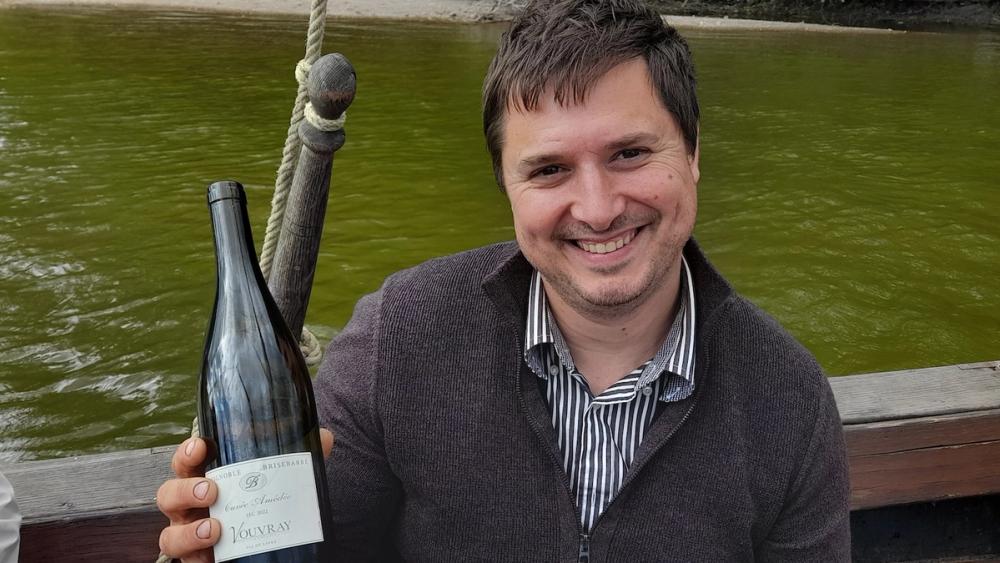
"Important to maintain the know-how of demi-sec and moelleux products even if the market is not in favour of it." Alexis Brisebarre
Vignoble Brisebarre and the enduring nature of sweet wines
The different styles of Chenin Blanc in Vouvray remain its great strength, of course, along with their ability to age gracefully over decades thanks to Chenin’s high acidity. Alexis Brisebarre, whose family have been making wine in Vouvray “for a very, very long time” revealed he has a bottle of 1921 sweet wine in his cellar. “That was a fantastic year, one of the best of the century,” he mused. “Lots of Vouvray age very well. Some people have older vintages – 1862 is the oldest I know of.”
Brisebarre, who has a strong scientific background, is an interesting character who made sure he “did something else” before returning to the family winery, Vignoble Brisebarre.
“It was my destiny to become a winemaker – I worked extremely hard in the vineyard as a kid,” he recalled. “But my grandfather said, ‘Know one thing: this will be the last job of your life.’ So I worked for English companies gold-mining all over Africa for quite a few years before coming home to France.”
Despite the dip in sales of sweet wines globally, Brisebarre thinks that drinking preferences could change, and that Vouvray must continue to produce its high quality sweet wines.
“In the 1920s, Vouvray was very well-known for sweet wines,” he declared. “In the 1980s, it was the sparkling wines, and now it is the dry still wines. If sweet ones are not so fashionable now, it's important to maintain the know-how of demi-sec and moelleux products even if the market is not in favour of it. It’s very difficult to predict the market as I see it. But the day the market changes, there will be stock and know-how. Everyone is making them.”
Brisebarre is, therefore, bullish about Vouvray’s future despite the fact it is limited by appellation rules to one grape. “I’m optimistic we can preserve our 100% Chenin Blanc profile for another 100 years due to the clay and its fantastic water retentive capability,” he declared. “That is the true magic of Vouvray rather than the limestone. In half a metre of clay in hotter lands, we can retain the equivalent of 300mm of water. In the colder lands, we can retain 400-450mm of rain, or more when the clay is 1.2m deep.”
“What’s beautiful about Vouvray is you’ll go a few hundred metres and have a very different wine. Although there’s a clear entity of what Vouvray is, around the clay and the limestone, the way both are mixed, and the way some extra inclusions of rock are embedded into it, makes a significantly different soil. And Chenin Blanc is a fantastic medium at expressing that. I make cuvées that are just a few hundred metres apart and the wine is widely different. And so with over 80 families producing over a few kilometres, every single plot will produce something different. We will be very happy to make sweet wine a few times a decade in hot years, but also happy in cooler years to make nice dry and sparkling wines. I really see that as the uniqueness of Vouvray.”
Vincent Carème and single sites
Nowhere were the effects of different single vineyard sites better illustrated than with Vincent Carème’s range, certified organic since 2007. His ‘Le Clos’ 2024 comes from shallow soil - a 30cm mix of clay and limestone on top of a limestone bedrock. It gained a lot of structure from the limestone and was very long. Meanwhile, the ‘Clos de la Roche’ 2022 comes from very similar soil but with a different micro-climate - being south-west facing and much warmer. It was a much bigger wine, being 14% abv compared to 12.5% (although 2022 was a warmer year). Carème’s Le Peu Morier 2024, which comes from much older vines (70 years in age) from 80cm of flint and clay on a limestone bedrock, offers greater richness and stoniness.
All Carème’s wines receive no batonnage and see no more than 10% oak. His smallest barrels are 400 litre, and he is increasingly using foudres along with concrete eggs. “We like foudres,” he mused. “They are good for long ageing as they keep the freshness. But thanks to global warming, we are seeing higher sugar and less acidity every year.” Therein lies the major challenge for Vouvray producers, whose main preoccupation is how to deal with climate change.
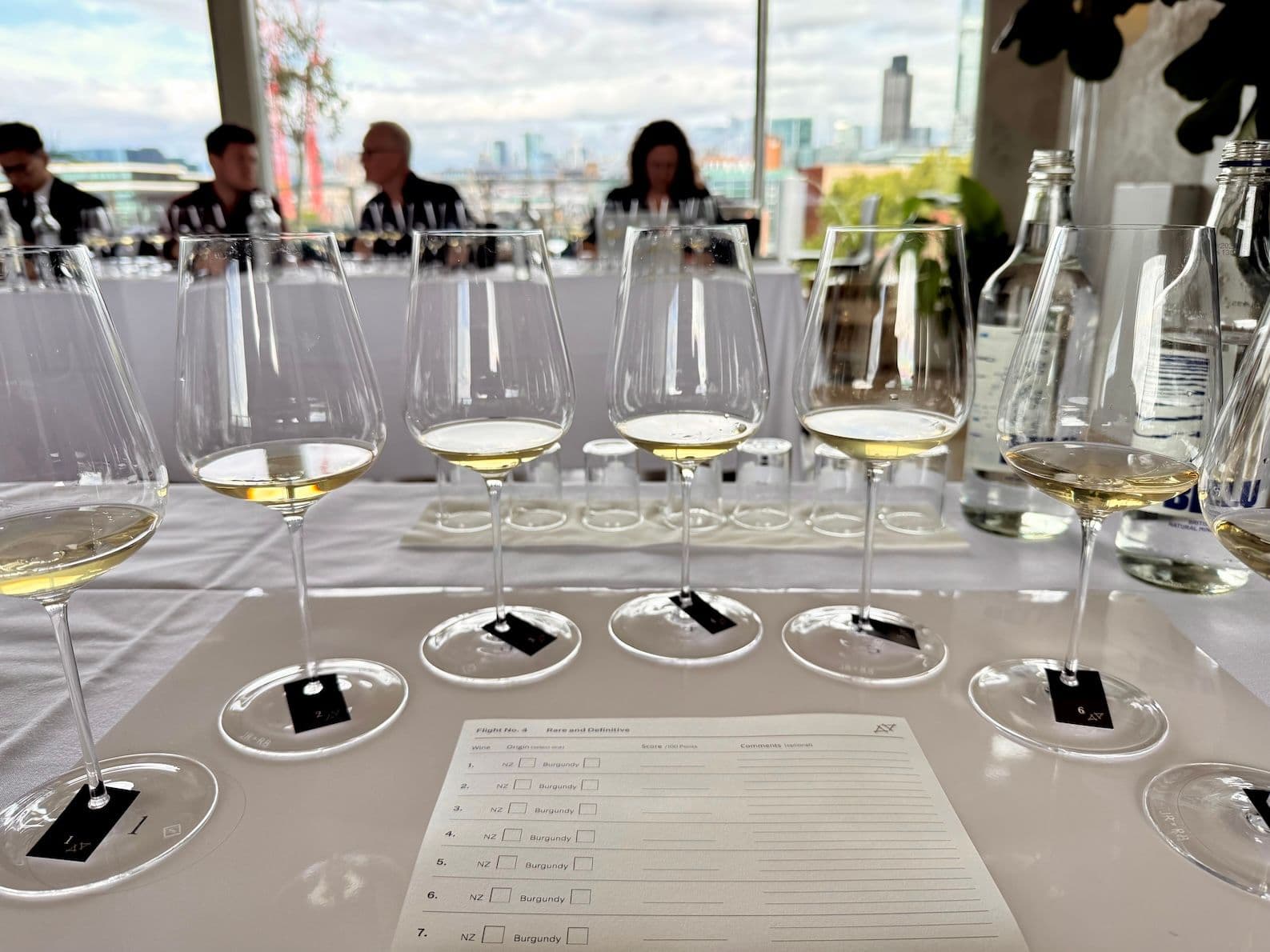
Vouvray wines tasted from each producer met
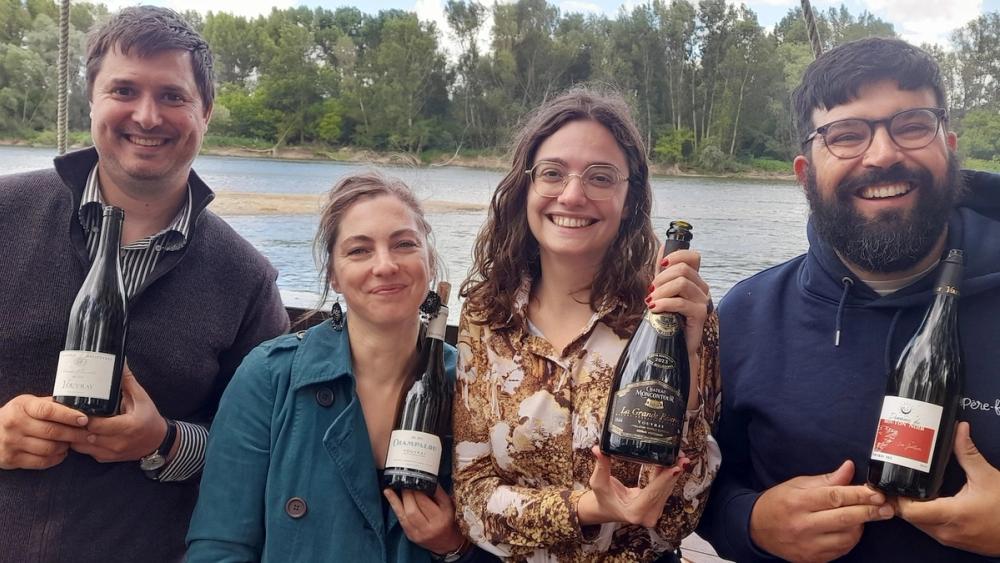
Alexis Brisebarre, Celine Champalou, Cassandre Feray & Julien Martins (l-r)
Champalou Sec 2024, Vouvray AOP
Seventh generation owner-winemaker Céline Champalou farms her 21 hectares of vines organically and sustainably (Terra Vitis). Exquisite purity, elegance and minerality with balancing acidity. Les Caves de Pyrène imports the wines.
Château Moncontour, La Grande Reserve 2023
Traditional method sparkling wine that spent two years on the lees. Crisp and refreshing with notes of quince, apple and pear with hints of brioche. Available in UK through VINVM, Wine Direct and Hedonism.
Château Valmer Demi-Sec 2024, Vouvray AOC
Owner-winemaker Jean de Saint Venant is the fifth generation member of a family which has owned the estate since 1888. Renowned for its 15th century troglodytic cellar, stunning Renaissance gardens and 35 hectares of sustainably-farmed vines, the estate produces a wide range, with this off-dry label having 23g/l residual sugar to balance vibrant acidity. Enticing aromas of white fruits with a hint of compote. Christopher Piper Wines imports some of the wines.
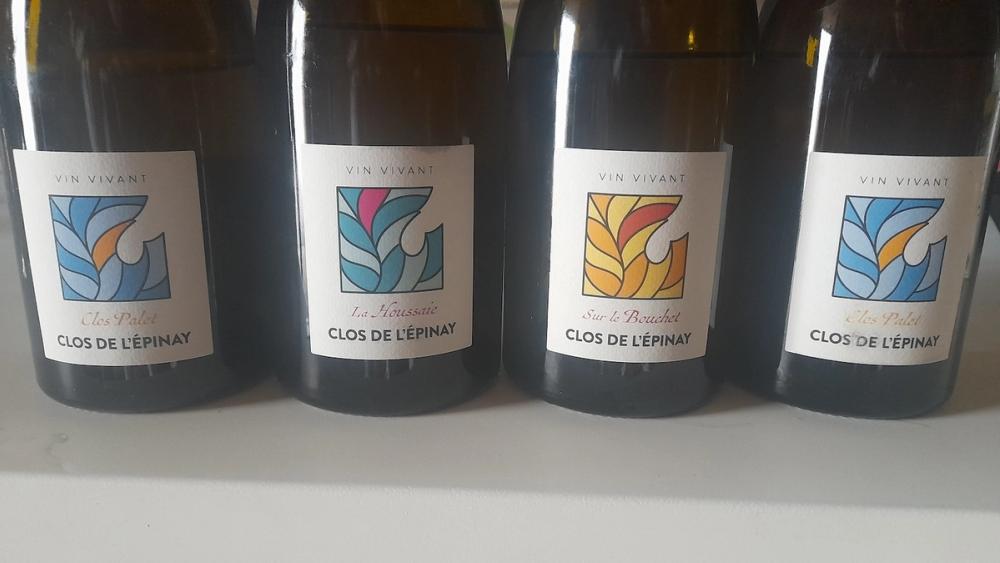
Clos de L'Espinay, La Houssaie Sec 2024
Historic, organic winery under the stewardship of Antoine Labrosse and Henri Brusseau, which produces low-intervention wines ranging from dry/off-dry to sparkling and sweet styles. UK distributors are Vine Trail in Bristol.
Clos de la Meslerie 2022, Vouvray AOP
American-born Peter Hahn left corporate life to farm four hectares organically, and makes one style of wine each year. This alluring one is off-dry with 15g/l of residual sugar. His book ‘Angels in the Cellar’ is a charming account of his travails as a producer. Imported into the UK by London-based Dynamic Vines.
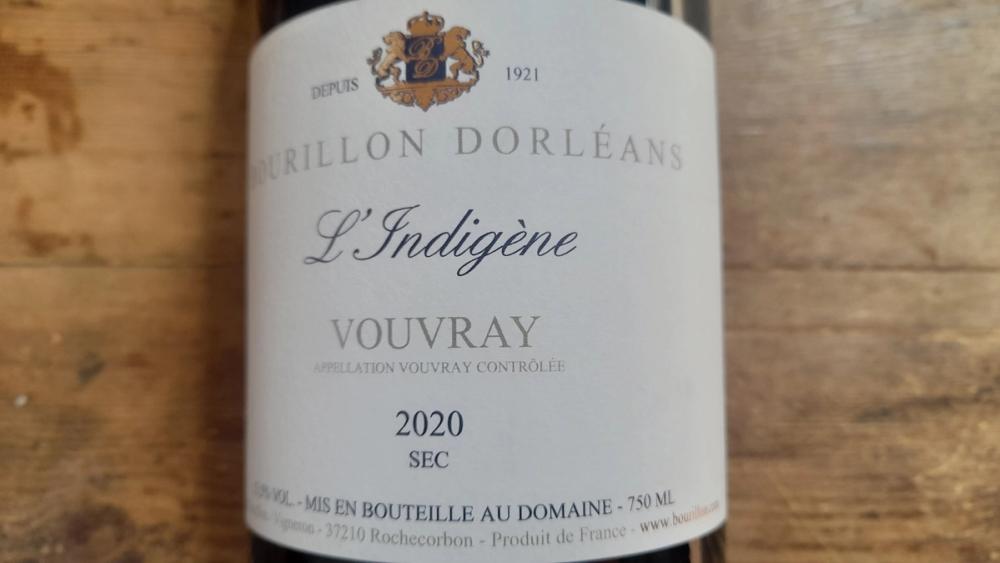
Domaine Bourillon Dorléans, L’Indigène Sec, Vouvray AOP
Top quality example of dry Vouvray, from 30-year old vines on the clay-limestone soils of an estate founded in 1921 by Gaston Dorléans. His grandson Frédéric, and his two sons Benjamin and Maxime, make an excellent range. This label, which is aged in old oak for 12 months, takes its name from the use of indigenous yeasts. Imported into UK by Four Walls Wine Co in West Sussex.
Denis Breussin, Vouvray Sec 2023
Denis is a fifth generation family winemaker, who has 15 hectares in the Vaugondy valley where he produces four different styles of Vouvray. His vines nearest the Loire river produce this fine dry expression, which has apple and white blossom aromas with notes of pear and white peach. The wines are intermittently imported by distributors and merchants.
Château Gaudrelle, Le Sec 2024, Vouvray AOP
The estate received biodynamic certification in 2025. From 60-year old vines on limestone soils with no clay at all, this was fermented and aged in oak, a small amount being new. Floral, spicy aromas with notes of baked apple, citrus and honey. Quite complex with good body and length. Imported into the UK by Graft.
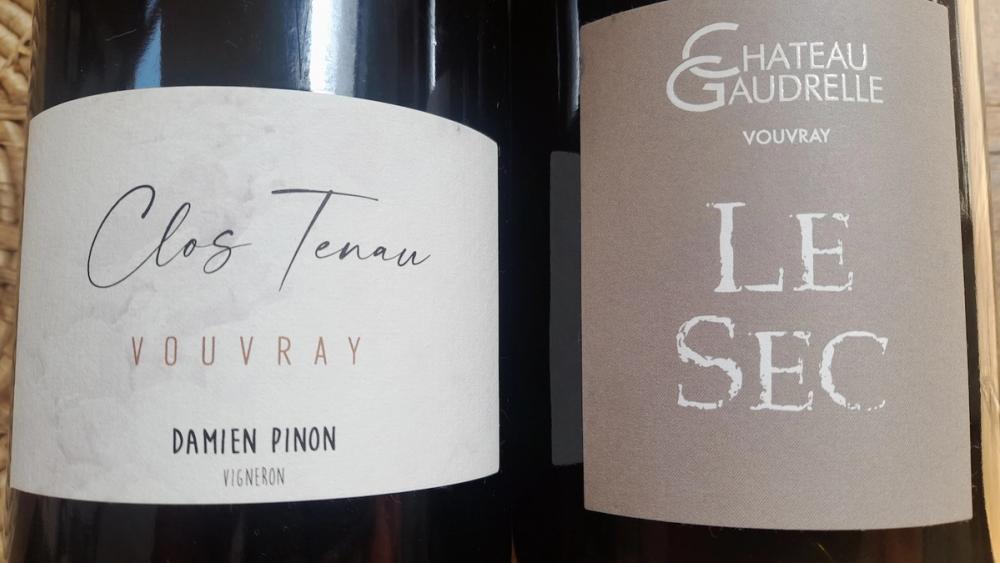
Domaine Damien Pinon, Clos Tenau 2023
2023 was the first year this estate was certified organic. From 40-year old vines on predominantly limestone soils with some clay. Elevage in concrete (80%) and old foudres (20%). Very fresh and quite complex with aromas of pear and white blossom. Pairs well with Asian cuisine. No UK representation.
Domaine de la Pierre Gravée, Brut Nature 2022, Vouvray 2022
Philippe Guyonnet has crafted a very appealing sparkling wine that spent two years on the lees in barrel before second fermentation in bottle, where it was aged for 16 months. Disgorged June 2025. Aromas of pear and peach with notes of citrus pith and sea salt. Wines intermittently imported by distributors and retailers.
Domaine d’Orfeuilles, Atemporelle Brut NV, Vouvray AOP
Arnaud Herivault has followed in his father and grandfather’s footsteps to make an impressive bubbly. This NV traditional method sparkling wine spent three years and a half years on the lees. Persistent mousse with brioche on the nose and notes of marshmallow and vanilla.
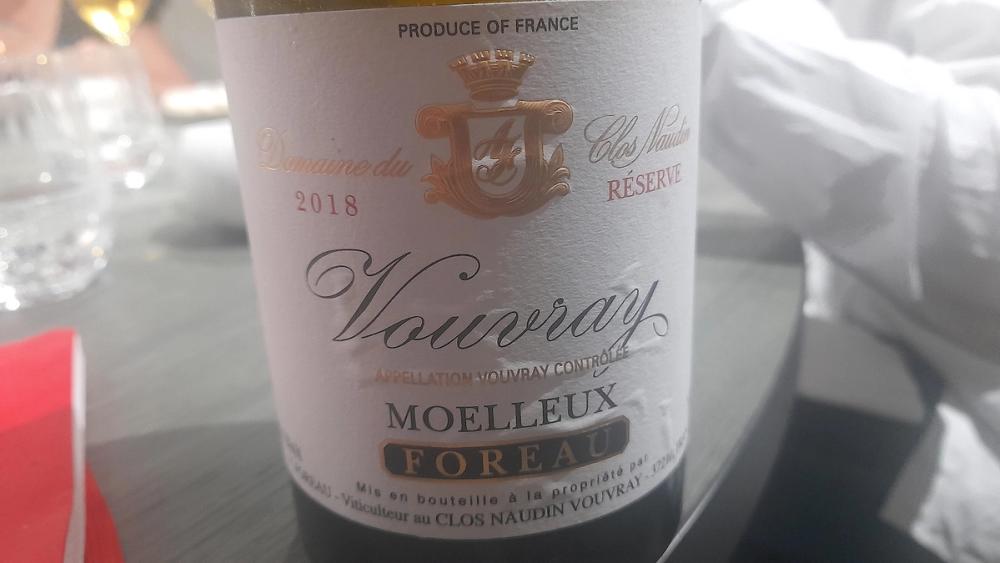
Domaine du Clos Naudin, Moelleux 2018
Philippe Foreau, whose grandfather acquired the estate in 1923, produces almost exclusively sweet wine of super-premium quality with son Vincent. This 11.5% abv 'moelleux', which has 110 g/l residual sugar, is all about texture, possessing lovely viscosity that is not cloying. The RS is beautifully balanced by lively acidity, with intense minerality at its core. UK importer is The Rare Wine Company.
Domaine Gaudron Sec, Les Vaux Louis, Vouvray AOP
Since 1890, four generations of the Gaudron family have produced wine in Vernou-sur-Brenne. The cellar under the winery dates back to the 13th century, with 1000 metres carved into the clay limestone tuffeau. Gilles Gaudron makes the wines. This enticing dry Chenin has wetstone and herbs on the nose. Imported by Alliance Wine.
Domaine du Mouton Noir Sec 2023, Vouvray AOP
Pleasing minerality from clay and flint soils on limestone bedrock. Quite complex with good intensity and length. Owner-winemaker Julien Martins is seeking UK representation.
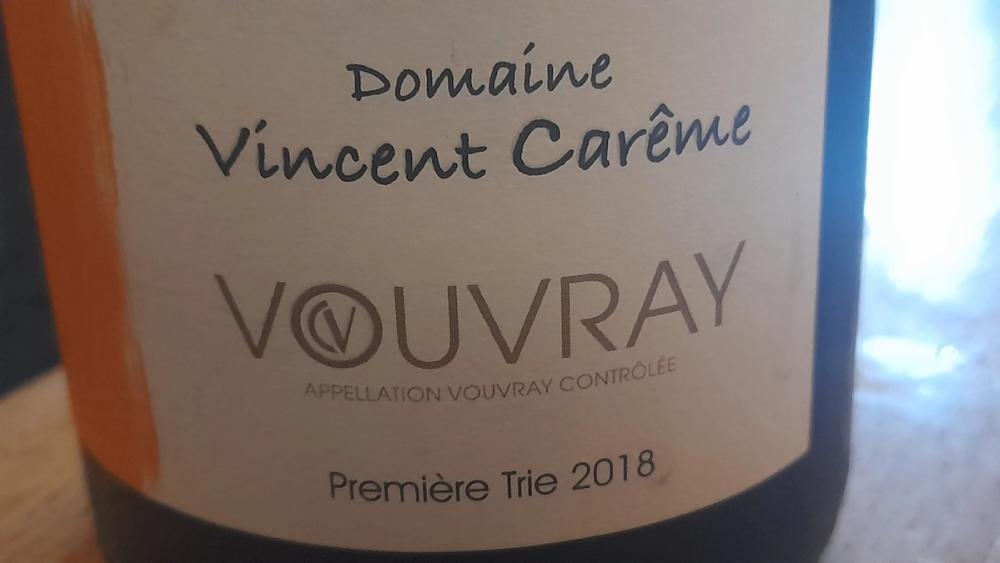
Domaine Vincent Carème, Première Trie, Licoreux 2018, AOP Vouvray
Glorious honeyed notes and great length on this 12.5% abv sticky that has 100 g/l residual sugar.
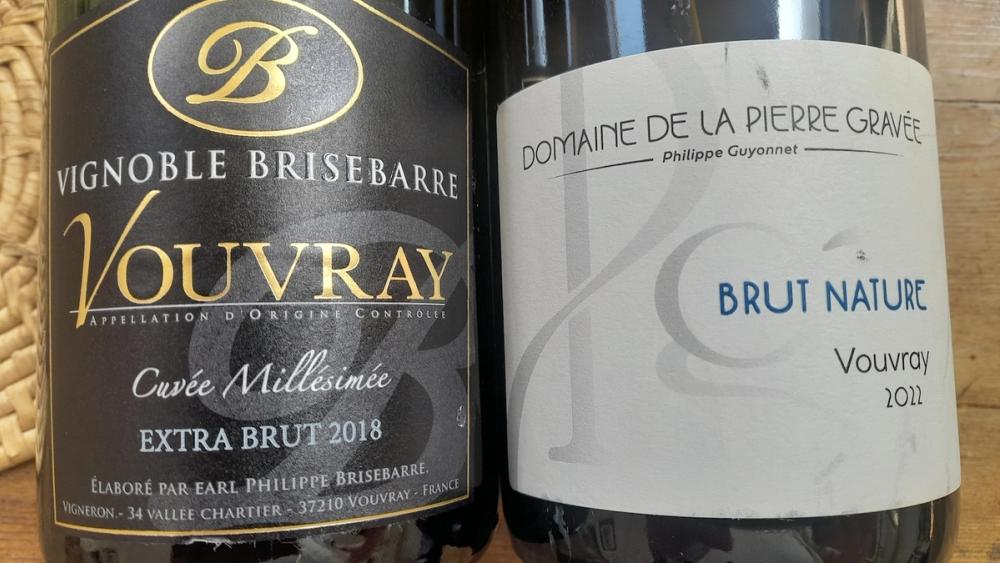
Vignoble Brisebarre, Cuvée Millesimée Extra Brut 2018, AOP Vouvray
Creamy buttery finish on this complex traditional method bubbly, which spent seven years on the lees. Imported by Amathus Drinks.