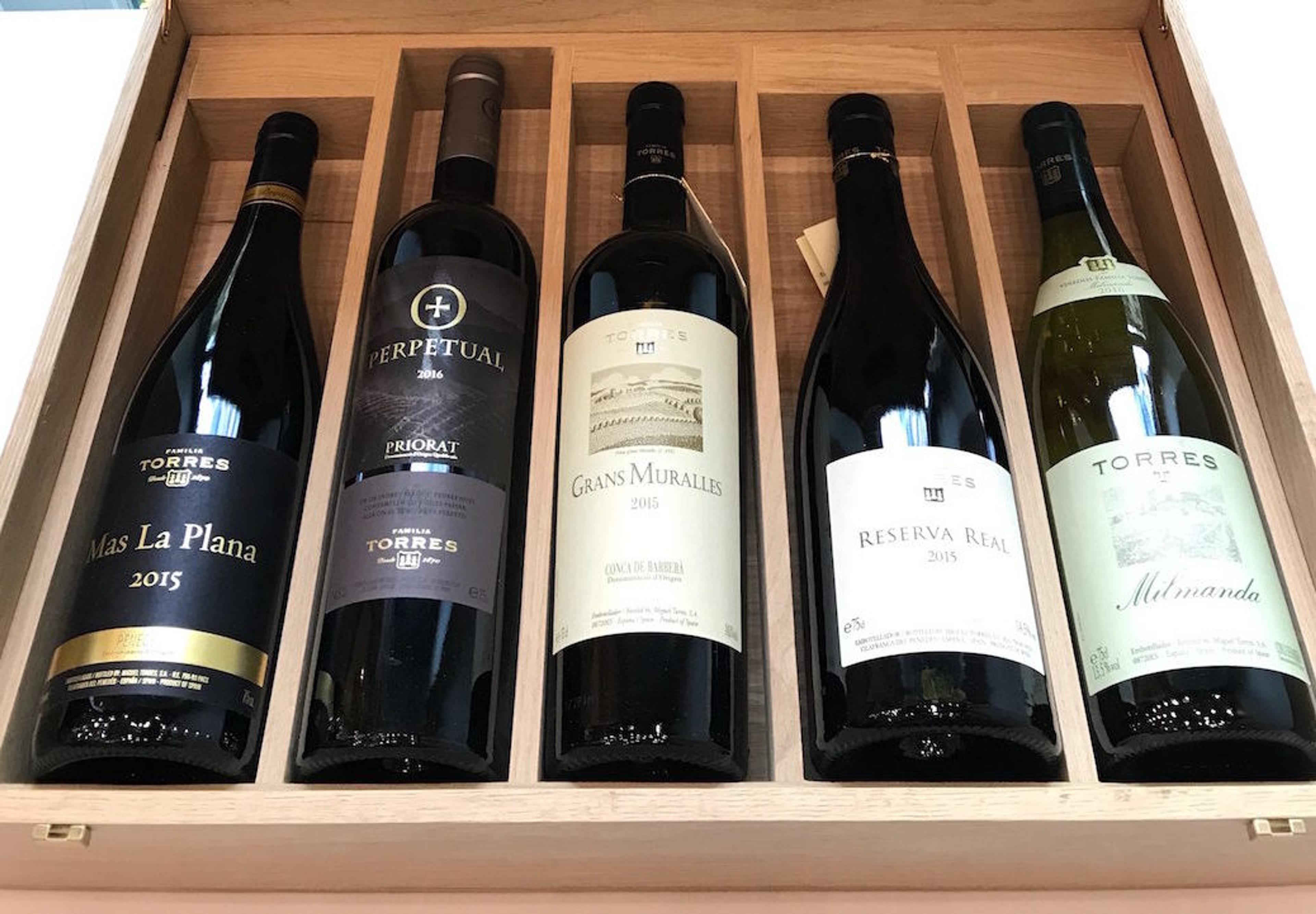

Mas La Plana is described as “historic”, “iconic” or “legendary.” It was in 1979, three years after the famed dethronement of French wines by the Californians at the Judgment of Paris, that Spain’s Mas La Plana caused a similar upset. At the Gault & Millau Wine Olympics in Paris, its debut vintage triumphed over some of the world's most renowned Bordeaux châteaux – and at a stroke raised the global status of Spanish wines.

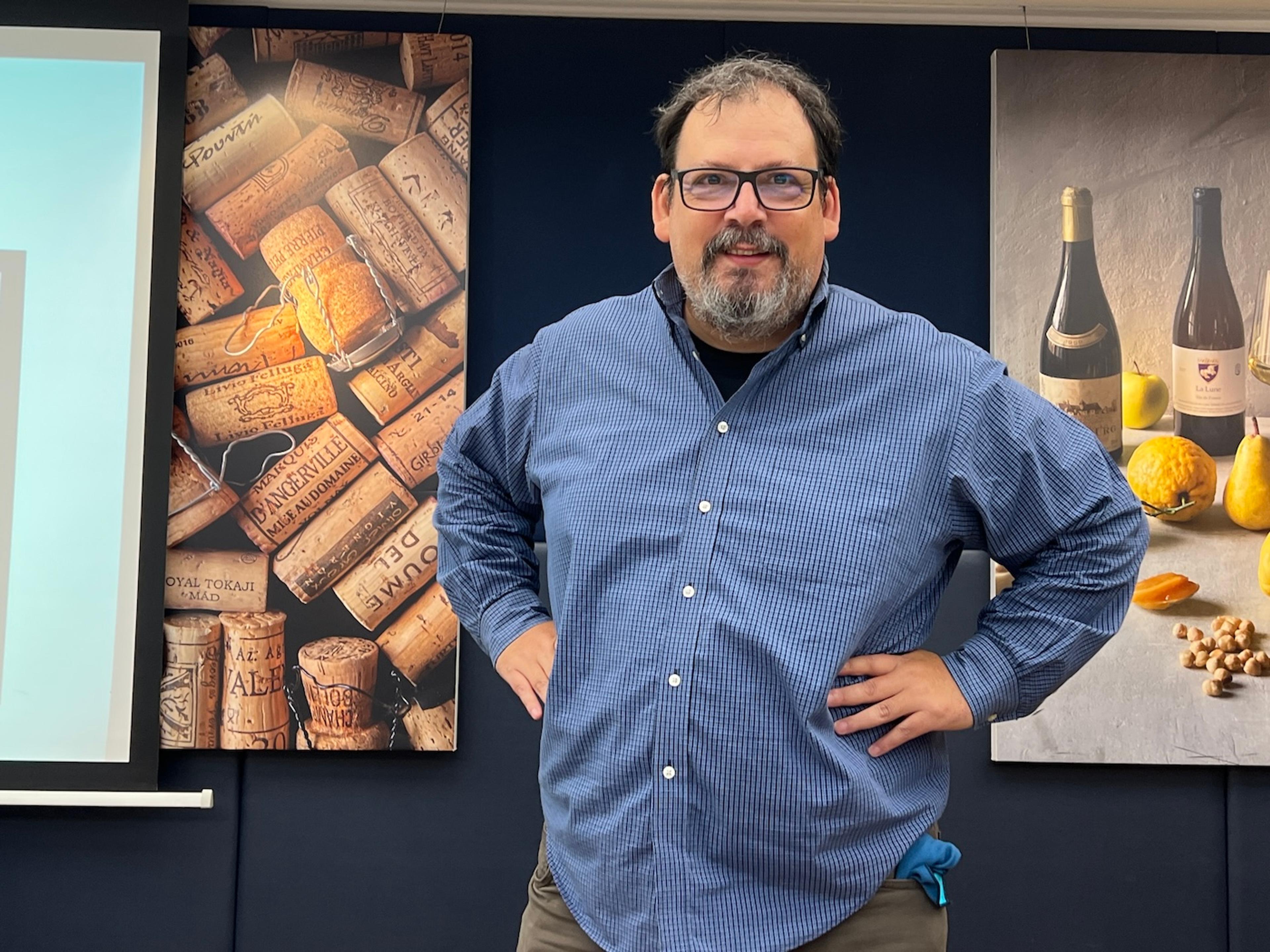
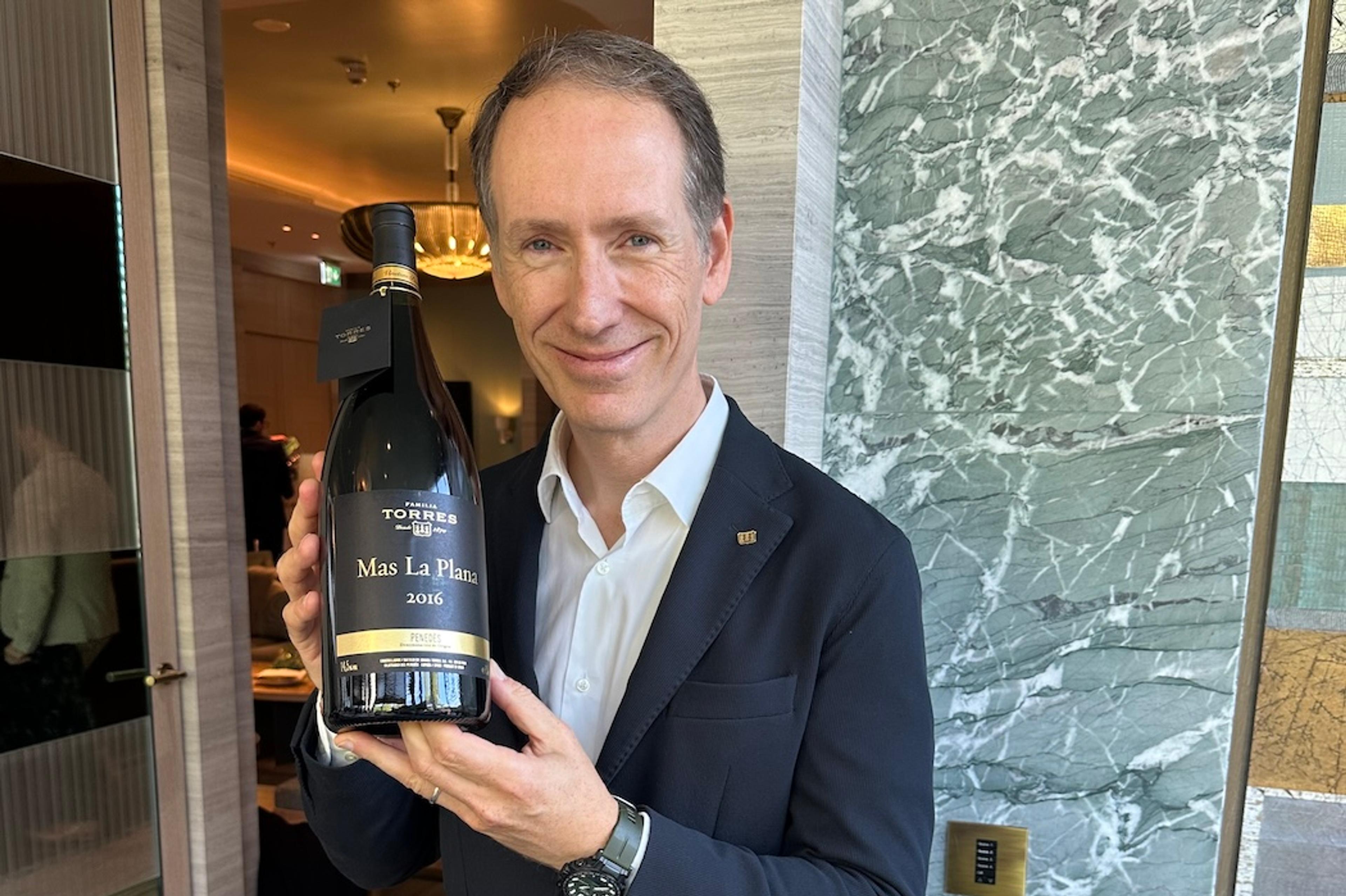
Miguel Torres Maczassek, president of Familia Torres, presents 50 years of Mas La Plana
Fifty years on Miguel Torres Maczassek, president of Familia Torres, proudly presents his wines at the smart Pavyllon restaurant in London’s Mayfair. He is from the fifth generation of the family in the business – it was his father who defied Miguel’s grandfather in the late ‘sixties to try his hand at growing Cabernet Sauvignon plants smuggled in from France. This was a time when everyone seemingly was doing the same and the so-called Super Tuscans were getting a foothold.
Quietly spoken with a gentle humour, Miguel scarcely needs to persuade his audience of the merits of Mas La Plana. Sited in the heart of Penedès region near Barcelona (famed for its sparkling Cava), the vineyard comprises 29 hectares of 11 parcels at two distinct levels. Deep, well-drained alluvial soils rich in sand, clay, and gravel on the lower level change to marlstone on the higher level. It’s a Mediterranean microclimate with hot summers and cool winters. Low in organic matter, the soils are dark yellowish or brown.
Many of the original vines from the 1960s are still yielding up their bounty. Replacements only happen a few at a time, to preserve as much of the age and character of the vineyard as possible.
Interestingly, regenerative farming and the fight against the “climate emergency” are top priorities. “This is my passion, what I love most”, remarks Miguel. He rails especially against the winemakers who till the soil too often and too deeply and judge their success by the macho appearance of their tractors.
There’s a dip, admittedly, when invasive cultivation first ceases and regenerative viticulture takes over. But then the environment recovers. Today, the Mas La Plana vineyard is so full of falcons and other wildlife that “folk from the town come simply to soak up the country sounds,” we are told.
How well do the first vintages stand up?
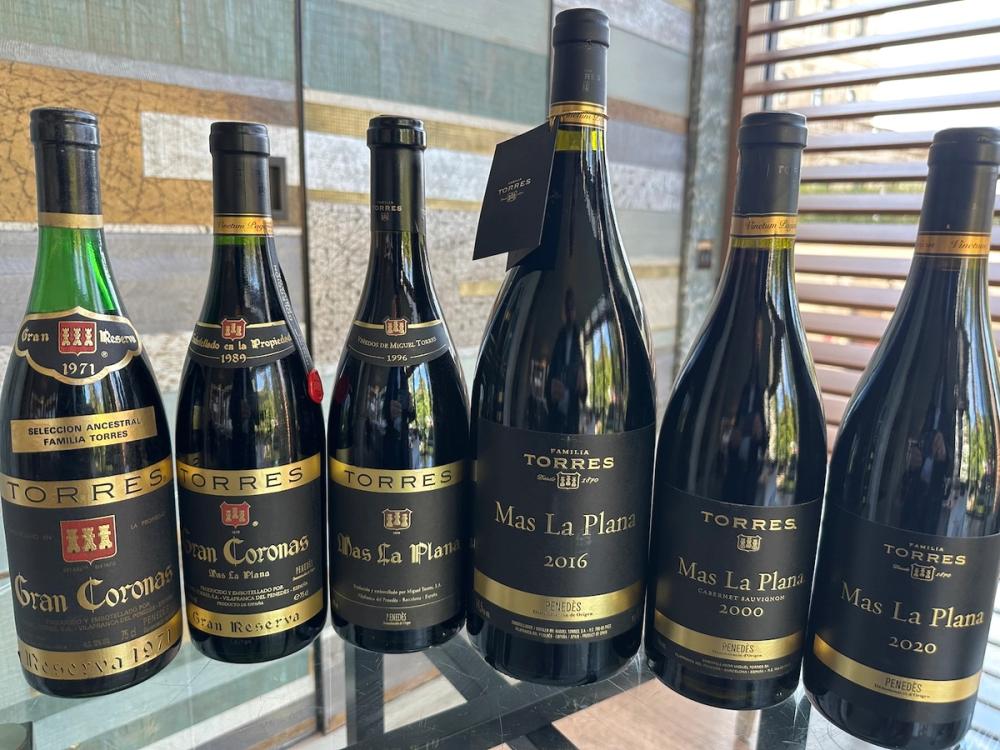
For the first years of its life Mas La Plana was called ‘Gran Coronas Etiqueta Negra’
There’s a sense at the tasting that the Torres family does not have a whole lot to prove. Everyone admires Mas La Plana, it seems. Still, there is the crucial question of ageing: how well will the oldest wines – born of what was simply a bold experiment half a century ago – stand up to scrutiny today?
But we start with a vibrant youngster, the Mas La Plana 2020 DO Penedès (AVB 14.5%, about £55 a bottle retails). This is a powerful wine, but already elegant with a distinctive perfume and a striking intensity. To the fore are dark berries, there are tobacco notes and the tannins are not too drying. All of the ingredients are there already in the flavour profile. You feel that this won’t let the side down after ten or 15 years of cellaring.
On to the Mas La Plana 2016 DO Penedès (ABV 14.5%, £58 a bottle retail). Like the more recent vintage, this wine has a fresh, lively feel on the palate with young blackcurrant and redcurrants. But the aroma is quite different. This is a wine that starts to appeal to the head as well as the heart with greater complexity and sophistication. The very deep ruby-red colour stands out. And on the nose alongside the dark black fruits is a touch of liquorice.
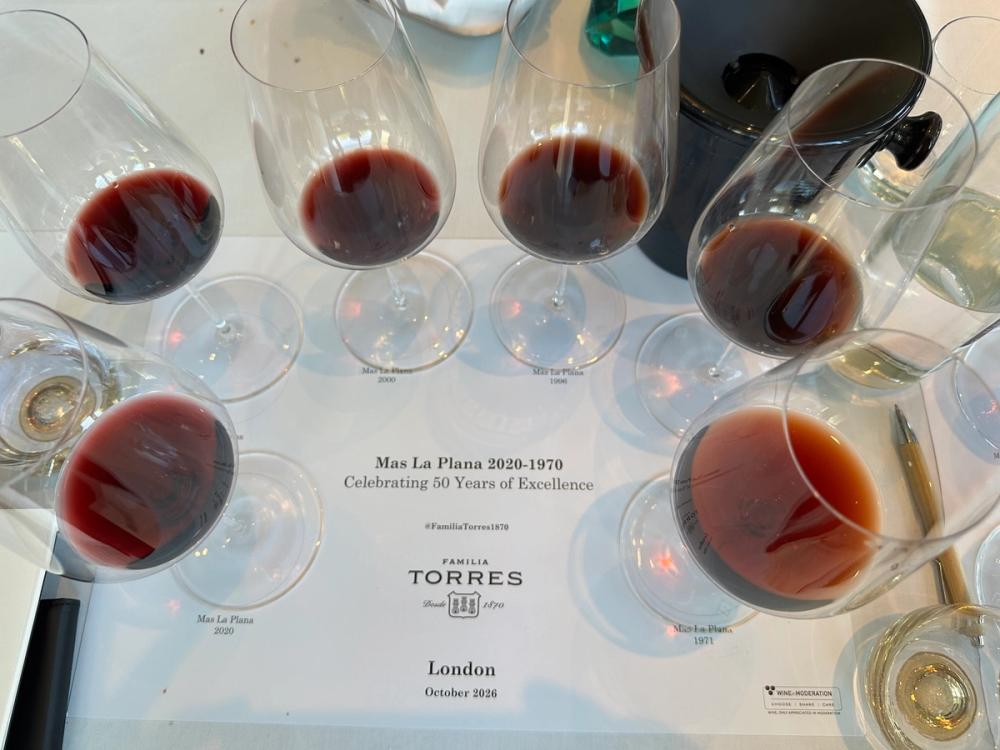
From here on, you will be hard-pressed to find these venerable wines on retailers’ shelves. The Mas La Plana 2000 DO Penedès (ABV 14%) came from a drier year. Again, the liquorice is noticeable plus some cigar box and spiciness. These flavours are all well integrated and there is a touch more concentration. The wines carry the highish alcohol level well.
The Mas La Plana 1996 DO Penedès (ABV 13.5%) was a late-ripening vintage. This is quite a bit different with lower alcohol, drier tannins and less intensity. There is some prune and just a hint of wood. This perhaps is the most complete of the wines. “This was a great vintage for us”, says Miguel proudly.
No good wine is without some family lore. Miguel explains that back all those years ago, he wanted to call the wine ‘Mas La Plana,’ after the vineyard. But his father didn’t want his family vineyard’s name on a Cabernet.
So, for the first years of its life the wine was ‘Gran Coronas Etiqueta Negra’, (translated as Gran Coronas Black Label) with ‘Mas La Plana’ in unobtrusive lettering further down the label.
Hence the next wine is labelled Gran Coronas Mas La Plana 1989 DO Penedès (ABV 12.5%). This was a year with a rainy spring and a dry summer. Here there is leather and tobacco and dry fruit.
Another twist in the story of these historic bottles is that – although they now only exist in highly limited quantities – they could have vanished altogether. The Torres family was blithely working its way through the stock of classic vintages in the cellar until someone with a more commercial eye to the future called a halt to this unthinking indulgence.
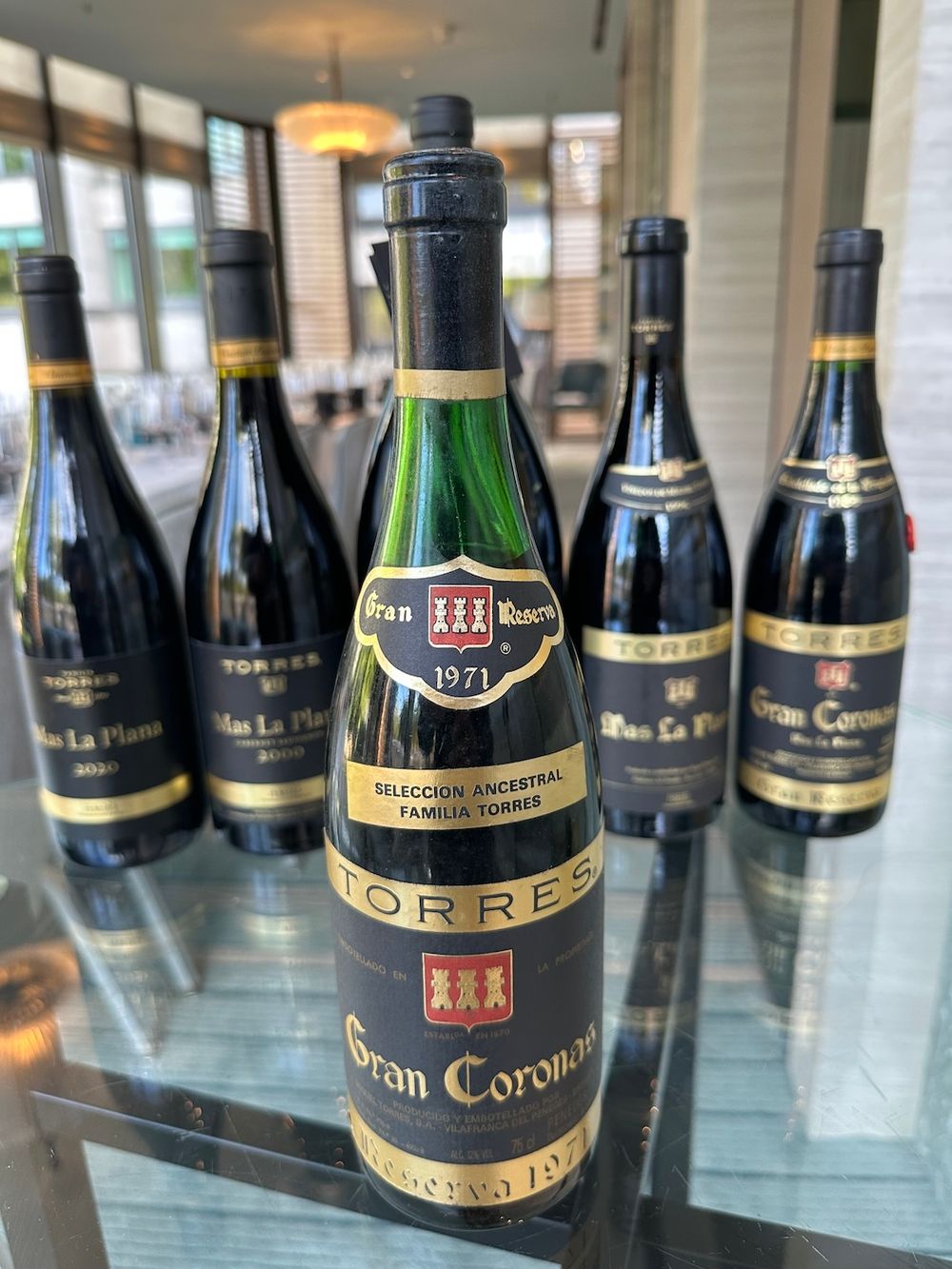
Our final sample is Gran Coronas (Mas La Plana) “Black Label” 1971 (ABV 12.5%). Now around half a century old, this wine is under minute examination from the tasters. It’s the first wine not to be pure Cabernet Sauvignon, as it includes 20% Tempranillo and 10% Cabernet Franc. Unsurprisingly, the colour is not the near-opaque ruby red of the younger wines. And the word “dry” appears on the label, something of an anachronism. But the wine itself has held up well. There’s a lovely perfume, some delicious notes of dried flowers and a well-balanced acidity towards the end.
Fifty lucky customers have the chance to buy a box of these select decades-old vintages this Christmas. As Miguel comments: ”Wines that have aged to this point have a beautiful message to send for us from the past.”
Mas La Plana is distributed by Fells in the UK which is a commercial partner of The Buyer. To discover more about them click here.