
Before the tasting, I was sitting in the bar at Corrigan’s Mayfair, thinking it felt a little like a version of Mayfair that had already had its moment.
Then the Parmesan-stuffed fried olives arrived….
By the time dinner proper started – beef tartare, chicken and Iberico ham croquettes and chicken liver terrine with Louis Roederer Collection 246, followed by game terrine, beef, wild mushrooms and finally crème brûlée – Corrigan’s had rather won me back. The kitchen has confidence, and more importantly, it knows what it is doing.
It was also a great place to taste wines that, on paper, could easily sound like old-school Australian 14.5% Barossa Shiraz... they aren’t.
MMD finally adds Australia
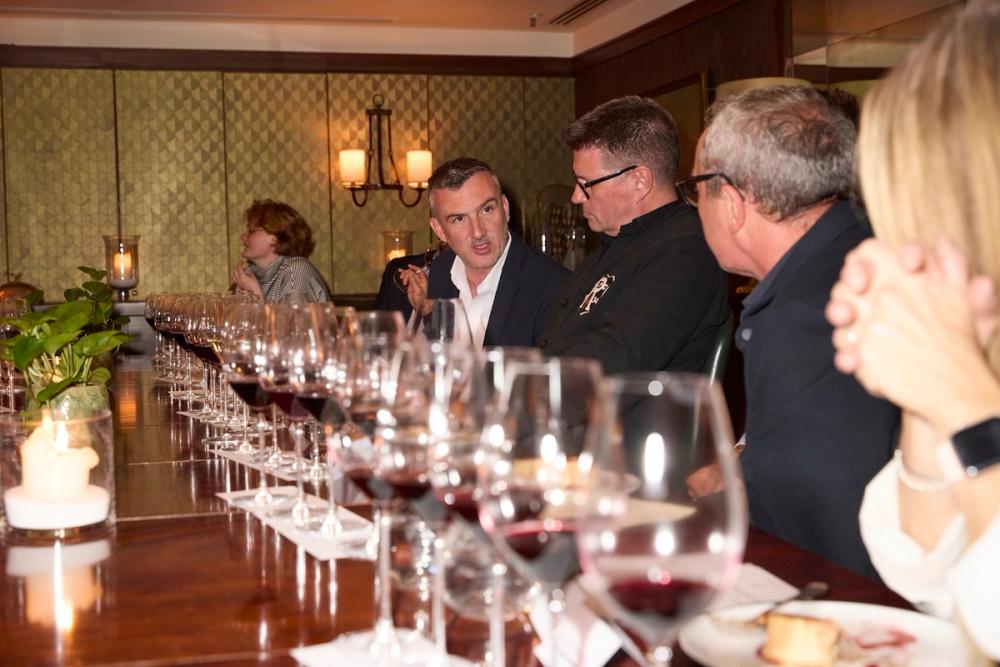
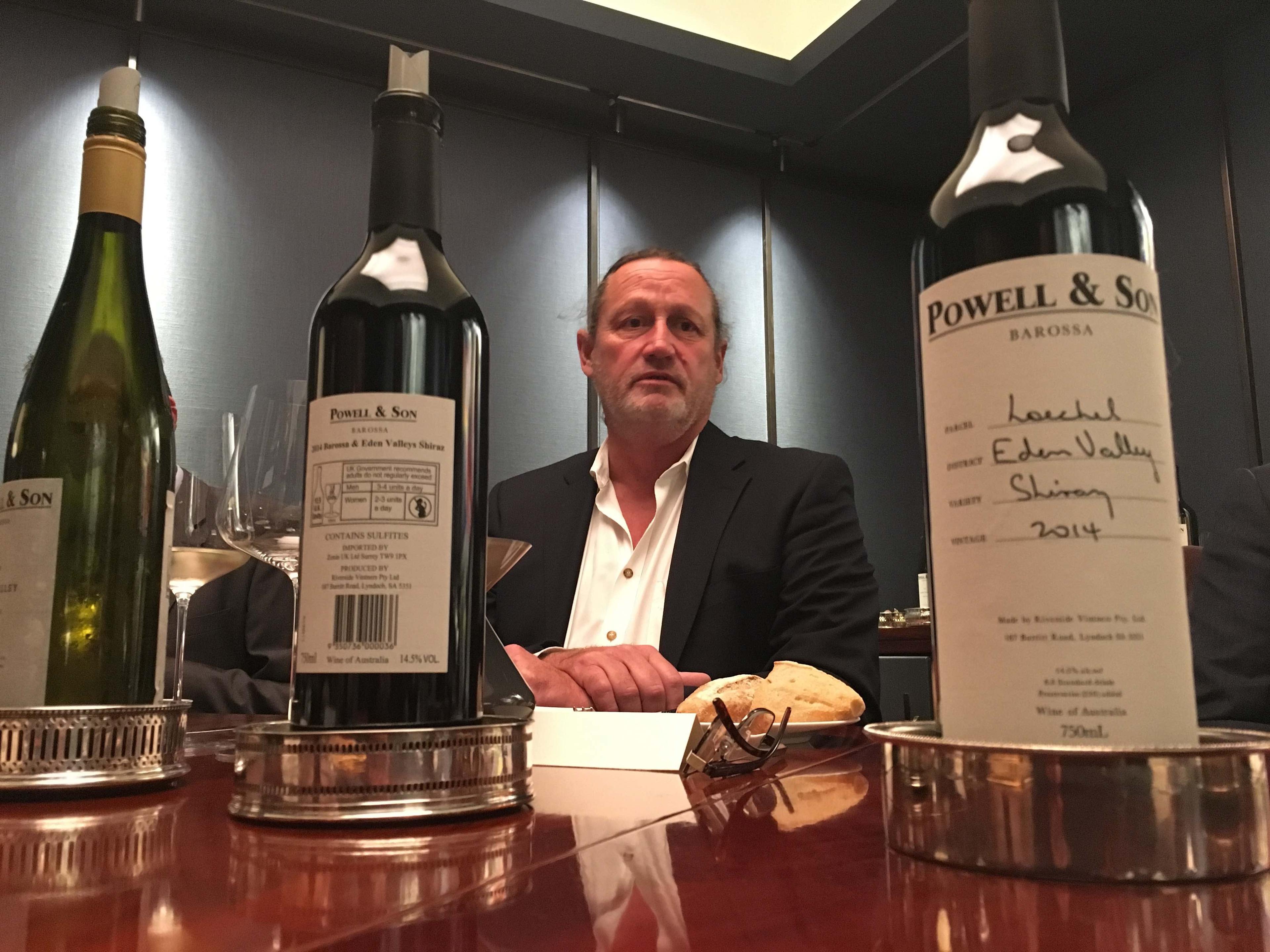
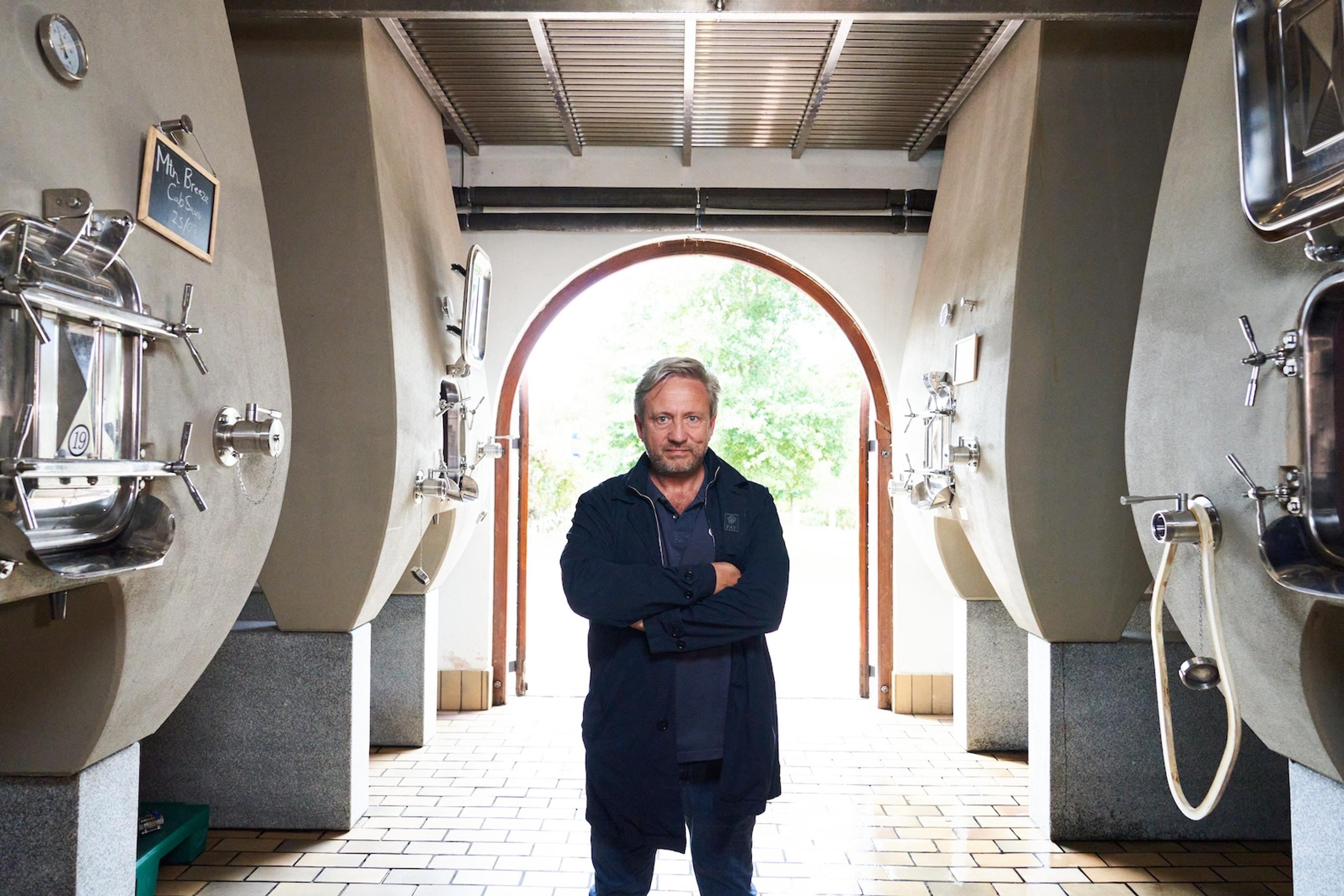
Pierre-Henri Morel at the Barr-Eden launch, Corrigan's, London, September 28, 2026 ©Robert Billington
Barr-Eden Estate officially joined Maisons Marques et Domaines’ UK portfolio on 28 September. It is the company’s first Australian producer and its first entry into the country’s super-premium category.
Richard Billett, MMD managing director, has known Pierre-Henri Morel for around 25 years, going back to Morel’s time working in the northern Rhône. That relationship matters because Billett says MMD was not particularly hunting for an Australian agency. The company already has a New World spread which includes South Africa, New Zealand and California, but Australia had remained the missing piece.
“There’s nothing really quite like it,” Billett said of Barr-Eden. “It’s not Barossa, it’s not Eden. It’s something quite unique.”
More importantly, it fits the way MMD already works.
The total UK allocation across all five wines is fewer than 2,000 bottles. That immediately rules out any idea of broad distribution. Billett sees the wines going mainly into premium restaurants and specialist retail, where small allocations are not a problem and where someone is available to tell the story behind the bottle.
MMD itself remains a relatively small company, around 25 people across sales, marketing and finance, so Billett is fairly unsentimental about adding agencies.
“Any addition to the portfolio has to be the right partner, has to be found in the super-premium wine in terms of distribution, has to be at the right time and has to be for the right reasons.”
Barr-Eden is the third producer MMD has taken on this year. For now, he says, that is enough.
Before Barr-Eden, there was Bob McLean
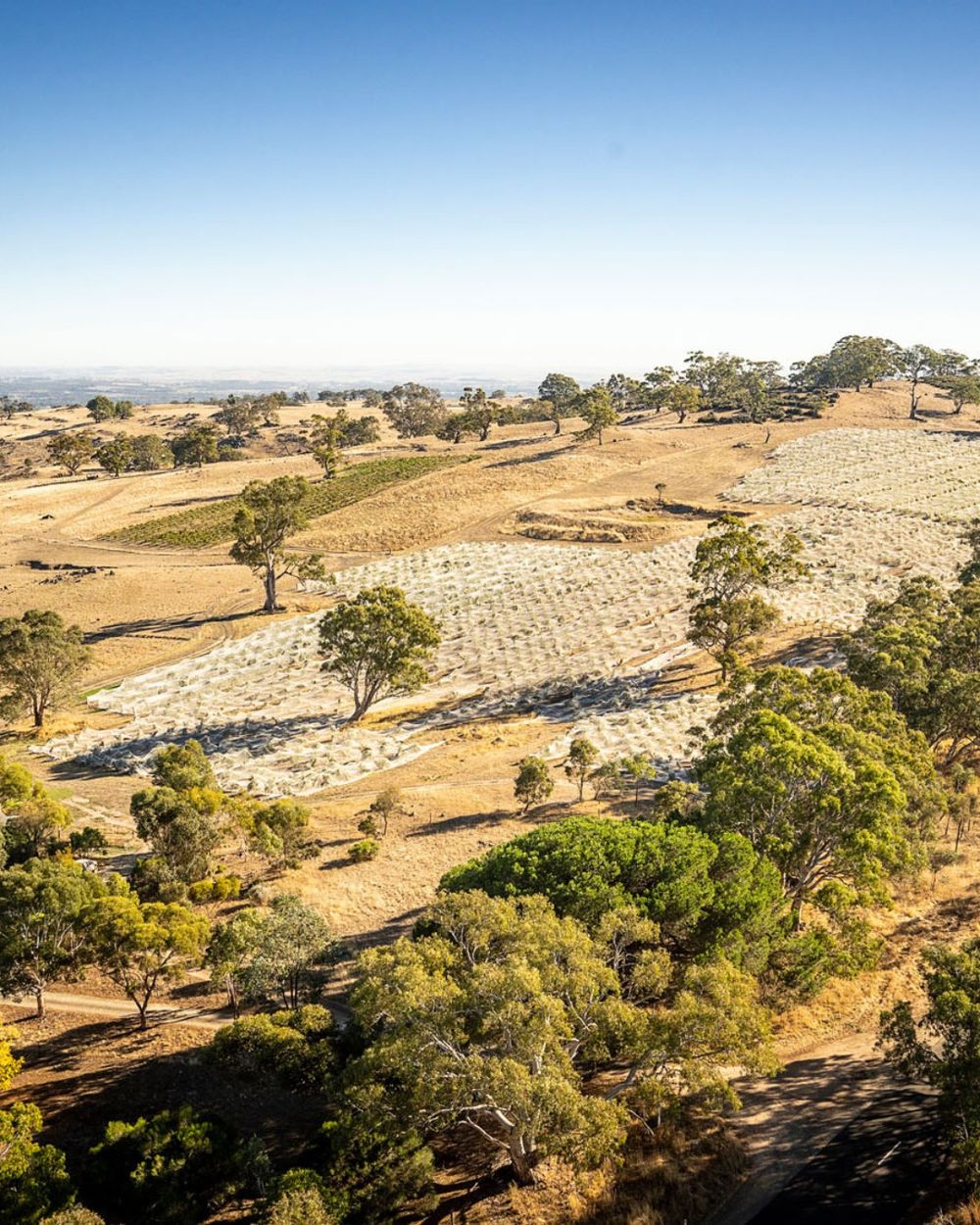
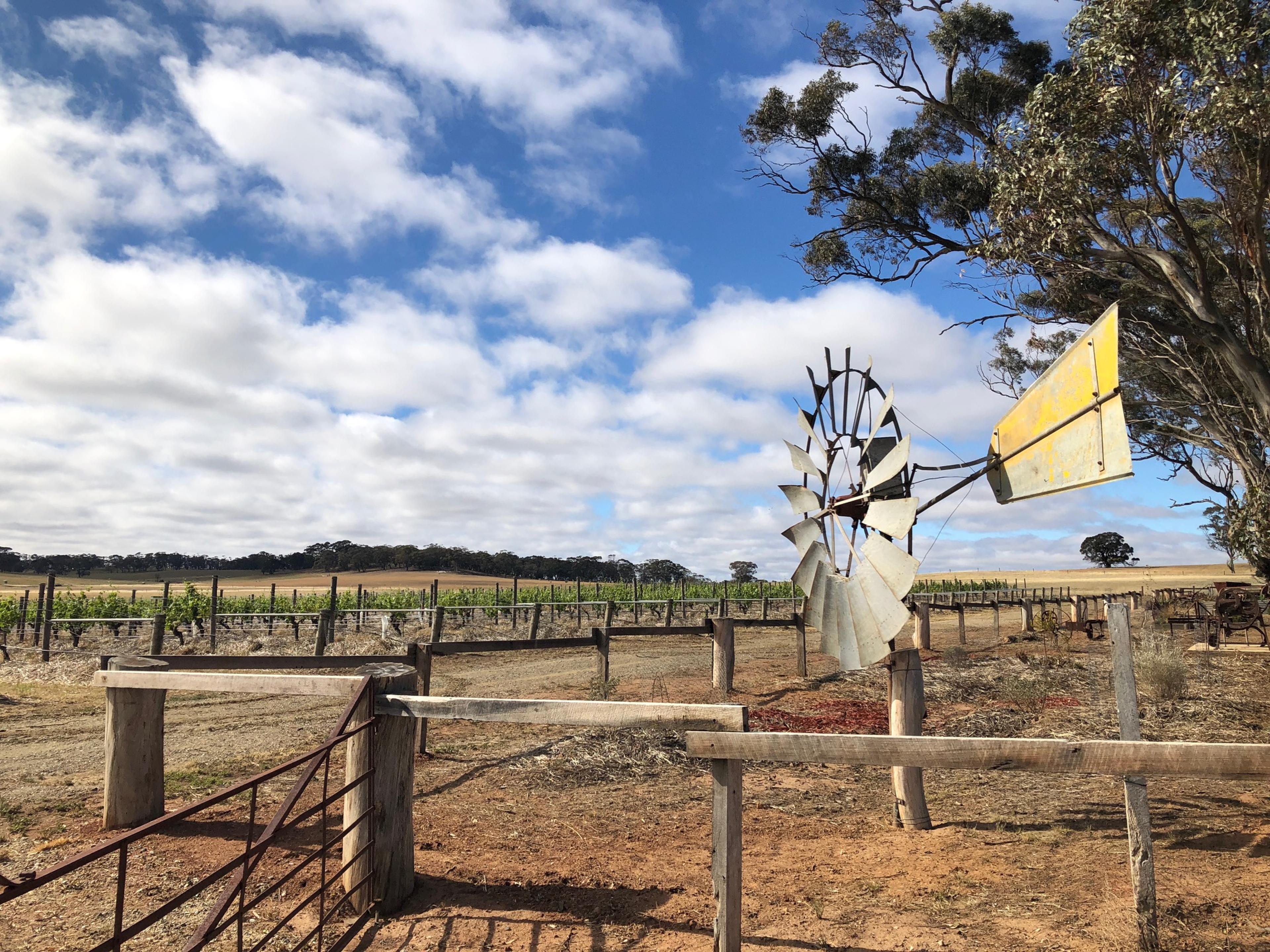
When the nets are put over the vines it means harvest is not far away
The story starts with Bob McLean. His name will be familiar to some of the Australian wine trade, particularly anyone who was around when Barossa first started making serious headway in the UK, but there will be plenty of buyers now who won’t know it.
They probably should.
McLean joined Orlando in 1972 as one of the Australian wine industry’s first dedicated PR people. He later worked at Petaluma with Brian Croser and Len Evans before returning to Barossa in 1988 as co-owner and managing director of St Hallett.
At the time, St Hallett was still strongly associated with fortified wines. McLean helped push it towards premium table wine, particularly Old Block Shiraz, and later Gamekeeper’s Reserve. The business grew, bought Tatachilla, became part of Banksia Wines and eventually passed to Lion Nathan.
McLean was also one of the first to understand that Barossa needed selling as a place, not simply as a collection of individual producers. After visiting the UK in 1992, he encouraged fellow Barossa wineries to come to London collectively and helped organise large tastings which did a considerable amount to establish the region with British buyers.
So there is a slightly wonderful contradiction in what he did next.
After years of helping wine businesses grow, he went up Mengler Hill and planted something almost deliberately difficult to commercialise. He and his wife, Wilma, established Barr-Eden as dry-grown bush vines, on their own roots, with no irrigation, no mechanical pruning, and no possibility of mechanical harvesting. McLean himself described wanting it planted in the “old original style”.
The estate itself has an older history: the property dates back to the Pöhner family's ownership from 1858, with McLean acquiring it in 1997. But McLean gave the modern vineyard its character and, once Pierre-Henri starts talking about the vineyard, you quickly understand that character still dictates what happens there.
463 vines at the top
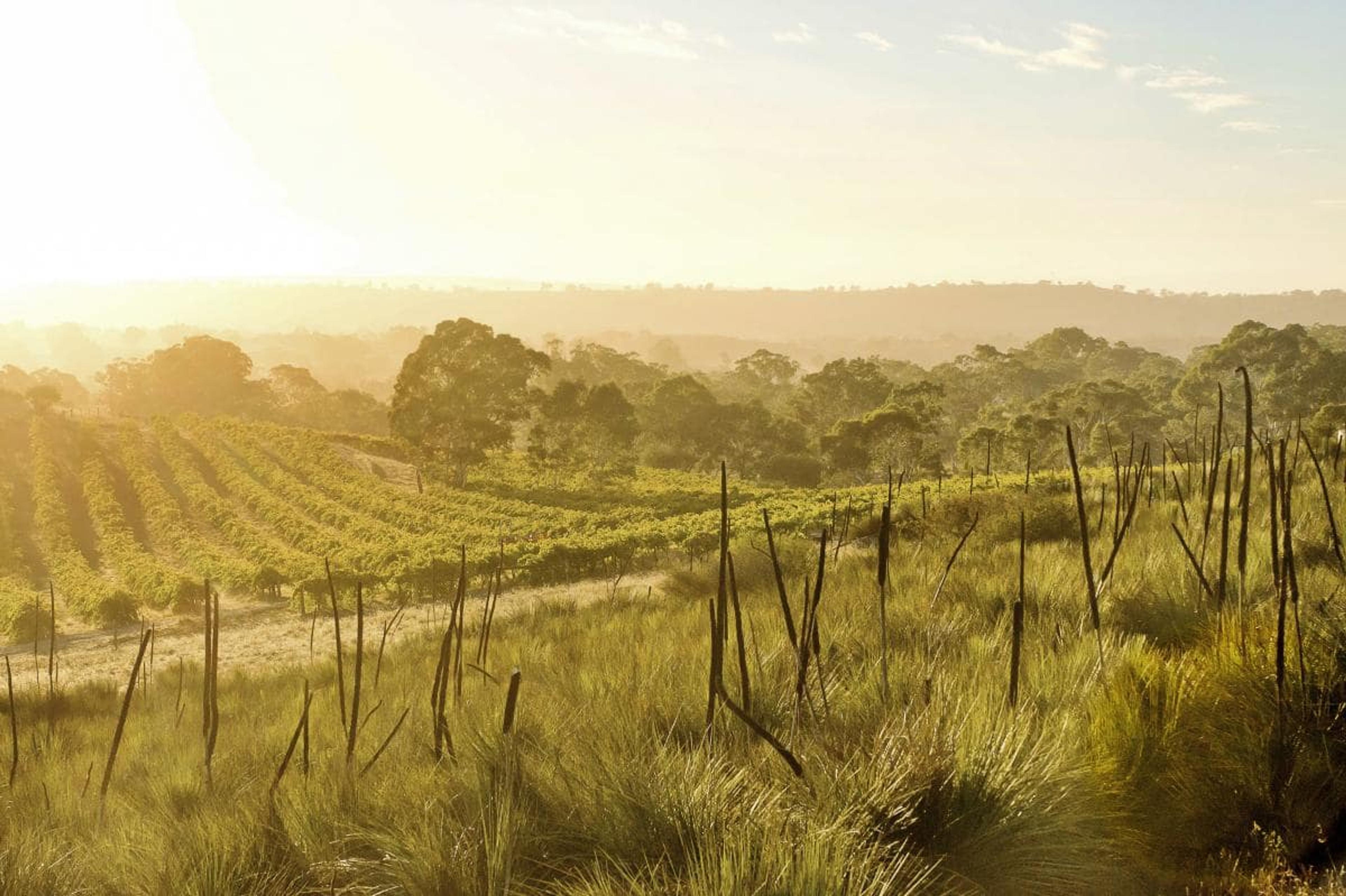
Barr-Eden sits on Mengler Hill, spanning the Barossa and Eden valleys, with vineyards running from roughly 465 metres to 545 metres. That is high by South Australian standards. The Grenache is right up at the top. Pierre-Henri talks about one block containing 463 bush vines, sitting in what he describes as almost a triangular corner of the vineyard. “There’s no road, nothing.” It is apparently where the kangaroos come and lie during summer.
A really good year might give around two kilos per vine. The technical sheet for Love Over Gold Grenache 2021 records just 463kg of fruit entering the winery.
The altitude is not simply a romantic vineyard fact either. The whole property receives more rainfall than the Barossa floor and has a slower growing season. The estate’s own figures give annual rainfall of roughly 700–900mm, with ripening starting later than lower-lying Barossa sites.
Mourvèdre is planted lower down the slope, at around 465 metres. Shiraz sits in between. Grenache is highest. That becomes important later, because Hommage brings fruit from all three levels together.
But first, Shiraz.
The wine they originally thought they might keep
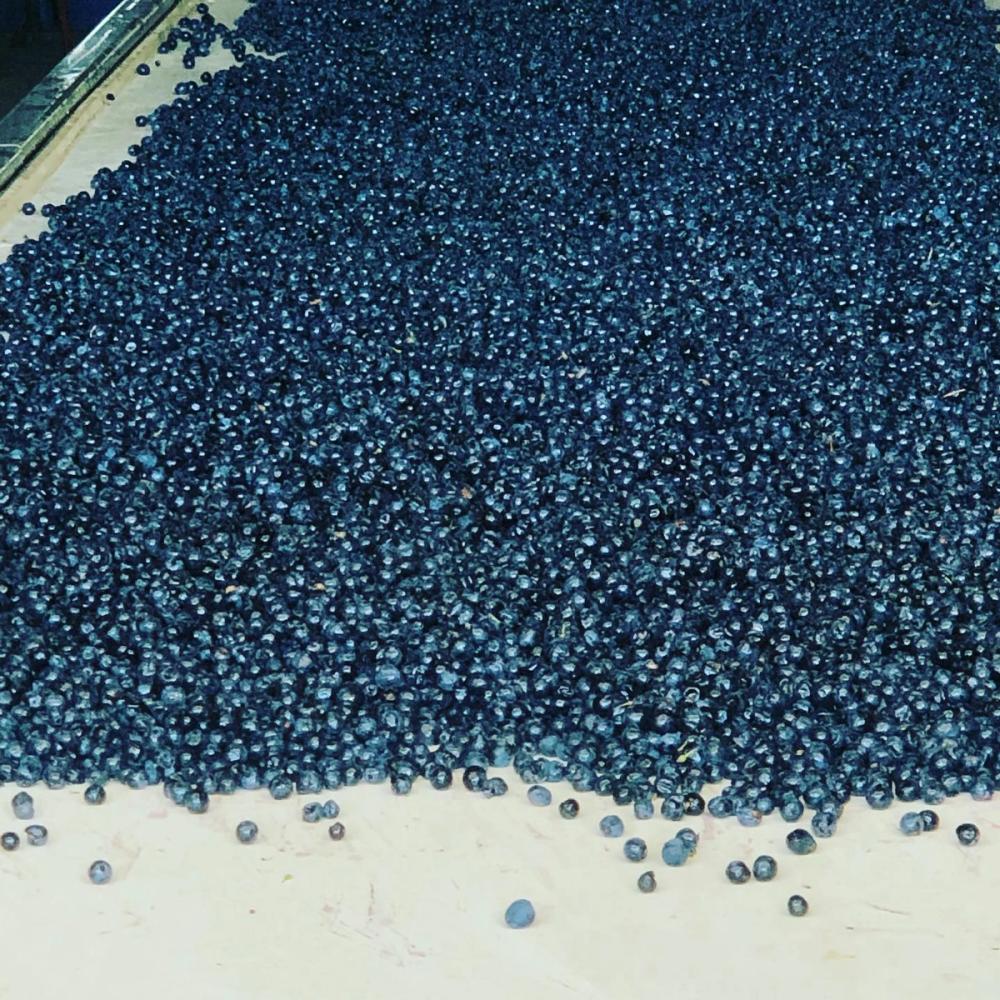
Grapes like caviar - every berry is hand de-stemmed
Pierre-Henri became involved with Barr-Eden in 2014, initially working with grower Joel Mattschoss. They had around a ton of Shiraz and decided to make something special with it. As he tells it, there was “no commercial reality behind it or plan whatsoever.” They even considered keeping the wine themselves.
The way they handled that first ton became the template for Love Over Gold. Fruit comes in 20kg baskets. Around 10% whole bunch is retained. The rest goes onto a sorting table and every berry is hand-destemmed. Actually hand-destemmed. No machine.
Pierre-Henri talks about a group sitting around the table picking out anything pink, shrivelled or imperfect and pushing it away until what remains looks, in his words, “like caviar”. In the first year there were around eight people doing it. More recently, four. He laughs that nobody particularly wants to turn up on that day anymore.
The Love Over Gold Shiraz 2019 comes from a 92-year-old vineyard and follows essentially that approach: hand-picked into 20kg baskets, hand-destemmed, with 10% whole bunch retained. Natural fermentation takes place at around 24°C with twice-daily pigeage, and after 24 days on skins only the free-run wine goes into a two-year-old French oak puncheon.
This is quite serious Shiraz. Liquorice, iodine, violets, dark fruit, plenty of savoury depth. But it is also surprisingly open already. The point is concentration without it feeling dense for density’s sake.
When 500 bottles is the experiment
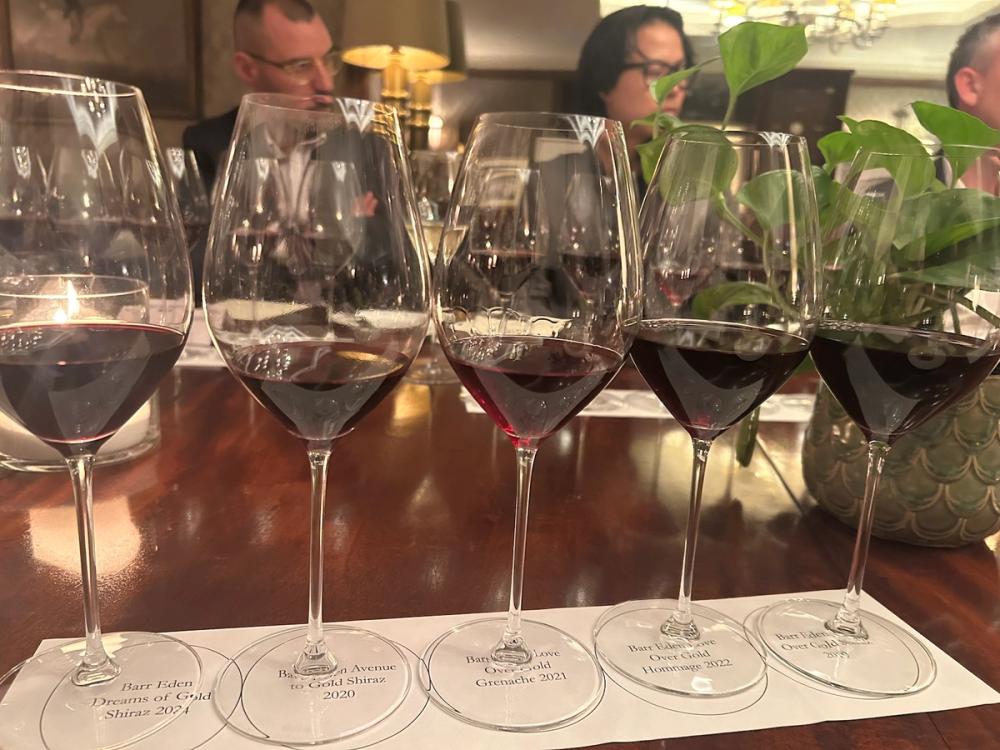
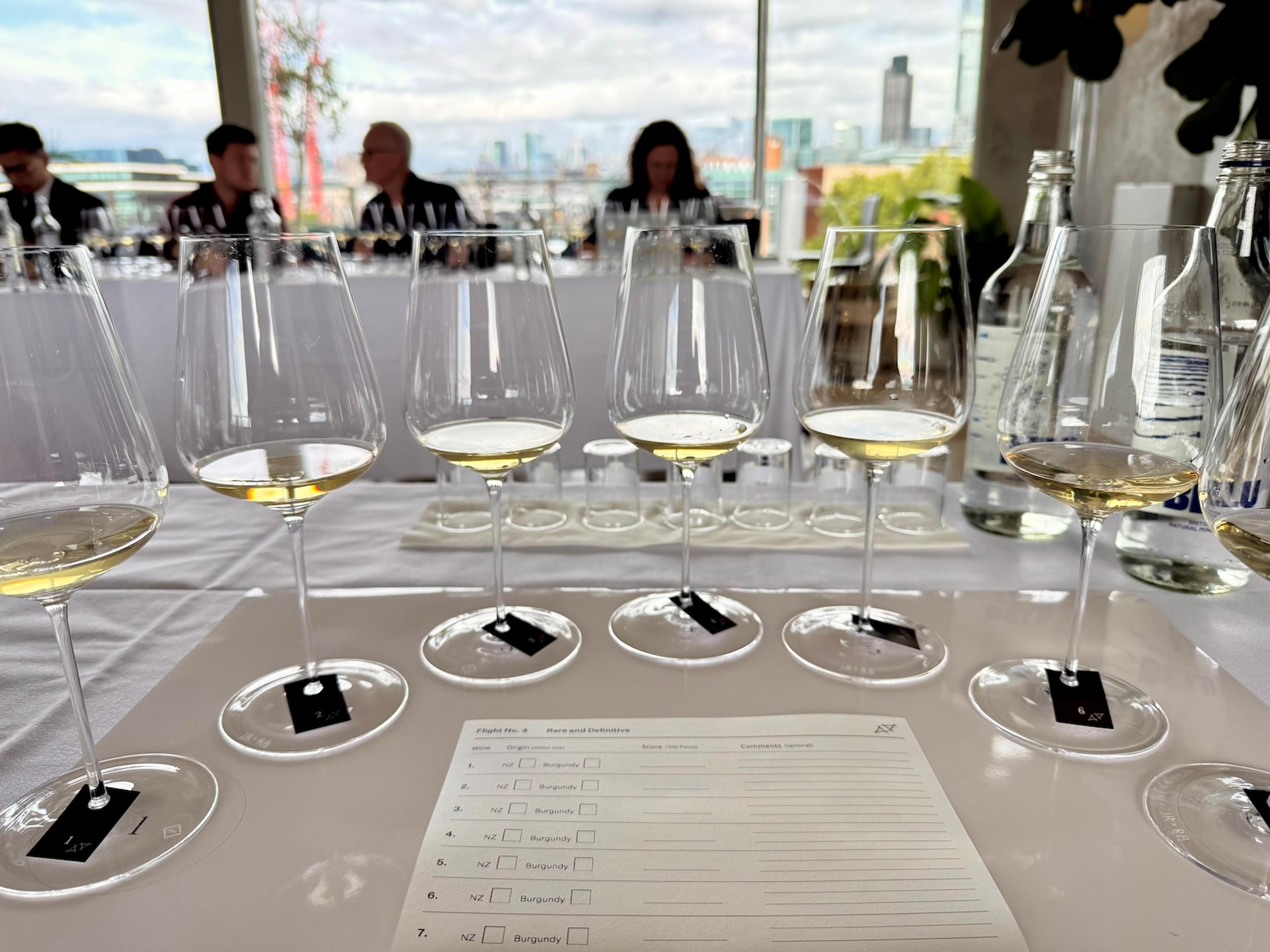
Line-up of wines for the tasting
There is something slightly charming about Pierre-Henri’s attitude to experimentation. He does experiment, of course, but with this scale of production he is very aware that a trial is not really a trial. If you have 500 bottles, the experiment is basically your entire vintage.
He makes the point himself: when the whole production is that small, “it’s all in”. So when something works, he tends to stick with it. For Grenache, extraction is deliberately gentle. Fruit is destemmed into a one-ton fermenter, worked carefully and taken to dryness. For the 2021 Love Over Gold, only the free-run juice was kept before going into an older French oak barrel.
The use of older wood is important across the range.
Pierre-Henri wants oxygen and evolution where useful, but not obvious oak flavour. For some wines he also uses stainless steel vessels shaped rather like barrels, which allow him to preserve a much more primary, fresh component before blending it back with wine matured in oak. It is not flashy winemaking. Quite the opposite. A lot of it is about leaving the fruit alone.
Dreams of Gold 2024
Ironically, the wine I liked almost immediately was not one of the rarest. The Dreams of Gold Shiraz 2024 comes from vines planted in 1997 and 2013. It spent 20 days on skins, was basket-pressed, and a portion of press wine was blended back into the free run for a little more structure. It then went into three- and four-year-old French oak puncheons and hogsheads.
My notes are fairly scribbled by this point. “Black fruit. Eucalyptus. Something meaty. Iodine. Supple tannins.” What was important was the lift. At 14.5% abv it is not trying to make any claim to being low alcohol, but it didn’t taste alcoholic. There is enough freshness and aromatic detail to keep the whole thing moving. That is quite an important distinction at the moment.
We spent part of the evening talking about changing consumption patterns and the increasingly difficult UK market. Billett sees wine in a much less predictable place than it was before Covid.
Covid gave fine wine an extraordinary speculative boom, followed by the correction that has been running since late 2023. Add changing drinking habits, UK tax changes and pressure on hospitality and it is not exactly an obvious moment to introduce a small, expensive Australian producer. But perhaps that is also why wines like this have a chance… because they are not chasing volume.
The Grenache
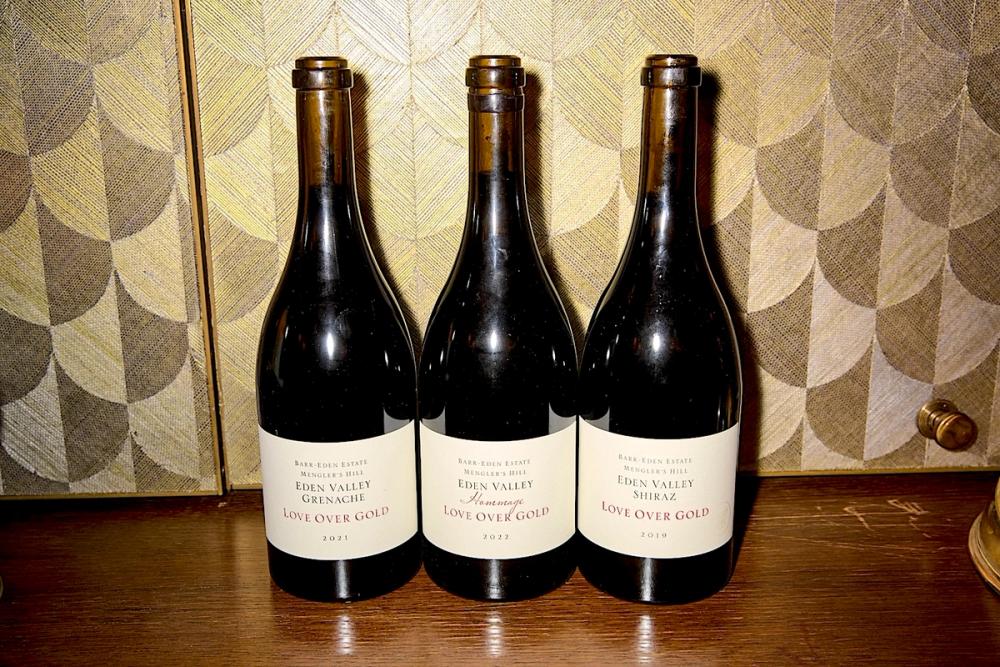
The Love Over Gold Grenache 2021 was one of the wines I would happily have gone back to all evening. The vines were planted in 1997 at around 545 metres, making this one of the highest Grenache sites in South Australia. That height matters in the glass. The wine was floral, perfumed, red-fruited, spicy, but the thing I really noticed was the tannin. Very fine. Plenty of ripeness, but little weight.
My actual notebook says something close to: “floral, perfumed, sweet spice, light, elegant”. Not particularly literary, but accurate. This is the wine where Pierre-Henri’s explanation of altitude made most sense to me. The point is not that high altitude automatically equals finesse, it is that the cooler, slower ripening gives him more time to get flavour maturity without losing all the acidity and perfume. And the vineyard is tiny enough that he can then be extraordinarily selective.
Hommage – and why Bob is still in the wine
Then there is Love Over Gold Hommage 2022. This is where Bob McLean re-enters the story. McLean had planted Mourvèdre and Grenache on the property. Later, when a grape contract came to an end, Pierre-Henri suddenly had access to those grapes as well as Shiraz. He could have made another varietal wine, instead, he started thinking about Beaucastel. Not because he wanted to make a copy of Châteauneuf-du-Pape in Australia, but because he liked the idea of using several Rhône varieties together and allowing the blend to do something none of them could do alone.
The back label says, Hommage McLean. The 2022 is 42% Mourvèdre, 42% Grenache and 16% Shiraz. Each component was fermented separately with 10% whole bunch, with around 20 days on skins, before barrel maturation and final blending.
Interestingly, that was not the blend Pierre-Henri expected to make. He had assumed Mourvèdre would dominate. On the bench, it didn’t work.
“The Grenache didn’t want to be dominated by the Mourvèdre, and the Mourvèdre didn’t want to give the Grenache anything,” was more or less his description. Equal parts suddenly did. There was no 2023 Hommage because there simply was not enough of the right fruit. The 2024 will be different again and, according to Pierre-Henri, much more Mourvèdre-led.
The 2022 itself was another standout for me: “Truffle. Dark berries. Dried flowers. Spice. Something almost bloody and meaty from the Mourvèdre. Almost like Bordeaux, but with Rhône elegance.”
Possibly not technically defensible, but still that’s what I tasted. There is darkness and structure underneath, but perfume and movement over the top.
Why MMD makes sense
There is another nice link back to Bob McLean here. He spent a large part of his career explaining Barossa wine to overseas buyers. He was an early communicator, marketer, salesman and regional advocate at a time when Australian wine was only beginning to establish itself seriously in markets such as the UK.
And yet Barr-Eden itself is almost ‘anti-scale’: Bush vines. Dry-grown. Own-rooted. Hand-harvested. No mechanical pruning. In some cases hand-destemmed berry by berry. Tiny crops. Occasionally no wine at all.
McLean said of Barr-Eden that it was planted in the “old original style”. Pierre-Henri appears to have inherited the vineyard and the determination behind it, which is why MMD makes sense as the UK partner because Billett does not need Barr-Eden to turn into a volume brand. His company already deals with allocation, specialist retail, serious restaurants and customers accustomed to wines which require explanation.
Fewer than 2,000 bottles across five wines is not very much wine. But if those bottles land with the right buyers, it may be enough. And at a time when the UK market is drinking less, hospitality is under pressure, and simply launching ‘another premium Shiraz’ would be a fairly brave commercial proposition – except for the fact that Barr-Eden does not taste generic.
For me, the three wines that really made the case were Dreams of Gold Shiraz 2024, Love Over Gold Grenache 2021 and Hommage 2022. Different wines, ripe for sure, but all with the same underlying freshness, perfume and detail than the words “Barossa Shiraz” might have led you to expect.