
“Celebrate the Diversity of Wines from Spain” was the theme of an early July press trip to Spain that focused on the Denominaciones de Origen (DOs) of Navarra and Somontano. The visit was co-funded by the European Union and the Interprofesional del Vino de España (OIVE), the association that was founded in 2014, with its director-general Susana García Dolla proclaiming that the campaign motto is part of a drive to target the British and other European markets.
Navarra, just to the east of Rioja, and Somontano, tucked under the Pyrenees, may not be two of the best known DOs in Spain, but the quality of their wines is not in doubt. Crucially, both regions enjoy a wide diurnal range, with cool nights allowing acid retention. Indeed, if there is one hallmark of the two denominations, it is the freshness of their wines. Winemakers are often slow to admit they have acidified their wines, but I did not meet one on the trip who said they had needed to.
Navarra - one of Spain's most diverse DOs
If Navarra has long been known for its darker hue of rosé, (aka ‘rosado’ in Spain, where it counts for 30% of the country’s production for that style), red wines are the mainstay. They form around a half of what is made in the DO, with rosado making up a third and the rest being white (with a tiny proportion of sweet fortifieds). Around 26% of production is exported, with the UK the third biggest market behind Netherlands and Germany.
Above all, Navarra is one of the most diverse DOs in Spain as it has as many as nine black varietals and seven white ones. Of the former, Garnacha and Tempranillo predominate with over 50% of plantings, with the rest being Cabernet Sauvignon, Merlot, Syrah, Graciano, Mazuelo, Pinot Noir and Garnacha Roja (Gris). Chardonnay, which accounts for 45% of white grapes planted, is joined by Viura, Sauvignon Blanc, Garnacha Blanca, Moscatel de Grano Menudo (Muscat à Petits Grains), Malvasia and Oneca.
There are also five distinctive sub-appellations within Navarra, each with differing soils:
- Baja Montaña (grey marl/loamy-silty)
- Ribera Alta (clay-loam/gypsum)
- Ribera Baja (calcareous crusts/marl/sandstone)
- Tierra Estella (clay/marl)
- Valdizarbe (marl/sandstone).
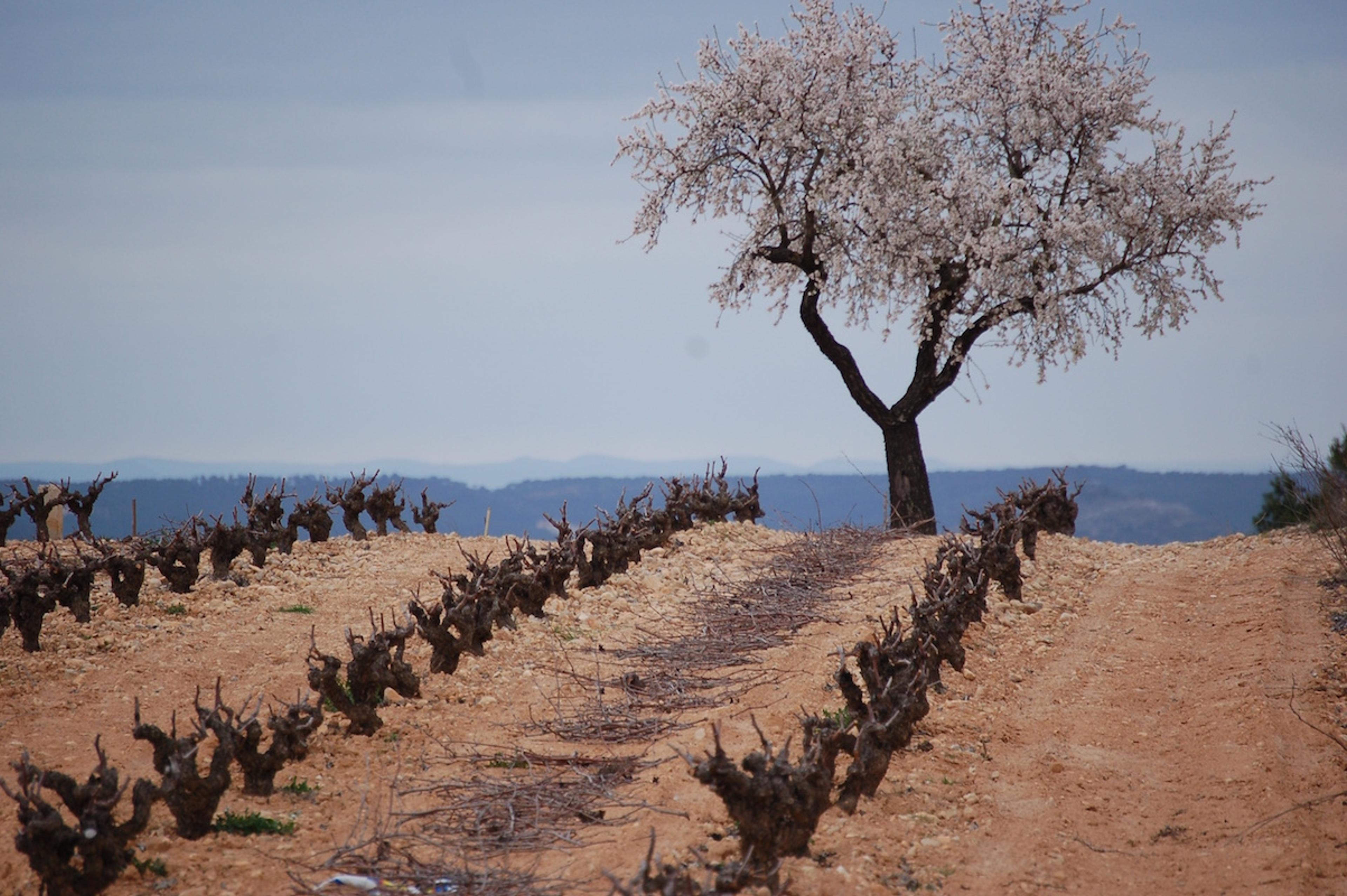
This all helps add to diversity, which is also enhanced by a remarkable convergence of three climatic influences: Atlantic in the north-west, Continental from the Pyrenees to the north-east, and Mediterranean to the south. Of the 9,000 hectares under vine, as much as 22% are farmed organically, one of the highest percentages in Spain. Almost 20% of vineyards were planted over 40 years ago, with just over half being bush vines. Complexity and concentration, while not a given, are a natural sequitur.
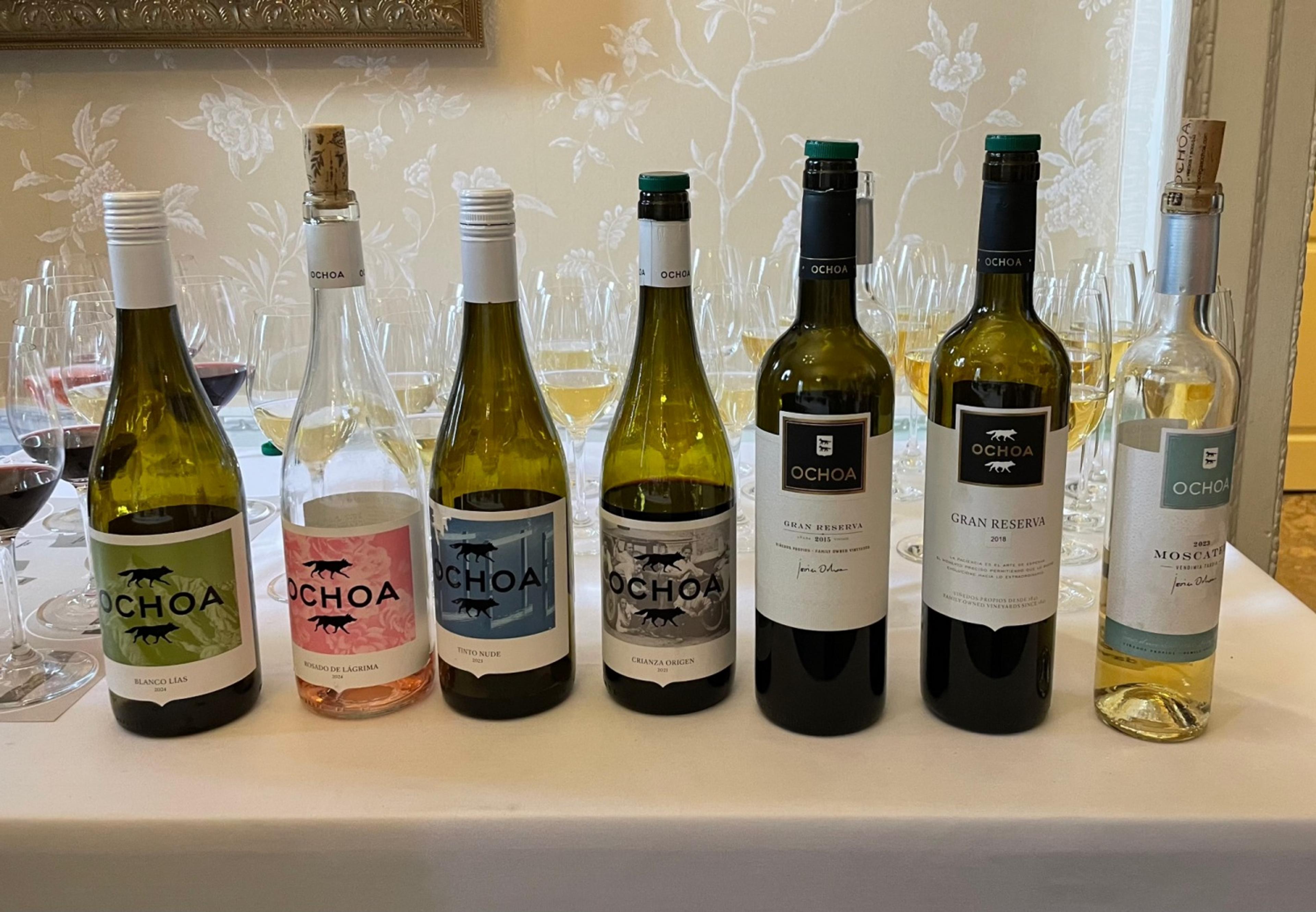
Bodegas Ochoa

Adriana Ochoa - planting Viognier in Navarra
This was certainly the case at Bodegas Ochoa, our first port of call. “Ahora, Aqui, Siempre” (‘Now, Here, Always’) seemed an apt motto for a winery that was founded in 1845, with current winemaker, Adriana Ochoa, being sixth generation. She honed her skills working with one of Australia’s top oenologists, Louisa Rose of Yalumba, and was so taken by the Eden Valley producer’s benchmark Viognier that she planted it at Ochoa.
With over 100 hectares under vine (as well as 58ha of olive trees and a swathe of almond trees), Ochoa sports a superb range that is imported by Amathus and Davy’s Wine Merchants. Two that stood out were the Ochoa Labrit Organic Garnacha 2022, with its vibrant freshness, crunchy red fruit, floral aromas, balsamic notes and velvety tannins; and the Ochoa Reserva 2016, a blend of Tempranillo, Merlot and Cabernet Sauvignon. Aged for 15 months in a mix of French and American oak (a fifth new), this was complex and elegant with silky tannins and a lengthy finish.
Bodegas Nekeas
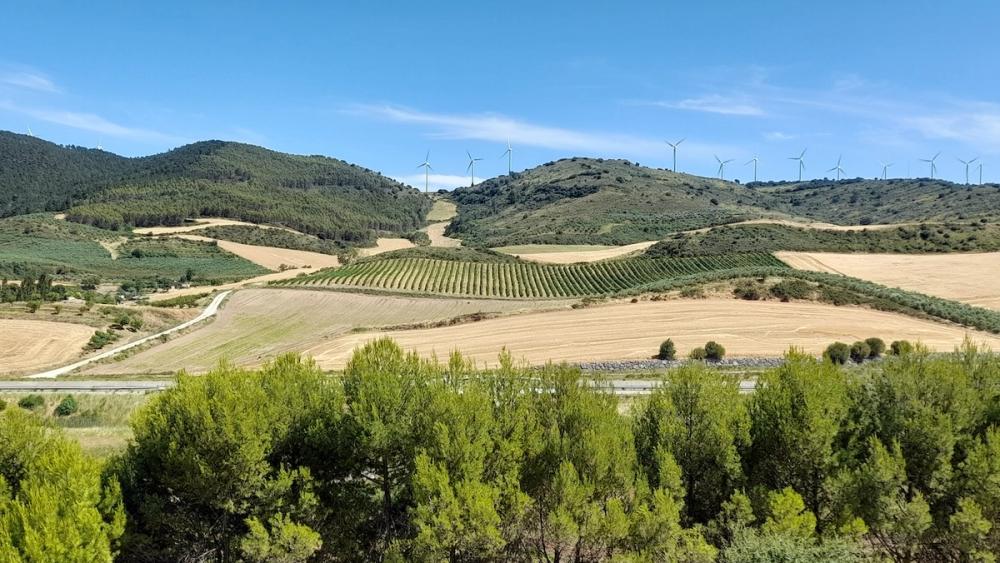
View from the winery
Not far away can be found Bodegas Nekeas, which is also a top-end olive oil producer with 250ha of olive trees. It benefits from a near-constant northerly wind which, according to export manager Carlos Biurrun, renders the next-door wind farm the most profitable in Spain. With a highest vineyard altitude of 650m, cool nights help make it a noted producer of both red and white wines. Its Garnacha Blanca ’25 Vendimios’ 2024 and El Rincón Chardonnay 2025 both showed particularly well, prompting Biurrun to claim that Navarra, as well as Somontano, make the best examples in Spain of the latter varietal.
Nekeas’ Cepa de Cepa 2025 is an expressive example of what Biurrun calls ‘pure Atlantic Garnacha.’ Fermented in stainless steel, its herbal aromas and intense red cherry and strawberry notes with ripe tannins were a delight. Equally impressive were Nekeas’ El Chaparral de Vega Sindoa 2023, a superb old vine Tempranillo, and the Izar de Nekeas 2019, a blend of Cabernet Sauvignon (50%), Tempranillo (25%) and Merlot (25%).
Pago de Larrainzar
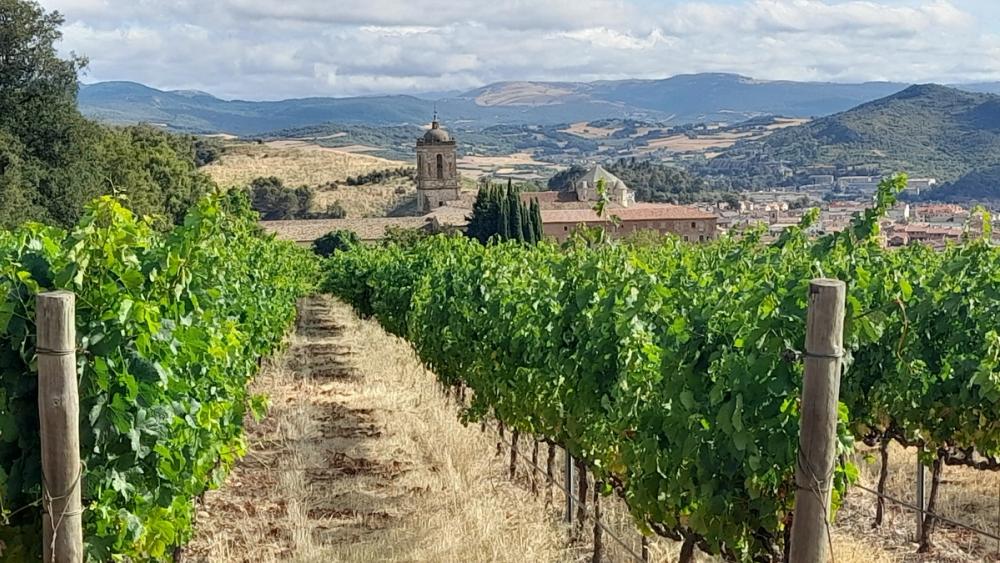
Larrainzar vines with Monastery of Irache
We encountered another fine Cabernet-Tempranillo-Merlot blend (the Reserva Especial 2014) at Pago de Larrainzar, where the tenth century Monastery of Irache stands sentinel-like over the early stages of the Camino de Compostela, which passes through the estate. Founded in 1891, the winery, which has 17 hectares under vine, is owned by the Canalejo Lasarte family, with siblings Irene and Miguel being fifth generation member heirs.
Miguel makes an excellent range that includes a single varietal Merlot and a single varietal Cabernet Sauvignon. Tasting both from the 2018 vintage, what struck you was the vibrancy of fruit, the freshness and the quality of the fine-grained tannins. The Cabernet comfortably absorbed 100% new French oak (the Merlot seeing 40% new).
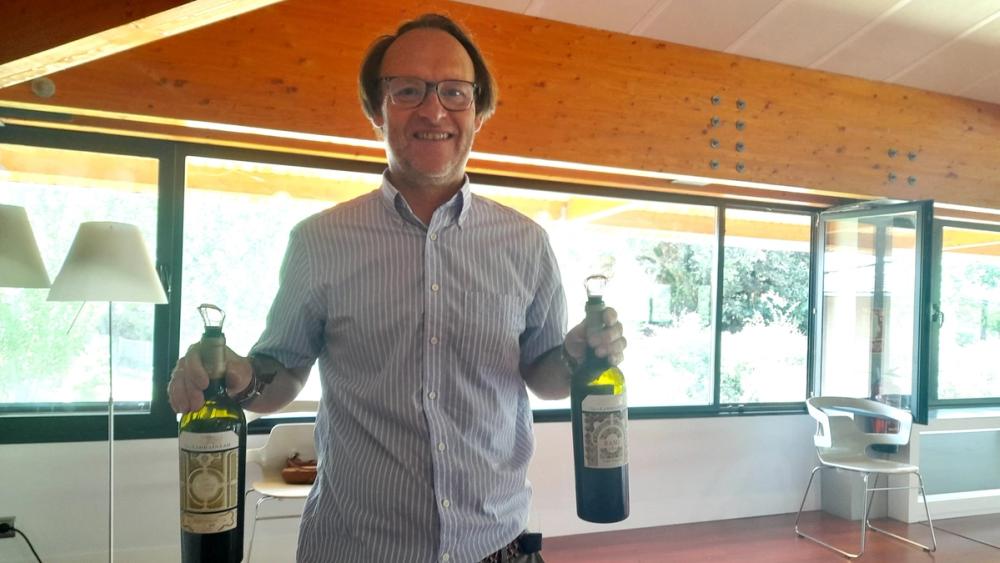
Miguel Canalejo Lasarte, Larrainzar winemaker
Georges Barbier in London imports some of the Larrainzar range, although Irene, who is sales & marketing manager, is keen to “expand our reach in the UK and connect with new buyers across all sectors.” The winery is in the final stages of the European Commission’s certification process to become a ‘Vino de Pago’, an independent geographic appellation. This is regarded as the highest category in Spanish wine legislation, reserved only for estates with exceptional terroir and distinct personality.
Bodegas Castillo Monjardín
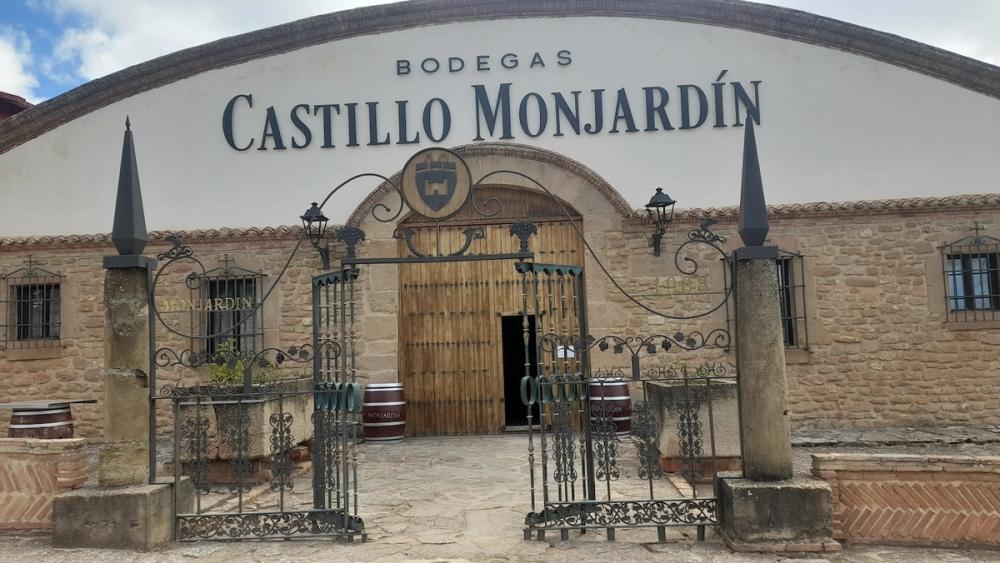
Bodegas Castillo Monjardín likewise lies on the Camino de Compostela, and is just 10km from the border with Rioja. Situated at 650m, the estate has 250 hectares under vine as well as 100ha of olive trees and 150ha of cereals. Built in 1990, the winery produces as many as 26 different labels, including different styles of excellent Chardonnay (unoaked, oaked in 100% new French barrels and sparkling ‘espumoso’). Tanners and Inverarity Morton are the UK distributors of a range that also features Pinot Noir, Grenache and Tempranillo.
Somontano - tucked under the Pyrenees
Somontano’s 4,000 hectares of vines are overlooked by the Pyrenees, whose highest peak of Aneto (3,404 metres) is visible from many of its 27 wineries. The climate is continental with cold winters and hot summers, although the altitude of vines (300-1000m) encourages cool nights. Soils of calcium carbonate and loam predominate, as do red varietals, which make up 63% of production. Two of these are indigenous - Moristel and Paraleta - as is the white varietal Alcañoń.
Bodega Sommos

Bodega Sommos's €100m winery
Bodega Sommos is one of Europe’s more avant-garde wineries, with a futuristic 27-metre high production building that was built in 2004 at a cost of over €100 million. With 350 hectares under vine and 20 wines made, it is a major producer but its ‘Colección’ top range labels really impressed. After the blow of losing the entire Garnacha Blanca 2024 harvest to hail, Sommos has produced a complex 2025 version of that grape that was aged for eight months in second fill French oak. The 2021 vintage of the Sommos Colección Garnacha Blanca won the Grand Gold medal at the Concours Mondial de Bruxelles in 2021.
Sommos’ Pinot Noir 2024 demonstrated that Somontano can produce excellent examples of the variety in years that are not too hot (none being made by them in 2021 or 2023). Fermented with wild yeasts from fruit grown at 350m, and aged for six months in old oak, this had appealing cherry fruit with balsamic notes and soft tannins. Evuna in Manchester and Vinissimus import Sommos wines into the UK.
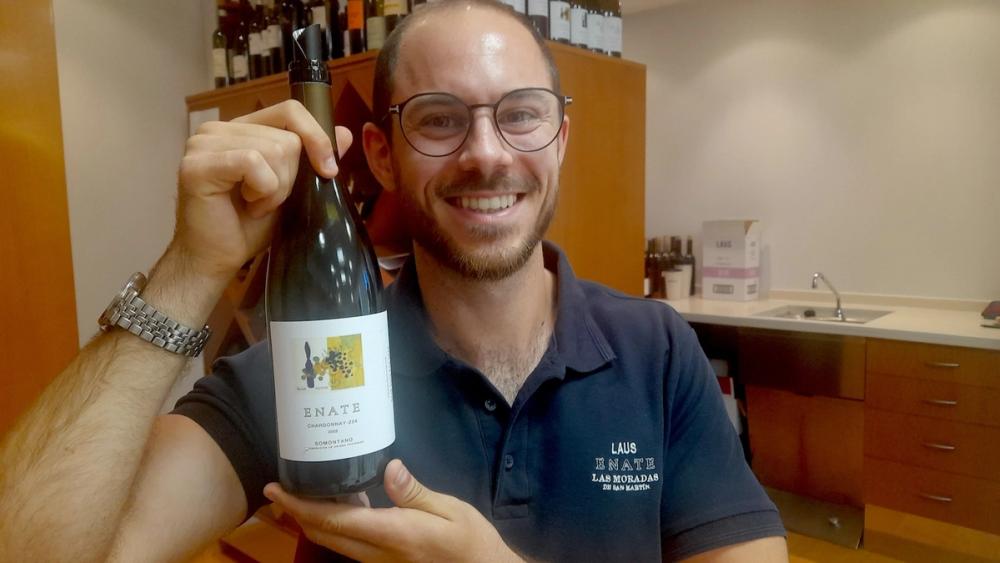
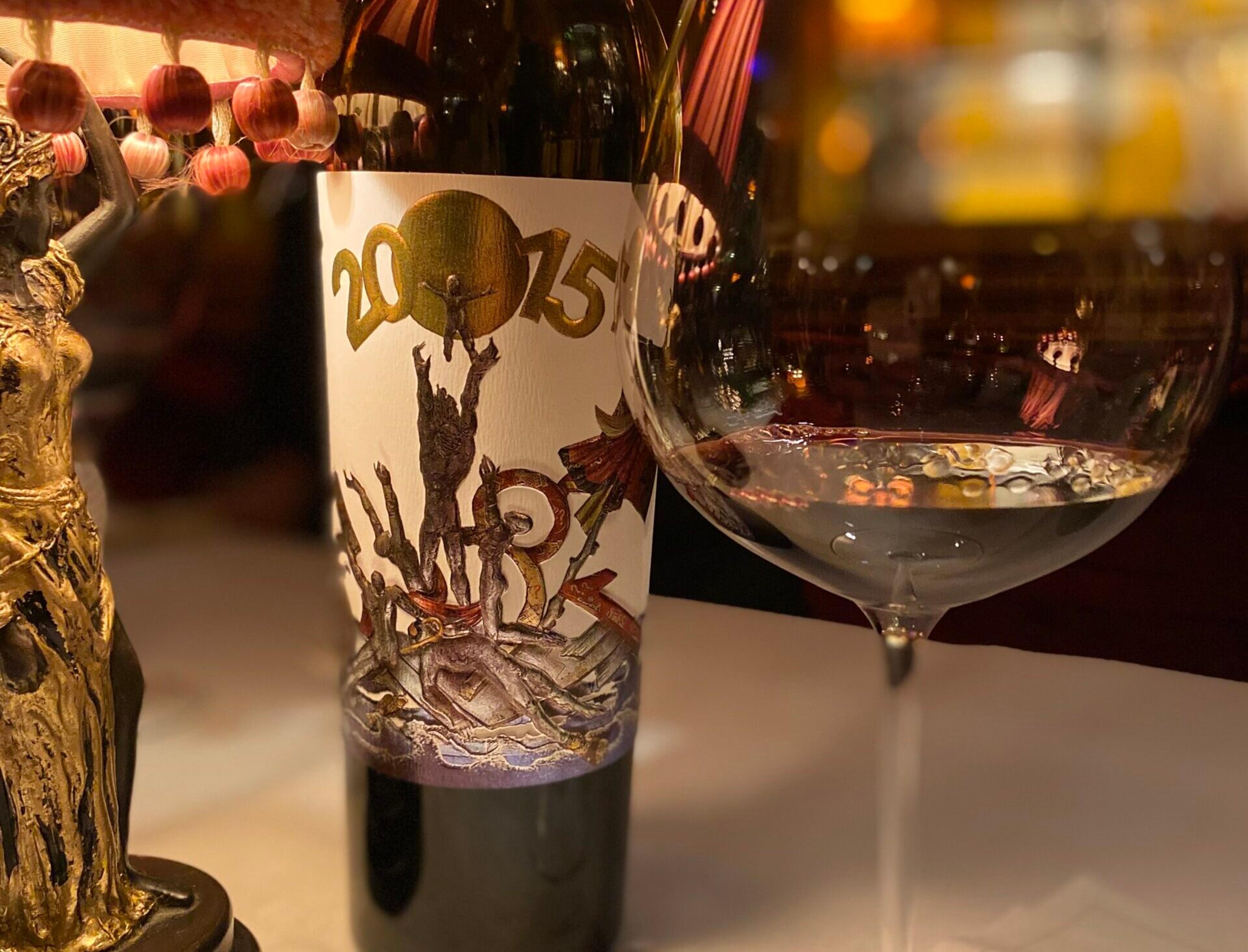
Another estate not to be missed on a visit to Somontano is Bodega Enate. The winery houses both a state-of-the-art cellar and an art gallery, where the owners, the Nozaleda family, has curated over 400 pieces of contemporary art. It is a magnificent collection, featuring works from a string of famous artists, including Luis Gordillo, Jaume Plensa, Frederic Amat, Salvador Victoria and Manuel Rivera. These are then printed on different Enate labels. Amat, for example, created an original drawing specifically for the Enate Merlot-Merlot 2022. ‘Why name it twice?’, I asked Jesús Sesé, Enate’s viticulturist. “Because in Aragón we say something twice if it is really good,” he smiled.
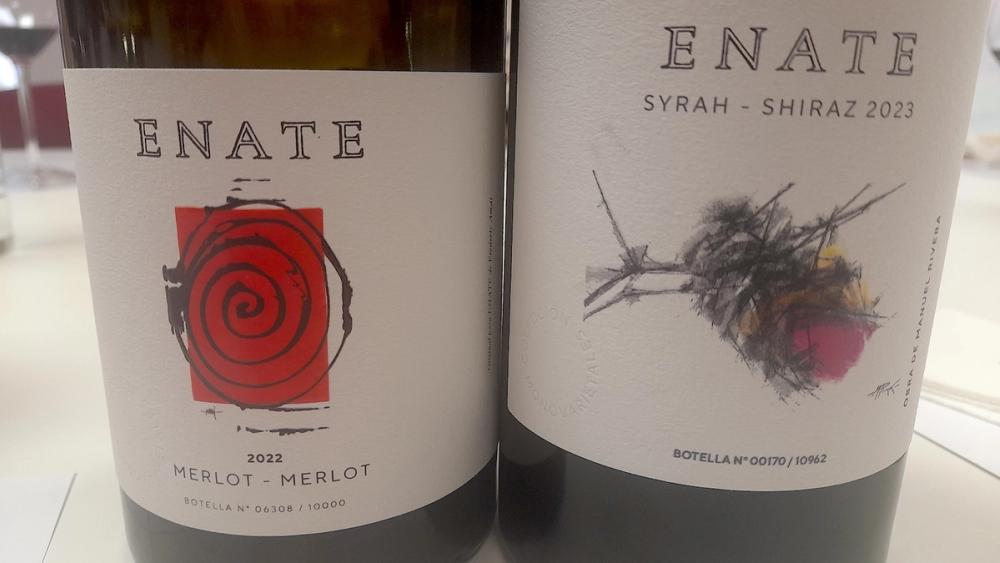
And Enate’s wines are indeed really good. The Merlot is one of Spain’s best, effortlessly absorbing 100% new French oak, and marrying elegance and freshness with seductive black fruit and chocolate notes. The Syrah-Shiraz 2022, which was aged in 50:50 French & American oak (also all new) had similarly soft tannins. Both wines are 15% abv, and ‘hedonistic’ as export director Christian González put it, but with sufficient freshness, fruit and structure to counter-balance the high alcohol.
Enate’s impressive range included its Chardonnay Fermentado en Barrica 2023, which was adjudged the best barrel-aged white wine in Spain by the Guía Vinos Gourmets. Displaying more finesse than power, it went through 100% malolactic fermentation and spent seven months in 100% new oak. The Enate Rosado 2025, made from Cabernet Sauvignon, spent four hours on the skins, and in González’s view is aimed at ‘red wine drinkers who want extra from a rosé.’ The Reserva Cabernet Sauvignon 2020 was outstanding value at €17 from the cellar door. Daniel Lambert is Enate’s UK importer.
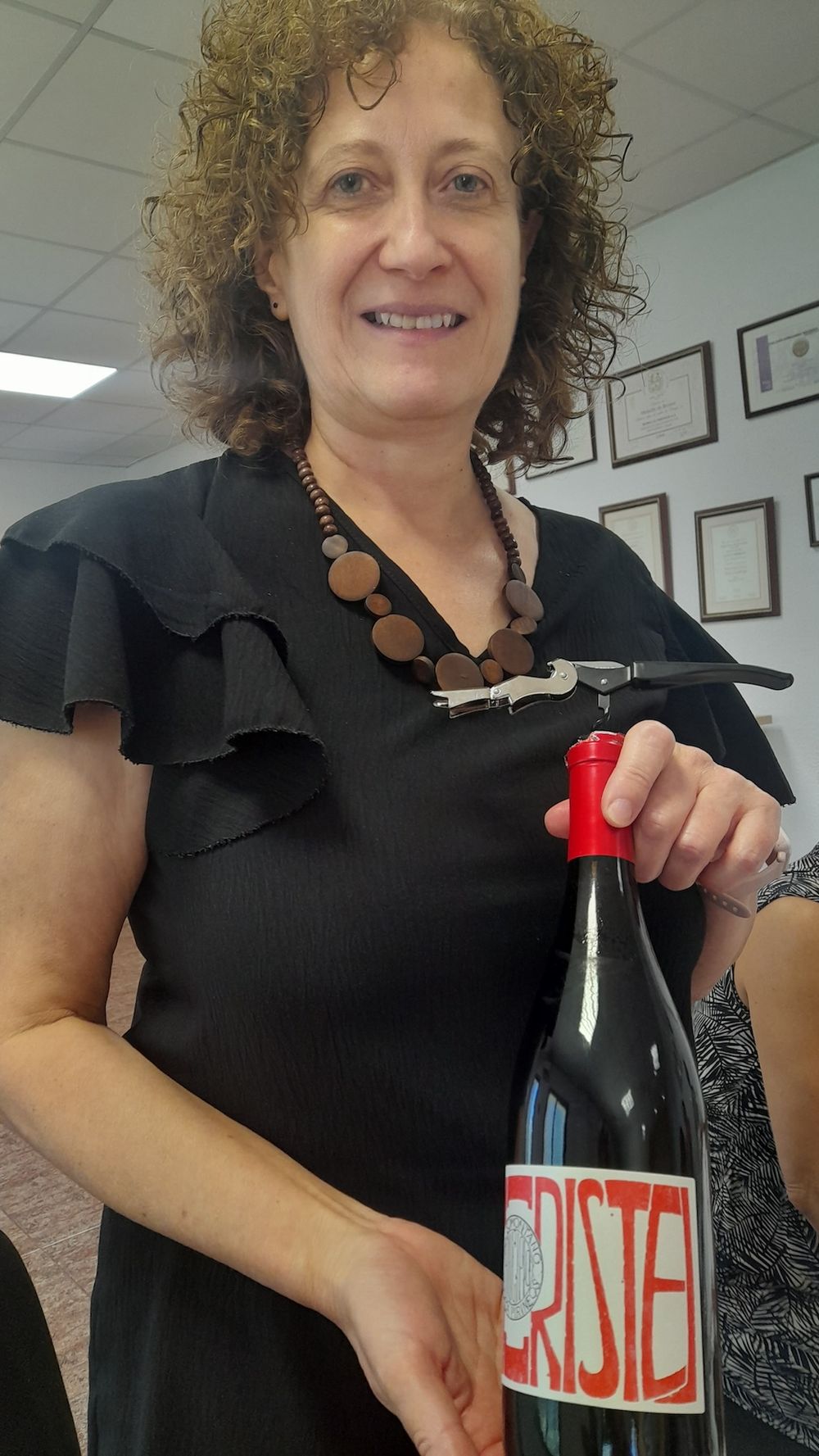
Cristina Barón Castellar, Bodega Pirineos winemaker with bottle of Moristel
Our final port of call in Somontano was Bodega Pirineos, which is 76% owned by the Barbadillo group with the remainder by a co-operative of 150 grape growers. With 700 hectares of vines at its disposal, it has an excellent range that Les Cave de Pyrène in Guildford imports, and is perhaps best-known for its production of Moristel, which is only found in Somontano.
Deeply coloured but light-bodied with soft tannins, this varietal has oodles of juicy red fruit – cherry, plum, rhubarb and cranberry – as well as earthiness and fresh minerality. “We are in a privileged position as far as acidity is concerned,” winemaker Cristina Barón Castellar purred. Above all, Moristel is yet another fine example of the diversity of Spanish wines.
Wines tasted at OIVE masterclass, Madrid
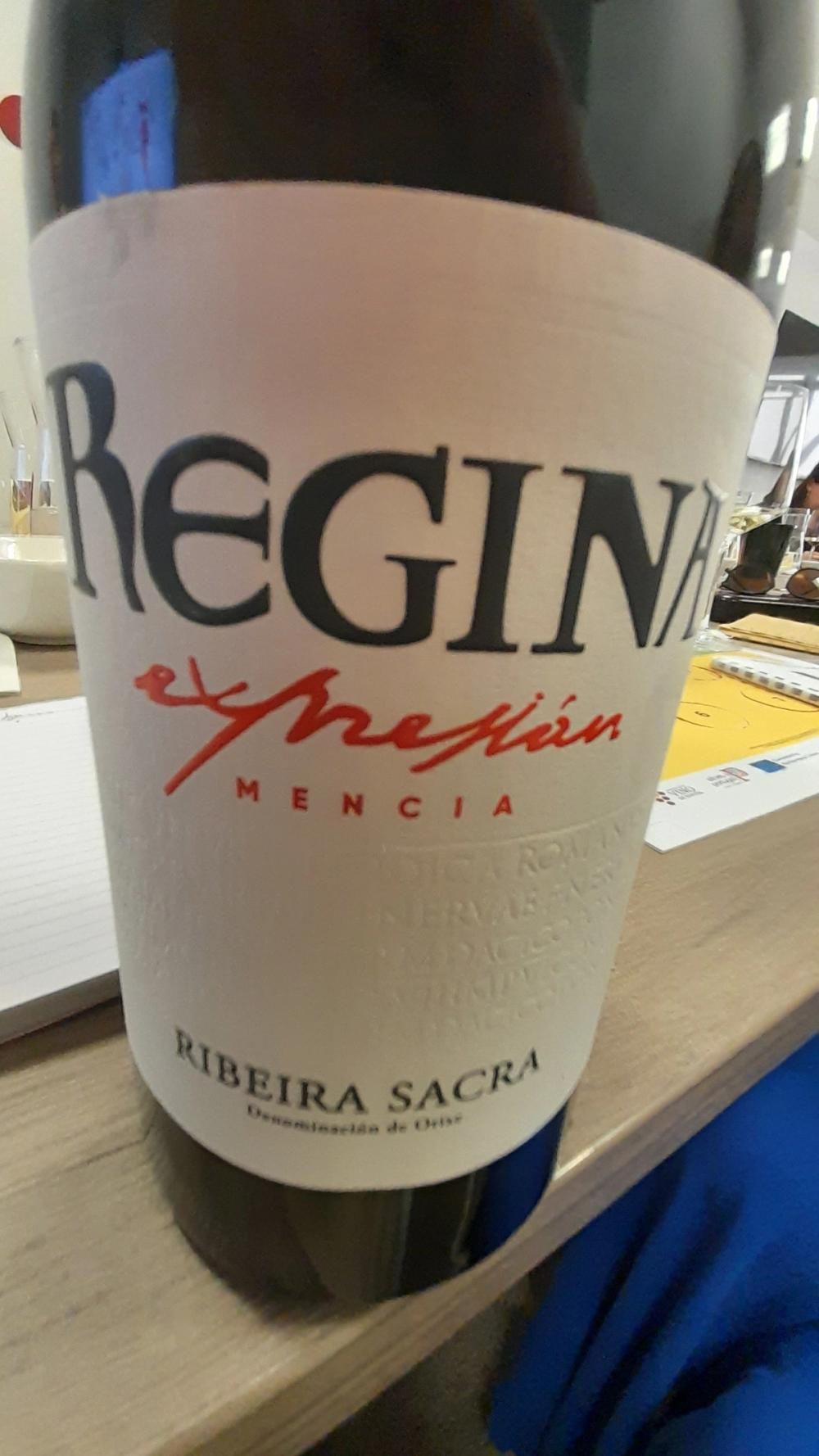
Regina Viarum, Regina Viarum Expresión 2021, DO Ribeira Sacra, 14.5% abv
Heroic viticulture on steep escarpments with a 30-degree gradient. Atlantic to Mediterranean transition climate. Very expressive, bright red cherry fruit from vines at 500m.
Rovellats, Gran Reserva Original Brut Nature 2020, 12% abv
65% Xarel-lo, 20% Macabeo, 15% Parellada (all organically farmed). DO Cava Comtats de Barcelona (Valls d’Anoia-Foix subzone). 60 months on the lees. Zero dosage.
Dominio de Baco, Airén 2025, 12.5% abv
From a huge co-operative in La Mancha that made 213 million bottles in 2025 (4% of Spain’s total production). Characterful every-day drinking Airén. Great value at €5 RRP.
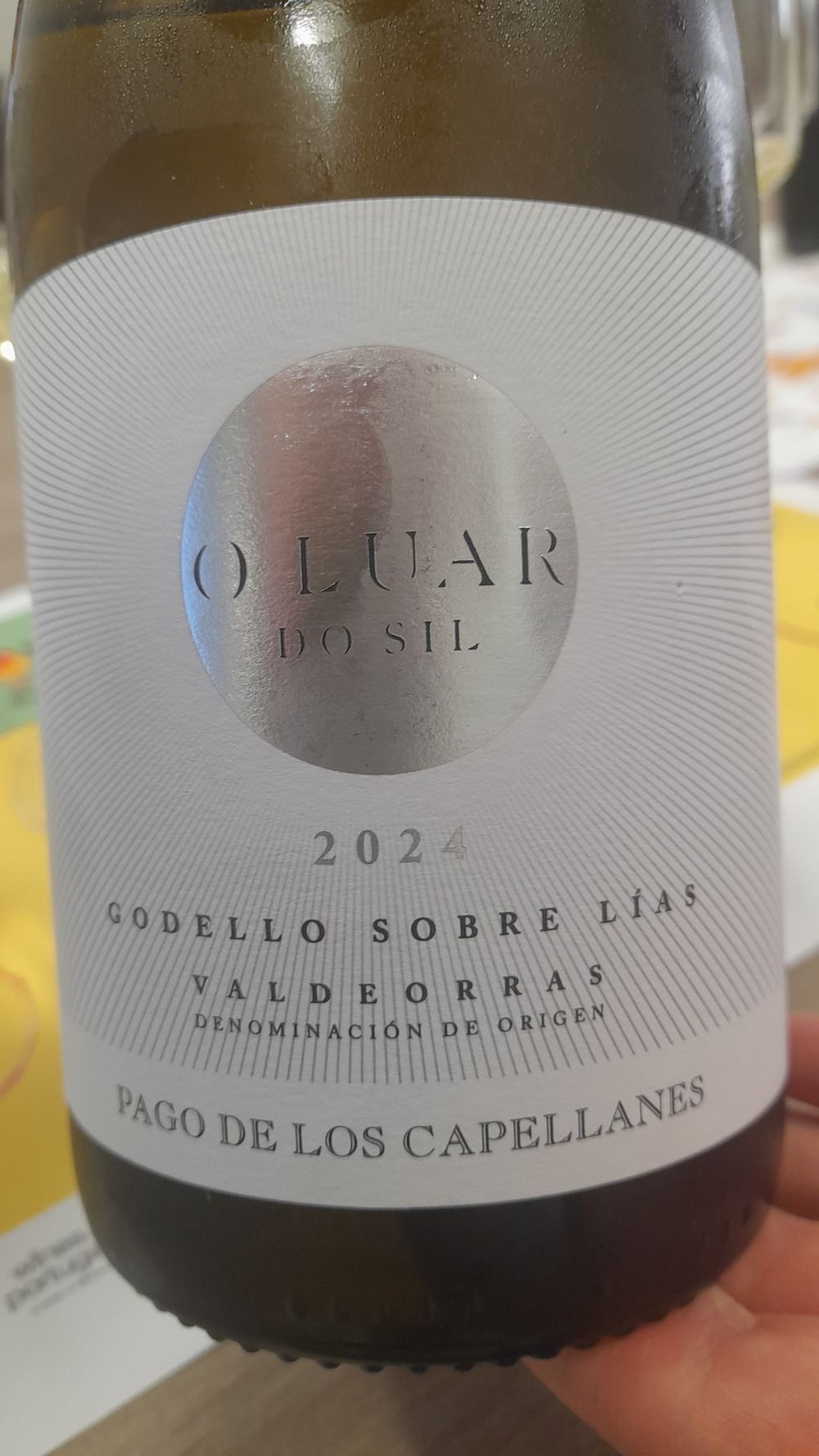
O Luar Do Sil, Godello Sobre Lías 2024, DO Valdeorras, 12% abv.
Six months on the lees in stainless steel for this excellent Godello from small parcels of old vines on the slate/granite soils on the banks of the Sil river. Complex and long. €20 RRP.
Bodega Eduardo Peña, Eduardo Peña 2025, DO Ribeira, 13.5% abv.
Enticing blend of Treixadura, Albariño, Godello, Lado and Loureira from estate vineyards at 250m on a west-facing slope. Low intervention viticulture. €17.60 RRP.
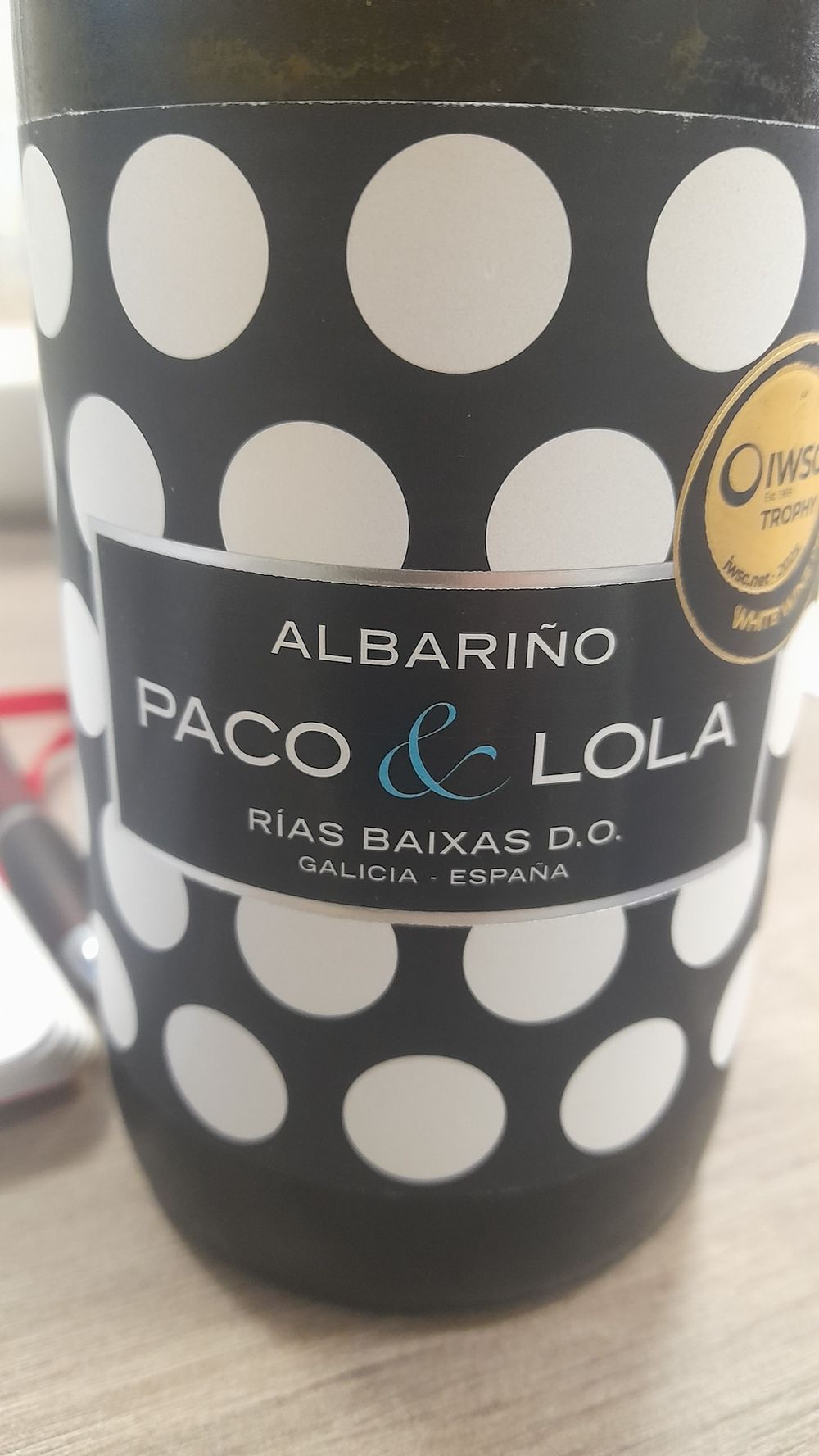
Cooperativa Vitivinícola Arousana, Paco & Lola 2025, DO Rías Baixas, 13% abv.
Highly drinkable Albariño from small plot vineyards on sandy loam soils over granite in Valle de Salnés. €11.75 RRP
Bodegas Remigio Salas, Las Luceras Rosado 2025, DO Cigales, 13% abv
Cigales is well-known for its rosé, with this being dark in colour and produced using the traditional saignée method. Must spent 14 hours on the skins before bleeding. Fruit from 70-year old Garnacha/Tempranillo vines (80% of blend) and Albillo/Verdejo (20%). €5 RRP
Bodegas Santa Cruz de Alpera, Cueva del Chamán Garnacha 2025, DO Almansa, 15% abv
From low-yielding Garnacha Tintorera (aka Alicante Bouschet) organically-farmed vines near Laderas de la Herrada. Carbonic maceration employed.
Bodegas Alceño, Alceño Selección 2020, DO Jumilla, 14.5% abv
Blend of Monastrell (40%), Tempranillo (40%), Syrah (10%) and Garnacha Tintorera (10%)from high altitude vineyards on poor stony soils. €17 RRP.
La Rioja Alta, Viña Ardanza Reserva 2020, DOCa Rioja, 14.5% abv
Tempranillo (80%) from 30-year old vines, with the Garnacha from an estate particularly suited to the variety (La Pedriza vineyard). American oak only used for élevage, with 20% new for the Tempranillo (aged for 36 months), while the Garnacha spent 30 months in barrel before final blending in Nov 2024. €29.
Bodegas Barbadillo, Manzanilla Solear, DO Manzanilla-Sanlúcar de Barrameda, 15% abv
From 30-year old Palomino vines on white limestone albariza soils. Fermented dry in 400,000-litre stainless steel tanks before being fortified to 15% abv. Aged under flor for six years in Sanlúcar de Barrameda. Great value sherry at €8 RRP.