
Compared to the other challenges facing the UK wine trade, the vexed issue of how to get people to attend your tastings must lie fairly far down an importer’s list of concerns. But with so many trade tastings – particularly at this time of the year, with Christmas on the horizon – it remains a concern, especially on a day when the huge Wines of South Africa tasting could have sucked all of the oxygen, and the people, out of the room. However, Andrew Johnson, managing director of WoodWinters, which started out as a Scottish wine shop over 20 years ago and next year celebrates the tenth anniversary of its London office, seems pretty sanguine.
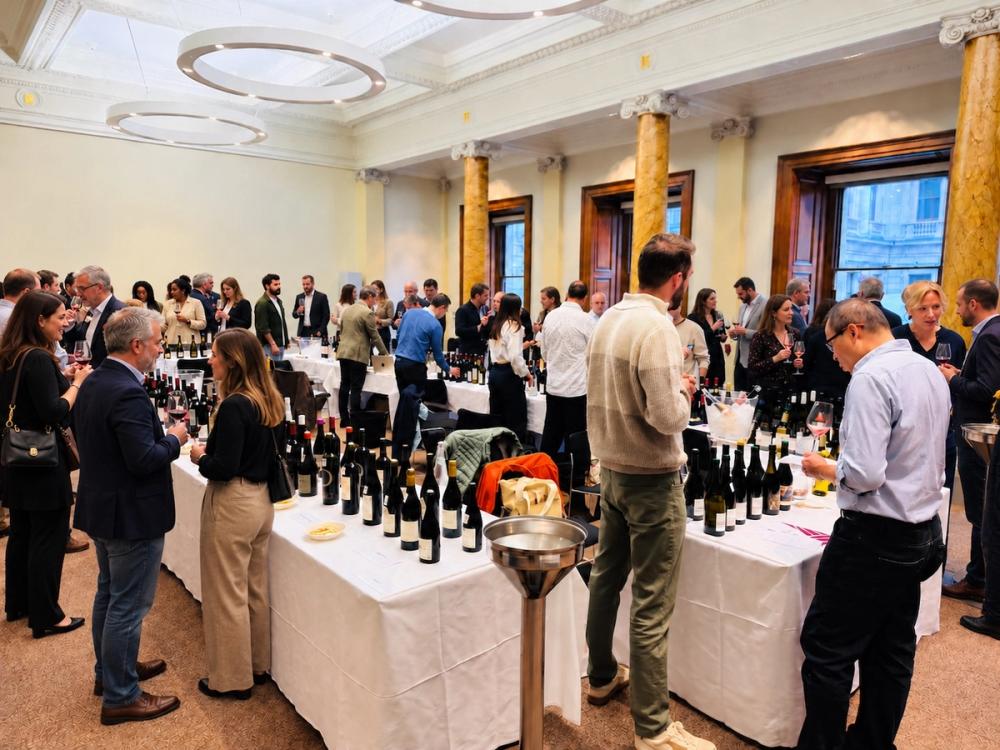
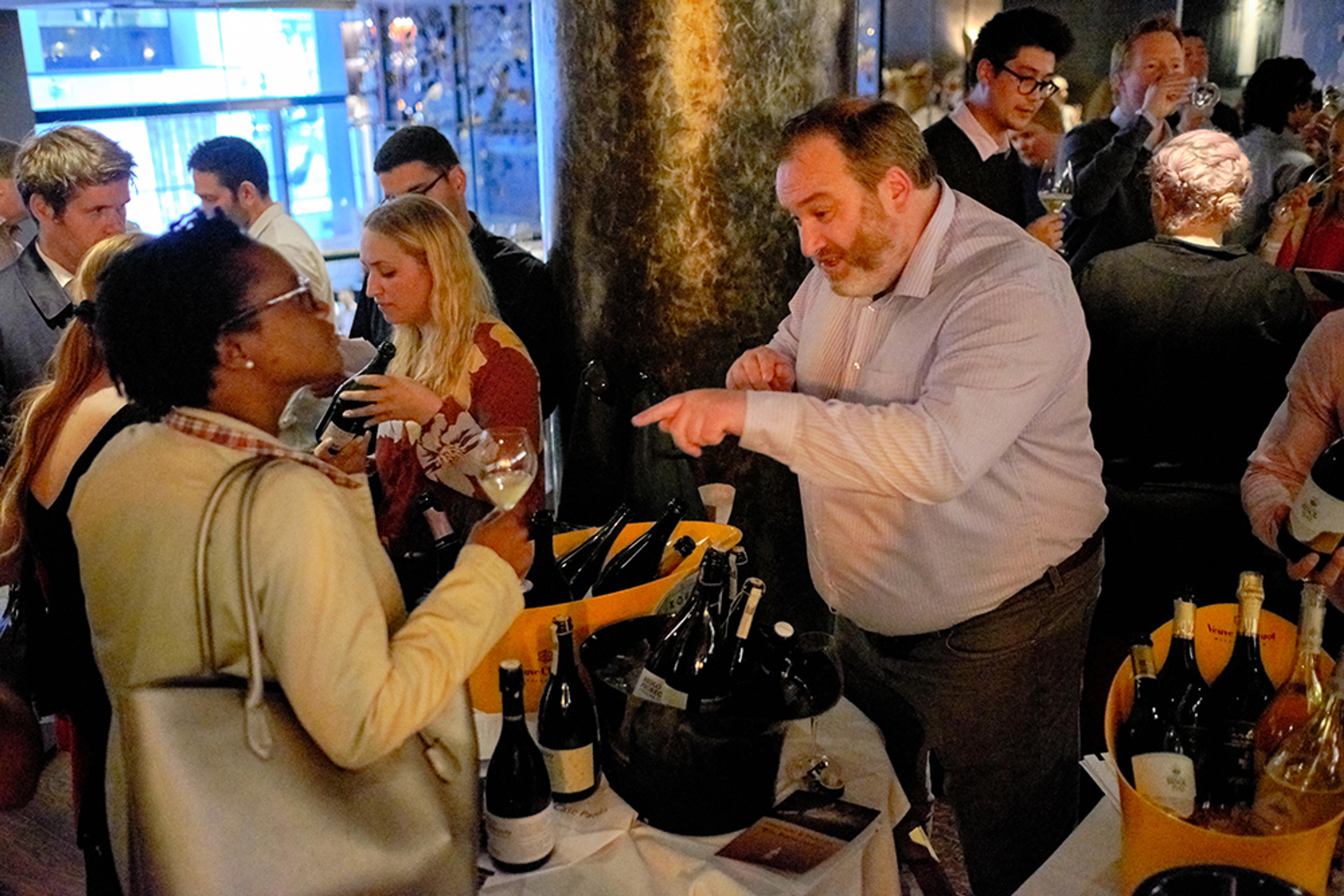
WoodWinters portfolio tasting, Royal Society of Chemistry, London
“We’ve had a good steady flow of people and a lot of interest in what we’re doing,” he says, presiding over his annual trade tasting in its usual home in Piccadilly’s Royal Institute of Chemistry. “And I’m happy about that because you can’t gloss over the challenges facing our industry at this time.”
These include people generally drinking less, and many of the young barely at all, rising costs (particularly of labour, impacting the price of eating out hugely) and changing habits.
“You could say it’s a perfect storm of different factors impacting severely on consumer habits and behaviour and it’s our job to know how to deal with that,” he says.
“Take lunchtime drinking. When smart restaurants were offering lunches for £25 a head, people would stretch to another £10 and add a glass of wine. But with that lunch now £35 a head, they’re saying no I’m spending too much already.”
Johnson reckons somms and social media are key to bringing people in, with the latter especially key for younger people and the former needed to hand-sell the wine, particularly if it’s something relatively unusual. The challenge apart from price, he reckons, is to have a compelling story behind what you’re trying to sell and giving people a reason to try something new rather than stick with a bog-standard Sauvignon Blanc or Merlot.
“The sweet spot is between £15-50 retail, any more than that and we’re talking about a probable restaurant price that is beyond comfort for most consumers,” he says.
Another key plank of the strategy is to stay fresh and exciting for your clients and that means bringing in new wines rather than just relying on your core list.
Johnson’s key wine regions are Italy, Greece and South Africa. Italy comprises around half the portfolio and includes such diverse producers as Benanti, Ansitz Dornach, and two exciting Montalcino producers Canaliccio di Sopra and Albareti. Greece, which Johnson sees as exciting and is increasingly popular is represented by
Paros Farming Community, Diamantakis and Artemis Karamolegos. South African estates include Waterkloof, Bosman Family Vineyards and Holden Manz, amongst others.
“I think the dynamism down there right now is unparalleled, as is the value for money. Another thing I love about producers there is that there’s no bitchiness, they all hang together recognising that they are selling the country as much as their wines.”
So how were the wines?
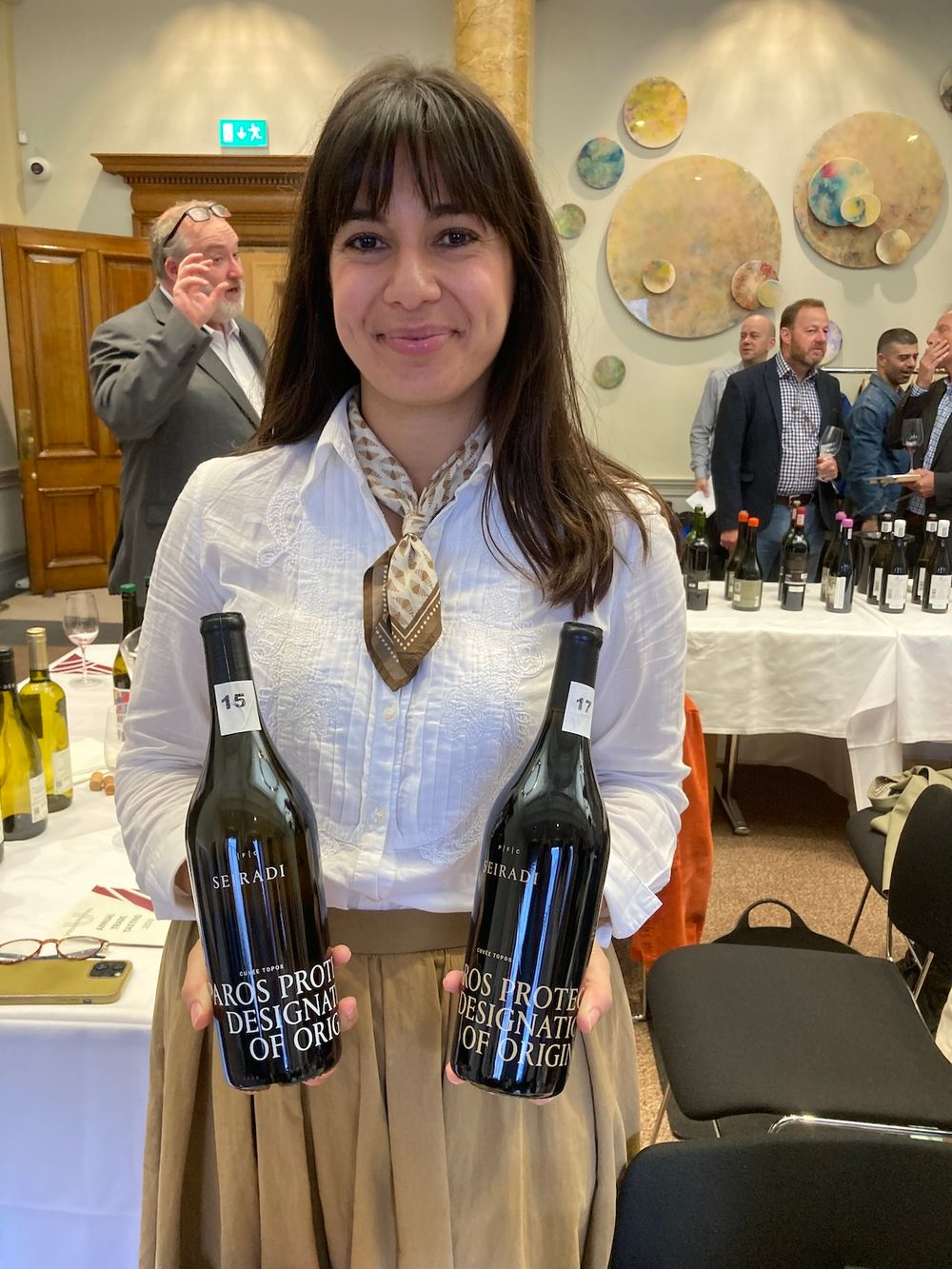
My first stop was an old favourite, the cutely named Paros Farming Community (SEIRADI, Greece) from the Cycladic island to the north of much better-known Santorini, but different in every way.
Famed for its motto “Curious Wines for Curious Minds” Paros is a 100-year-old cooperative famed for its aplotaria vine system, which keep the vines low to protect them from the frequently windy weather. The main varieties are white Monemvasia and red Mandilaria which they make in different styles including a 100% Monemvasia Pet Nat NV and my two favourites, Seiradi Cuvee Topos White 2023 and Seiradi Cuvee Topos Red 2023. Made from 75 year old vines at an altitude of 450m, these are really characterful limited edition wines, the former, 100% Monemvasia, vinified in stainless steel oak and amphora to produce a complex, moreish wine; the latter a blend of 55% Monemvasia and 45% Mandilaria, medium weight and intensity, the harshness of the red variety softened by the white. Memorable.
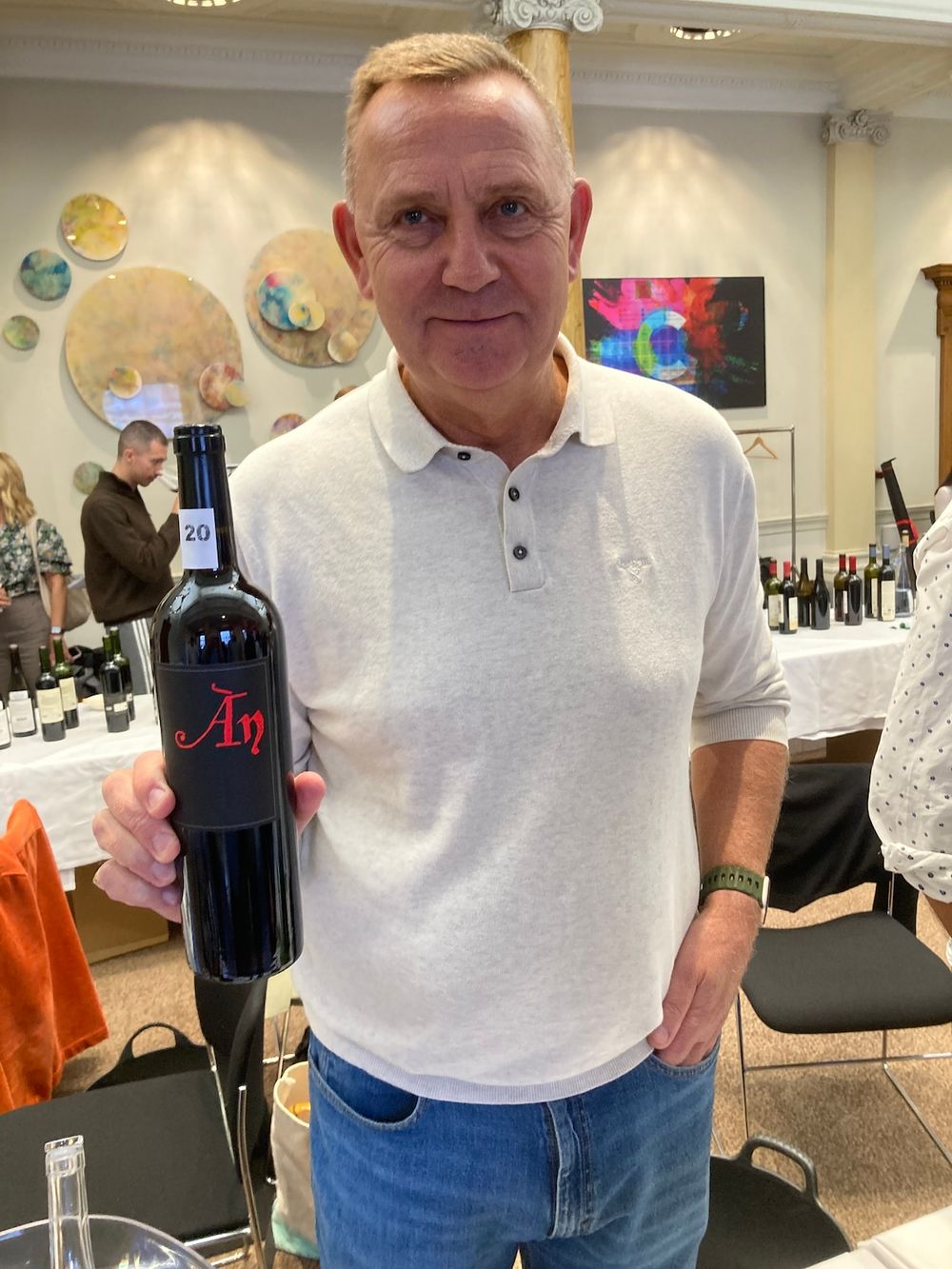
Staying with islands, Ànima Negra was established in 1994 and is one of the pioneers of Mallorca’s viticultural renaissance, working with native varieties including Premsal, Fogeneau, Mantonegro and Callet as well as some international varieties such as Syrah. A great selection of wines again, notably the Anima Negra AN 2023, predominately old vine Callet and showing sour cherry, ash and hints of balsamic on a balanced, medium palate. Distinctive.
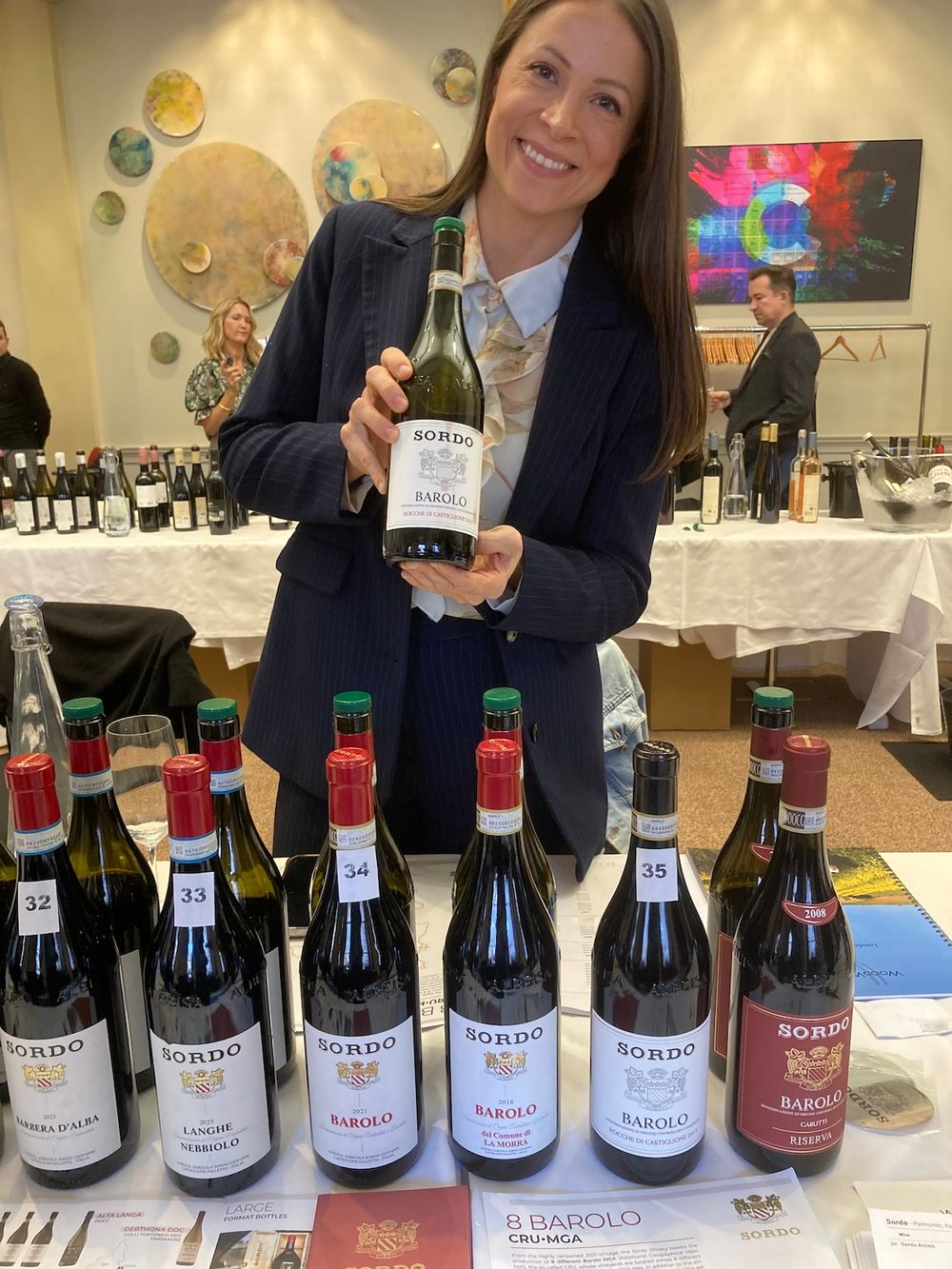
Value is hard to find in ever fashionable Piedmont but I couldn’t quite stop myself writing VGV alongside my notes for Sordo, a fourth-generation Barolo producer overlooking the slopes of La Morra famed for bottling eight Barolo Cru wines, making this unique in the region. The delicious Dolcetto D’Alba here is a snip at £17 retail but the Sordo Barolo 2018, the Sordo Barolo Rocche di Castiglione 2013 and the Sordo Barolo Gabutti Riserva 2008 were the real bargains here, the last two – both single vineyard wines – very decent value at below £60 a bottle: the last, my favourite of the range, shows spicy bramble notes supported by a well-balanced, slightly floral palate. This has aged well and will continue to evolve nicely.

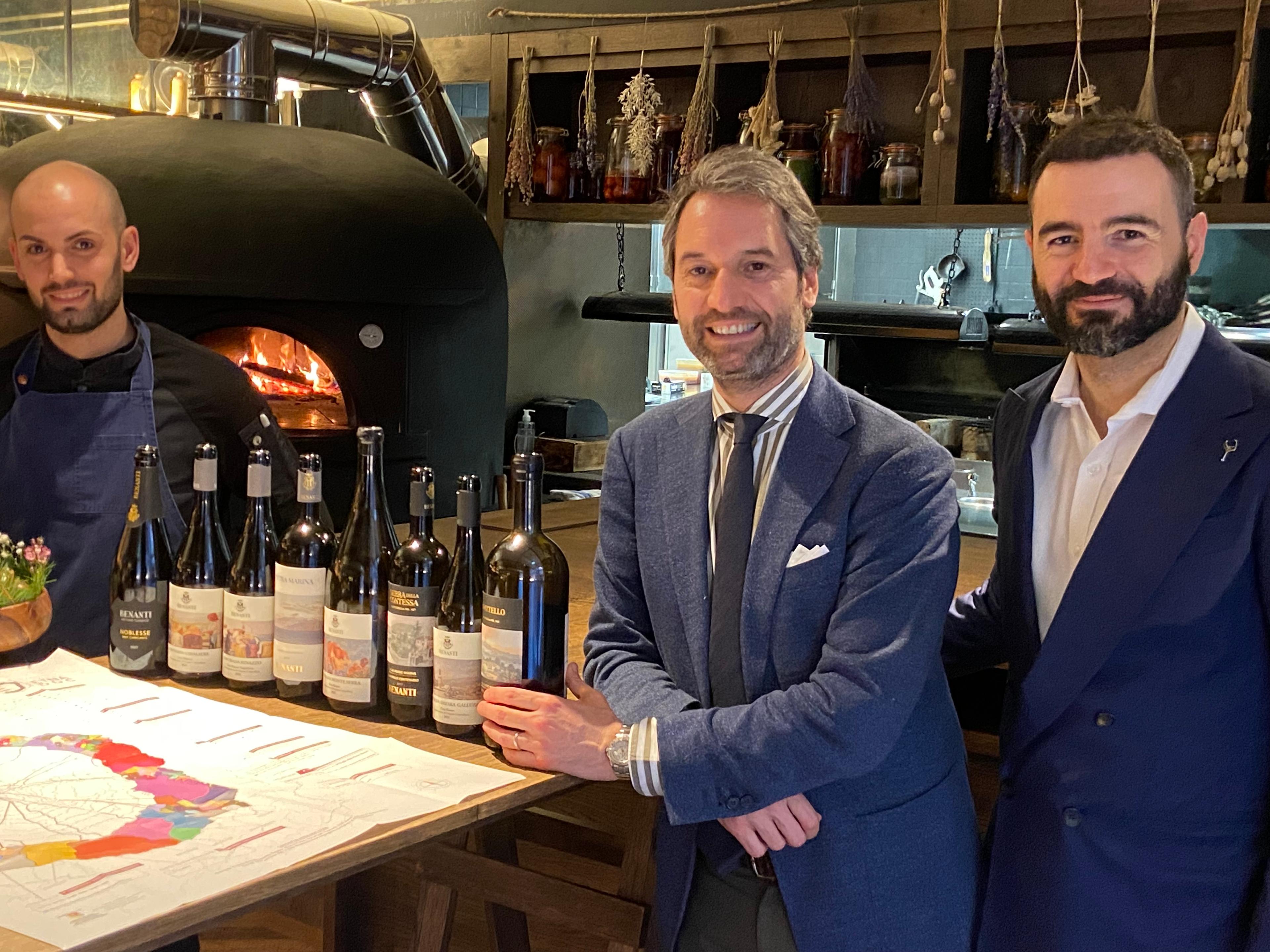
The Etna region is now, of course, mega popular with the trade enthused by the soft, well balanced volcanic reds of the region (led by Nerellos Mascalese and Cappuccio) and increasingly the white too, led by Carricante. With his first vintage back in 1988, Giuseppe Benanti demonstrated the true potential of Etna, a job his son Salvino now carries forward. All these wines show well, especially the complex, well-structured whites – but for my money the Roviettello Etna Rosso Riserva 2019 is the wine of choice here. Made from un-grafted pre-phylloxera vines of the above two red varieties (90% and 10% respectively) this is vinified, matured and refined over a period of five years, resulting in an incredibly complex wine, with crunchy red fruit supported by an elegant, spicy and floral palate.

Compared to Tuscany’s other big hitters, the Montepulciano region has become something of an ‘also ran’, doomed to perpetual confusion with the Montepulciano d’Abruzzo ( a distinct variety) rather than the well-made and often well priced Sangiovese, and Super Tuscan-style Merlot and Cabernet Sauvignon. Avignonesi has been running since 1987 and offers a range of wines and styles. My favourites were the white Da-Di Bianco 2023, a five-variety blend of (unusually) Petit Manseng, Grechetto, Trebbiano, Vermentino and Malvasia all vinified differently in used barrique and amphorae; Delightfully complex and generous on the palate, this wine has floral peach notes supported by firm but not excessive acidity. Leading the pack and made in only the best years the Grandi Annati 2021 is as full on an expression of Sangiovese, coming here from four distinct vineyards. This has liquorice and dark berry notes on a palate that seems to go on forever.
One of the most glittering jewels in the WoodWinters crown is Artemis Karamolegos, one of the original producers of Assyrtiko on Santorini, owning 3 ha of vineyards in some of the island’s most sought after and iconic villages. Karamalegos makes a range of wines including some precious single vineyard ones, which are a real rarity on an island which has seen production fall steeply after several years of bad harvest and increasing construction (hotels provide a more reliable source of income than grapes, despite some steep increases which have made Santorini Assyrtiko grapes pricier than champagne). Sadly, the only single vineyard wine showing today was the Kouloura 2023 – but sadly probably isn’t a word I should associate with such a delicious wine, a mouthwatering, saline blend of 90% Assyrtiko, 5% Athiri and 5% Aidani, from different vineyards across the island, left to ferment in separate stainless-steel tanks before being allowed to rest on lees for five months. Very pure and tangy, with great structure and length.

Andrew Johnson, MD of WoodWinters
With Cap Classique wines very much the rage these days (a restrained, high acidity-driven style), the Charles Fox Brut Vintage 2018 from Elgin is a bit of an outlier being a very rich, full-on blend of the three champagne varieties, quite toasty and moreish and not shy.
Staying in South Africa, Anysbos Disdit 2022 is a great value Chenin Blanc-dominated blend (supported by Grenache Blanc, Marsanne and Rousanne) from the increasingly well-regarded Bot River region. This minimal intervention wine has generous fruit with suggestions of peach and honeysuckle on the palate, having undergone spontaneous fermentation and long-lees resting in large oak barrels for just under a year. Seductive and moreish.
From France, the Agathe Bursin Pinot Gris Bollenberg 2024 is a generous and well-made wine that really makes you wonder how it is that Alsace has so fallen out of favour with mainstream wine drinkers. This has everything you would expect from that grape in that region: white flowers, maybe a touch of jasmine on the nose with a long generous but disciplined palate, notwithstanding 6 grams of residual sugar. A joy.
Last, but no means least, from New York’s Finger Lake region, the Osmote Riesling Seneca Lake 2023 is a balanced, surprisingly fruit forward take on the variety, just 11.5% alcohol but masses of zippy character and elegance: a hint of petrol on the nose, quince and tangerine on the palate. Very decent.
In conclusion
So, given its myriad challenges, how does the future look for the trade, I ask Johnson.“People ask me is there light at the end of the tunnel? I say there is...but it’s a long tunnel,” he replies.
He may be right but, in my view, WoodWinters’ excellent portfolio, comprising core producers supported by some seriously proficient outriders, is sturdy enough for even the longest passage through to the other side.