Can you tell us why you wanted to step in and take ownership and control of the UK Sommelier of the Year?
The UK Sommelier of the Year has always held a special place in my heart. Long before I became involved in organising it, I attended many editions as a spectator and admired what it represented. Having spent most of my career working alongside sommeliers through Decanter and later the IWSC, I’ve always believed it is one of the most important platforms for recognising and developing talent in our industry.
When the competition became available following The Caterer’s decision to sell it, I was chief executive of the IWSC. It immediately felt like a natural fit, so we acquired it and brought it under the IWSC umbrella. Over the following two editions, we modernised the format, strengthened its educational focus and broadened engagement across the hospitality industry.
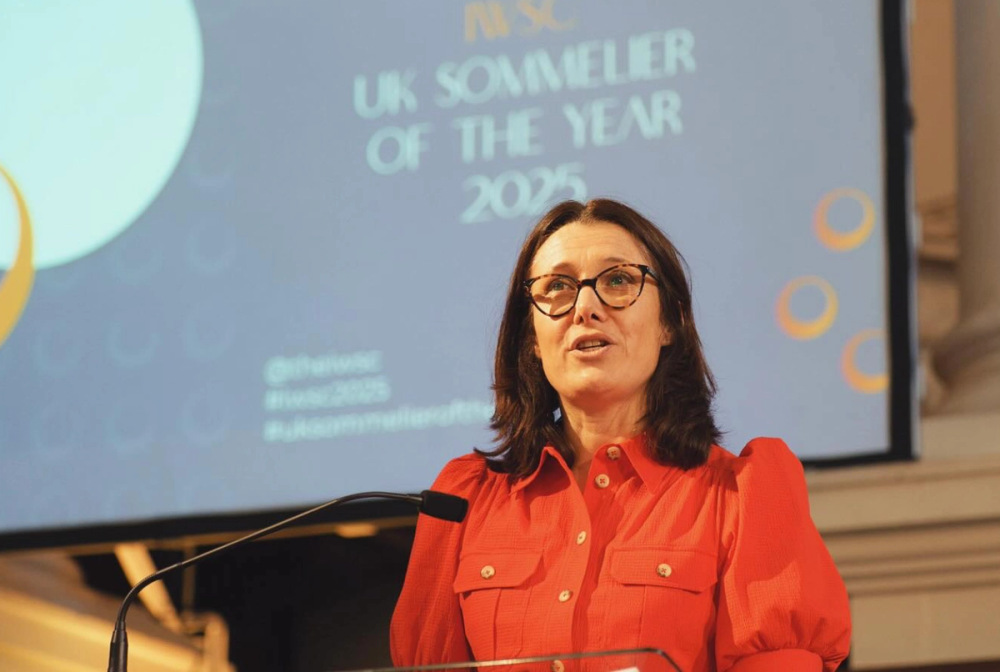
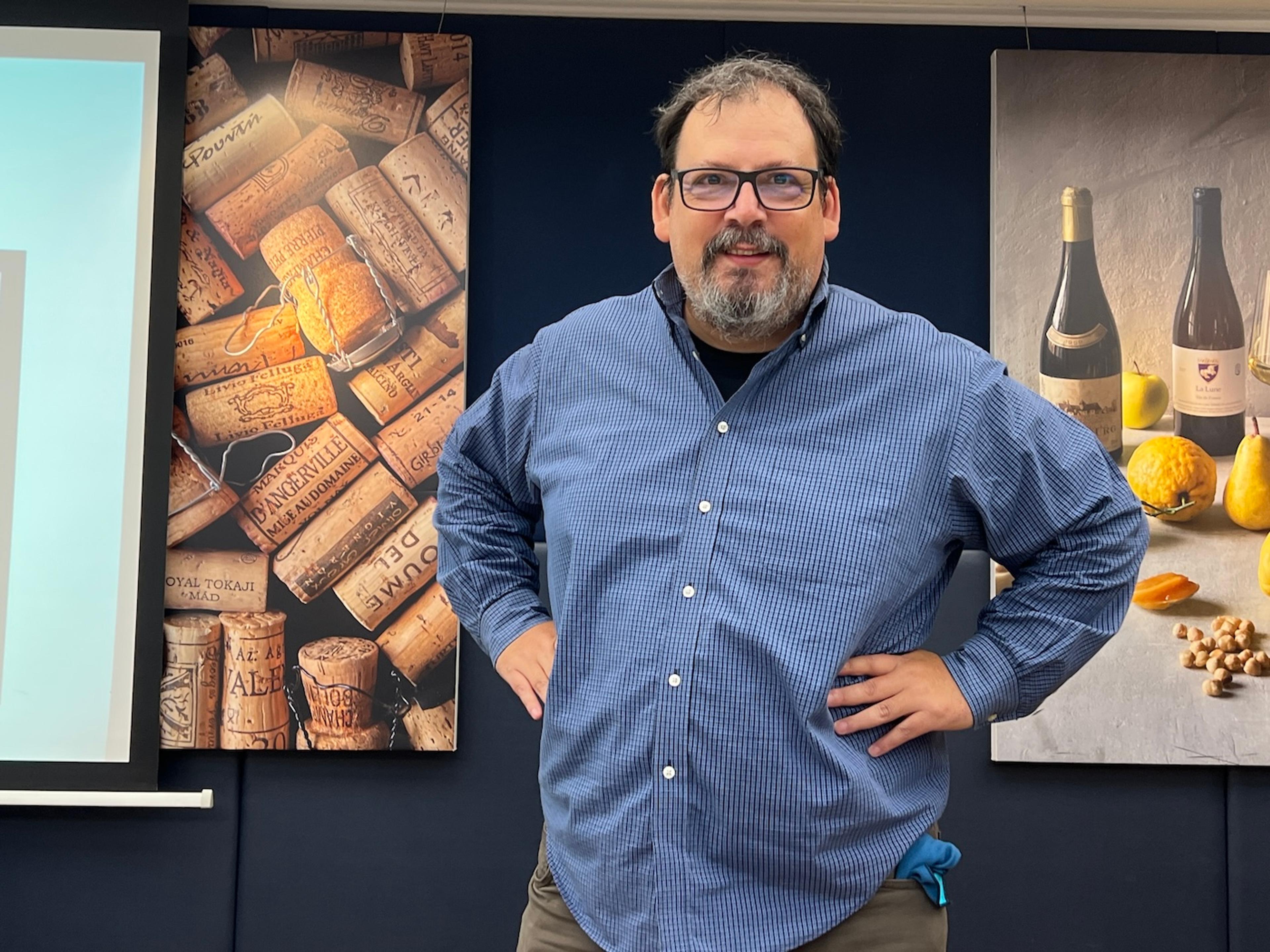
Christelle Guibert took ownership of the UK Sommelier of the Year in time to prepare and organise the 2026 competition
When the ownership of the IWSC changed, I had the opportunity to acquire the competition personally. For me, it wasn’t about taking it away from the IWSC - it was about giving it the time and attention it deserved. Running the IWSC was a demanding role, and I simply couldn’t dedicate the time and focus I wanted to its development.
At the same time, I acquired Trade Hospitality, which gave me the perfect platform to continue investing in both the competition and the wider hospitality community. Together, they are a natural fit: a year-round platform supporting hospitality professionals, with the UK Sommelier of the Year at its heart.
It is such an important and highly respected event. What steps did you take to make sure you could take the awards on, and that any changes you made would ultimately make the event better?
The first principle was never to change it for the sake of change. The UK Sommelier of the Year has an incredible legacy, and I wanted to build on that rather than reinvent it.
Having attended many national and international competitions over the years, including the ASI Best Sommelier of the World Contest, I already had a good understanding of what makes a world-class competition. That gave me the confidence to preserve its foundations while identifying areas where it could evolve.
From the outset, I worked closely with former winners, the technical committee and leading figures from the hospitality industry to ensure every change reflected the realities of today’s profession.
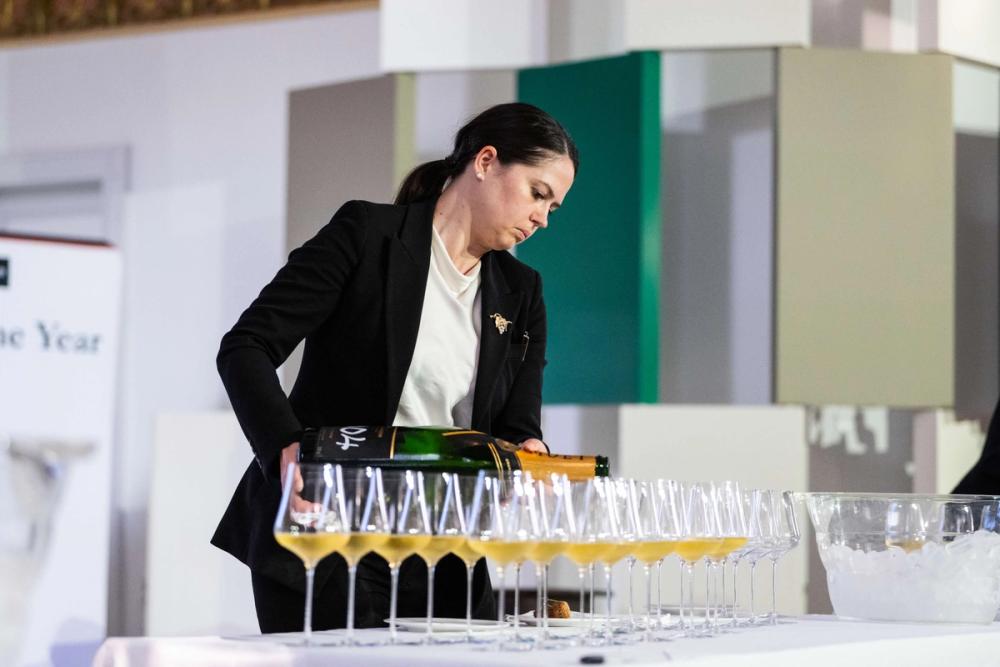
The winner: Emma Denney, wine director at Claridge's was named UK Sommelier of the Year 2026
The role of the modern sommelier is constantly evolving, and the competition has to evolve with it. We’ve introduced tasks involving Coravin, reflecting how widely it’s now used in premium hospitality, and incorporated low and no-alcohol beverages to reflect changing consumer trends.
Beyond the examination itself, I wanted the UK Sommelier of the Year to become a celebration of hospitality. A day where sommeliers from across the country come together to compete, learn, reconnect with colleagues, meet future mentors and be inspired by the very best in the profession.
The competition is the centrepiece, but the event is really about strengthening and celebrating the sommelier community. If we can inspire someone to develop their career in hospitality, encourage a young sommelier to enter for the first time and develop their skills, or create new connections across the industry, then we’ve achieved something far greater than simply crowning a winner.
Take us behind the scenes at the awards. How is the competition organised in terms of deciding what steps and challenges the sommeliers are going to be asked to complete?
(You can watch the full final of the UK Sommelier of the Year 2026 above)
The competition follows the framework developed by the Association de la Sommellerie Internationale (ASI), ensuring competitors are tested across the full range of skills expected of a modern world-class sommelier. That provides the structure, but every task is created specifically for the UK competition.
The content is developed by the UK Sommelier Academy’s technical committee, made up of former UK Sommelier of the Year winners and some of the country’s leading sommeliers.
We divide the competition into three core areas: theory; tasting; and practical service.
Each section has its own head judge, who works with a team ofjudges to design challenges that are relevant, realistic and appropriately demanding.
My role is to oversee the entire process and make sure every element works together as one cohesive competition. It’s a little like producing a theatre show. Each scene has its own director, but someone has to ensure the timing, the flow and the overall experience come together seamlessly for both the competitors and the audience.
By the time competitors step onto the stage, months of planning, testing and collaboration have gone into creating an experience that is fair, relevant and worthy of the title of UK Sommelier of the Year.
You had a record number of entries this year. What are the different stages the sommeliers go through to get down to the finalists?
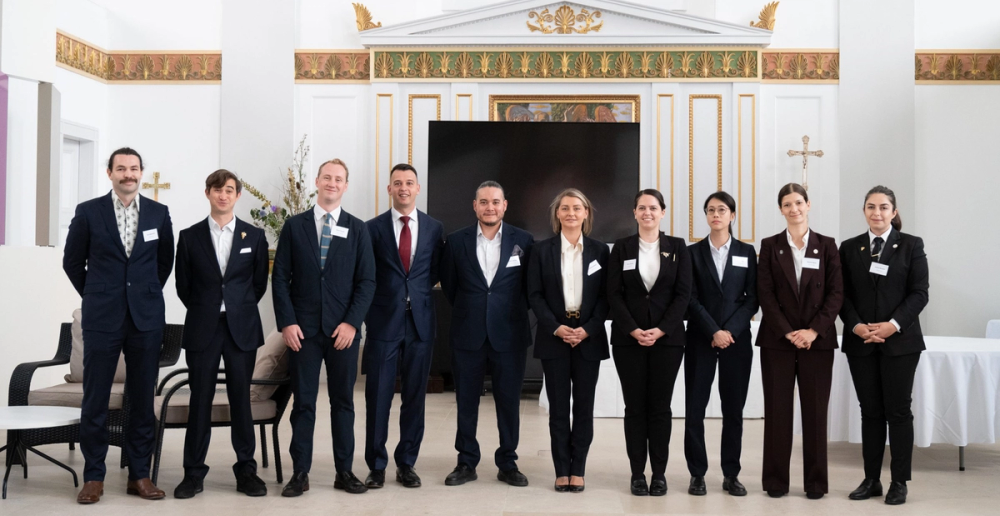
The 10 semi-finalists in the UK Sommelier of the Year 2026
The competition is open to hospitality professionals based in the United Kingdom who are actively involved in the service and management of wine within an on-trade hospitality environment, and do a minimum of three services per week in a restaurant.
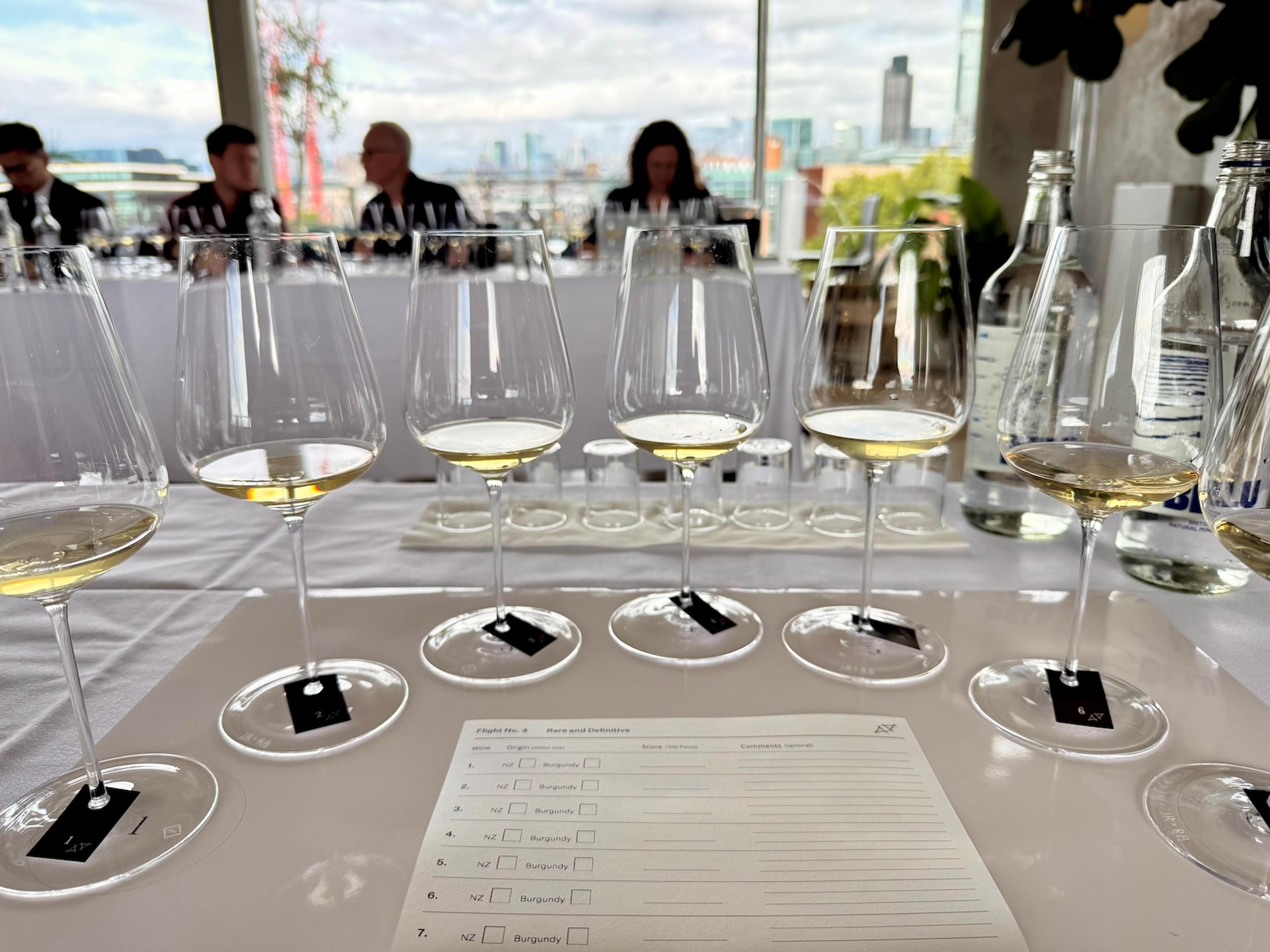
All entrants are invited to take part in a mock examination and receive feedback from former winners. It's designed to help them understand the competition format, experience the standard expected and give first-time competitors the confidence to enter.
The competition itself takes place over two days. On day one, all competitors complete a series of theory, tasting and practical challenges. Their combined scores determine the 10 highest-scoring sommeliers, who progress to the semi-final.
The semi-final takes place the following morning and raises the level of difficulty considerably, with more demanding service, tasting and technical tasks. At the end of that round, the scores are reviewed and the top three competitors earn their place in the live final.
The final is held in front of a live audience of hospitality professionals and industry guests. It’s a unique experience that tests not only technical knowledge and service skills, but also composure, communication and the ability to perform under pressure. It has become one of the highlights of the hospitality calendar.
Every stage is designed to test a different aspect of the profession, ensuring the eventual winner is the most complete performer on the day.
You had a new venue this year. Why did you want to change the venue and how did you choose it?
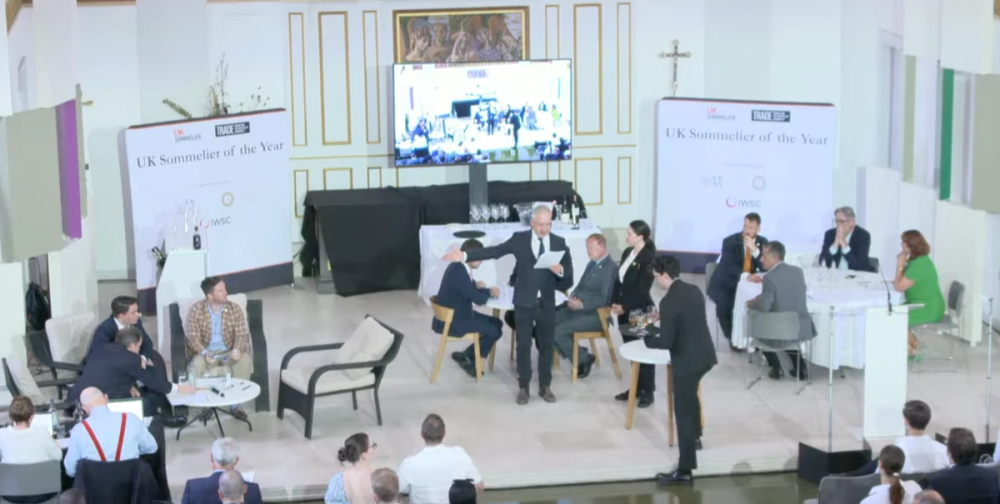
Emma Denney taking her instructions from the competition's host David Kermode during the finals of the UK Sommelier of the Year
Choosing the venue is actually one of the biggest challenges in organising the competition. It’s not simply a case of finding a beautiful space - it has to work operationally for a very complex event.
The competition has a lot of moving parts running simultaneously. We need a theatre-style stage for the live final, breakout rooms for the earlier rounds, judging rooms, preparation areas for competitors, storage for wines and equipment, and enough space for sponsors and guests to move around comfortably. Finding a venue that can accommodate all of that is surprisingly difficult.
This year we moved to St John’s Church in Waterloo because we wanted a larger stage and a more immersive setting for the live final.
I was also quietly hoping the new venue would be a little cooler than the previous one, but unfortunately the record breaking British weather had other ideas. Historic buildings have incredible character, but they’re not always designed to cope with modern heatwaves.
How do you look back on the 2026 awards in terms of what you achieved and wanted to achieve?
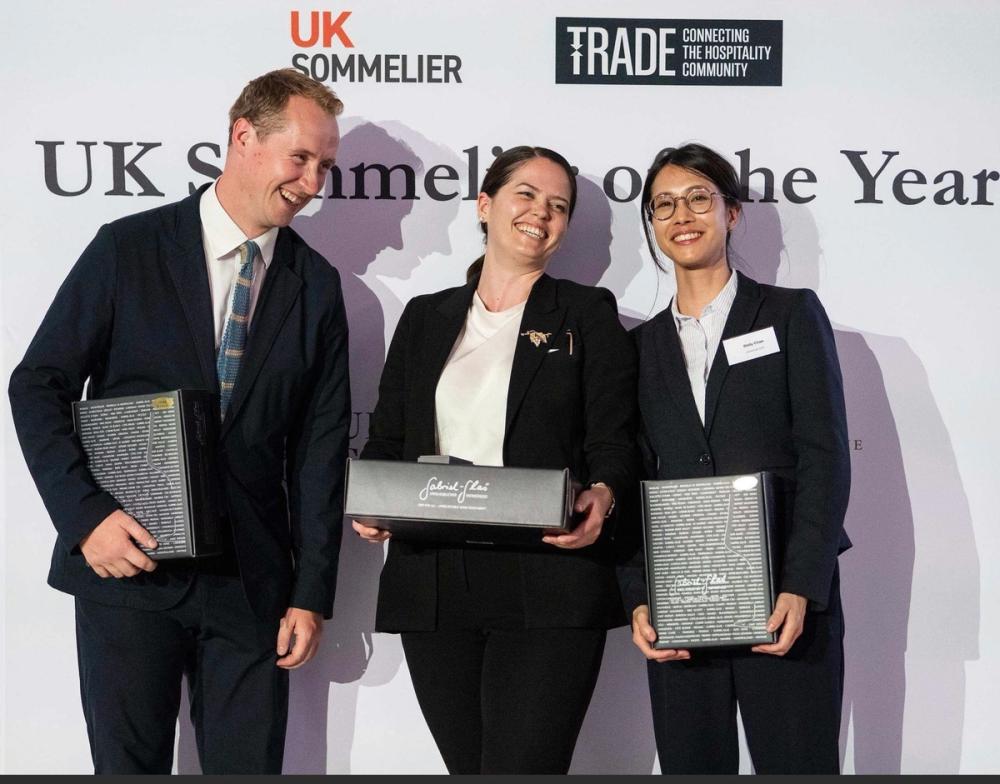
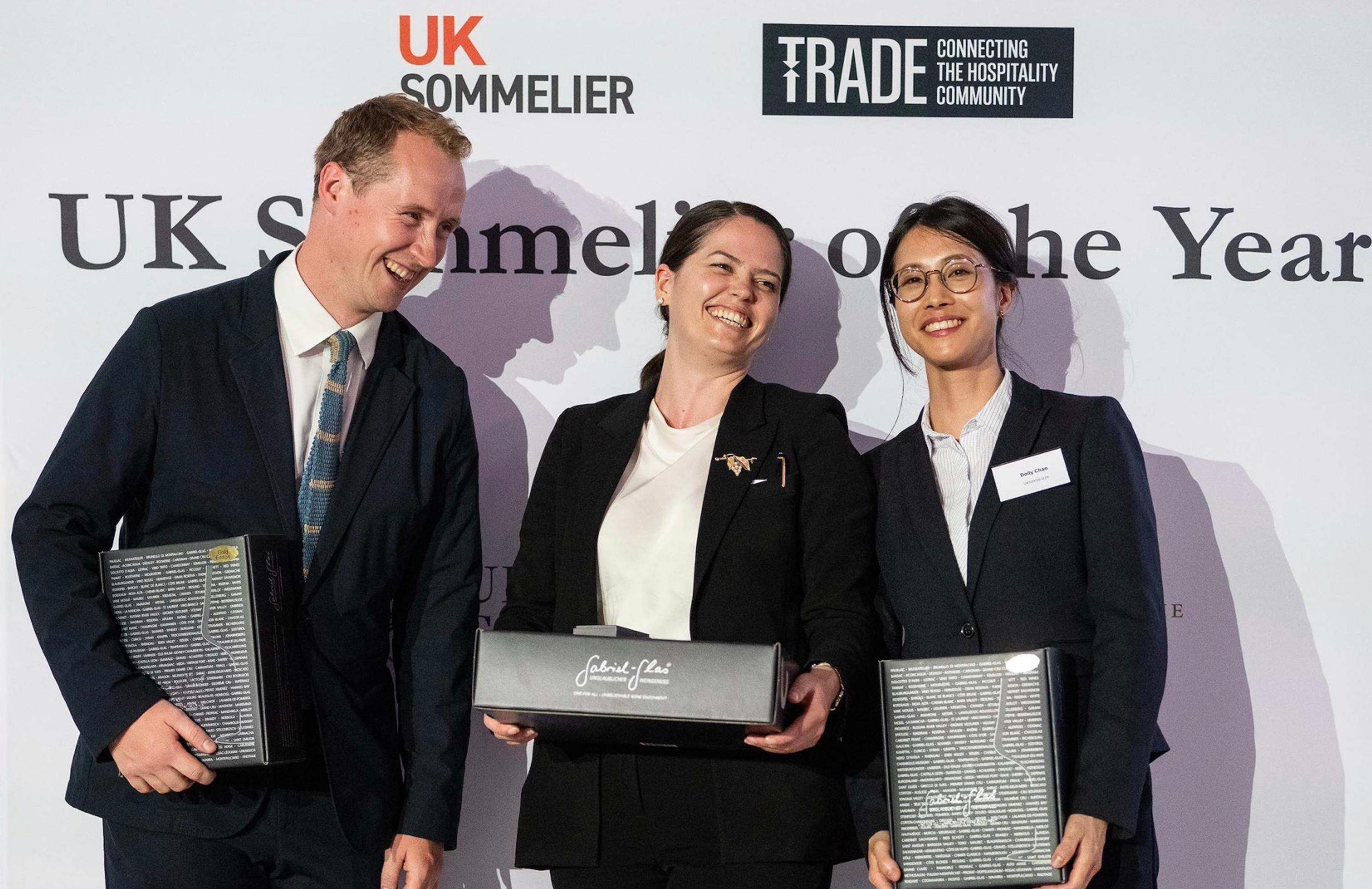
Emma Denney, winner of UK Sommelier of the Year 2026, centre with Dolly Chao who came second and Wilem Powell in third position
I am incredibly proud of what we achieved this year, but perhaps not for the reasons people might expect.
The competition itself was a success, with record entries, a record audience of hospitality professionals at the live final, and an outstanding winner in Emma Denney, wine director at Claridge’s. But for me, the biggest achievement was everything that happened before we even reached finals week.
One of my ambitions was to transform the UK Sommelier of the Year from a once-a-year competition into a year-round platform for the hospitality community. Over the past year, we have built a dedicated network of more than 700 sommeliers and front-of-house professionals in London and the surrounding areas.
We also launched a series of bootcamps in partnership with Berkmann Wine Cellars and The Whisky Exchange Trade, led by two exceptional mentors, Vincenzo Arnese and Dawn Davies MW.
The original aim was to help competitors prepare for the examination and give them the confidence to enter. What surprised us was the number of sommeliers who attended simply because they wanted to learn, challenge themselves and connect with their peers, even though they had no intention of competing.
That was a real turning point. It showed there is a genuine appetite for practical, high-quality education and, perhaps even more importantly, for a stronger sense of community within hospitality.
The bootcamps became much more than training sessions. They became a place where people shared experiences, built friendships and realised they weren’t alone.
For me, that’s the real success of 2026. We created opportunities for hundreds of hospitality professionals to learn, grow and feel part of something bigger.
Are you looking to introduce more changes for next year and, if so, can you give us some ideas?
I wouldn’t describe them as major changes. It’s more a process of continuous evolution. Every year we review every aspect of the competition with the technical committee, the judges, competitors and our partners to identify what worked well and where we can make the experience even better.
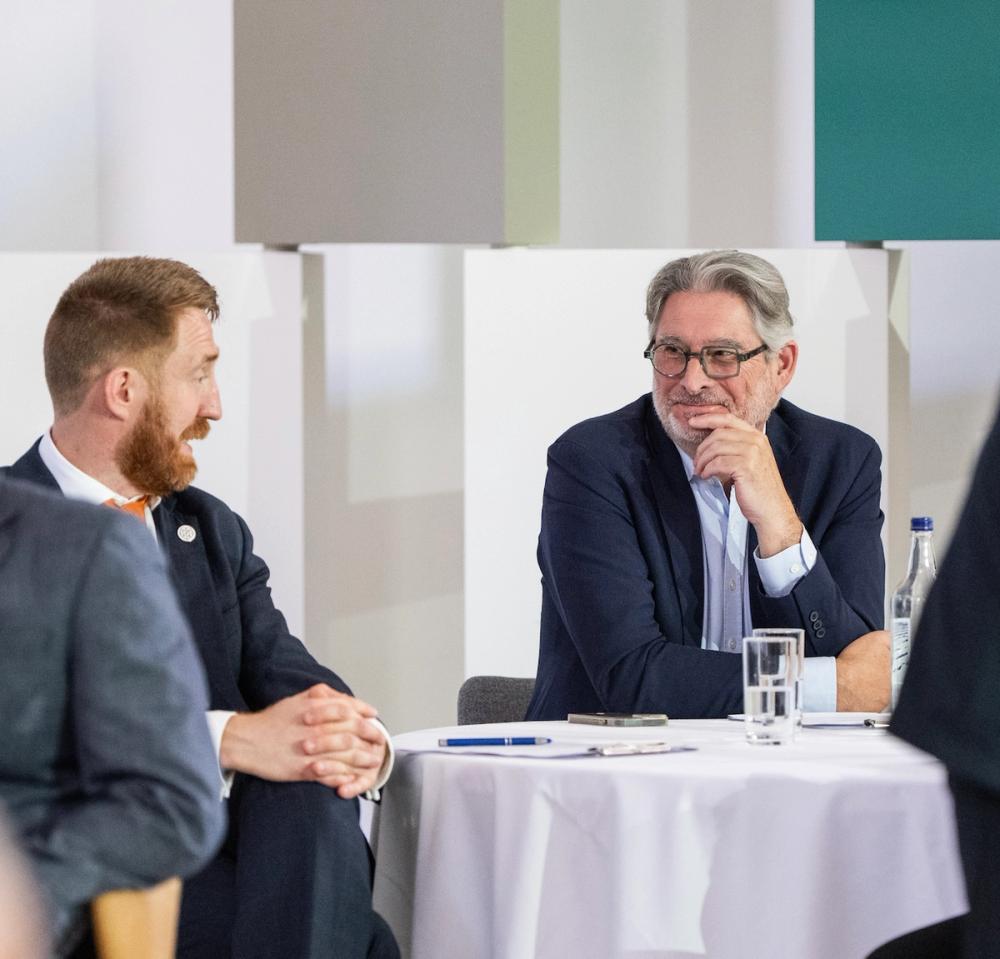
Benoit Gouz, chef de cave, Moët & Chandon, was guest of honour at the UK Sommelier of the Year 2026 - here talking to Roberson's Tanguy Martin, a judge in the competition and also an award-winning sommelier in his own right
One of the nicest moments for me this year came from our guest of honour and guest judge, Benoît Gouez, chef de cave at Moët & Chandon. He admitted he arrived expecting to see a relatively small national competition, but left genuinely astonished by the standard of the organisation, the competitors and the overall production. He told us he felt it was on a par with the very best sommelier competitions in the world.
That was probably the greatest compliment the technical committee and all the former winners involved in delivering the competition could have received. It validated the incredible amount of work that goes on behind the scenes and confirmed that the UK competition is recognised internationally as one of the leading national sommelier contests.
Looking ahead to 2027, we will continue refining the experience rather than reinventing it. We’ll keep adapting the tasks to reflect the changing role of the modern sommelier, continue investing in education through our bootcamps, and look at ways of making the live final even more engaging for the hospitality community.
My ambition is simple: every year, the UK Sommelier of the Year should set a new benchmark for what a national competition can be.
Are there any other initiatives you have planned that can widen the reach of the awards?
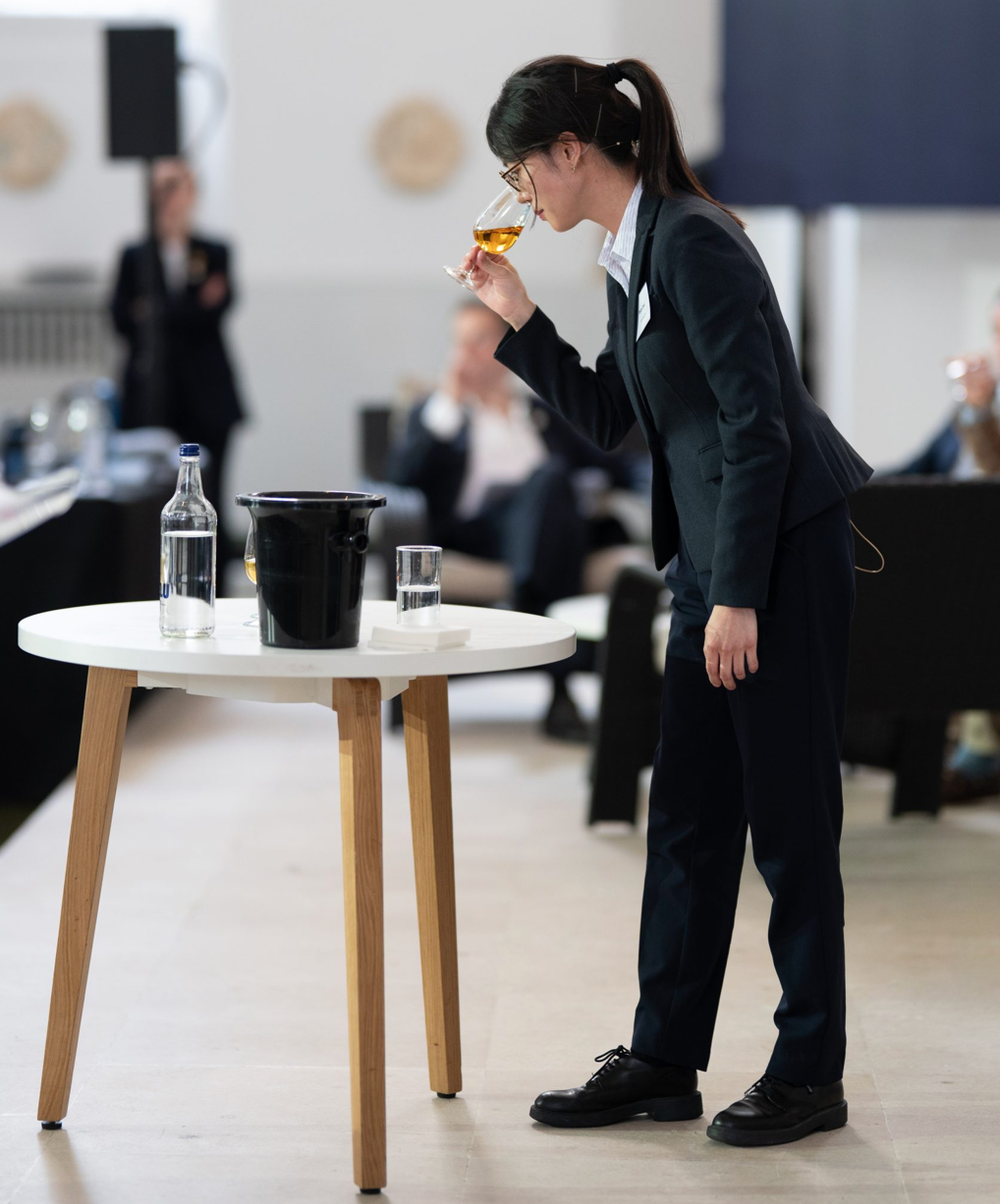
Dolly Chao competing in the UK Sommelier of the Year 2026
Absolutely. The next major step is to take the UK Sommelier of the Year beyond London.
The competition has always attracted talent from across the UK, but we recognise that not everyone can easily travel to London for training or networking opportunities. That’s something I want to change.
Over the coming year, we’re planning to take our bootcamp programme on the road, with sessions in Manchester, Edinburgh and, hopefully, other parts of the UK. T
The idea is to create regional gatherings where sommeliers and front-of-house professionals can spend half a day learning together, challenging themselves through practical exercises and, just as importantly, meeting peers from their local hospitality community.
The bootcamps don’t just prepare people for the competition. They create opportunities to learn, build confidence and build stronger local networks. If those sessions encourage someone to come to London to watch the live final - or even inspire them to compete for the first time - then we have achieved exactly what we set out to do.
Ultimately, my ambition is for every sommelier in the UK, wherever they’re based, to feel that this competition belongs to them.
* To find out more about the UK Sommelier of the Year click here.