
John Casella’s seemingly psychic prescience when it comes to the business of wine prompted his accountant Roy Spagnolo memorably to declare that “people think he’s Nostradamus or something. He bought farms when no one wanted them, then he built up a good portfolio, and he sold two-thirds of them not long ago, just before the market crashed.”
Yellow Tail still sells around five million cases per annum in the USA, with that figure unaffected by President Trump’s imposition of 12.5% tariffs on Australian wines, for Casella Family Brands and its American importer have taken the hit themselves. While Casella admits America is not “particularly profitable for us” as a result, the high volume of sales is critical for the company’s 350 or so growers in Australia.
“Not many of our growers have grubbed up, as I have kept the same number on, ordering less grapes but paying them good money. We are going to need them one day. The challenge for the industry is not the 10-15% who have pulled out but the remaining 85-90% whose yields will come down.”
We got the wine quality right; we got the wine style right; we got the presentation right,
Expansion and acquisition
Around four million cases are sold in the UK and one million in Australia each year. In 2025, Casella Family Brands is Australia’s third-largest wine company by total wine production* producing about 15% of Australia’s total wine exports. In a global downturn, these are impressive figures, but Casella is not one to rest on his laurels. He, and his managing director of CFB (Europe), Simon Lawson, are particularly keen to increase sales of Peter Lehmann, the Barossa Valley brand he acquired in 2014.
Why did he buy it, I asked?
“The intention was always to expand our portfolio to include some premium and super-premium products,” he replied. “For a region like the Barossa, you could do it organically which would take years, or you could look at a company like Peter Lehmann, which in a lot of ways paralleled our story. Peter was the founder of a family-run company, had a good relationship with growers, and it was a perfect fit. There were very little products that competed with our own set of products."
"It’s certainly important when you’re looking at acquisitions that there isn’t that internal tension between products where they compete with your products and the customers you have around the world within the same portfolio. Sales have definitely done well at Peter Lehmann, where we concentrated on getting the numbers of labels down and the volume up of the ones we chose to continue.”
From processing 6,000 tons of fruit at the Tanunda winery in 2016, they are now doing 30,000 tons.
Two mid-market labels – Peter Lehmann, The Barossan Chardonnay (RRP £13) and Peter Lehmann, “The Barossan” Barossa Valley Shiraz (RRP £15-20) - were excellent value for their quality on tasting. Each are rich, food-friendly wines that represent the region they originate from. The Peter Lehmann Stonewell Shiraz (RRP £50-65) remains one of South Australia’s best-known super premium labels.
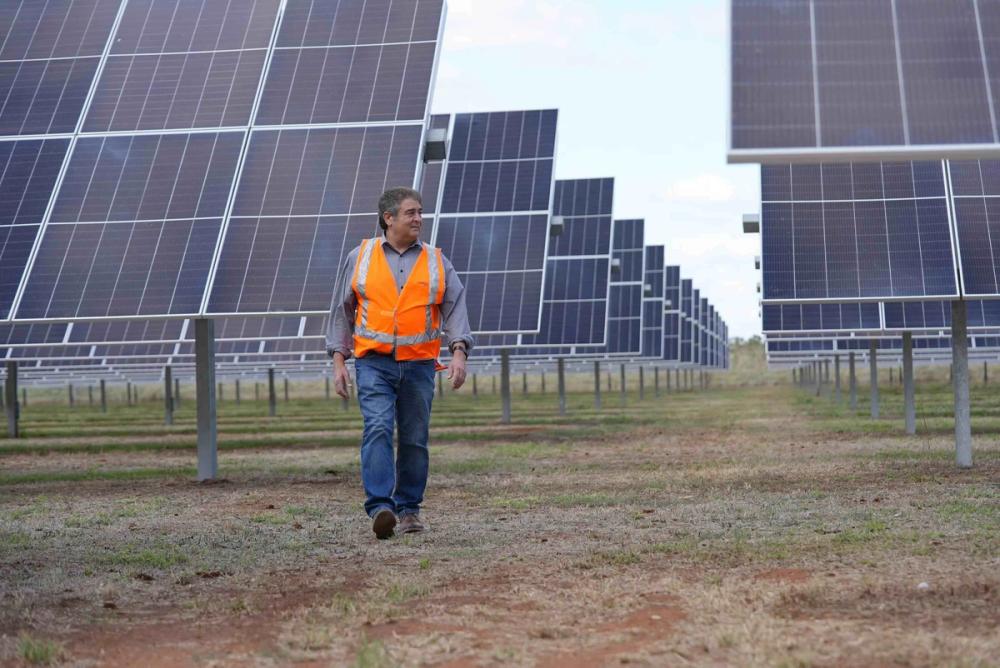
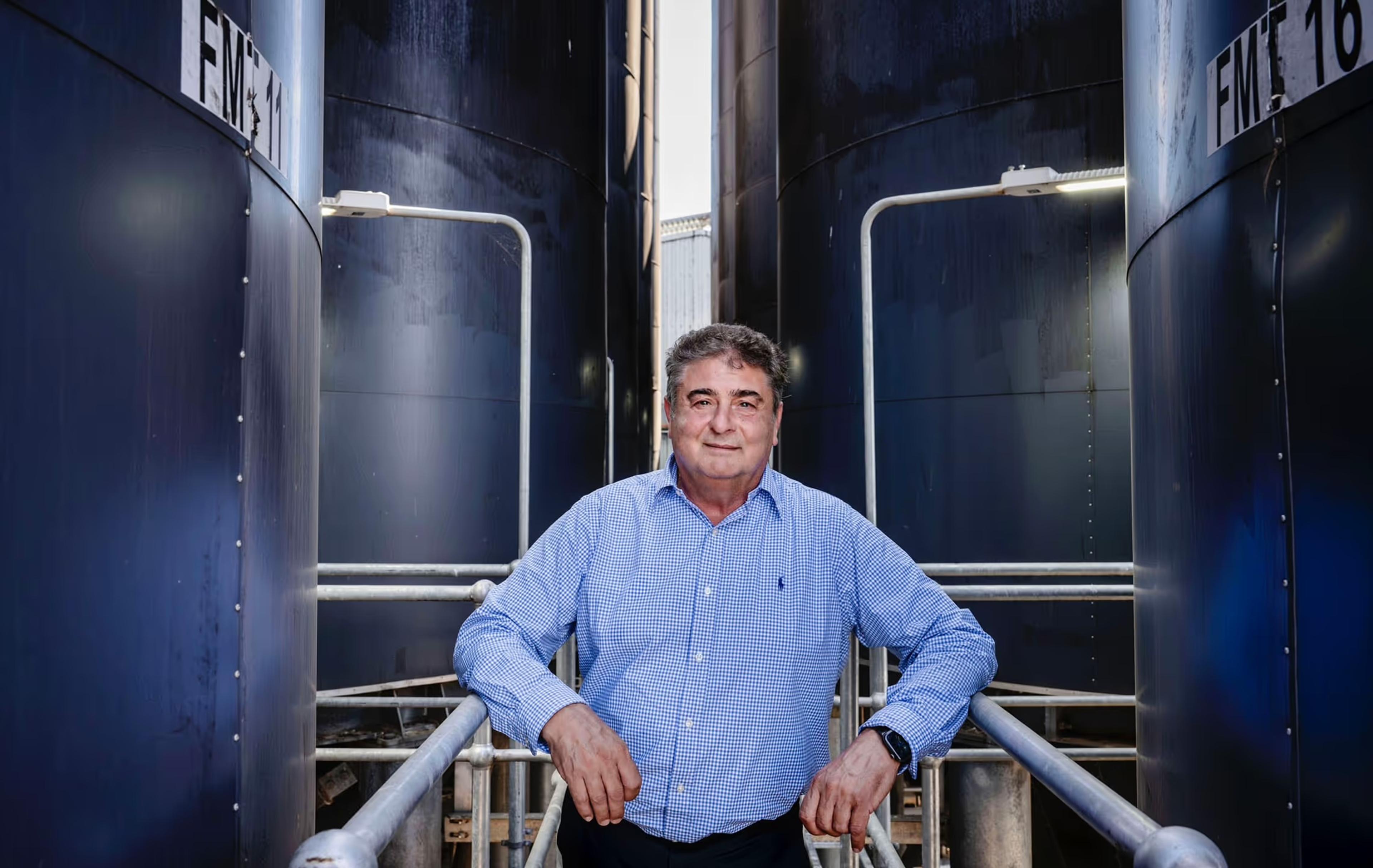
John Casella at the company’s new solar facility in Yenda, NSW – part of its initiative to be net-zero by 2050
The logic of acquiring Morris fortified
Casella’s other big acquisition a decade ago was one of the greatest of the Rutherglen fortified producers, Morris, which was established in 1859. When the owners Pernod Ricard put it up for sale, there was a real possibility all the barrels and wines would be sold off to other wine companies, with the Morris brand ceasing to exist. Irked by this, for he had not forgotten that a member of the Morris family had given financial help in the 1960s to his father, Filippo, an Italian immigrant, Casella stepped in to save the iconic brand.
“It fitted nicely into the portfolio,” Casella mused, “where we had Peter Lehmann as the premium Shiraz, Yellow Tail as the volume play, and Morris as the end-of-night finishing wine with the super fortifieds that are made there and in those majestic barrels that date back a hundred years or more. Sales for fortifieds are declining but it was more about having a complete set of wines for our customers, whom we have to look after as much as our consumers."
"For the customers, it’s simpler to deal with one company rather than multiple companies; and that’s also why we bought Brand’s Laira in Coonawarra as that’s a Cabernet region of Australia. Then we bought Baileys [the Glenrowan fortified producer], which was the organic place. So that filled up our portfolio of products that we could offer to our current consumers in Australia, and our customers around the world.”
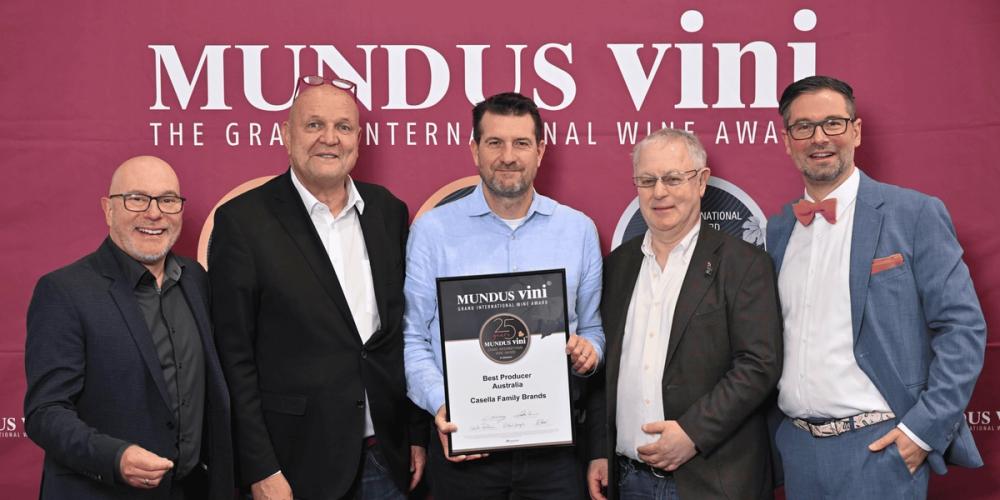
Casella Family Brands collects “Best Producer Australia” Award at MUNDUS vini 2026
The importance of consistency and value
For Casella Family Brands’ European managing director, Simon Lawson, the key standpoint is continuity, consistency, reliability and building trust.
“This thing about consistency is one of the great aspects of this business, and it comes from John,” he said. “We are clear about what we want to do, and we do it consistently from year to year. We know that with Peter Lehmann in particular, we are in this for the long run. It’s going to take a lot of time and effort, a lot of shoe leather and relationship-building in order to build the brand to the state and scale it can be – a beacon for Australia."
"The Barossa is Australia’s leading region, and Peter Lehmann we want to be the beacon for that region, for premium Australia. But under the stewardship of John, and the philosophy that comes out of the Casella business, we will be consistent. I’d like to think people know where we stand on most things, whether it’s Tesco or Sainsburys talking to us, or whether it’s Boutinot knowing we are here to support them in their efforts."

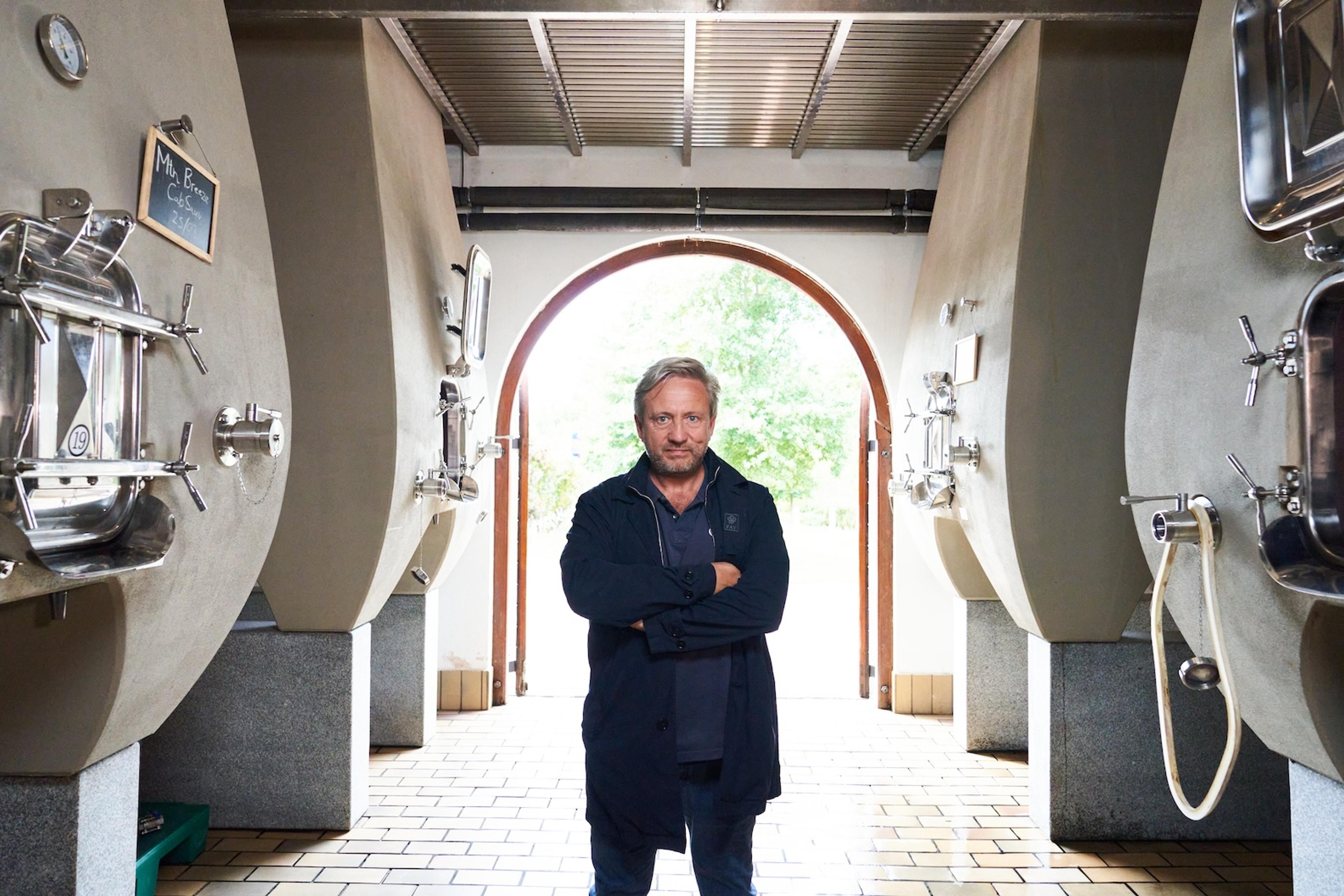
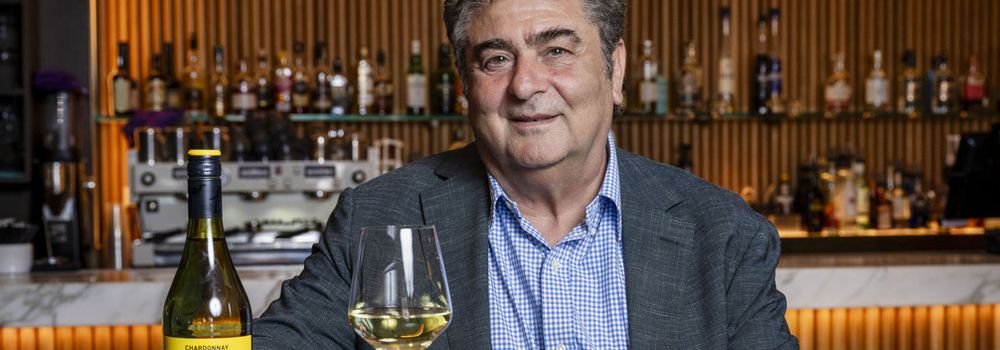
Meeting the legend – writer Geoffrey Dean (l) and John Casella
"That philosophy stems not just from our commercial and marketing approach but also our production, our winemaking and relationship with growers. We have 27 markets in Europe, going as far north as Iceland and as far east as Georgia and Kazakhstan. Germany is big for us – the market there is not great but Yellow Tail is bucking the trend and going strongly. The other key market is Ireland.”
As far as his philosophy behind Yellow Tail is concerned, Casella is unequivocal.
“Yellow Tail has always been exceptional value for money,” he declared. “We got the wine quality right; we got the wine style right; we got the presentation right, which sort of set us above our competitors at that time, and gave us that degree of success and astounded everybody, who couldn’t believe we did so well."
"You have to get the combination of all of those correct – it’s not just the quality of wine but the style of wine that consumers at that time weren't asking for but certainly took to very quickly and recommended to others. You can’t grow a brand like Yellow Tail unless there’s personal word-of-mouth recommendation for what value and what drinking enjoyment it represents.”
His final message? This global fall in consumption can’t continue, he predicted.
“It’s not that we're selling something bad but we’re maybe not doing enough to pull consumers in.” If anyone can persuade them back, it is surely John Casella, founder of Australia’s largest family-owned winery and a true legend of the industry. As he says:
“Our success has always been about staying true to our roots - making drinks that people love to enjoy, while honouring the legacy of family, hard work, and the land we call home.”
To discover how you can buy the Casella Family Brands wines click here for further details.
(*Source: CFB Internal data, The Australian and New Zealand Wine Industry Directory 2025.)