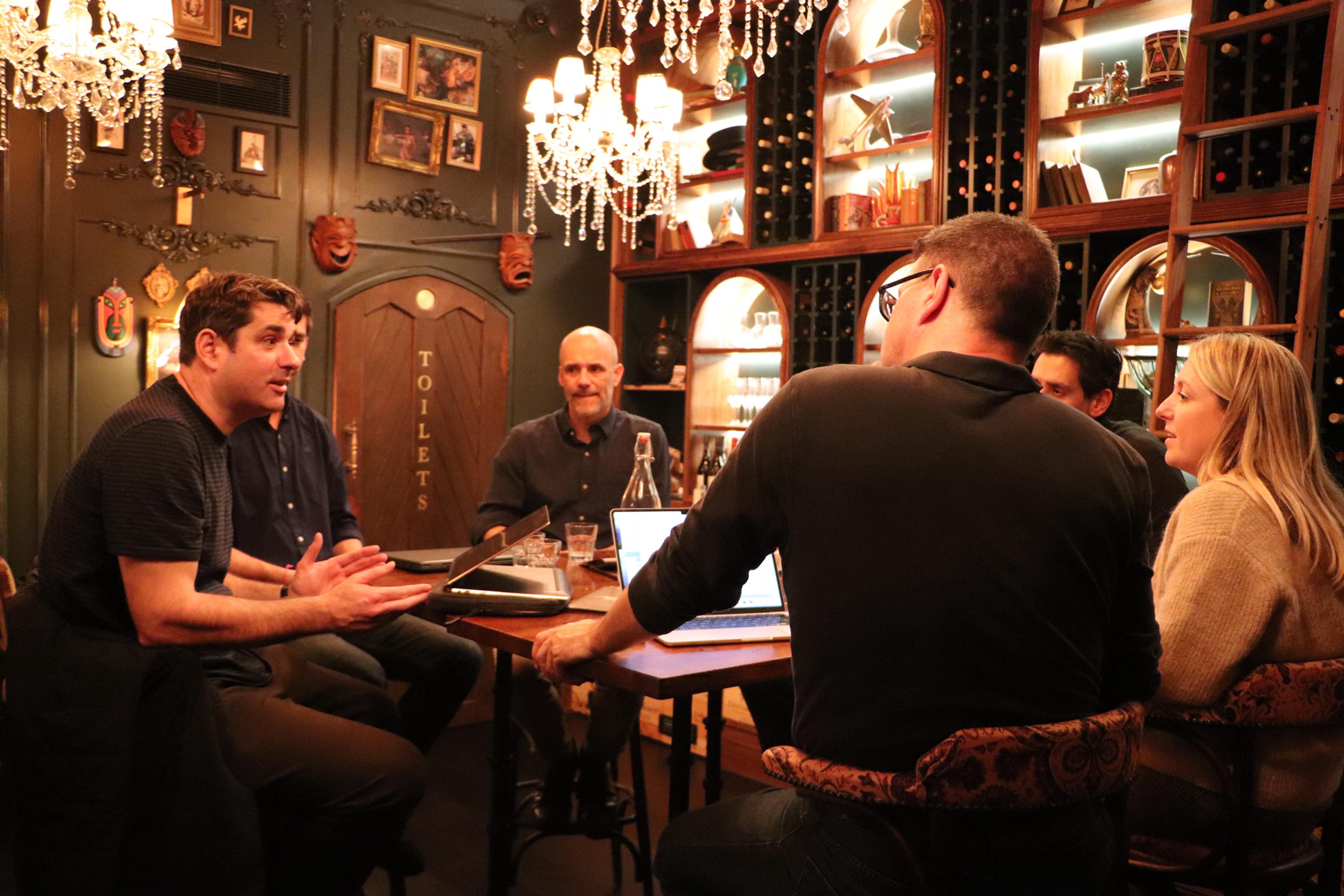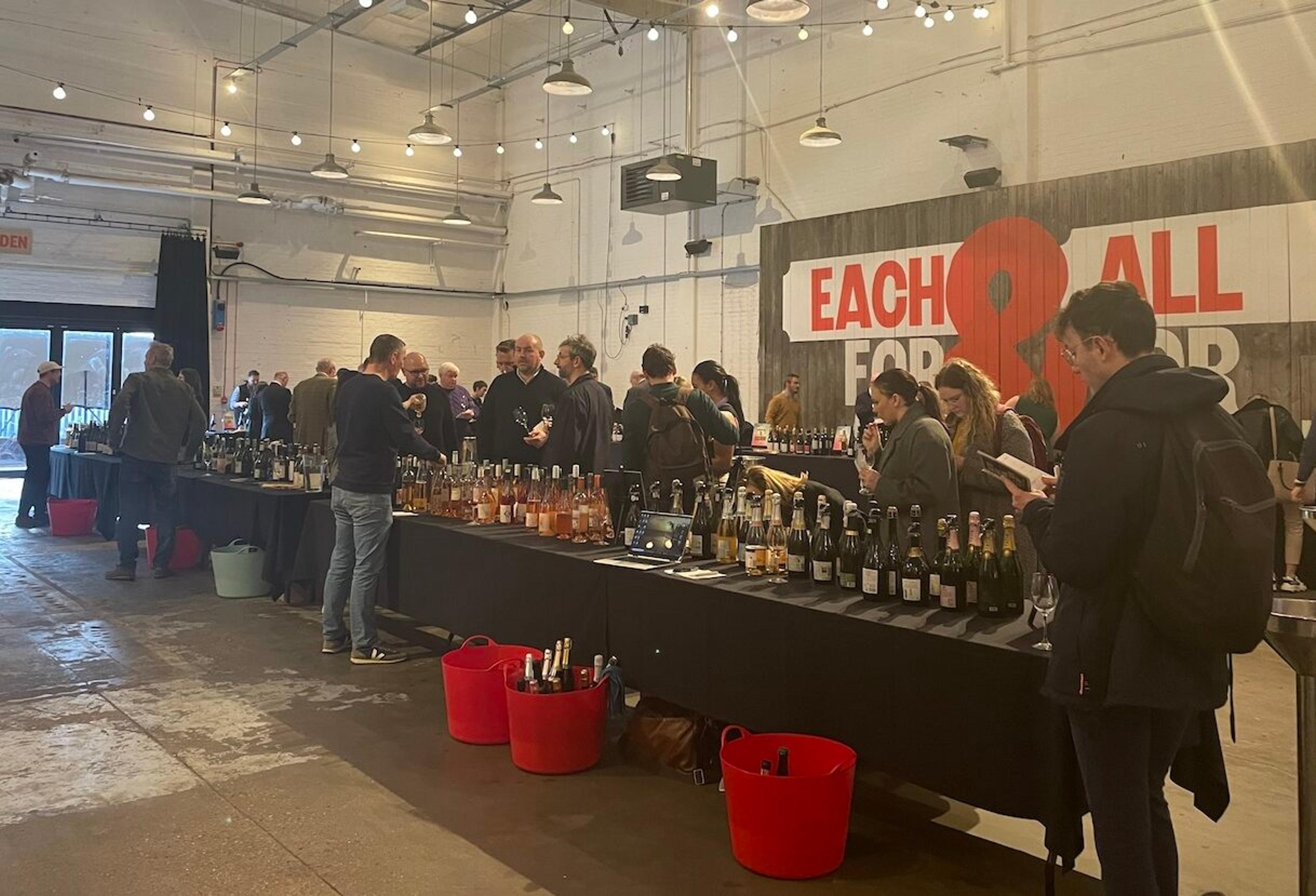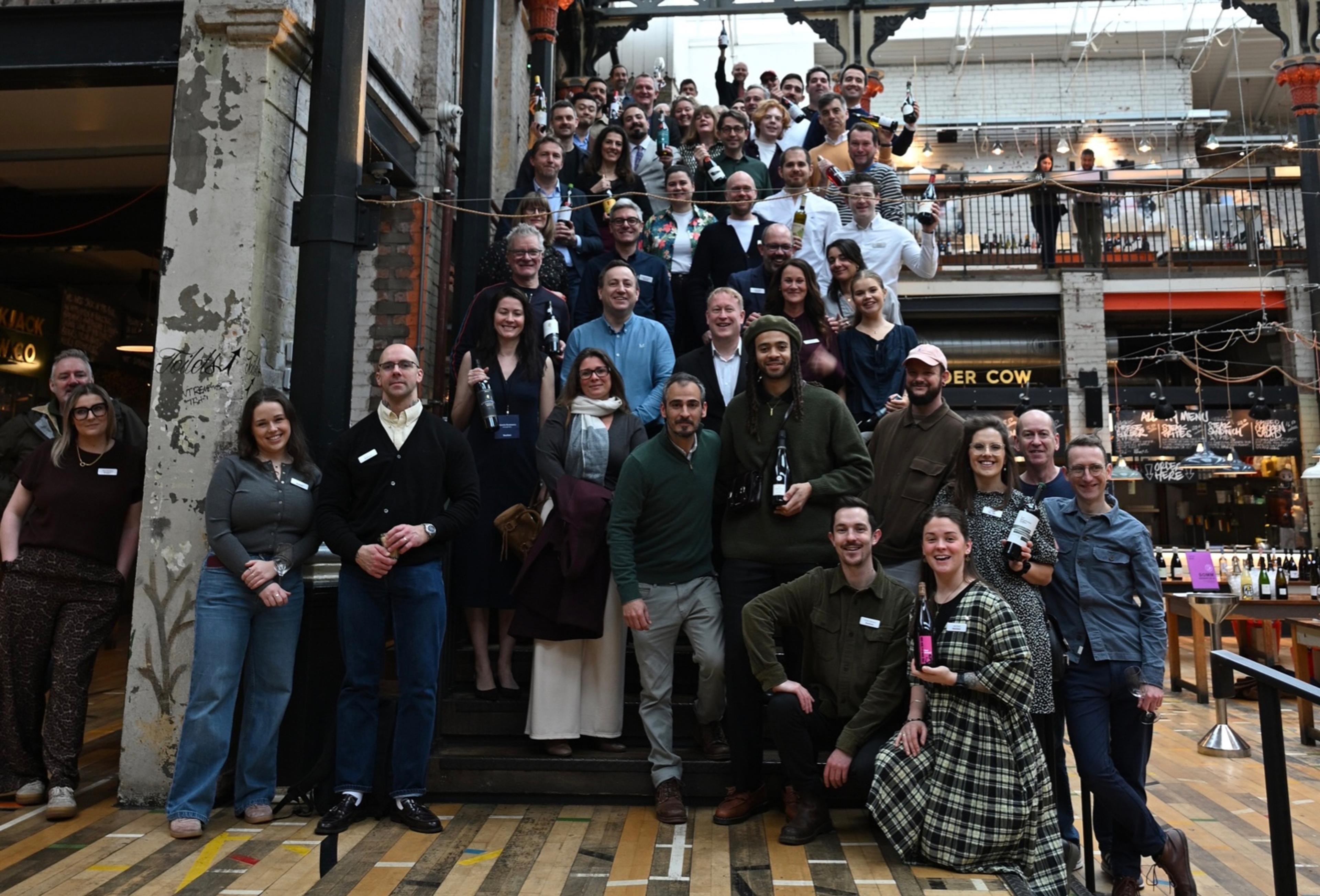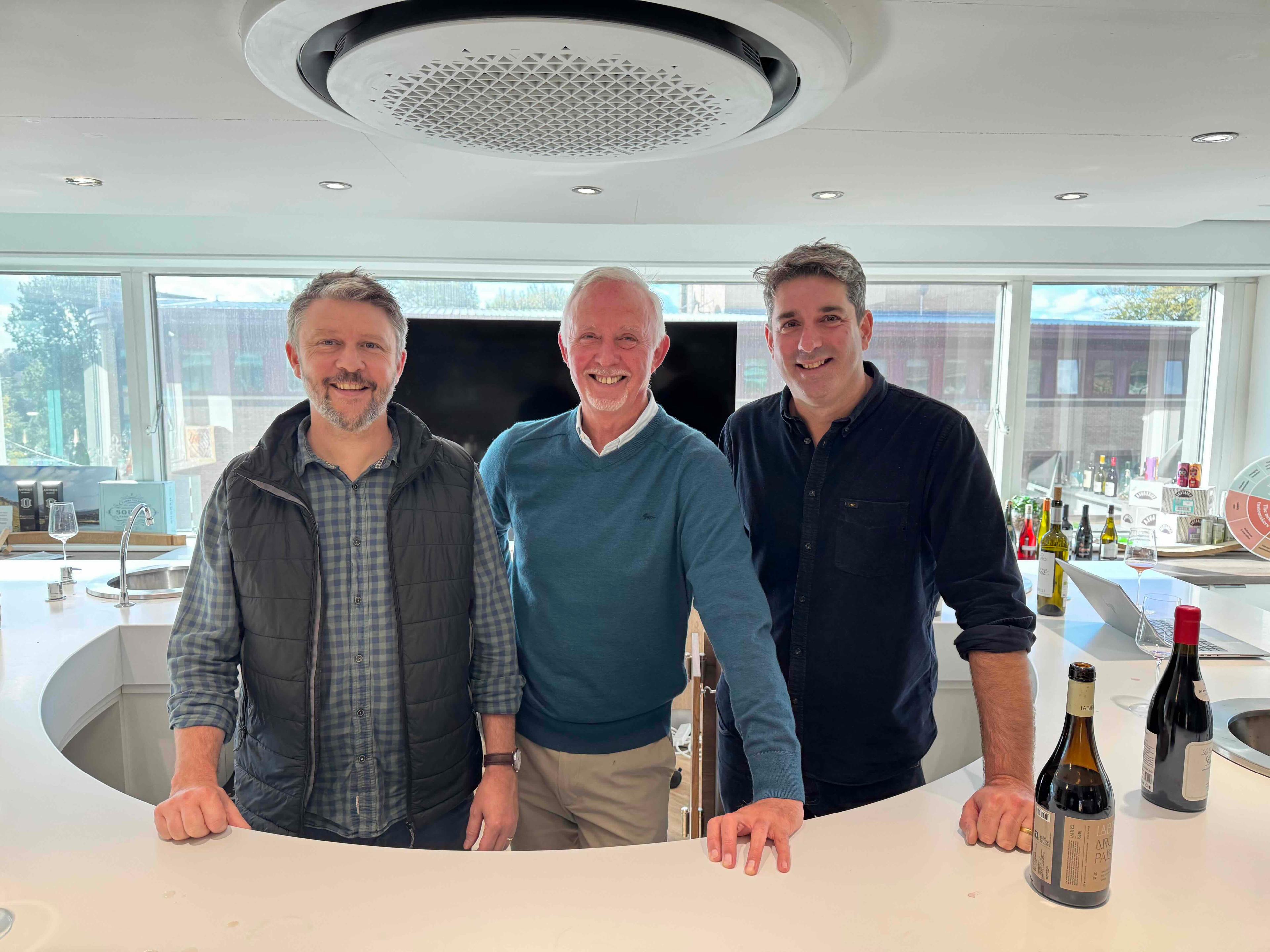

If there are industry prizes for friendliness and making you feel at home, then Boutinot would win hands down. For on arriving at its head office, outside Cheadle in greater Manchester, it felt like I was introduced to every smiling member of staff before sitting down for the serious stuff of talking business, strategy and tasting some wines.
But then I should not have been surprised. For this is the same Boutinot team that greets you with tales of fun and laughter at every trade tasting and international trade fair you see them at.
In such an increasingly cynical, competitive world Boutinot’s natural, grounded, down-to-earth way of business goes a long way. Its northern soul runs through its corporate DNA.
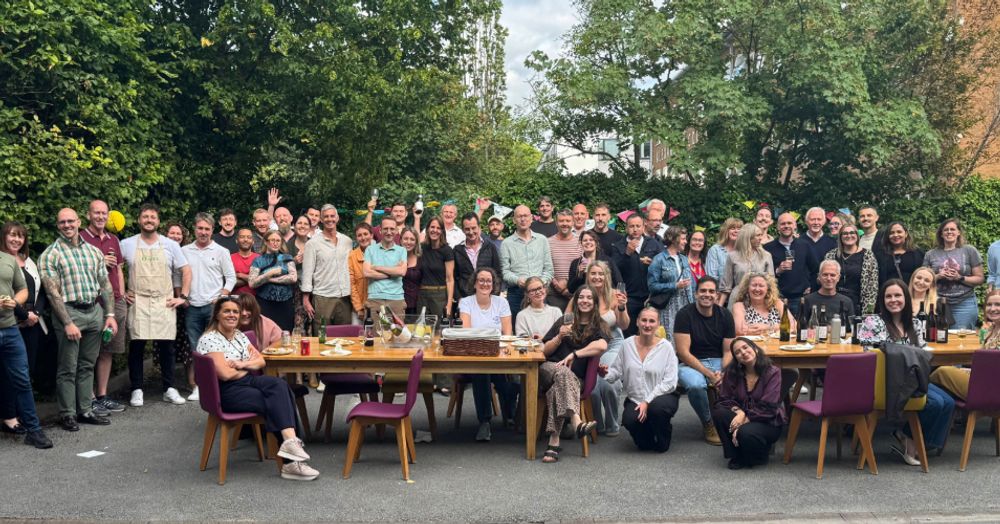
The Boutinot team enjoying a summer BBQ
Not that Boutinot would see it or even recognise it as giving it a competitive edge. But it does.
“We are authentic and honest in what we do,” says head of product Alex Gittins.
But it would be a mistake to underestimate Boutinot’s friendly, relaxed way of doing business.For this is a company that is wired for success as any you will find at the sharp end of the international wine industry.
A highly successful, and crucially independently owned business that is turning over £170 million, employs 275 people and is supplying wine, from a 2,000 strong range, to 4,000 customers.
That independence is something that Boutinot is very proud of.
“It gives us stability,” explains Gittins. “We are not driven by private equity and can take long term decisions for the next 20 to 30 years and not just for the next two and three years.”
Its business model also sets itself up for success. It’s hardly a secret that Boutinot makes its own wine, but it is a revelation to discover that it is now making 60% of the wine it sells - and that it is selling as much wine overseas as it is the UK.
How, and why, it makes its own wines was very much on today’s agenda. With a detailed analysis of its own winemaking strategy and what a difference it makes to the company’s bottom line.
It was also an opportunity to explore Boutinot’s new Third Floor Wines division, run by Graham Wharmby, that hopes to offer more off-beat wines to smaller premium on and off-trade customers that might not be suitable for Boutinot’s main business.
Whilst run very much as separate profit centres there is a clearly a great deal of shared understanding between the two divisions about which styles of wine Boutinot’s customers are looking for.
A global business
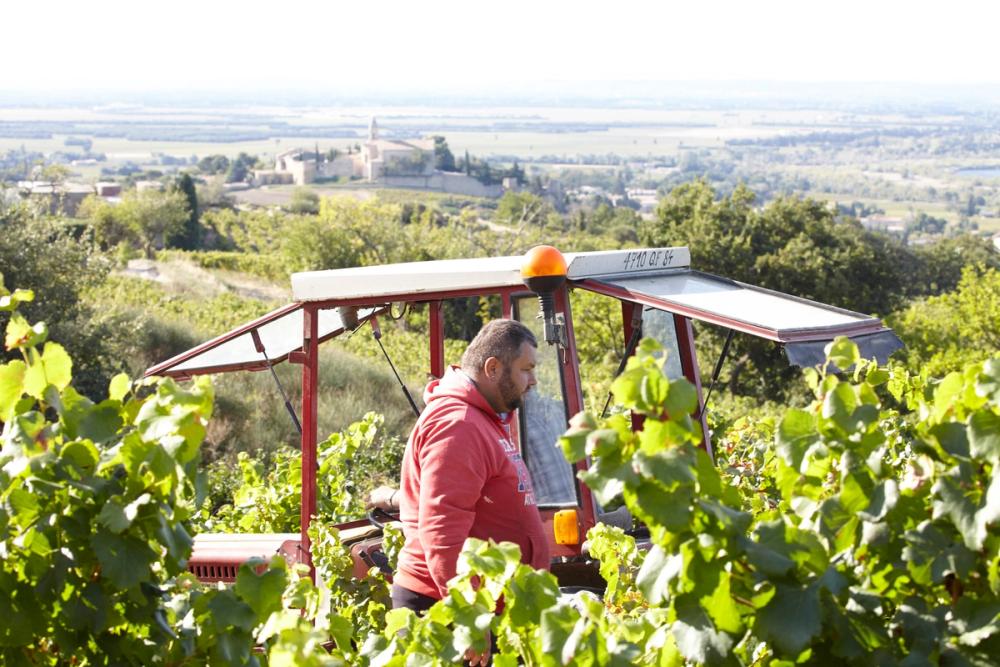
Boutinot's now runs an extensive winemaking operation around the world - including here at Domaine Boutinot in the southern Rhône
Boutinot’s international division has grown to such an extent it now owns four wineries in four countries and has another three joint winemaking ventures: in France it owns Domaine Boutinot in the southern Rhône; its UK operation is at Henners in east Sussex, which it bought in 2017; Wildeberg in Franschoek is Boutinot’s base in South Africa which it has owned since 2016; and in 2022 it took over Heaphy in the north west corner of New Zealand’s South Island.
AltaVe is a Spanish joint venture with Bodegas Borsao that allows it source and bottle wines from across Spain. Azul y Blanco is a joint venture with Bodegas Urqo, in the Uco valley in Argentina.
Its international stronghold is such that its biggest corporate shareholder is Italian wine producer, Araldica, that took out a near 30% equity stake in the business when the company went through a management buyout in 2013. They have been worked together since to build a strong winemaking presence in Italy centred around Il Cascinone in Monferrato hills in Piedmont.
It its now selling wine across six continents and into over 60 countries around the world. An international business that provides a strong platform for the rest of the company to operate around.
As it says: “Our own production and vineyard investment programme enables us to access quality grapes. Coupled with our ability to work on a competitive cost of production, averaged across millions of bottles produced, ensures that these wines represent exceptional value.”
It has five distribution companies to help sell the wines it is making around the world, including a new US business based in Colorado.
“It is the side of the business that is growing the most,” says Gittins.
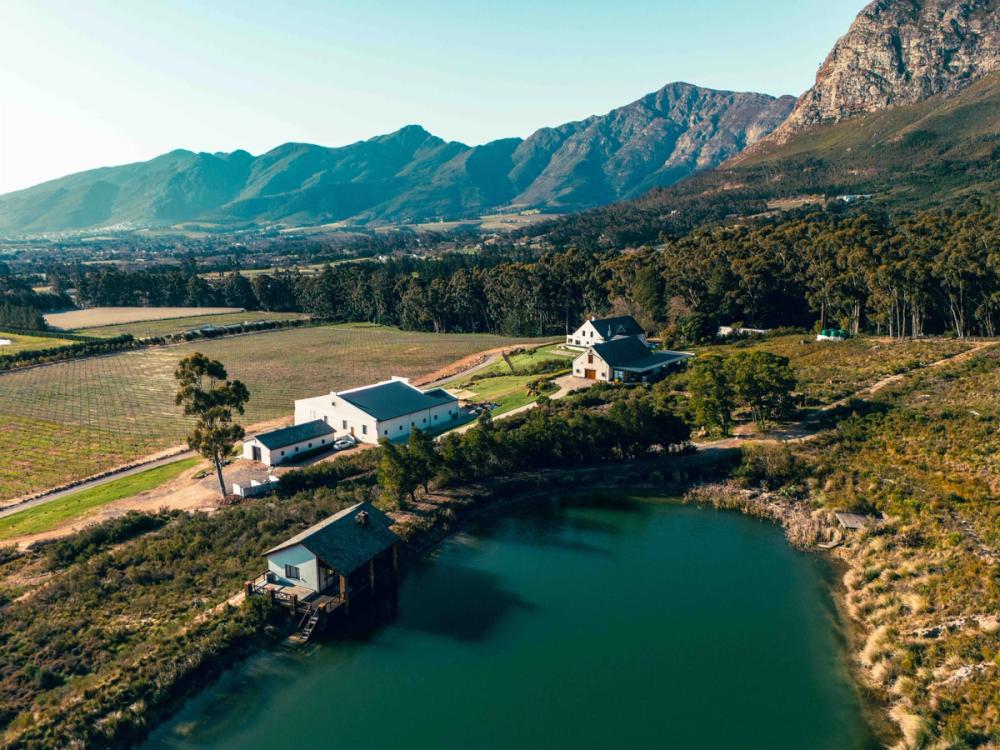
Wildeberg in South Africa is another of Boutinot's winemaking operations
It also means the 220 producers it has signed up to work with on an agency basis in the UK can also potentially access and take advantage of its international distribution network as well.
There are two key reasons why Boutinot wants to run its own wine production, explains John Sanderson, Boutinot’s commercial manager for France.
First, it means it can control the quality, price and value of its wines. Secondly, it gives it complete control of its production and distribution costs.
Whilst its peers are buffeted side to side by the ups and downs of the global wine market, Boutinot can set sail and follow its own path.
Sanderson is particularly well placed to know the styles of wine that Boutinot needs to be making as he used to be a winemaker at one of its key French suppliers. He has now been part of the Boutinot winemaking team for five years, but says it is good to have “the perspective” of having worked on the other side of the fence.
His role now is all about working closely with its winemaking hub based in Cairanne within the Rhône Valley where its team of winemakers are sourcing and producing wine from all over France.
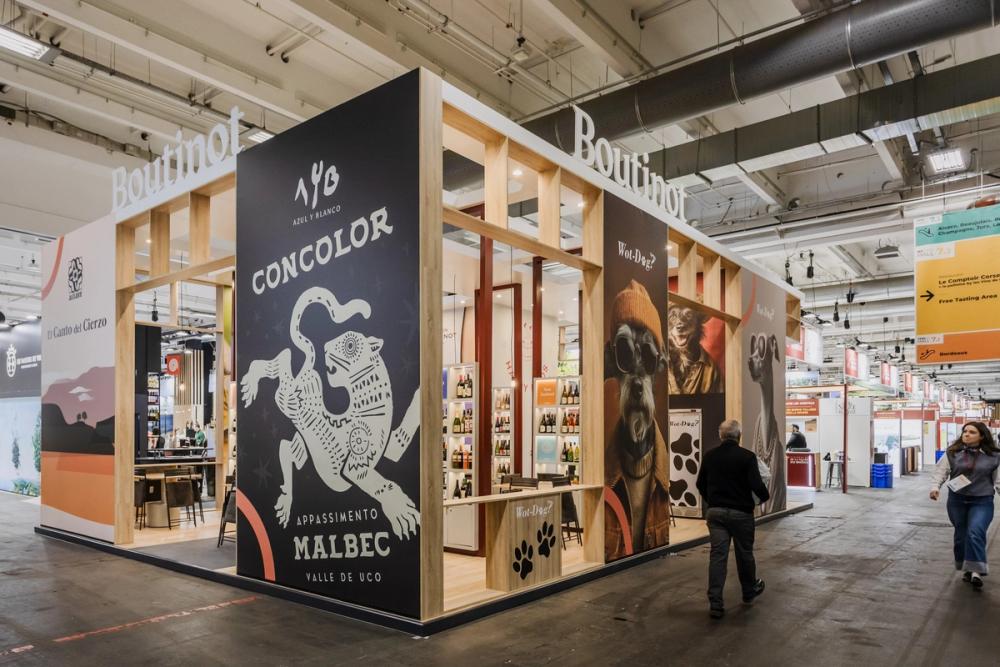
Boutinot is a long-standing exhibitor at international trade shows like Wine Paris, above, and ProWein where it can promote the wines it is making to potential customers around the world
“We also use our on site wineries to source from different parts of the world,” he adds. “We want to have a large pool of producers to wok with to give us flexibility in terms of where we get our grapes from.”
Which means having a balance between those growers and producers it has very long standing relationships with the option of also bringing on new suppliers as and when is needed.
“Having people on the ground means you get to hear about new opportunities,” he adds.
The heart of what we do
It’s a business model that its founder Paul Boutinot put in place from when he first started the business back in 1980 - grounded on the back of its winemaking operation in France. He might have moved on, but his influence is still very much part of the Boutinot he left behind, confirms Deborah Brooks, who herself is leaving the main business, after close to 40 years, to help set up its new Windermere Wines neighbourhood wine merchant and bar.
Its winemaking operation is critical if Boutinot is going to continue to achieve its “simple mission to make quality wines accessible for everyone to enjoy”.
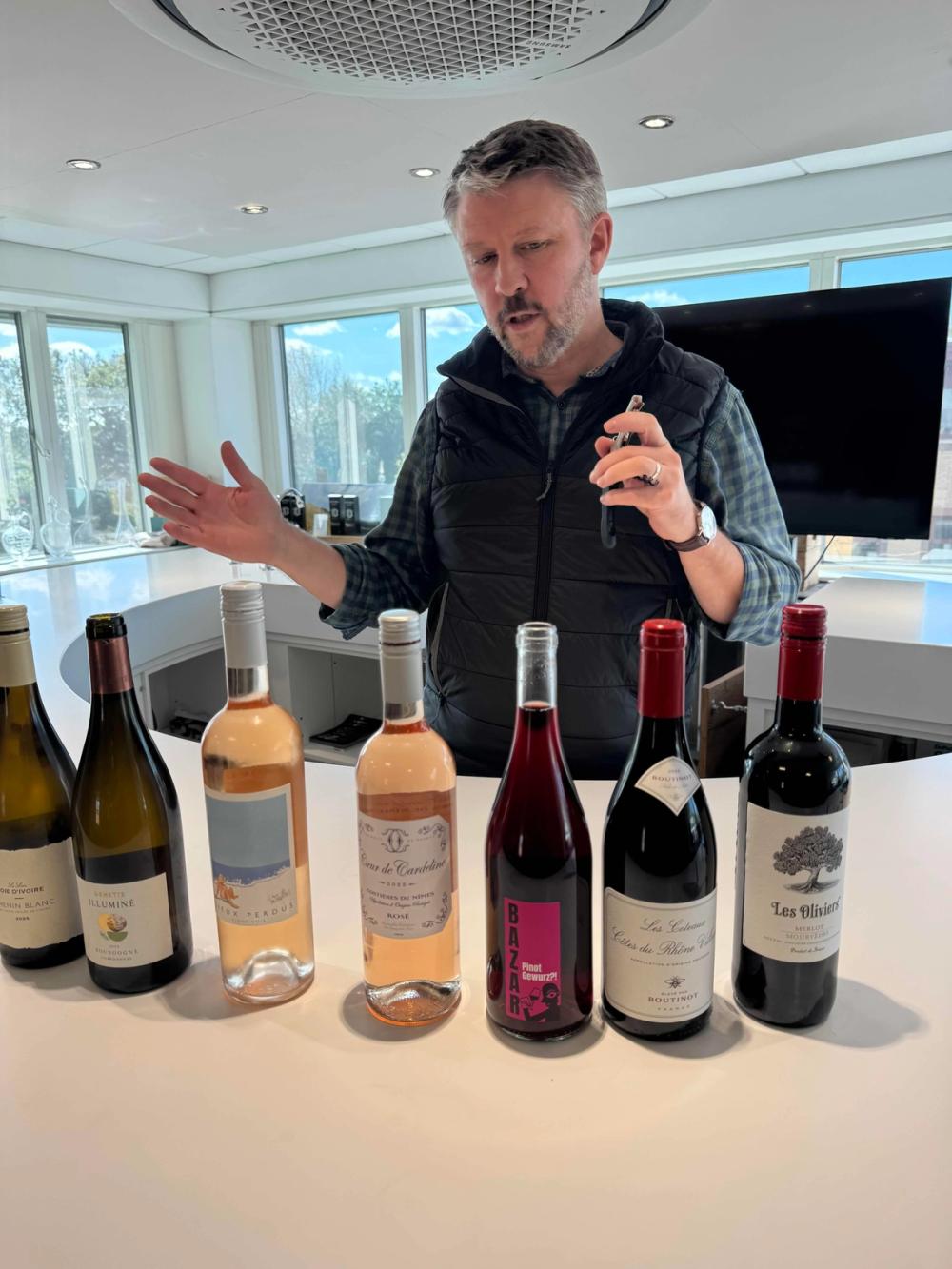
John Sanderson helps to co-ordinate Boutinot's French winemaking operation
“It’s the heart of what we do,” stresses Sanderson. “We are making wines we know we can sell - and making enough wine that meets that demand.”
To have a foot in both the production and sales side of the wine supply chain is the foundation on which the Boutinot business has been built.
It means it is also ideally placed to pick up on new trends and if wines do particularly well it can quickly scale up production to meet that demand, adds Sanderson.
It means the majority of the producers it works with are those that have the ability to work with large volumes and can live within the Boutintot business model, says Brooks.
“We pick producers that we can grow together with,” she adds.
They also have to share the Boutinot “ethos” says Sanderson. “It means there is always a lot going on, with lots of ideas,” he says.
Industry challenges
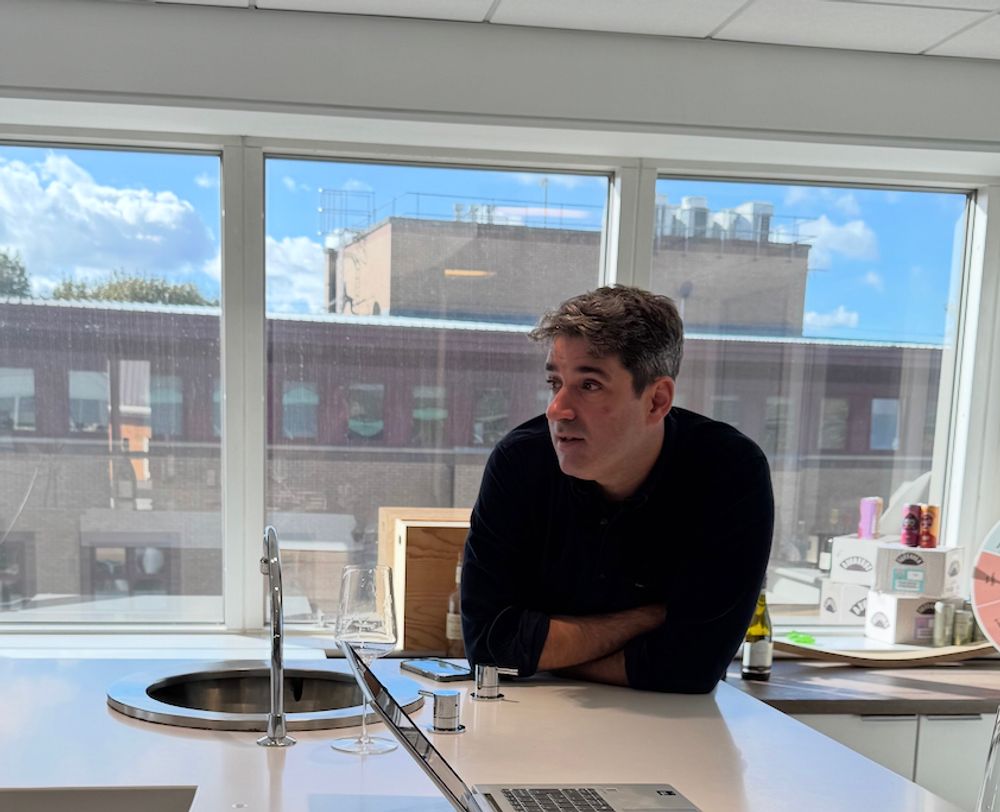
Alex Gittins says the savings that Boutinot can make by doing so much of its own winemaking means it can offer great value quality wines to its customers
Boutinot might be able to manage and control the costs of the wines it is making, but it is still at the mercy of the overall trading environment that all wine suppliers, distributors and their customers are having to work in.
Gittins says there is no doubt the hospitality sector, in particular, is having to live with an unprecedented number of challenges, which means it is even more important that it can rely on its suppliers to do what they can to give them the best possible service.
It’s why its winemaking operation is so important in that it can go to the market with wines it is confident its customers can sell.
Gittins explains: “We can give people wines they can have fun with and that will appeal to their customer base. If they can make some money out of those wines then we are doing our job.”
Graham Wharmby says it goes back to how Paul Boutinot first started up the business: “If you can make wines that a retailer or a wholesaler find it easy to make a margin on then why would they not want to come back and stick with that supplier?”
It’s why Boutinot’s product team works closely with the winemaking and sourcing teams to make sure the right wines are coming in to the business, says Gittins.
“We look at what innovation we can bring to the market. A lot of businesses have buyers and brand managers. At Boutinot we have product managers who are buying the wine, but also work with the sales team to make sure the wines we are giving them are what the sales team needs,” he explains.
“We are responsible all the way through the supply chain. From the production and sales side through to the customers’ side as well.”
Third Floor Wines
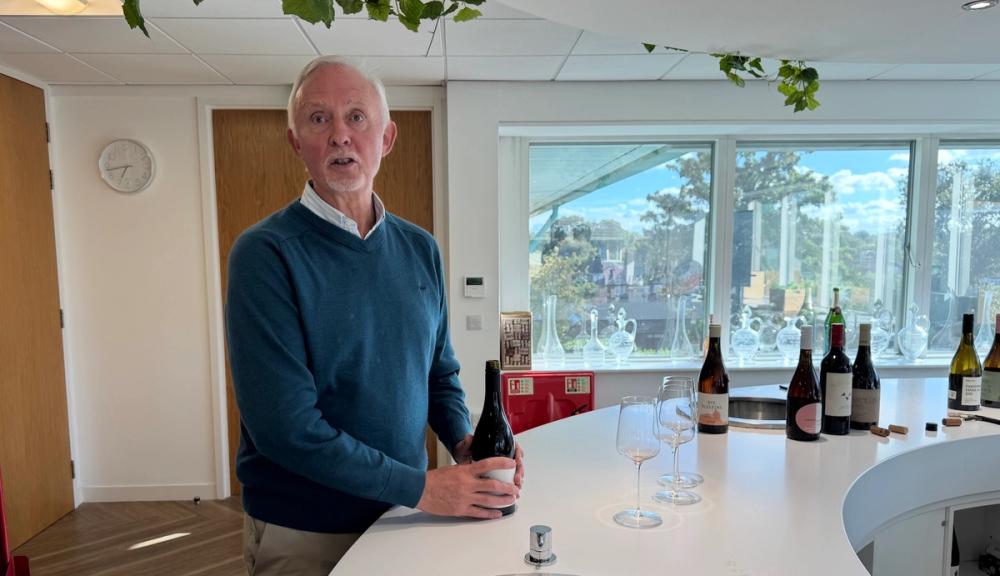
Graham Wharmby heads up Boutinot's Third Floor Wines - named as it is run out of the third floor of Boutinot's head office
Third Floor Wines - named simply because it is run out of the third floor of the Boutinot head office - is focused on sourcing high-quality artisan producers that don’t have the volumes for a full national Boutinot listing.
Under the control of Boutinot stalwart, Graham Wharmby, the range has grown to around 25 producers that are looking to build distribution with independent wine merchants and in the premium on-trade.
They include more off-the-beaten-track producers like Matteus Scarbolo from Friuli, Silvia Heinrich from Burgenland, Daniel Fries from the Mosel, and sparkling producer Lena Macht Sekt from the Rheinhessen.
Gittins says it is a business that is very much in step with how the on-trade, in particular, is changing.
“Over the last five years we have seen a new type of customer. Independent restaurants serving a mix of small plates and want more artisanal and bespoke wines to go with them that fit in with the premium experience they want to offer,” he says.
Wharmby says he came up with the idea of Third Floor Wines as he could see a growing demand for wines that matched the needs of this changing customer base, who are looking for “wines that still offer great value but at higher price points”.
He says he feels like he has come full circle with Boutinot at Third Floor Wines having previously been a Boutinot customer, when he ran his own wine store, and then helped manage its independent wine merchants’ business.
By consolidating orders, invoices and using Boutinot's back-office operations, Third Floor Wines can act as an independent sourcing arm, with a relatively small cost base. It also means that it can take advantage of Boutinot’s scale and offer highly competitive prices to the trade for this level of quality, bespoke wine.
It also means Boutinot can appeal to a whole different customer base, adds Gittins.
Wharmby says customers will also happily take an extra meeting from “Boutinot”. One to look after their needs that Boutinot can deliver and one to target more bespoke wines that Third Floor Wines can provide.
“Customers get to see a different part of Boutinot as well,” he adds.
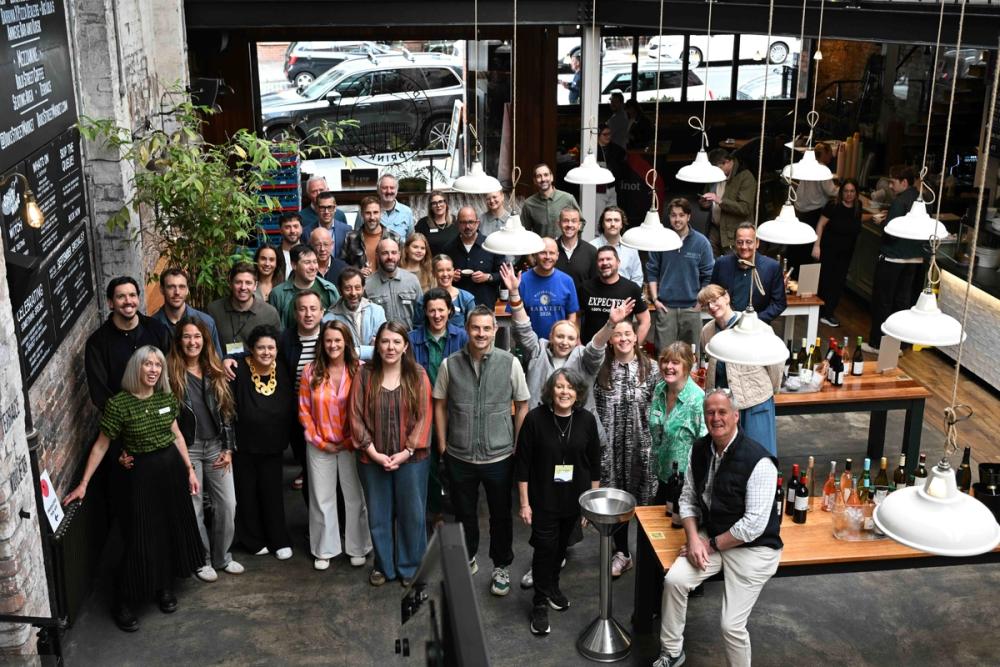
Boutinot's team at an on-trade event in Liverpool
It also gives Boutinot the opportunity to work with a much wider pool of producers, says Gittins.
“We often come across producers that would be too small for Boutinot, but now we have a new route to market for them,” he adds.
It also means the average price point of a Third Floor Wines is often twice that of a classic Boutinot wine.
Collaborative mindset
The arrival of Third Floor Wines in the business is also in keeping with the mindset of the overall business, argues Deborah Brooks. For despite Boutinot’s global footprint it is still run with the personality of a much smaller business, she says.
“There is a senior management team, but there is a flat structure across the business and it is very collaborative,” she says. “We still think like a small company even if we are a big business.”
Gittins agrees: “Yes, it’s a big business, but it still feels like we are all very close together - we are all learning from our experienced colleagues.”
It means, argues Brooks, that even after close to 50 years in the industry, the best way of describing Boutinot is as a “restless beast”.
Albeit a pretty welcoming, friendly one.
* You can find out more about Boutinot here.