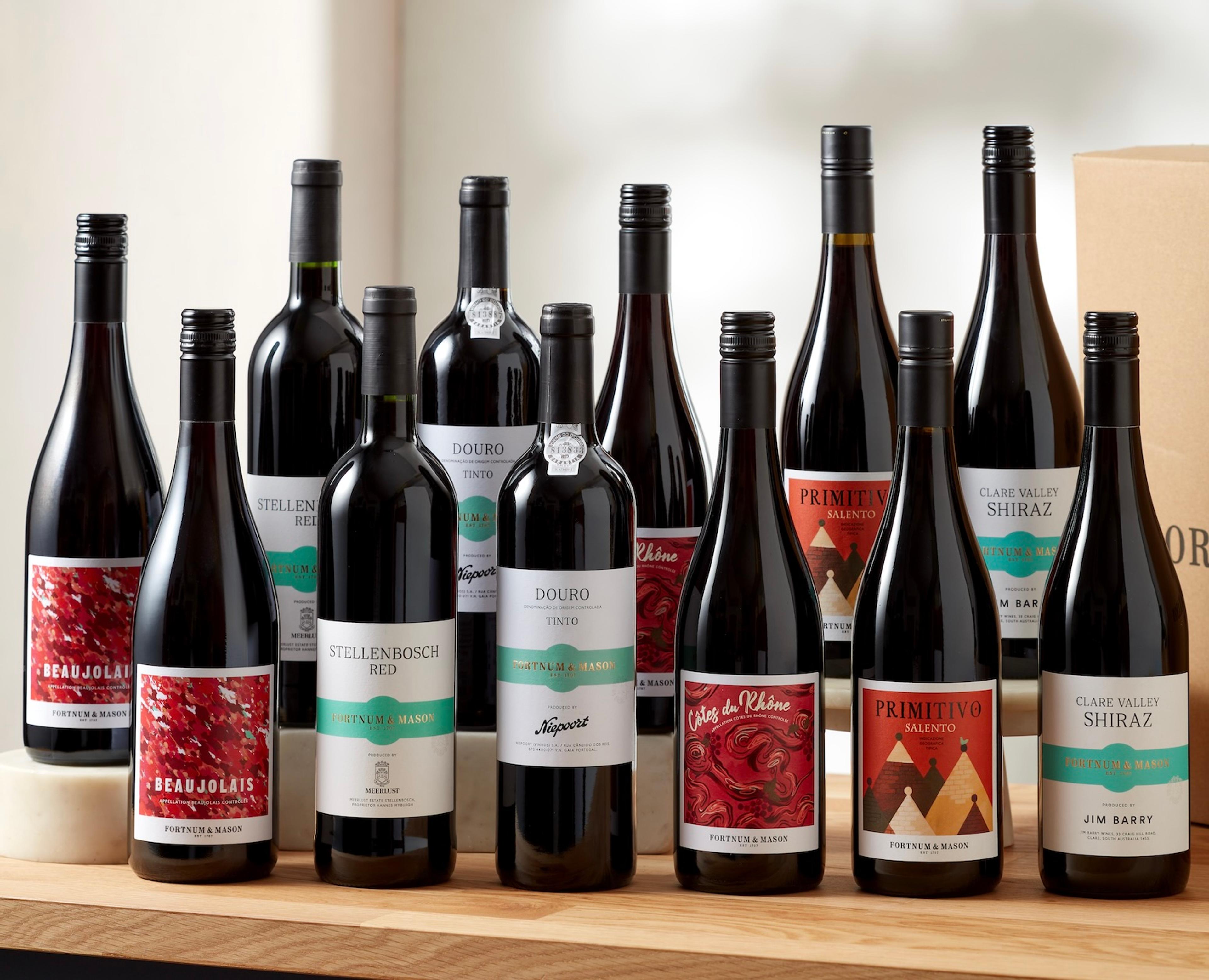

Fortnum and Mason has undertaken a complete shake up of its own-label wine offer this year, which was officially launched in May. Described by senior wine and spirits buyer Edwina Watson as a “huge project that’s taken a couple of years to put together” it includes 49 wines divided between Piccadilly House, its more accessible tier, and Fortnum’s Collection, positioned at the premium end, with wines sourced from across the globe, though France still makes up the bulk of Fortnum's overall wine sales.
“We are not reinventing the wheel,” says Watson. “It’s about making sure the wines we have are varietally recognisable, and are the best that we could find. In terms of a buying role it’s a pretty nice one because we’ve got the pick of the crop really.”
With its turquoise and gold branding, the iconic flagship store that sits just down the road from The Ritz is an international luxury destination where the afternoon cream teas - yours for £84 – are a long-standing institution, along with its world famous hampers.
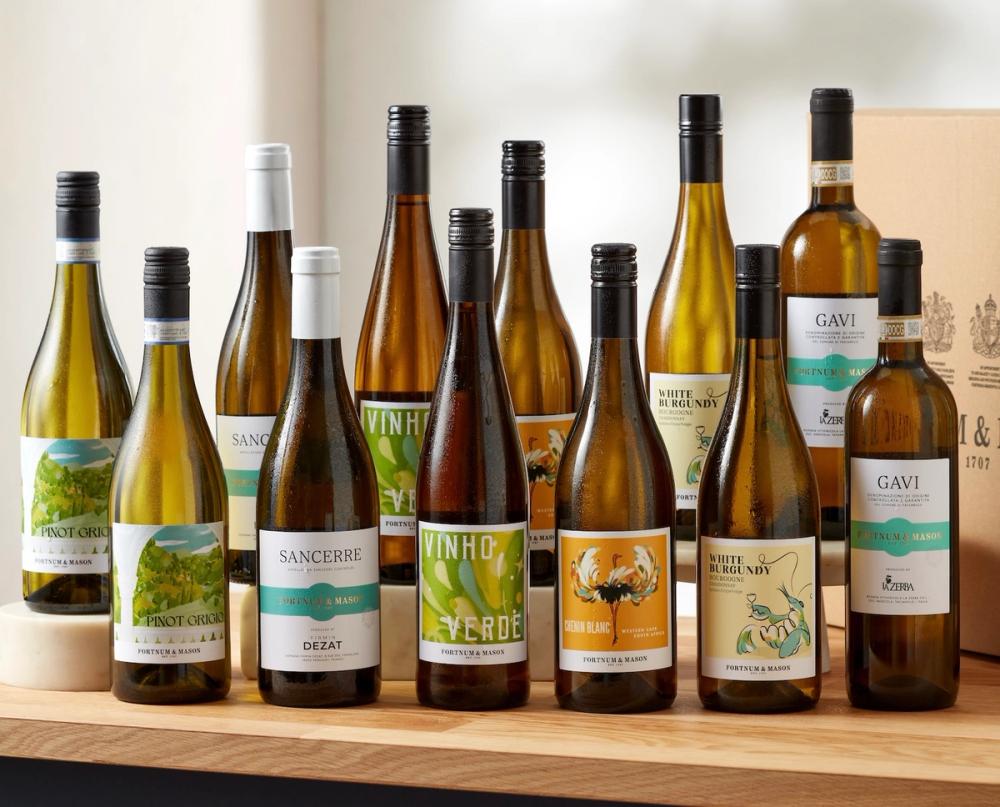
Part of the new Fortnum & Mason own label range
It attracts tourists and affluent travellers alike, snapping up traditional British produce such as teas and preserves, as well as its loyal London-based customers, with food and drink at the very heart of its offer.
“While we do get a lot of tourists, particularly Americans, who love to come along to Piccadilly and pick up a bottle of English wine, something very special they wouldn’t get anywhere else, we also have a lot of well-heeled customers who regard us as their local grocery store,” she adds.
There is the traditional affluent Fortnum’s customer, familiar with the house’s heritage and looking for the likes of Champagne, a serious bottle of Bordeaux or a beautifully presented gift. International visitors meanwhile, are likely to be hunting out a quintessentially British purchase to take back home, while a growing group of customers are simply buying wine for their personal consumption.
The latter group is a particularly significant shift, as wine sales at the store have historically been dominated by gifting, but there has been a resurgence in domestic customers in recent years, and increasing sales to customers buying wine for themselves following lockdown.
“Fortnums is really famous for its hampers, and we are seeing huge growth in mixed cases,” says Watson. “That’s an incredibly successful side to the business which also presents a great opportunity for the wine category, as well as acting as a great shop window for our wines. It’s something we are really focusing on in terms of the offering and the packaging.”
The gift market still remains an important element of Fortnum’s wine offer, and it continues to sell wine through an extensive range of gift boxes and hampers, from £75 wine gift boxes through to much more substantial wine collections at £350 and beyond. Its current best-sellers include Champagne, Prosecco and Fortnum’s own sparkling tea.
Diverse customers
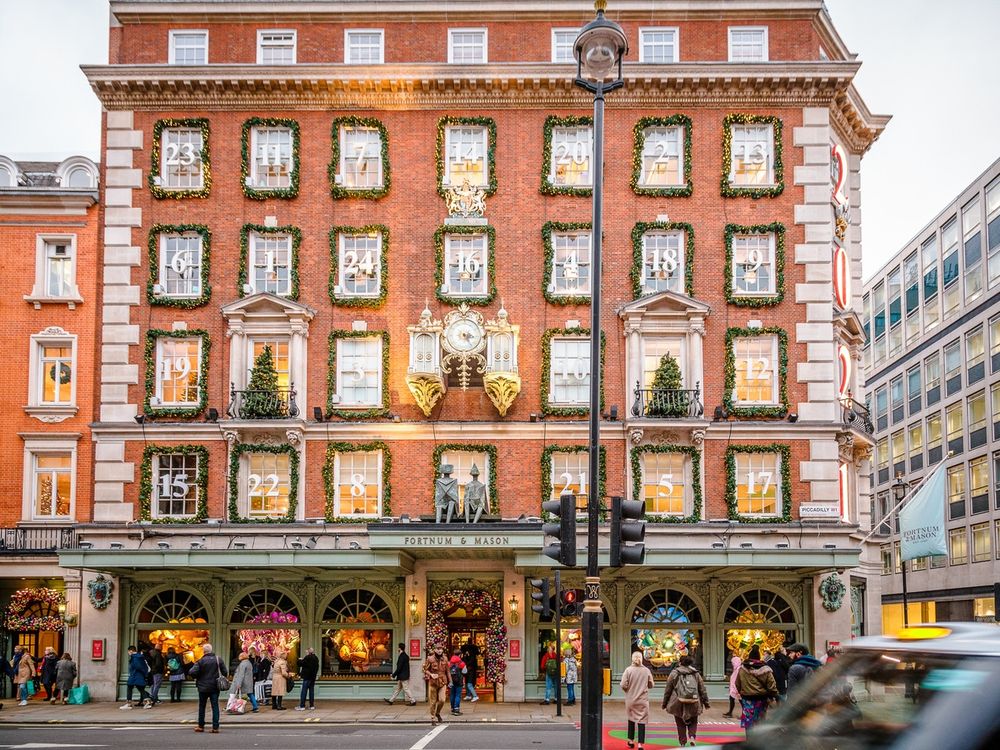
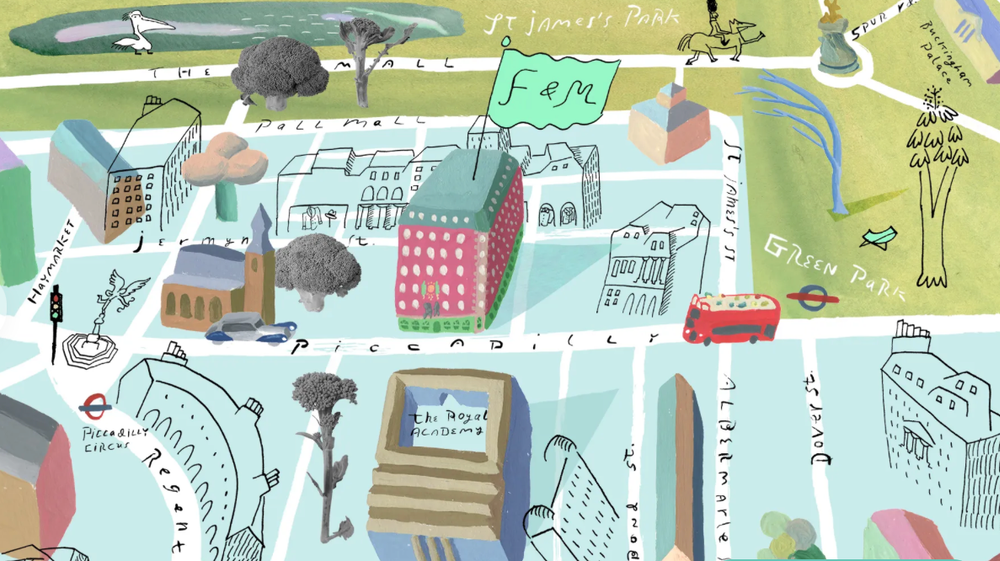
Fortnum & Mason's world famous flaghip store in Piccadilly, London
Watson says Fortnum’s wine customers vary widely. They may be a knowledgeable collector buying a £48 own label wine, or someone spending £20 on a bottle for dinner that night. Alternatively they may be buying Champagne because the packaging and provenance make it the perfect gift. Either way the average spend comes in at around £21 a bottle which might surprise a few.
Her job, she explains, is therefore less about serving one specific demographic than creating enough signposts for several different kinds of wine drinker to navigate the same range.
The conundrum facing the Fortnum’s wine team was how to give customers enough choice to feel there is something new to discover, without overwhelming them with so much choice that they don’t know where the start. For Watson, the exercise was about much more than putting a new label on an old range.
“I wanted the range to feel more relevant to more people. We already had a large own-label offer, but it wasn't that easy to shop,” she says.
The key to deciding which wines should be in the range is finding producers and wines that have a strong sense of place.
“They must represent where they are from, but they must also be clean and elegant, not too heavy handed or too extracted – they are my key principles when it comes to buying,” she stresses.'I'm looking for wines that are recognisable and appealing, and that represent the best of their region with a real sense of place. They're wines that I love to buy and drink myself from some of the world's best producers. I want to create a range that represents both the classics and new discoveries, rather than simply following trends."
Collaborative approach
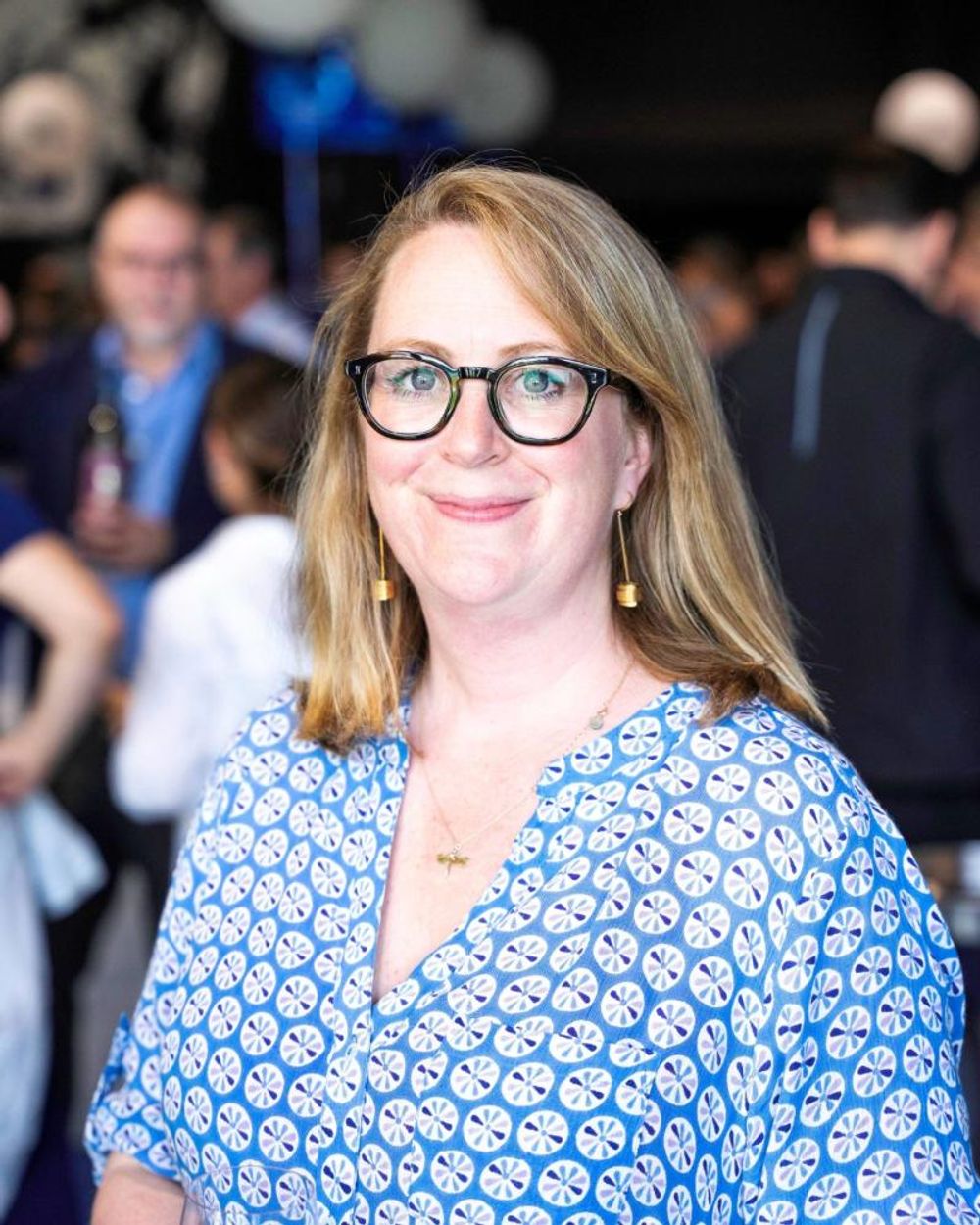
Edwina Watson has headed up Fortnum & Mason's wine and spirits buying for the last two years
Included in the new range are some familiar varietals such as Pinot Grigio and Sauvignon Blanc - “grapes that people know and love,” says Watson.
“But they are also from extremely well-known producers so it’s a combination of the Fortnum brand and those producers. We’re trying to be a bit more of a collaboration than simply hiding behind the Fortnum name, so we are promoting the producer too. Giving them equal billing on the front label was a really important part of the project.”
The new 49-bottle own label collection is probably the clearest expression yet of where Fortnum wants its wine business to go.
Piccadilly House contains 21 wines, priced at £12.95-£19.95, with a deliberately more expressive visual identity.
Fortnum’s Collection, meanwhile, consists of 28 wines, ranging from £16.95 to £48, and is designed around benchmark expressions of classic styles and partnerships with leading producers.
The overlap in pricing is deliberate – this is not simply “cheap Fortnum’s” versus “expensive Fortnum’s”. Instead, the two ranges are intended to satisfy different customer needs, according to Watson.
“We have focussed on benchmark expressions of classic styles, from some of the world’s finest producers. These are quality wines with a true sense of place that we are proud to put our name to.”
Meanwhile Watson believes the more accessible Piccadilly House range will appeal to a “broad range of wine customers, from the casual drinker to industry taste leaders”.
Pushing boundaries
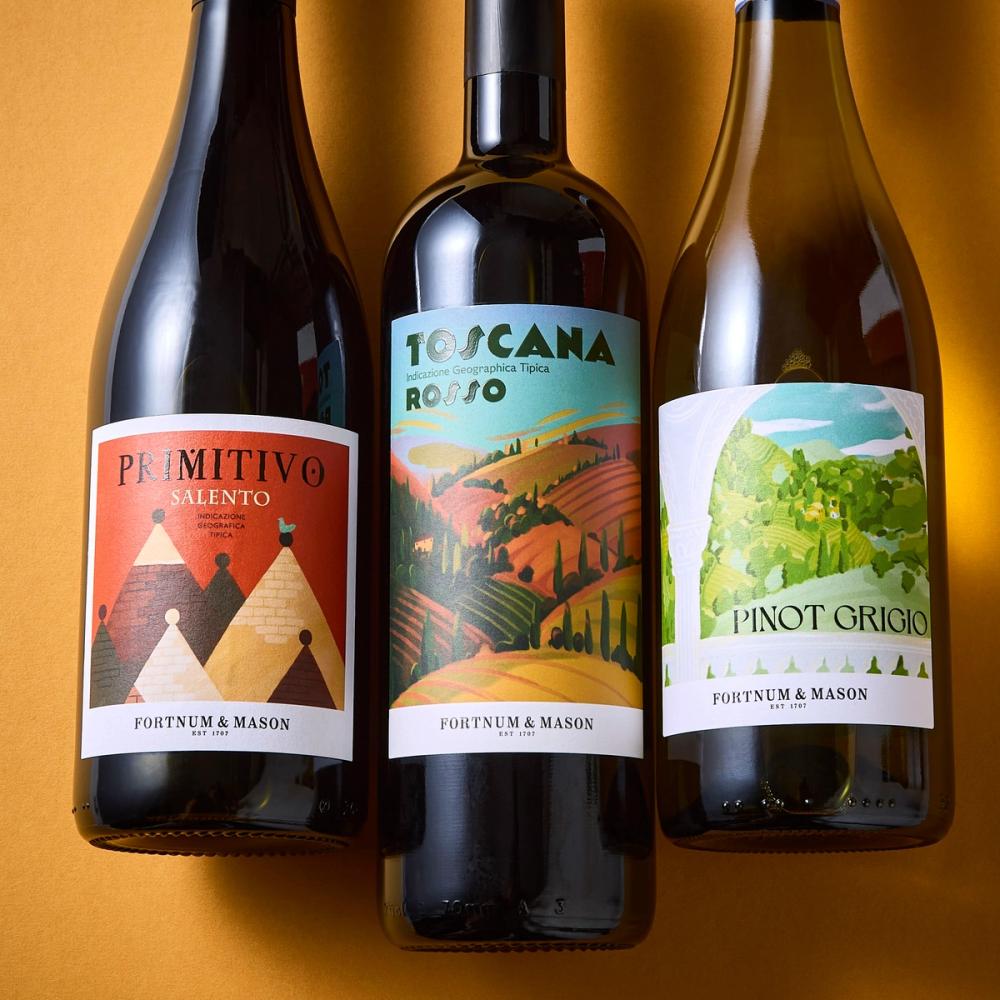
New colourful designs have been created for the own label range by Amphora Design
Customers are becoming more curious about wines outside the traditional regions, claims Watson, with the likes of Patagonia, for example, joining the range through Otronia’s Pinot Noir, while she has introduced some Greek wines that are selling well, in addition to Spanish bottles that are beyond the more conventional offering.
“We’re now moving beyond a selection once dominated by Rioja and Ribera del Duero to champion a broad spectrum of Spanish wines – wines with personality, irrespective of origin,” she says.
For example, the old-vine Garnacha from Bodegas Frontonio has subsequently become a customer favourite. Watson says that with the new range, it is not about abandoning all that is familiar, rather that they are using familiar categories as a starting point for discovery.
A bottle, she says, does not have to come from one of the most famous appellations in the world if it has a compelling story, strong provenance and, crucially, delivers in the glass.
“We’ve tried to make sure that we’ve got a good spread of varieties and styles of wine, adding 10 new wines to the range in total. That was the area we probably focused on the most in terms of improving the quality and elevating what we were doing,” she explains.
One of the wines in the Piccadilly range of which Watson is most proud is a Tuscan red made by the producer Cortonesi.
“Essentially it’s like a declassified Brunello from a family estate in Montalcino,” explains Watson. “In terms of value for money it’s unbelievably good, at £14.95. To me that’s probably the best secret within the range – a real hidden gem.”
Another wine in the range she’s keen to highlight is a Monastrell from Valencia-based young winemaker Rafael Cambra, who has been working on a low intervention basis.
“Previously we hadn’t really branched out and explored what else was going on in Spain and what was representative of great wine in Spain. This is a really interesting wine, with a crunchy and fresh flavour profile as opposed to those heavier, richer aged Spanish wines that are more traditional. It probably represents the more contemporary Spanish wine.
While it’s still very early days, Watson says early indications are that the £16.95 white Burgundy formerly a generic Bourgogne Blanc and now rebranded as a White Burgundy, has been a top seller. Since the launch of the own label range five months ago, up until the end of August, volumes of the Burgundy were up by 372% versus the previous Bourgogne Blanc, while sales of English Coastal were up by 70% versus the previous single varietal Bacchus. Outside the own label range where changes have been made to the range, Italian wine sales have jumped by 40%, while South African wine sales are up by 19% and English wine, both sparkling and still, were up by 22%.
Referring to the surge in white Burgundy sales, Watson said: “I think that for an own label wine in retail, it’s been a really helpful signpost for customers. People primarily come here for tea and biscuits so they don’t necessarily have the wine knowledge that you might expect of a premium wine retailer,” she says.
Lighter, fresher and chilled
While selecting wines for the new own label portfolio, Watson was mindful of the clear shift in consumer trends towards lighter, fresher and lower alcohol wines, and this is reflected in the new selection.
“It’s certainly something I’ve tried to influence in the range across both own label and our proprietary range, to make sure we offer a range that’s representative of what contemporary wine is about. It’s not just about changing for the sake of following a trend. It’s about making sure we’ve got the best cross section of wine that I believe is representative of the trade today.”
Fortnum’s has also curated a dedicated chilled reds collection, taking advantage of growing awareness and interest in fruit -driven lighter red wines served cool.
The same is true of no and low alcohol. “More people are moderating their alcohol consumption, but they still want a drink that feels elevated, celebratory and adult,” she says.
That is particularly relevant to Fortnum’s because the category sits naturally alongside Champagne and gifting. It is not being positioned simply as an alcohol-free substitute; it is being sold as another sophisticated drink for a celebration.
Understanding its customers
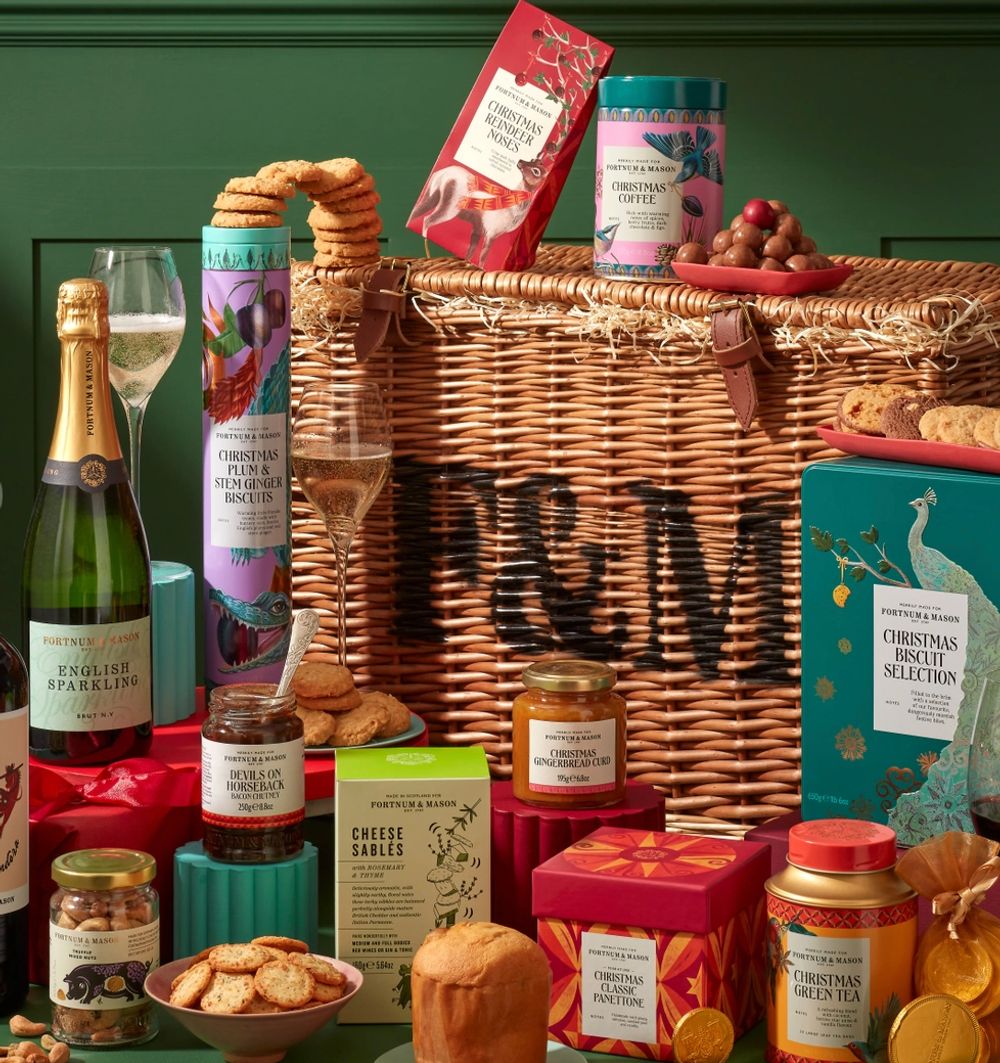
The world famous Fortnum & Mason hamper
“What’s been really great about the own label project has been trying to get into the minds ofour customers and make the wines as accessible for those who don’t know about wine as those who do – we are trying to appeal to more customers. Making wine more relevant to more people more often - that’s something our chief executive Tom Athron said and it really struck a chord with me before I joined the business two years ago.”
She adds: “With the Fortnum brand we’ve got such an amazing opportunity to captivate customers in that way and capture their imagination through labelling and design. We are famous for our design and colour, and my aim has always been to get people to think about the wine range in the same way they do about biscuits or coffee. A packet of Fortnum’s biscuits in someone’s house will likely elicit a response of ‘Ooh, Fortnum’s!’ and I want that same reaction to the wine.”
Making the labels more customer friendly has been one way to make the bottles more accessible. A major part of the design process, the labels were the initial part of the own label project with Fortnum’s working closely with an illustrator.
“The idea is not to tell people everything there is to know, but to make them curious to find out more – we don’t want to overwhelm them,” says Watson.
The back label copy is very short, but there’s more information online, she adds, with extensive tasting notes and information about the designs.
“We’ve also put in better signposting and point of sale material in store, and there is the opportunity in store for customers to sample the wines.”
While the classic categories are not going away - Fortnum’s current best sellers include the tried and trusted old favourites such as Blanc de Blancs Champagne, Louis Roederer Brut Réserve and Prosecco Valdobbiadene, with Champagne continuingto occupy a central position in its gifting proposition, but the more interesting part of the range is in those wines from outside these traditional regions that are now included in the portfolio.
Backing Britain
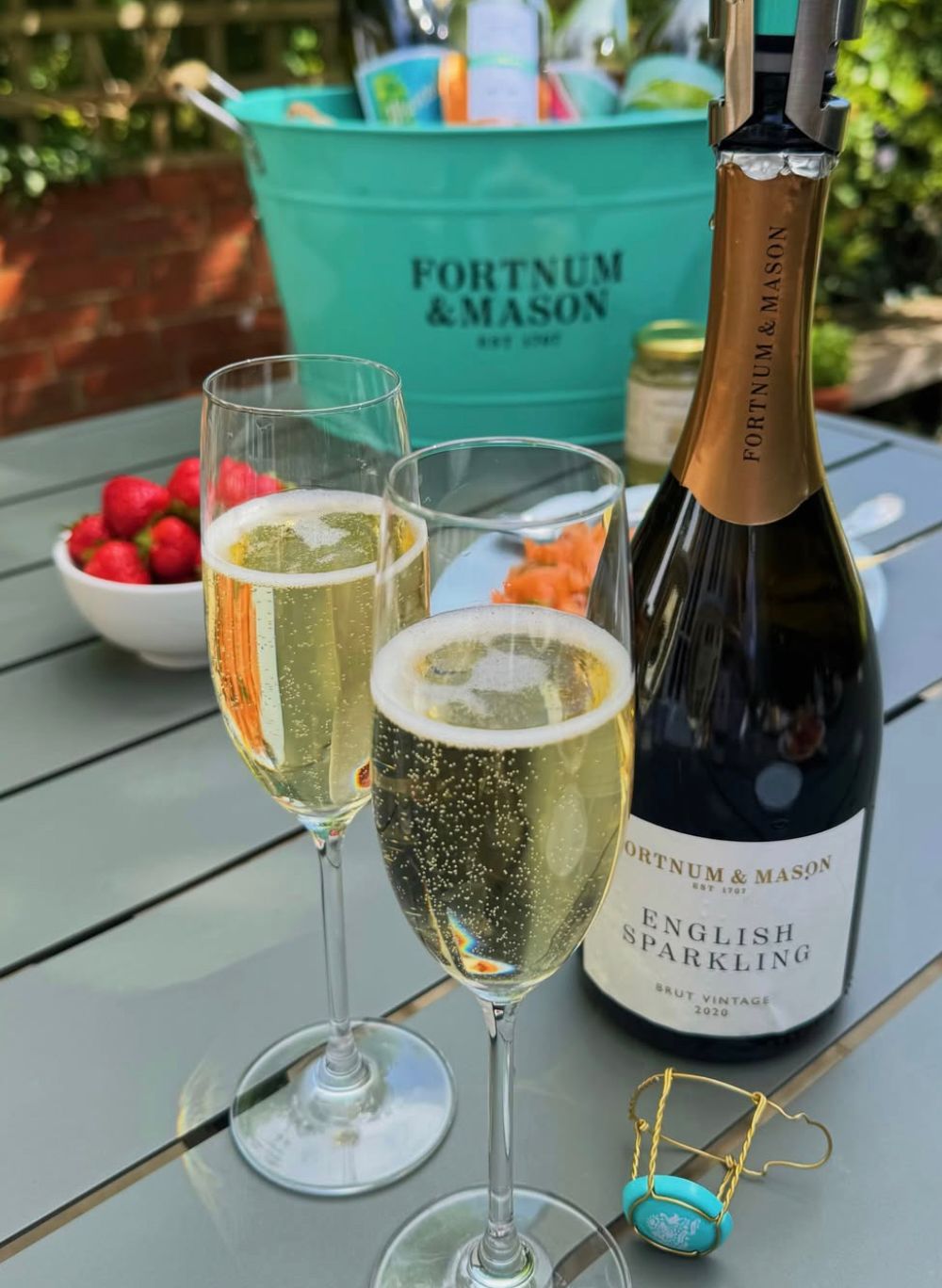
Fortnum & Mason now has around 50 English wines in its range
If there is one category that perhaps best demonstrates the evolution of the Fortnum’s wine offer, it is English wine. The retailer now has around 50 English wines across sparkling and still, including three own-label sparkling wines and two own-label still wines.
While Fortnum has long championed the domestic wine market, listing pioneering labels such as Breaky Bottom and Hambledon for years, the quality, points out Watson has improved in leaps and bounds. While once it was “pretty patchy”, now there is so much diversity, with quality “shooting up”.
She attributes that improvement in quality not simply to global warming and a more temperate climate conducive to grape production but tosignificant investment by the vineyards, better winemaking and a greater understanding of vineyard management and grape varieties.
“I think it's about the right grapes in the right places as well,” she stresses.
English sparkling has long been sold partly through its comparison with Champagne – but now Fortnum’s is selling English wine on its own terms. While the big hitters of the English wine world such as Nyetimber, Gusbourne and Chapel Down are included in the entire range, other notable English producers being listed include Langham Estate and Gutter & Stars.
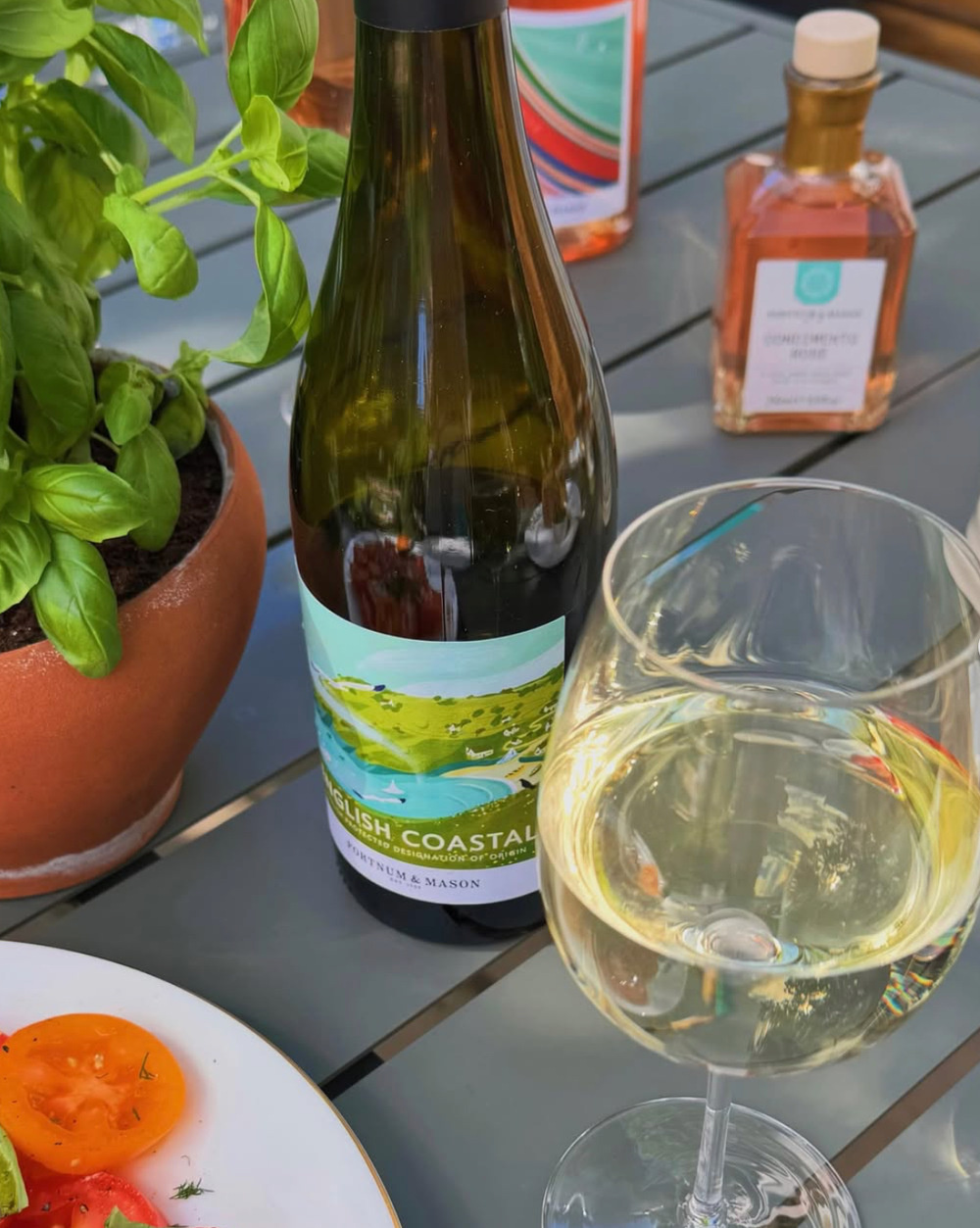
The new English Coastal wine from Camel Valley
Watson is keen to point out the success it has had in introducing an English still wine, English Coastal, retailing for £17.95 and made from Bacchus, Pinot Gris and Chardonnay by Camel Valley in Cornwall.
“It’s a completely new concept for own label wine, in that it’s not a varietal labelled wine, it’s place-led instead. While people often talk about English wine in terms of the South Downs and the South Coast and the similarity between France and the soils, they don’t necessarily talk about the fact that England is an island, and about the huge coastal influence that has,” she explains.
With sales up by 50% on the previous incumbent, a Bacchus, Watson and her team are clearly in tune with what their customers want.
Events and tastings
The retailer has also been developing its Wine Bar and Cellar Sessions, bringing in leading figures from the wine world such as Tom Gilbey, Jancis Robinson MW and Olly Smith, and using the events to tell the story behind its new collection.
In addition, the wine served in the store’s cafes and restaurants is also available to buy encouraging customers to be more adventurous in their choices, according to Watson.
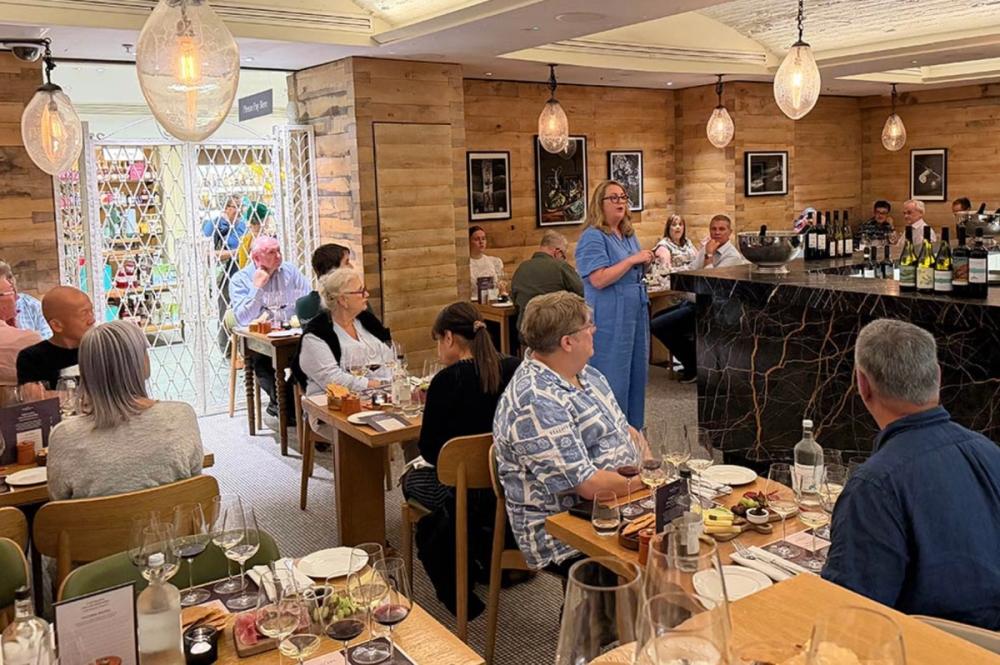
Edwina Watson presenting to customers at Fortnum & Mason
“Fortnum’s put on amazing events, and people love the experience of coming here as well as what they’re going to taste or discover. That in conjunction with amazing wine personalities is really appealing,” she says.
And with over 100 wines by the glass on offer in the basement wine bar, Watson says she is aiming for is “a more seamless experience between the retail side and the wine bar, providing a great opportunity for customers to try the wines before committing to buying a whole bottle”.
Customers are also able to buy any bottle in the store and then for a corkage fee enjoy it in the wine bar.
Pushing and probing

Fortnum & Mason used a customised Wine Float van to help promote its new wine range and send out wines to key inflencers and journalists
As to the future, Watson says the plan with the own label range is to not make too many changes in the near future, but will be working on a redesign for the sparkling and fortified wines.
In the second phase of the project, Watson says it will be starting to release some exclusive wines from small parcels, that will be available on a very limited basis.
“We are currently working with some really well established producers and looking at parcels you can’t get elsewhere,” continues Watson. “This would enable us to perhaps offer some wines that we wouldn’t necessarily want in the mainstream own label range, but think outside the box and try out some more quirky wines with very limited volumes that we will probably offer to our members first.”
Fortnum’s is able to take advantage of its membership club, Friends of Fortnum’s with members benefiting from various exclusive offers and events.
“It’s a really big opportunity as our members are actively engaged with the wine category and are more knowledgeable than average about wine,” she says.
Other possibilities including releasing older vintages from particular producers, or a magnum under the producers’ label.
“However, we will add something to the bottle that designates that it’s exclusively for Fortnum’s, giving us a bit more flexibility to be able to keep the range fresh without having do a complete revamp every time.”
As it is she can look back with some pride on the “revamp” that has already taken place to take its wine offer to another level.
* You can find our more about Fortnum & Mason here.