
The annual Wines of Greece tasting has become one of the more welcome fixtures in London’s tasting calendar. Quality producers from across the Greek mainland and islands? Tick. Familiar importers with a great range of wines (step forward HN Wines, which started the Greek wine ball rolling here around 20 years ago thanks to buyer Steve Daniel; but also Boutinot, Southern Wine Roads, WoodWinters and Keeling Andrew, to name just a few)? Tick. Informative and enjoyable masterclasses? Tick again, and all held in one of London’s best tasting venues, the light and airy St John’s Church, opposite Waterloo Station.

Greek Wine Tasting, London, April 28, 2026
However, as I re-discover every year, the event demonstrates how many good producers there are out there, producing exciting, delicious and well-made wines… who have yet to find an UK importer despite the ongoing enthusiasm for Greek wine. There’s something slightly heart-breaking about approaching a table, seeing the producer’s face light up and then fall as they read my badge and realise I’m not from a leading importer or supermarket group or restaurant. Just another hack.
So, what do importers look for in a producer?
I spoke to Georgi Panayotov of The Jolly Merchants, a CEE/Balkan specialist who has widened its definition of the region to include Greece, a country they reckon to be one of the most exciting in the wine world right now.
“We look for producers working with indigenous grape varieties, making wines with a clear sense of identity rather than just following trends. We value long term partnerships, transparency, consistency, and a shared commitment to quality over volume,” he says, adding that it's the producer’s vision and the quality of its wines which finally helps greenlight them.
“I'm always interested in exploring new producers, particularly those with a clear identity and a commitment to indigenous varieties,” says Lenka Sedlackova of Bancroft Wines which, like other UK importers, has been steadily building up its Greek portfolio.
“I look for wines that offer something distinctive, an underrepresented region, a lesser-known grape variety or a unique interpretation of a familiar style. Authenticity and a strong sense of place are important. Organic or sustainable viticulture is increasingly relevant and is certainly an advantage, although it is not the sole criterion,” she maintains.
So with the dog days of summer, I thought I’d hopefully improve somebody’s day by highlighting six Greek producers not currently imported. To me at least, these wines seemed as good as, if sometimes actually better, than some of those producers who have a UK agent.
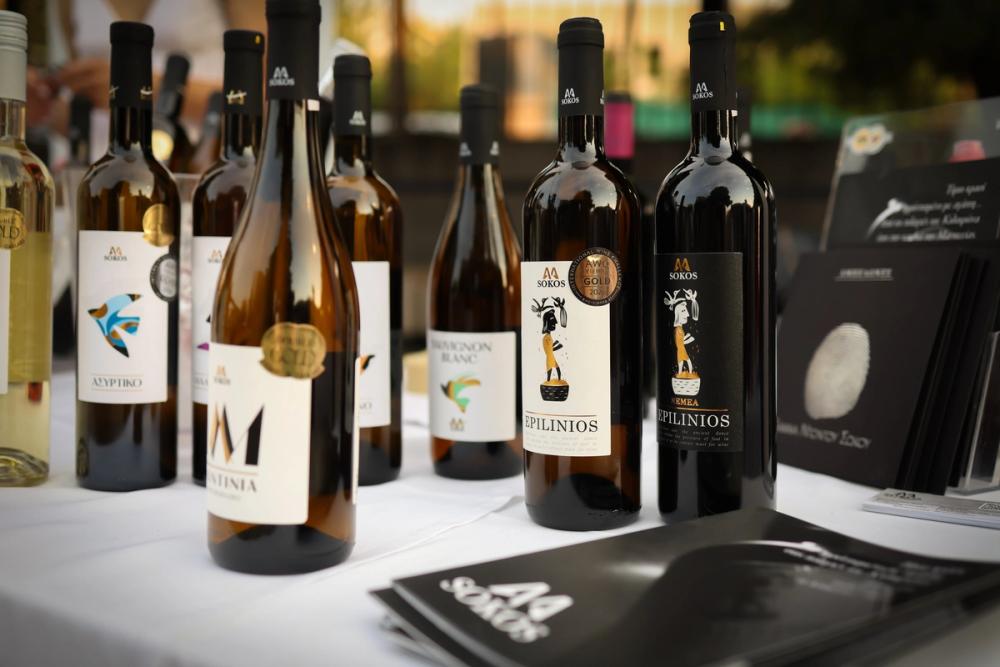
Established back in 1959 in mountainous Kithairona in central Greece – an area mythology associates with Dionysus, the Greek god of wine - but has grown in recent years, relocating first to Attica and then three years opening a state of the art winery in Mantinia in the Peloponnese. The main focus is indigenous single varietal wines and those I tasted – Mantinia 2025 made from 100% Moschofilero and Malagousia 2025, from PGI’s Kithairona’s Slopes, around 450m altitude - were spot on, highly expressive and well-made takes on two of Greece’s leading white varieties, around 12% alcohol a piece.
The Moschofilero is generous, quite full bodied, showing peach and lychee flavours on a full palate, whilst the Malagousia shows real character, slightly spicy and very expressive. Both wines are festooned with what I reckon are well deserved Gold and Silver medals – the Mantinia won a Double Gold from Gilbert and Gaillard last year – which makes you wonder again about the lack of a UK importer.
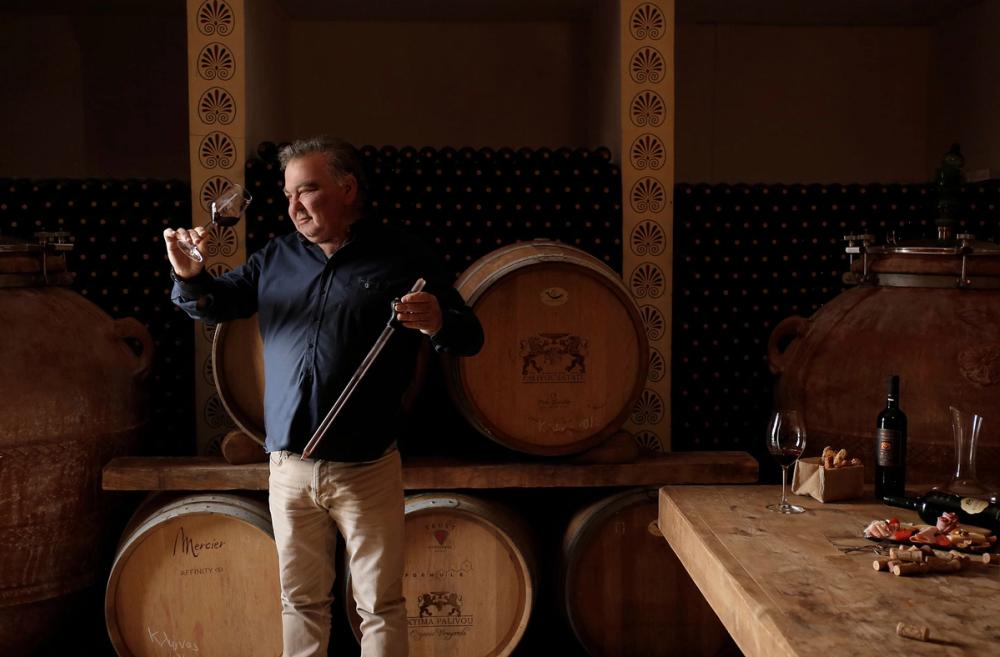
“Big wines in hefty bottles” is one way to describe the wines I tried from this organic Nemean producer which, since its foundation 30 years ago, has embraced sustainable and biodynamlc faming on its 50 hectares, in its words “producing wines that reflect the diverse terroirs of the region.”
The estate’s Vanikotis Christos is particularly keen to show me the Palivou Diaselo Kydonitsa 2025, a full-on interpretation of the variety he describes as similar to Malagousia and is currently all the rage in southern Greece in particular, which is where it originated and is undergoing a revival. This is a really nice wine, quite gastronomic but good as an aperitif too, showing peach, lychee and white flowers on the long palate. The estate’s Amnos Terra Leone 2023 is, at 15% abv, about as full-on as the grape variety – Agiorgitiko – allows, generous and rounded on the palate with great length.
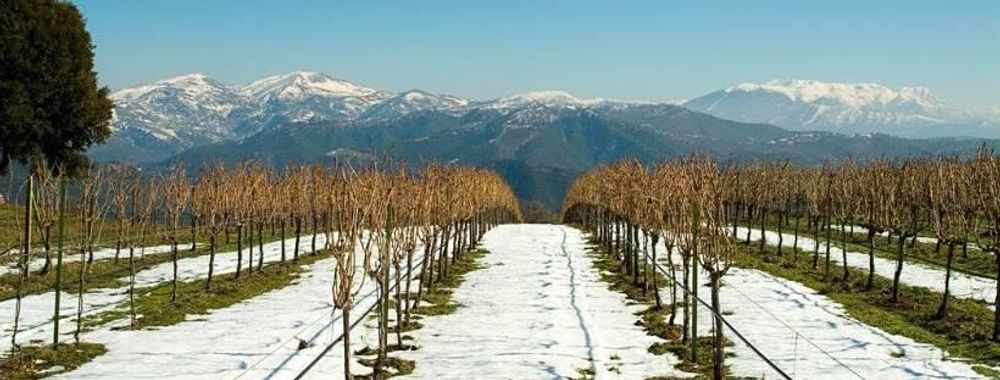
This Achaia-based winery near Patras is reputedly the oldest in Greece. Founded in 1861 and part of the group known as House of Clauss – which also comprises Achaia Claus and Castro Klaus – its big claim to fame is red Mavrodaphne. However, I was taken by its focus on two rare varieties I’d never heard of, Pavlos (Paul) a variety originally from Zante and shown here in a 2025 single varietal wine (very floral, quite textured and full bodied) and Skiadopoulo, a 2025 vintage very distinct from the Pavlos although originating from the same island, with more phenolics and acidity. A more mainstream but perfectly decent white is the Voreines Plagies 2025, a white blend of Roditis and Sauvignon Blanc.

This eclectic estate in the mountainous Drama region in north eastern Greece, produces around 500,00 bottles and includes the Plano range, which focuses on vertical expressions of varieties such as Assyrtiko, Malagousia and Xinomavro, but also unexpected ones including Touriga Nacional and Nebbiolo.
My focus was on the Limniona Anafora 2021 and the delicious Idisma Drios Assyrtiko 2024, both of which won gold medals at Mundus Vini last year. The Limniona – a rediscovered mountain variety that is becoming very trendy amongst the Greek wine cognoscenti – is delicious, fruit driven but restrained, almost broody in its appeal, with red cherries and berries pushing forward in an expressive wine that can benefit from a little chilling.
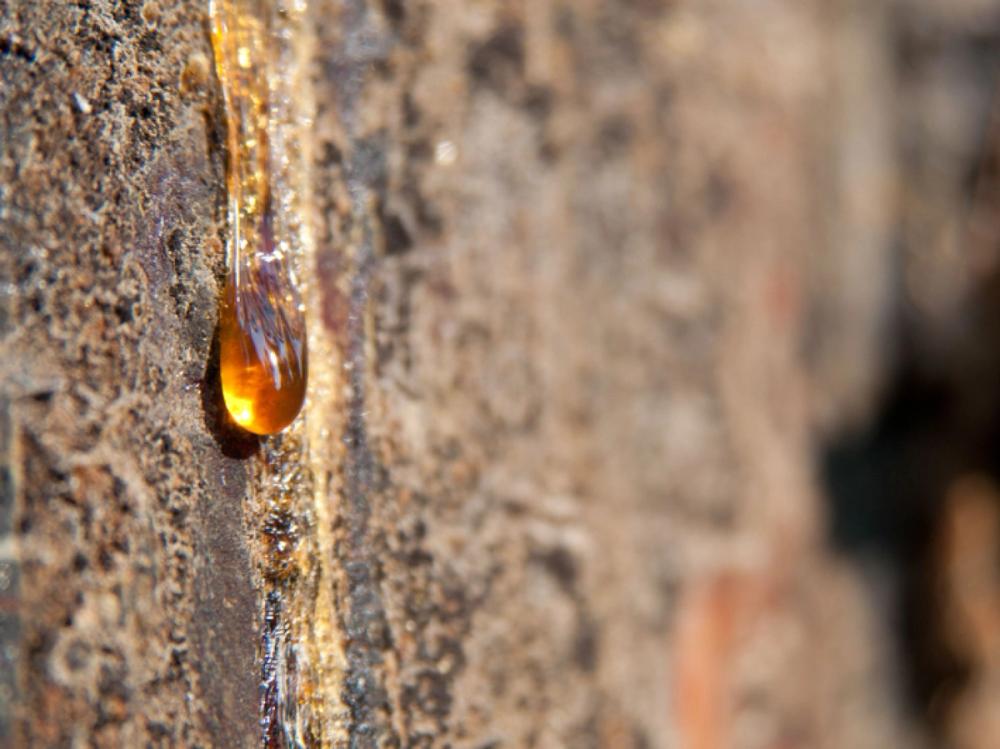
Think you know Retsina? You can’t really say that until you try wines from this producer, based in Kalochori on the Thessaloniki plain near Axios Delta - flat alluvial land with microclimate distinct from the typical sun scorched hillsides. I wasn’t the only visitor to be amazed by Retsina wines made with varieties such as Xinomavro and Assyrtiko alongside the more usual Roditis (which with Savatiano is the usual variety used). These are modern, very approachable retsina, the focus of this producer since its foundation back in 1911.
I started this piece by saying I was amazed that none of these producers had UK importers but, as it happened, I didn’t have long to wait. A few weeks after the event Georgi Panayotov of The Jolly Merchants contacted me to say they had signed up Kechris and another producer, Kontoziz Organic Winery from Kanalia, Karditsa, at the foothills of the Agrafa mountains to build up its Greek range further.
Panyatov told me they cannot wait to bring the two producers to market this September.
“Kechris Winery’s goal is to elevate the often-dismissed understanding of Retsina as a simple wine. Their flagship Kechribari (amber) was the first Retsina to win a gold medal at an international fair and their Tear of the Pine Retsina, made from Assyrtiko with a minimal touch of resin, is considered the best Retsina in the world,” he says.
All these wines are interesting I must say, and none more so than Roza, a retsina made entirely from Xinomavro – one of the more unusual wines I have tasted this year.
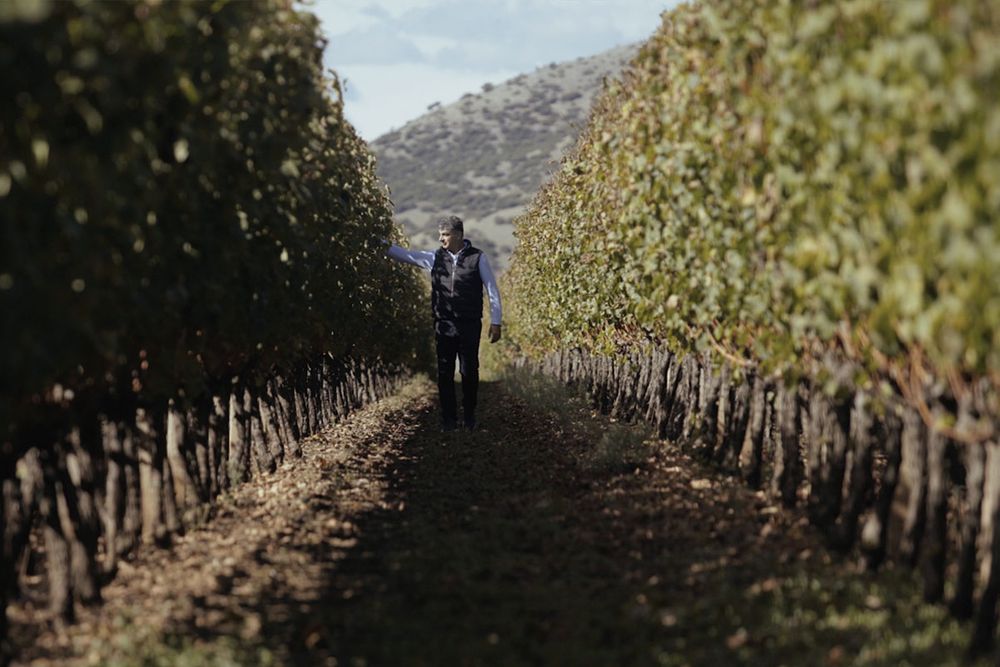
And last, but by no means least, a producer I came across at The Buyer’s own Greek tasting last November, focused on the Wines of Thessaly. Founded by an entrepreneur in 1999, Domaine Dimitris Migas is a 48-hectare estate located near Tyrnavos, Thessaly focused largely on international varieties but also Black Muscat of Tyrnavos, which it makes in a number of styles, and local variety Limniona.
The Limniona 2022 is a delicious, full-on wine, spicy and characterful with bitter cherry notes, basil and liquorice on a medium palate, supported by soft and silky tannins. The Limniona movement is a thing now in Greece, especially in Thessaly, its original home and, tasting this, you can see why. Although plantings remain relatively low, this level of interest coupled with the potential of the variety could see Limniona become the next big thing in Greek red varieties.
So five – well six – producers that deserve a place in the UK market, especially given the still growing interest in Greek wines.
For those who missed the annual tasting earlier this year, or who want to catch up with some of the above or indeed many others besides, Wines of Greece are doing a self-pour catch up tasting featuring 35 producers and over 100 wines on Monday 28th September, 11am – 5pm The Balcony Room, Swan London, 21 New Globe Walk, SE1 9DT