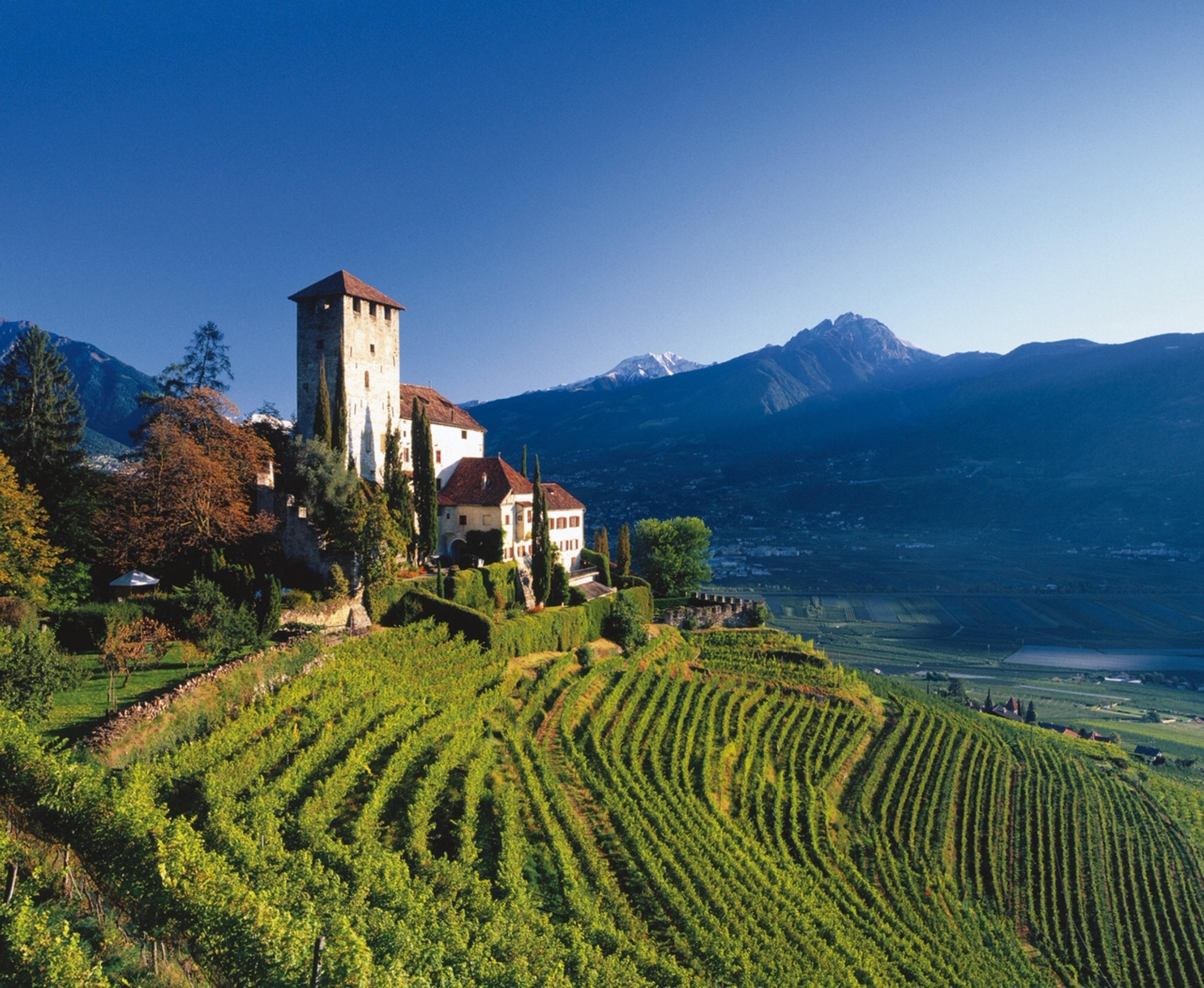

With an elevation range of 200-900 metres, Kellerei Kurtatsch’s vineyards have the most extensive altitudinal ranges in European viticulture. This influential Alto Adige cooperative can precisely match grape varieties to specific vineyard sites and has already been able to move grape varieties to higher or lower sites, to mitigate the effects of climate change.

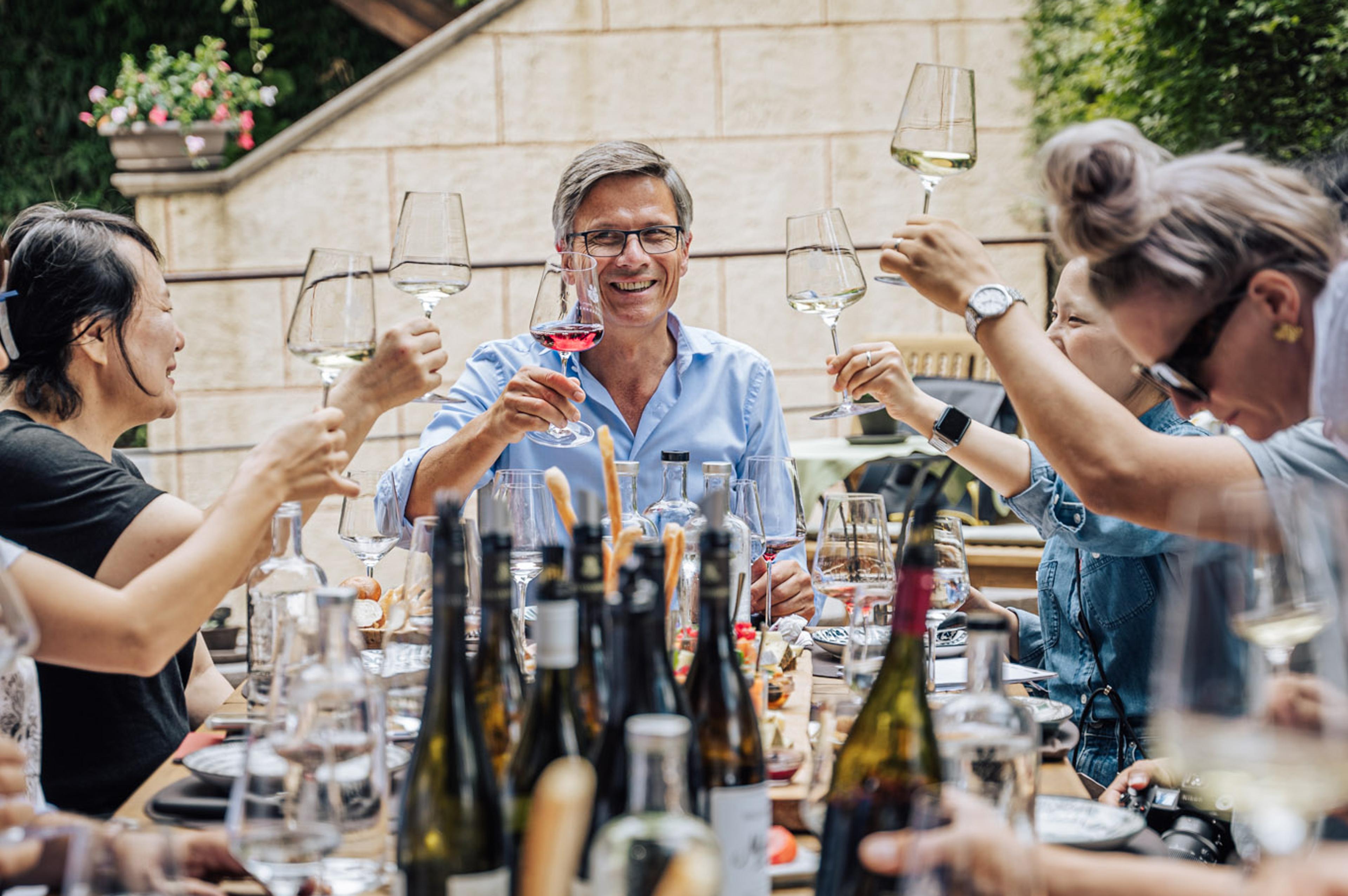
Sense of community – almost every inhabitant of the town of Kurtatsch is involved in the cooperative. photo ©Florian Andergassen
From this autumn, however, we will start to see the release of Kurtatsch’s new UGA wines – the fruits of the region’s new cru system which has identified 86 UGAs which have enabled winemakers to communicate their wines’ origin with even greater precision.
Each UGA is an officially recognised sub-zone of Alto Adige which aims to reinforce the link between origin and quality within Alto Adige DOC wines – the criteria that defines each one includes soil composition, altitude, sun exposure, rainfall and gradient of slope.
Take-up has been impressive since the new scheme was announced in 2024 with the 42 producers who cellared 2024 riservas now increased to 60 in number covering 52 of the 86 UGAs for the 2025 vintage.
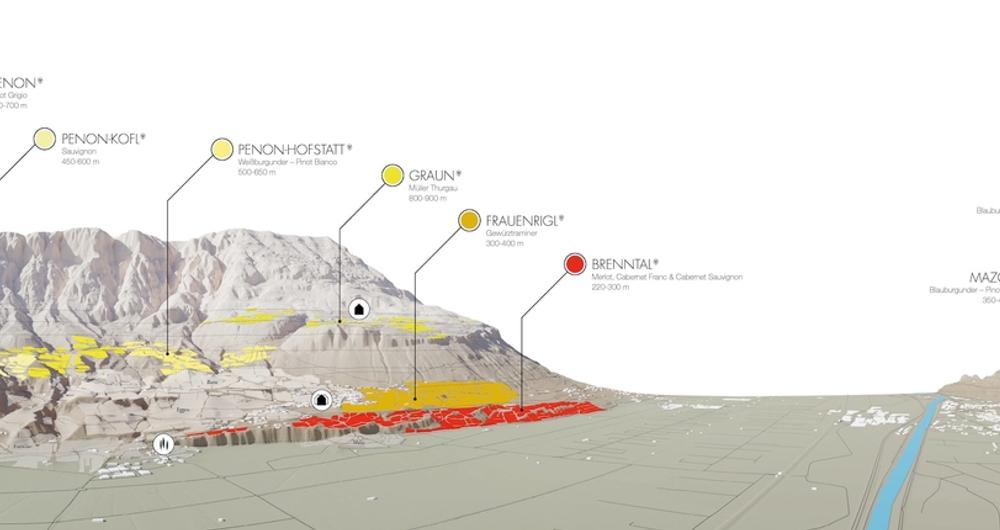
The new UGA wine sites for Kurtatsch
Kurtatsch has introduced the largest number of new UGA wines, nine in total, five of which are single varietals – meaning that from this September 10% of its 1.5m bottle annual output will be UGA wines. A cooperative founded in 1900, it represents 190 families with a total of 190 hectares under vine (with an average of one hectare of vines per family) with sites spread all across the valley like a patchwork quilt, as such a terroir philosophy has always been central to its modus operandi.
Winemaker Erwin Carli explains: “Our work always begins with observing the territory. Every grape variety performs at its best only when grown in the right place. Today, also in light of climate change, this means questioning certain choices made in the past and continuously striving to interpret as faithfully as possible what the territory itself expresses.”

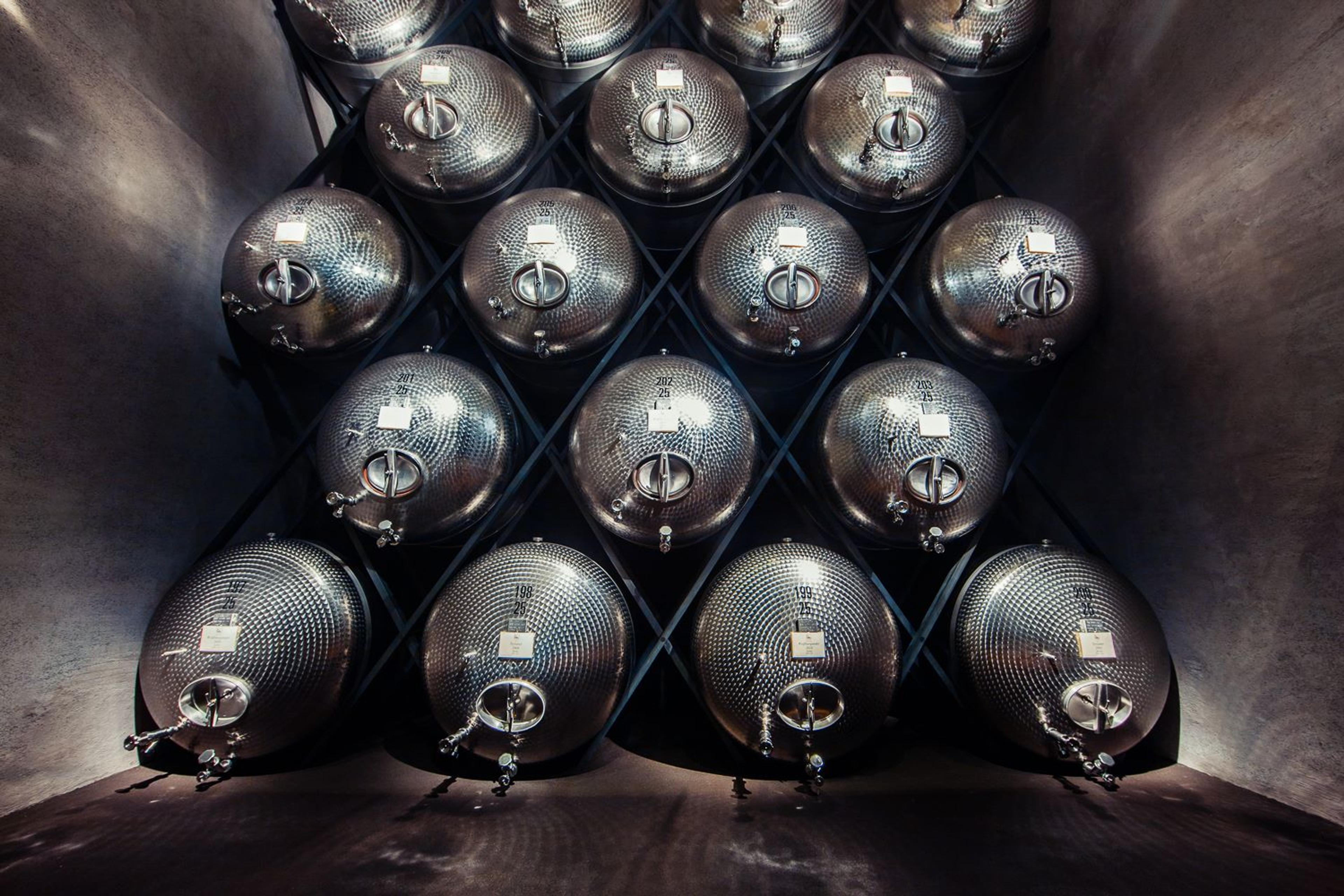
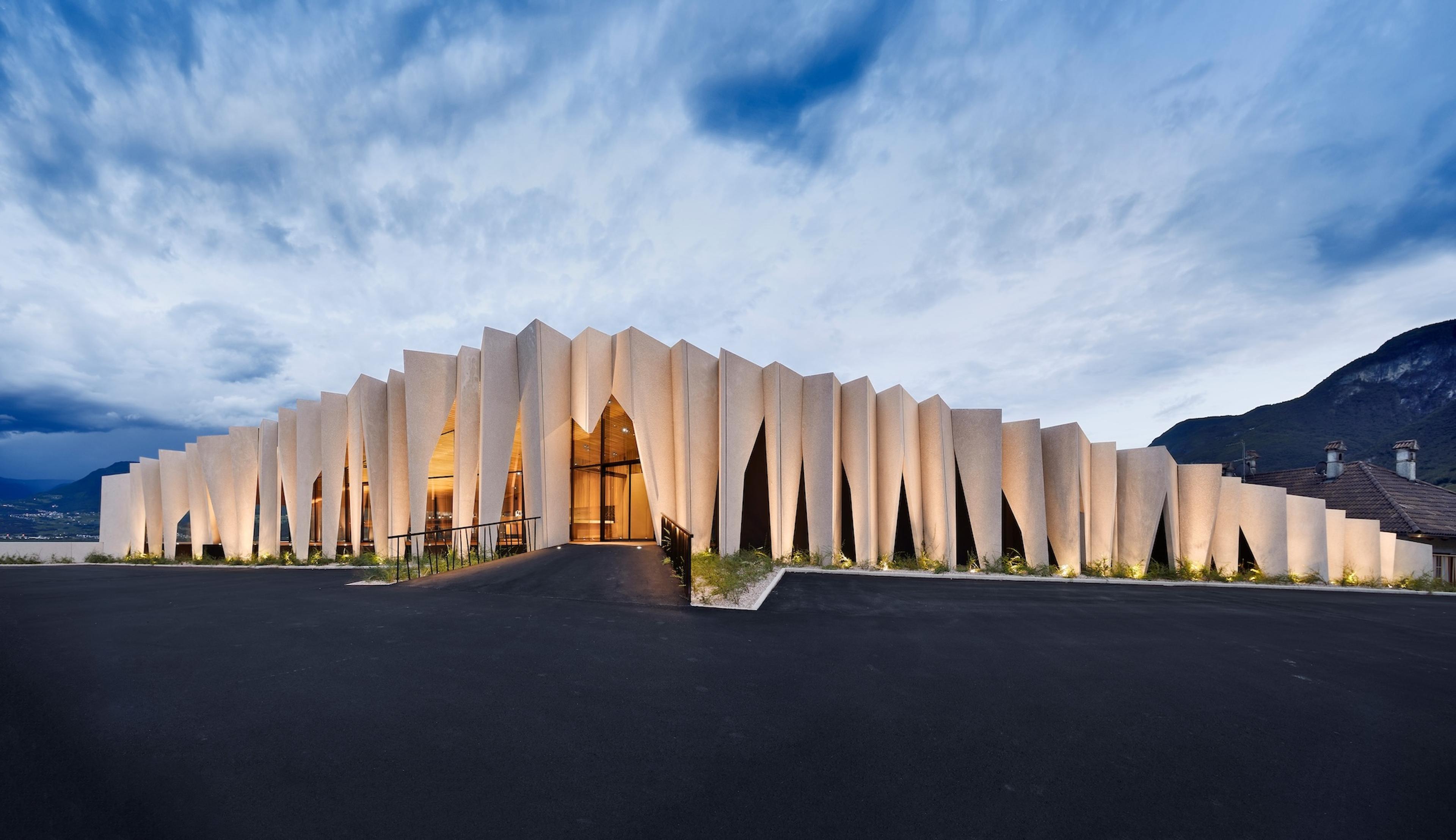
Kurtatsch's impressive architecture matches the rocks of the Dolomites photo ©Florian Andergassen
With the new UGA system in mind the winery has made the bold decision to phase out its Gewürztraminer from Brenntal UGA and introduce a new Frauenrigl UGA Gewürztraminer.
The Brenntal was historically one of the winery’s most representative wines and was born during a stylistic period in which intense, powerful and highly concentrated wines were sought after. Over time, however, climate change and rising temperatures, combined with the pursuit of a more precise match between grape variety and UGA, have led the winery to reconsider the relationship between grape variety and vineyard site. The Brenntal UGA, is a warm site that no longer represents the most suitable environment to express the style Kurtatsch seeks for this variety. Hence the decision to move to the Frauenrigll UGA, around 150 metres higher, where the soil and climatic conditions allow for a fresher, more balanced and more coherent profile. With the new wine available this month, the project has been gestating over the past decade.
The new UGA classification in action – Glen and Mazon
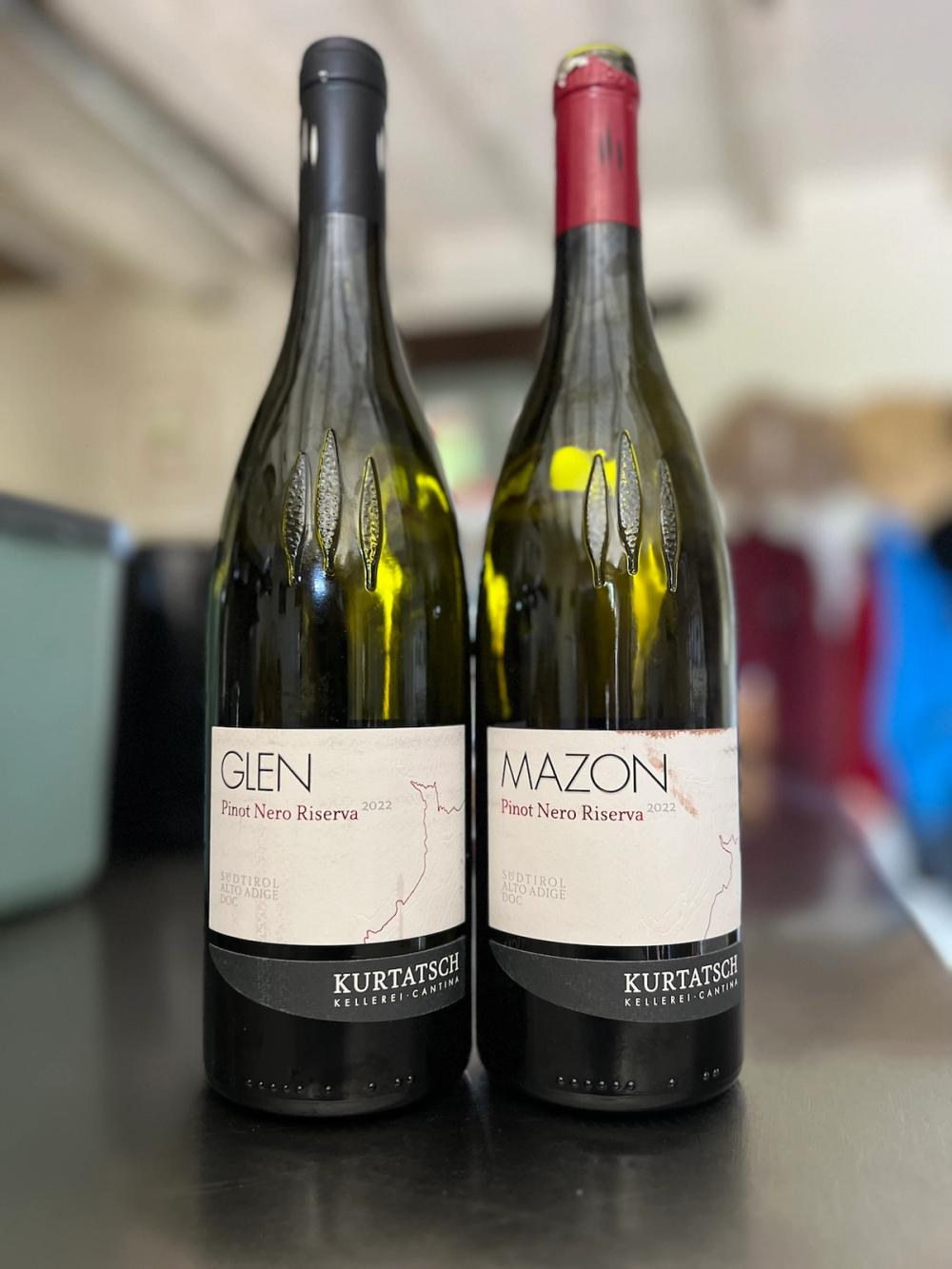
Glen and Mazon are two very different Pinot Noirs that reflect what Kurtatsch is doing with the new UGA classification. The wines are made in exactly the same way (except Glen has 5% more four-year-old barrels) so the differences you taste are entirely down to terroir.
The wines are made from a mixed set of French and German clones, 17 years old, both vineyards are harvested mid-September, then fermented in wooden vats with 20% whole-bunch and aged for 12 months in barrique.
Glen Pinot Nero Riserva 2022
Glen is the higher of the two vineyards (500-700m) with more sun-intensity on account of its South to West facing orientation.
It is a powerful, fruit-driven Pinot Noir that feels like it’s from nowhere else. Fresh, wild red fruit, mulberry, forest floor and just a hint of raspberry syrup. In the mouth the wine is smooth, fruit-driven, stylish with a decent acid-driven backbone and grainy tannins. Nice citrus grip on the long finish. About 15-17,000 bottles are made each year.
Mazon Pinot Nero Riserva 2022
Mazon is lower than Glen at 350-450m with North and North-West facing slopes hence less sun-intensity.
Aromas are more spicy and savoury than the Glen and, overall, a more reserved wine. The mouthfeel is soft, warm, welcoming, fruitier than the nose suggests. From a warm vintage it is apparently exhibiting more fruit than normal, according to the estate. It has a terrific acidity-driven backbone, overall feels more reserved, feels more tannic – very fine-boned – more textured – it has a fabulous length with a grippy, almost sour end note… this is pretty serious Pinot! Made in the same way as the Glen so the wine just shows the difference in terroir. About 4-7,000 bottles are made each year.
Tasting other new Cantina Kurtatsch Terroir cuvées
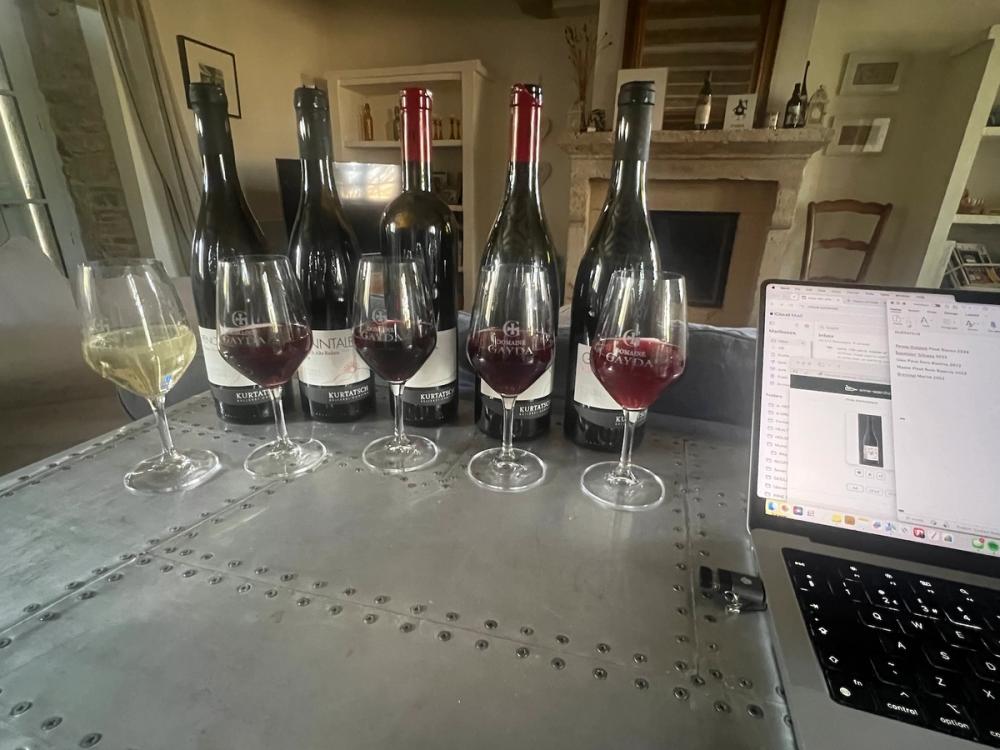
Penon-Hofstatt Pinot Bianco 2024
This is a ripe Pinot Bianco with nice intensity; the aromas are beautiful with alpine flowers, green apple, lemon verbena and white peach. In the mouth the wine is elegant with soft mouthfeel on entry then you start enjoying a citrus-charged wine with bags of flavour, and a profoundly mineral drive. Fresh, bright, a lot of extract, quite taut and precise. Super.
According to Harald Cronst, Kurtatsch’s export and B2B marketing director this wine shows best in cooler growing seasons of which 2024 was one – it is lower in alcohol and delivers more aromatically. Winemaking involves nine months on lees in Slavonian oak casks (not barriques).
Sonntaler Schiava 2025
Once accounting for 70% of plantings in Alto Adige and now just 8%, Schiava is a grape variety that is slowly making a comeback given its contemporary style – a glou glou red that is best served at 13°C and is great with pizza, pasta and cold cuts. “You count the bottles of Schiava not the glasses,” is how Cronst describes it. Winemaking style is to shy away from over-extraction with no pumping over and vinification for six months in concrete tank. The estate reports that 2025 was one of the best quality vintages ever.
This example is made from 60 to 90 year-old pergola trained vines. Very light in colour, the nose is distinctive with wild red fruit – cherries, plums – and a herbal note (almost garrigue). In the mouth the wine is highly quaffable, light and fun like a fruity Loire red or Beaujolais. Elegant, lean, fine-boned tannins. Delicious.
Brenntal Merlot 2022
After the tasting I left these wines out and this is the wine that the fruit flies went for! Not surprising given this is a ripe, concentrated Merlot with an almost Napa-esque nose and 14.5% alcohol to boot.
Brenntal is an historic flagship wine for Kurtatsch, a very warm site (220-300m) with strong sun intensity and a wide diurnal range. Bordeaux varietals were planted here 100 years ago and, as climate change has its effect on ripeness and alcohol levels so Kurtatsch has been planting higher up the slopes. 2022 was a very hot year so in the vineyard they leave outside leaves on and postpone pruning. Apparently the winery does blind tastings of Brenntal alongside top Bordeaux reds and this gives good account of itself.
Very ripe Merlot nose – blackberries, black cherries, mulberries – with hints of green tea, white pepper and pot pouri. In the mouth the wine is unctuous, full-flavoured with a dark fruit core, showing blackcurrant and fire hearth, with dense, fine-grain tannins; very long, spicy finish with a very dry, river stone texture. There’s a lovely register on the palate.
* Kellerei Kurtatsch wines are distributed in the UK through Alpine Wines.