
Arguably the most powerful aspect of the South African wine industry is how its producers and winemakers stand as one when it comes to presenting its wines to the world. Yes, individually they are as competitive as any other country to get their wines on the best and right wine lists in the world, but where they differ to any of their wine producing peers, is how ultimately brand South Africa is what comes first.
Clearly a lot of that united front stems from its troubled history, but it means its producers are uniquely placed to act with a unifying force that is hard for most other wine producing countries to comprehend - never mind compete with.
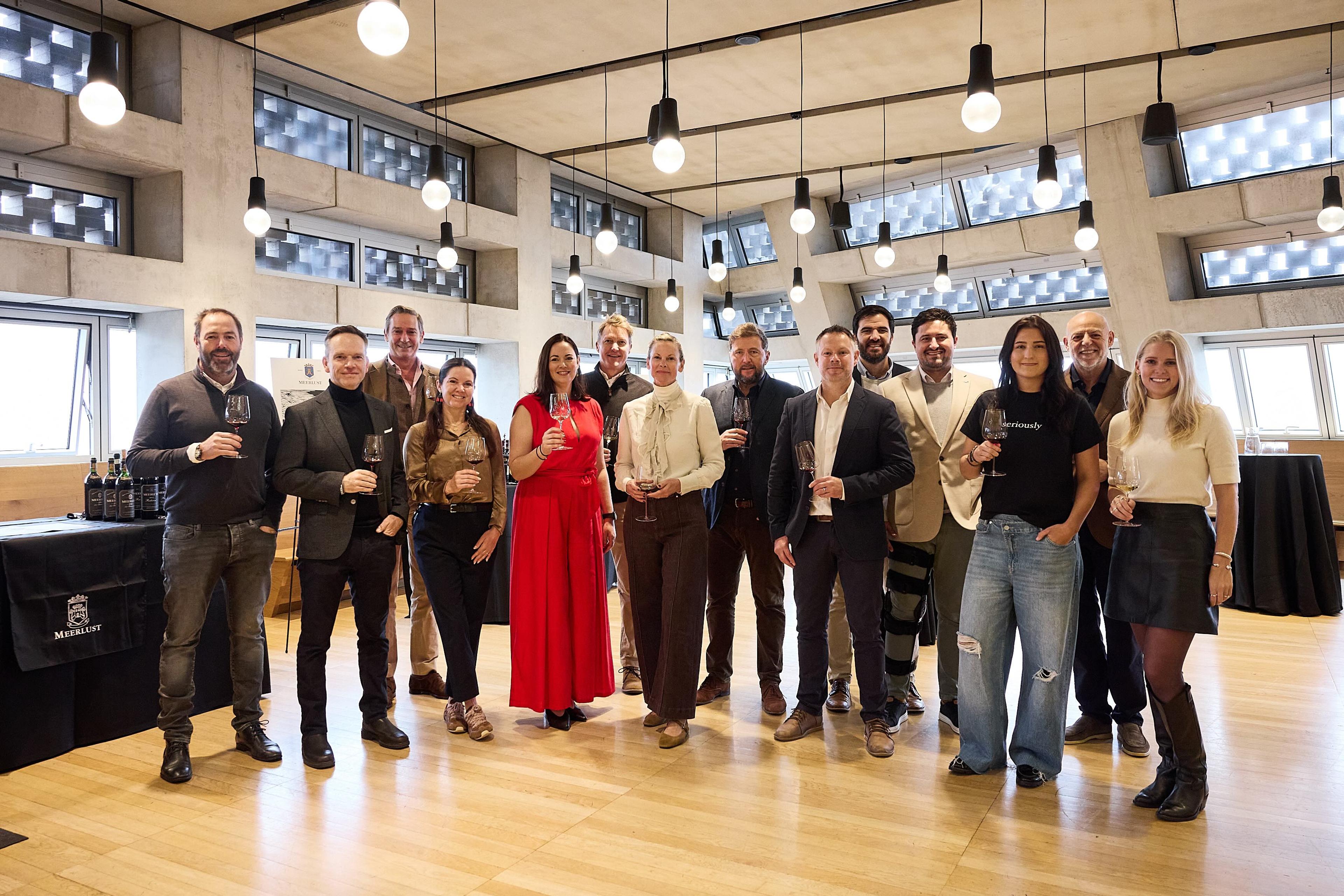
That united spirit was there to be seen at this month’s breakthrough ‘Eight Wineries, Eight Perspectives’ tasting that brought together eight like-minded producers that have pledged to work as one in order to celebrate, honour and promote all the wines of South Africa and what the country is now capable of producing.
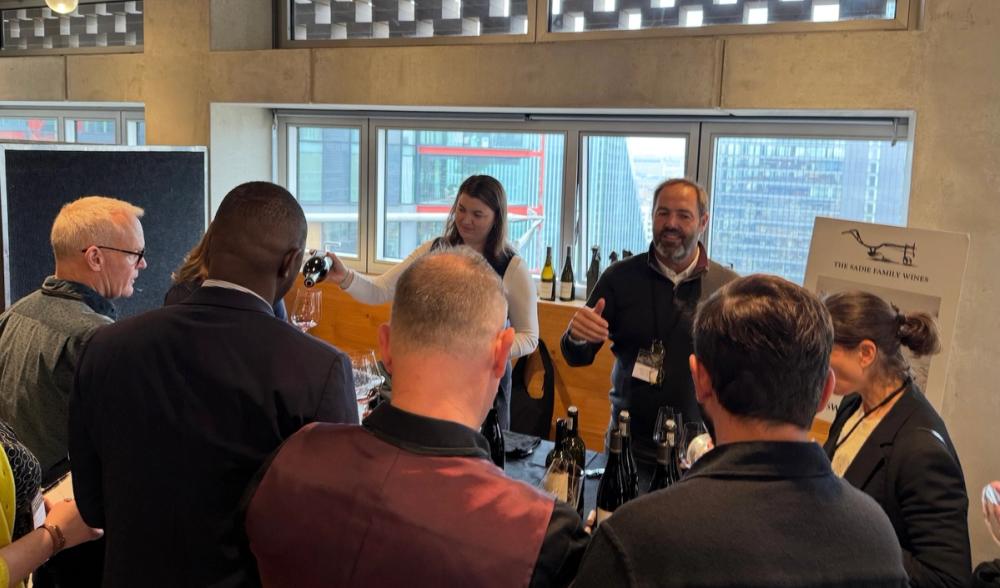
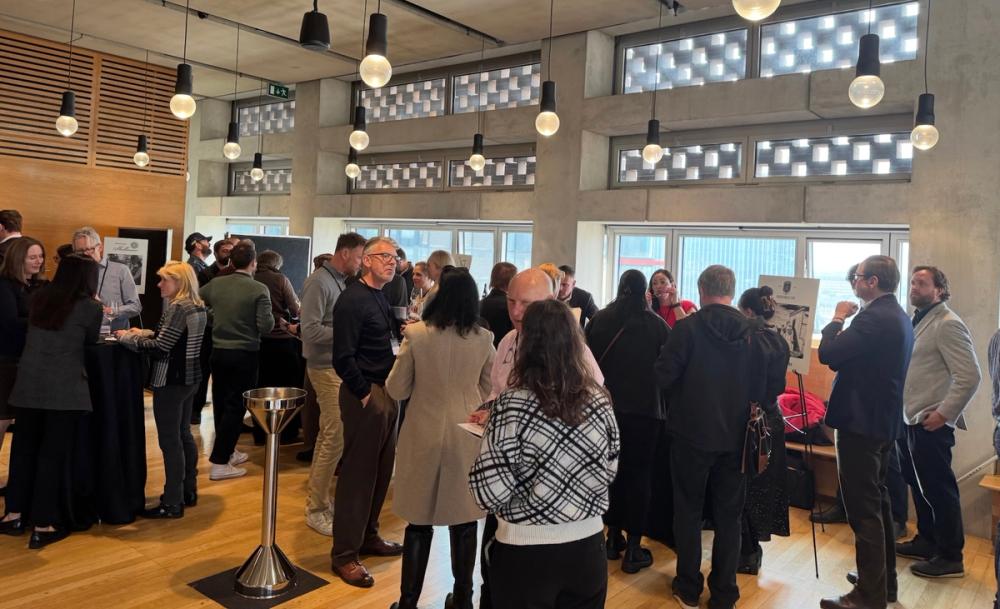
It was at times two or three deep at the tasting tables at the Eight Wineries Eight Perspectives tasting
As its founding principles state: “We represent a philosophy; not a region, not a variety, not a winery, nor an event…We stand together - not as competitors, but as collaborators - in pursuit of excellence, sustainability, gravitas and legacy.”
It adds: “We are independent but interdependent. Bound not by rules, but by respect, generosity of spirit, and shared purpose. We share knowledge freely, recognising that wisdom grows when it is given away.”
Ultimately they want to “develop a global South African narrative that transcends events”.
The eight producers
The eight wineries behind this breakthrough initiative include: Klein Constantia; Kanonkop; Mullineux; Vilafonté; The Sadie Family Wines; Meerlust; Hamilton Russell Vineyards; and Restless River.
Noticeably it was the founders and the family members who are the heart of each producer who were at the London tasting, ready to show their wines and share their vision for what South Africa can become, based on what it has already achieved.
It’s why they each had two ranges of wines to show. One from its most recent vintage release, and the other a back vintage that best reflects the history of the country’s wines and how they age and perform over the years.
As another of its founding principles states: “We uphold the traditions of fine winemaking, and embrace technical innovation where it deepens expression. We celebrate established classics in wine, both historical and modern.”
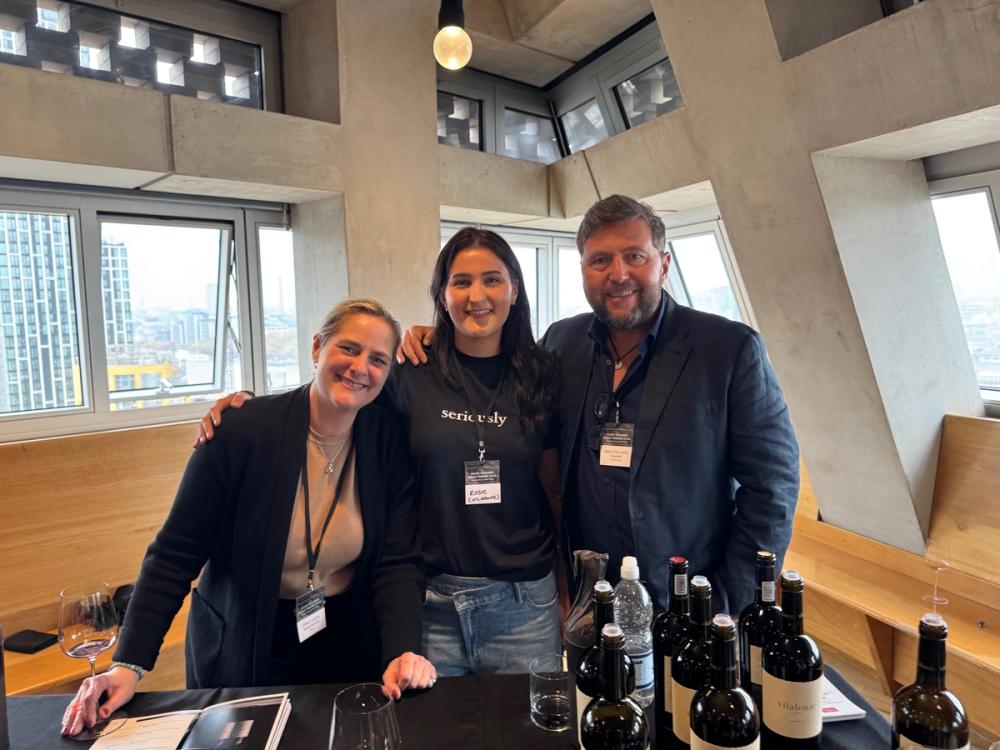
Mike Ratcliffe with his daughter, Rosie, and Pippa Carter, brand manager at Fells, Vilafonté's UK distributor
Mike Ratcliffe, owner and co-founder of Vilafonté, sums up what the initiative is all about: “We’re promoting the concept of high end South African wine. We’re proudly South African first, and everything else after that.”
Crucially, he stresses: “We don’t claim to be better than anyone else.”
Deidre Taylor, sales and marketing director of Meerlust, agrees: “We share the same ideology and vision of site specific wines.”
Which is why this collaborative tasting is deliberately not about marketing and selling more wines of the producers involved. There is no supporting website, or social media profile.
It’s also, says Ratcliffe, not trying to deflect or compete with any of the tasting and promotional activities of the main South African authorities and Wines of South Africa. In fact, Elona Hesseling, the new head of WOSA in the UK, was there to publicly support and congratulate the producers on what they are doing.
By coming together to hold a joint tasting they can also “draw a bigger and better crowd” than doing things separately, says Ratfcliffe.
“It’s a great showcase for South African fine wine with icons of each region,” says Taylor.
“We are able to speak the gospel of fine wine from South Africa more effectively,” adds Ratcliffe.
Organic collaboration
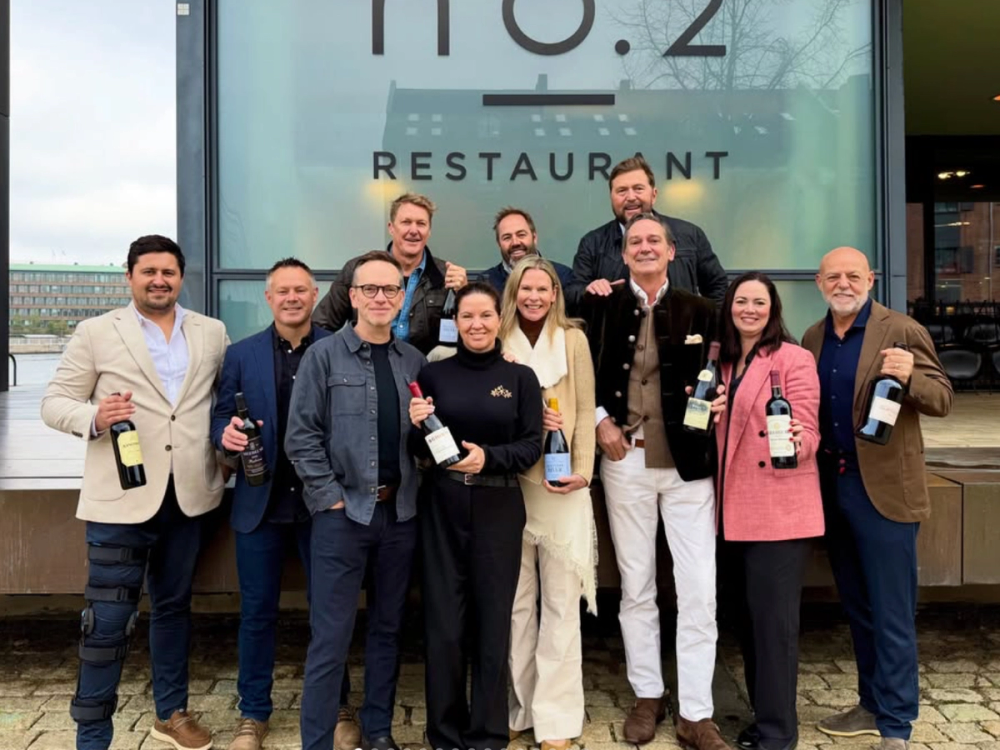
Following the London tasting the eight producers held a similar event in Copenhagen
It’s a “gospel” they have collectively been sharing for a long time for whilst the idea of hosting an event in London is new, they have collaboratively been working together on tastings held in South Africa going back some 13 years, including the last three Cape Wines.
It was decided the time was right to “take this on the road” and set up an initial tasting in London.
Ratcliffe says the group of eight producers has grown “organically” over the years, rather than it being some sort of exclusive club, with Restless River being the most recent producer to join.
“We are specifically not exclusive,” stresses Ratcliffe. “For example, if we decided to go to Japan next year and there was a slam dunk winery who operated with the same kind of morals, quality and integrity then we would just invite them. We’re not trying to be exclusive.”
What they all do, though, have in common is they are independent, family-owned wineries, producing fine and premium wine at scale who are all in charge of their own direction.
They can also between them show wines going back 50 years, with four of the wineries having wines covering more than five decades (Kanonkop, Klein Constantia, Hamilton Russell and Meerlust), three of the eight can show three decades (Mullineux, Sadie and Vilafonté) and Restless River can show two decades.
Producers that all “have a bit of skin in the game,” adds Ratcliffe, and can “simultaneously supply wines to Michelin star restaurants in Tokyo, Geneva, London, New York and Los Angeles and havea global footprint”.
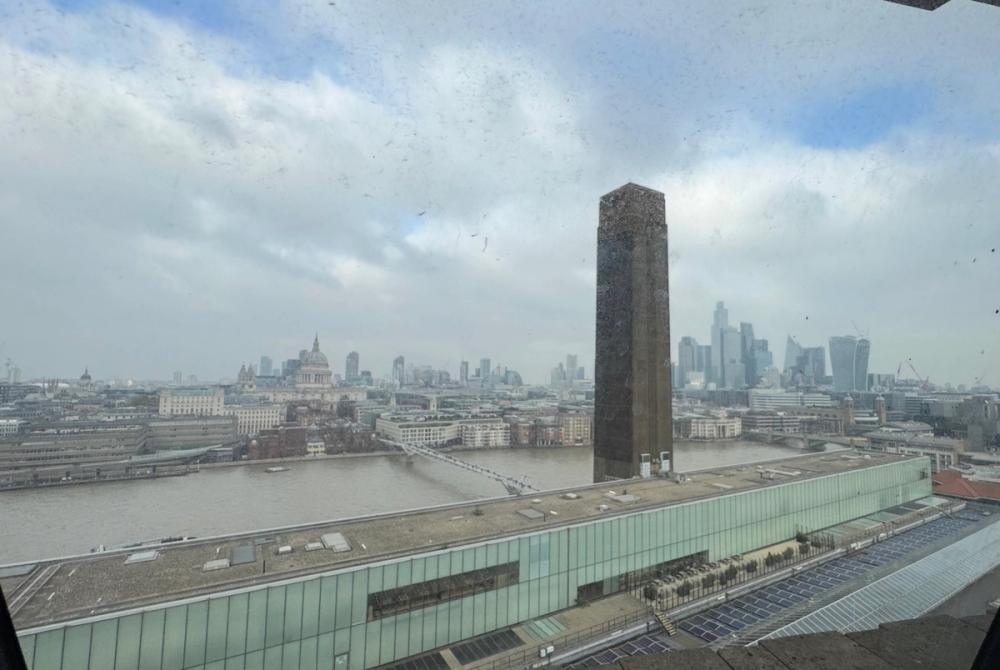
London's Tate Modern was the setting for the breakthrough Eight Perspectives tasting
It’s also a “happy coincidence” that between them they cover the majority of the premium wine producing regions of South Africa. It is not a pre-requisite, though, for being in the group. So Hamilton Russell and Restless River are in the Hemel-en-Aarde; Klein Constantia, south Stellenbosch; Kanonkop is north Stellenbosch; Sadie Family Vineyards is Swartland; Mullineux is Swartland and Franshoek; and Vilafonté is Paarl.
“We’re non-regional, non-varietal, absolutely focused on being united around the flag, proudly South African and proudly fine wine South Africa period,” he says.
The eight wineries have taken some inspiration from similar producer-driven groups around the world, noticeably the Primum Familiae Vini (PFV) and the conferences they hold to share ideas between them.
“We are going to do the same,” confirms Ratcliffe. “Between the groups there is a lot of skill and expertise.
Changing styles
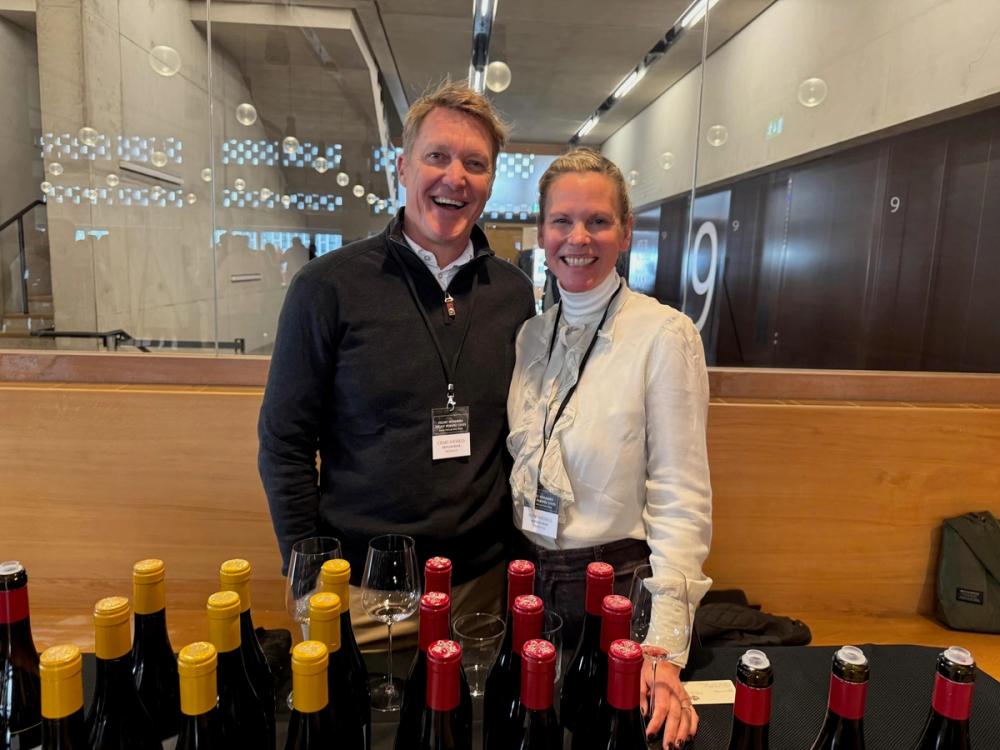
Craig and Anne Wessels of Restless River
Whilst South Africa’s fine wine credentials have come to the fore over the last 10 to 15 years, in particular, the tasting also showed the quality that has been made in the Cape going back over 50 years - with the oldest wine on show, from Meerlust, dating back to 1978.
The tasting was an opportunity to see how many of the fine wine styles in South Africa have changed over the years, particularly around the nuanced use of wood, and introduction of concrete, amphora and stainless steel versus the relentless use of wood.
Restless River, for example, the youngest producer in the group first started out in 2004 at the height of Robert Parker’s influence on world fine wines. Craig Wessels decision from the start to make lighter, fresher wines from its cool climate vineyard by picking earlier, not using malolactic fermentation, and ageing in larger barrels certainly turned a few heads and ruffled a few feathers.
“But we held our course and stuck to the programme,” says Wessels and has been rewarded by the big increase in demand for fresher, cool climate wines.
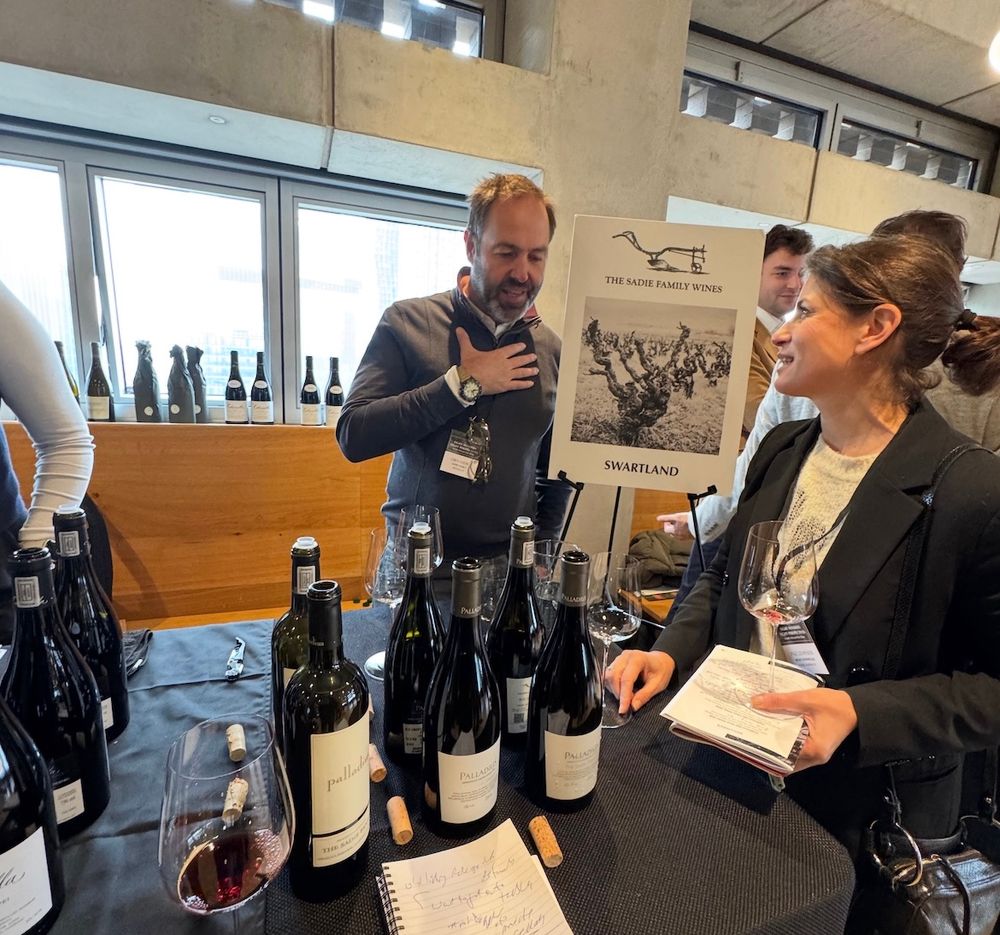
Eben Sadie talking to sommelier Paz Levinson
Eben Sadie’s multiple use of an increasingly broad spectrum of grape varieties in his wines shows how far the country has diversified and experimented with grapes to see what works best in which conditions.
That eclectic mix of varietals combined with the use of different fermenting and ageing formats, like concrete and foudres, to also counter climate change, have become a key factor in the rise in South Africa’s premium winemaking.
It’s what Sadie refers to as “appellation wine” that is influenced by so many factors and “dynamics” rather than trying to make a particular style of wine.
Then there is the influence of dry farming on the wines, says Klein Constantia’s chief executive, Pascal Askin, who says the importance of nature and climate on winemaking in South Africa grows with every vintage.
Dirk van Zyl, who this summer took over the responsibility of winemaking at Kanonkop, one of South Africa’s oldest and most respected producers, says he sees his primary challenge of “sticking to your guns” in terms of how Kanonkop’s wines are made, but “then experimenting on the edges” to see what is possible to improve the quality even more. Be it picking days or the types of barrels you are using.
“It is about achieving marginal gains around the core wine,” he says.
Old and new - a delicate balance
There is clearly now a need for producers to get the balance right between the amount of wine they are producing to go straight into the market now and how much they are holding back for library releases and for tasting way into the future.
Eben Sadie says he used to only keep back 5% of his wines, but that is now closer to 10-12% and he would like to get to the position of holding back 18% of its wines.
Noticeably, he says, any library stock he introduces into the market he reserves for restaurants and does not make them available for private collectors.
“I want them to be out on a table,” he says.
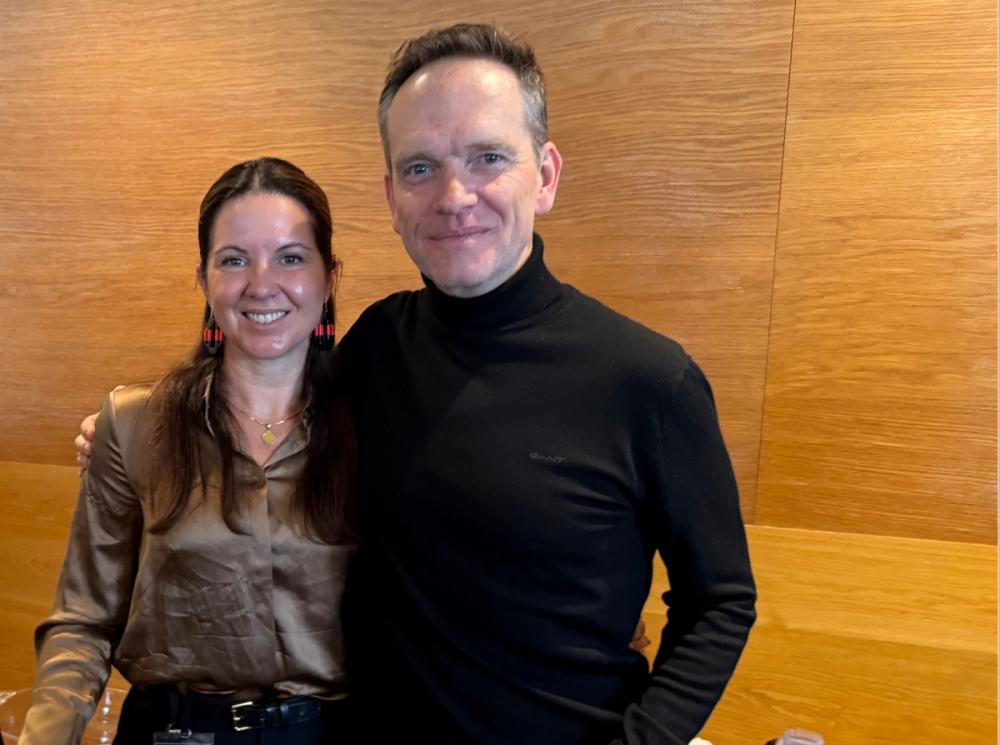
Chris and Andrea Mullineux
Chris Mullineux, co-founder and winemaker at Mullineux & Lee Family Wines, says it has looked, since 2016, to hold back a pallet of wines for each of its wines that it can the release into the market after 10 years.
“If South Africa is to be known as a fine wine country we need to keep some wines back,” he adds.
But, equally, it is hard to do and how much wine you can hold back will be determined by the economics of the estate and how much you can afford to tie up in cash flow and what sort of storage capacity you have, he adds.
Ratcliffe says Vilafonté keeps back 15% and has good stock levels going back to 2003. It is an area where local distributors, like its UK partner Fells, have an increasingly important role to play in keeping and managing some old stocks.
After the London event the producers all travelled to Copenhagen to put on the same tasting there and they hope to repeat the initiative with further international tastings in 2027 with Dubai and Hong Kong on the radar.
This first international tasting certainly felt like an historic event. And lived up to some of the eight wineries other founding principles:
“We strive to create a global benchmark. We are original and innovative. We seek to shift the paradigm, to develop a global South African narrative that transcends events.”
Wines tasted
The eight producers showed wines from two vintages - their latest release and one that represents an earlier vintage.
Restless River
Ava Marie 2016 100% Chardonnay
Ava Marie 2023 100% Chardonnay
Ava Marie 2024 100% Chardonnay
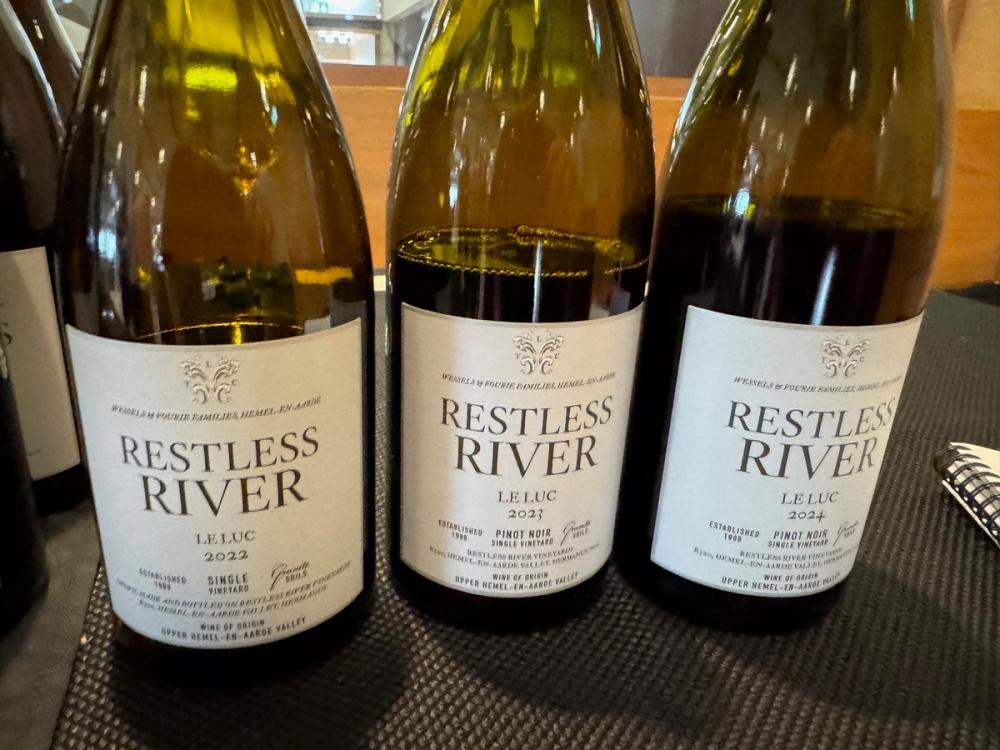
Le Luc 2022 100% Pinot Noir
Le Luc 2023 100% Pinot Noir
Le Luc 2024 100% Pinot Noir
Hamilton Russell
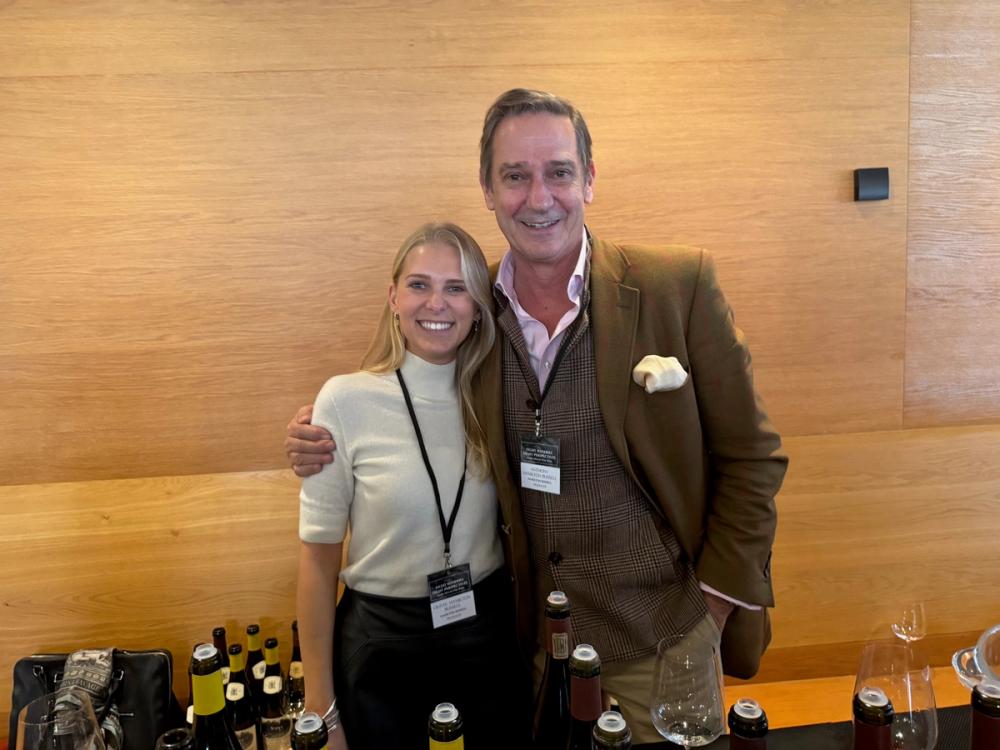
Anthony and Olivia Hamilton Russell of Hamilton Russell Vineyards
100% Chardonnay 2016.
100% Chardonnay 2018
100% Chardonnay 2025
100% Pinot Noir 1999
100% Pinot Noir 2008
100% Pinot Noir 2017
100% Pinot Noir 2025
Klein Constantia
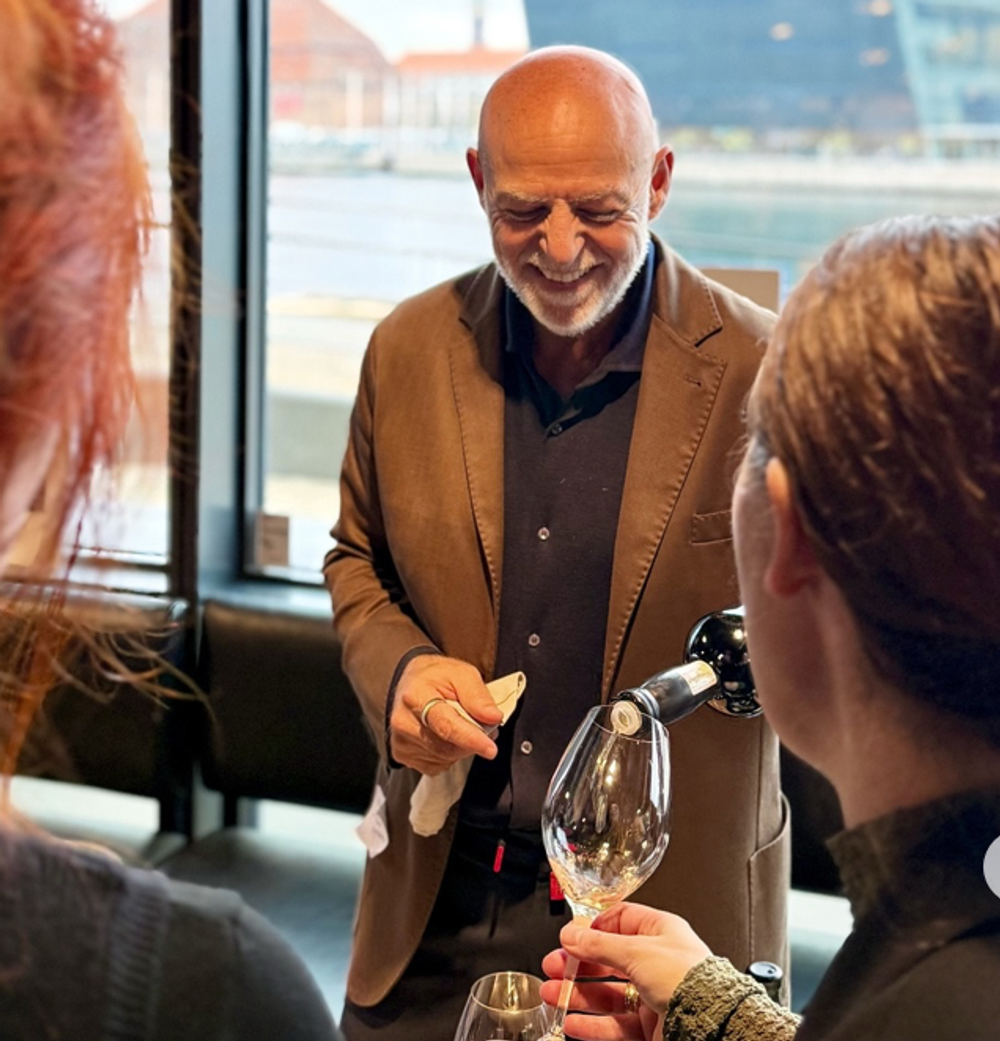
Klein Constantia's chief executive Pascal Asin
Clara 2021 100% Sauvignon Blanc
Clara 2025 100% Sauvignon Blanc
Vin de Constance 2014 100% Muscat de Frontignan
Vin de Constance 2017 100% Muscat de Frontignan
Vin de Constance 2021 100% Muscat de Frontignan
Vin de Constance 2023 100% Muscat de Frontignan
Mullineux
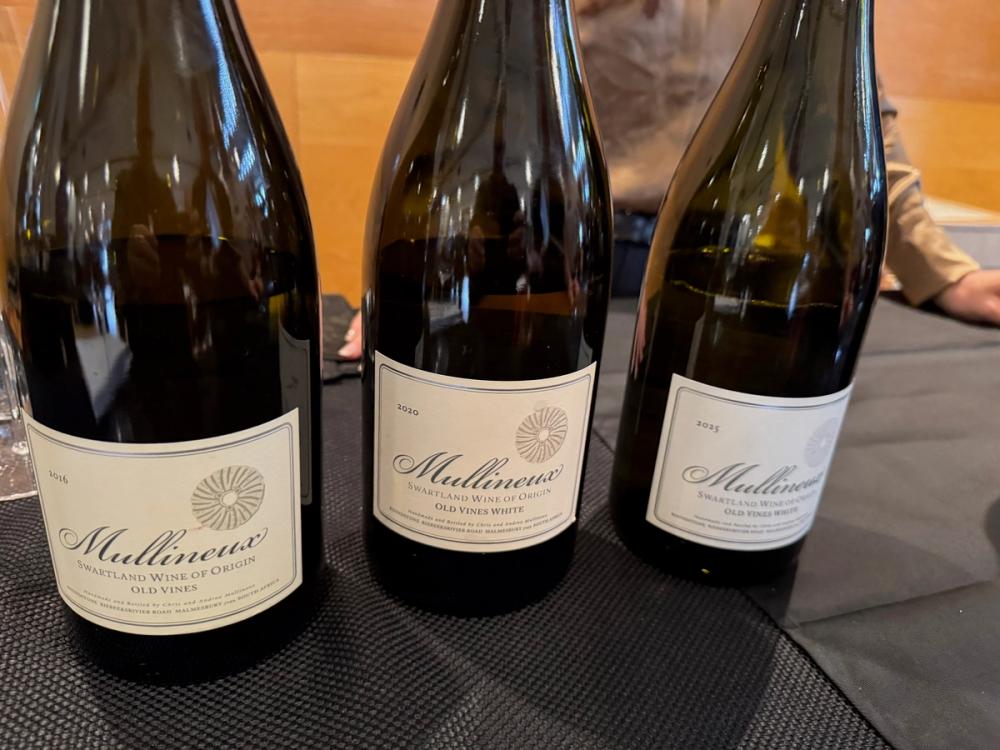
Mullineux Old Vines White 2016
62% Chenin Blanc, 15% Grenache Blanc, 11% Viognier, 8% Clairette
Blanche, 4% Semillon Gris
Mullineux Old Vines White 2020
65.5% Chenin Blanc, 5.2% Grenache Blanc, 4% Viognier, 17.5% Clairette
Blanche, 4.7% Semillon Gris, 3.1% Verdelho.
Mullineux Old Vines White 2025
70% Chenin Blanc, 6% Grenache Blanc, 8% Viognier, 11% Clairette
Blanche, 5% Semillon Gris
Mullineux Schist Syrah 100% 2013
Mullinuex Schist Syrah 100% 2018
Mullineux Schist Syrah 100% 2023
Sadie Family Wines
Columella 2005
Syrah Mourvèdre
Columella 2012
Syrah, Mourvèdre, Grenache Noir
Columella 2019
Syrah, Mourvèdre, Grenache Noir, Carignan, Cinsault Noir, Tinta Barocca
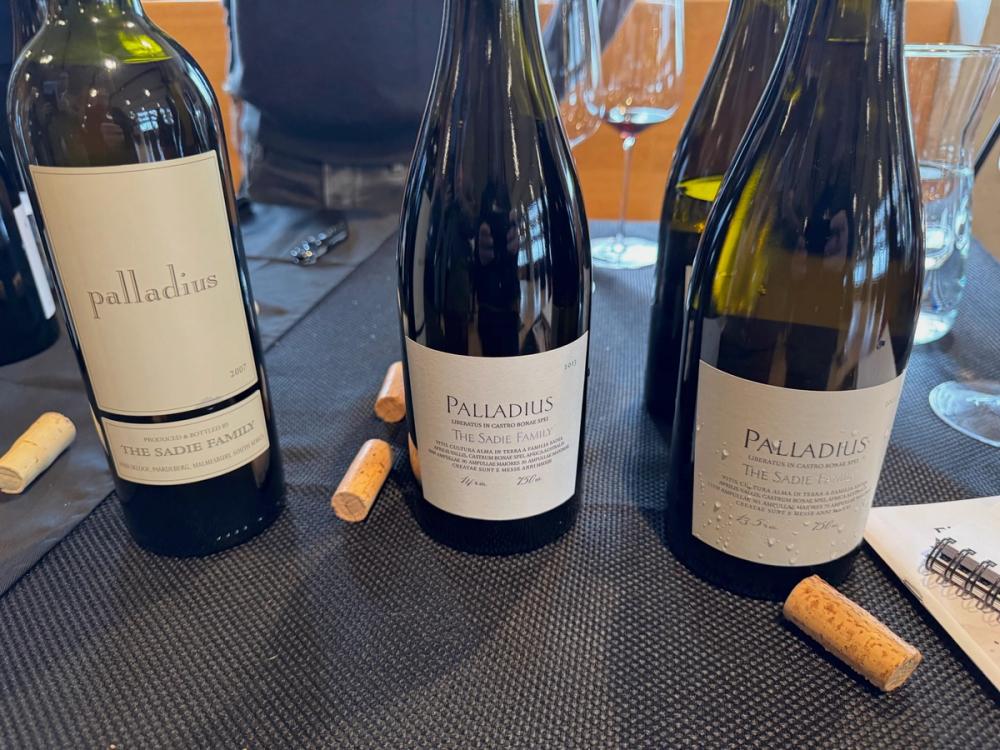
Palladius 2007
Chenin Blanc, Grenache Blanc, Marsanne, Clairette Blanche, Viognier
Palladius 2013
Chenin Blanc, Grenache Blanc, Roussanne, Sémillon Blanc, Palomino, Verdelho, Colombar, Clairette Blanche, Viognier
Palladius 2021
Chenin Blanc, Grenache Blanc, Marsanne, Roussanne, Sémillon Blanc & Gris, Palomino, Verdelho, Colombar, Clairette Blanche, Viognier
Meerlust
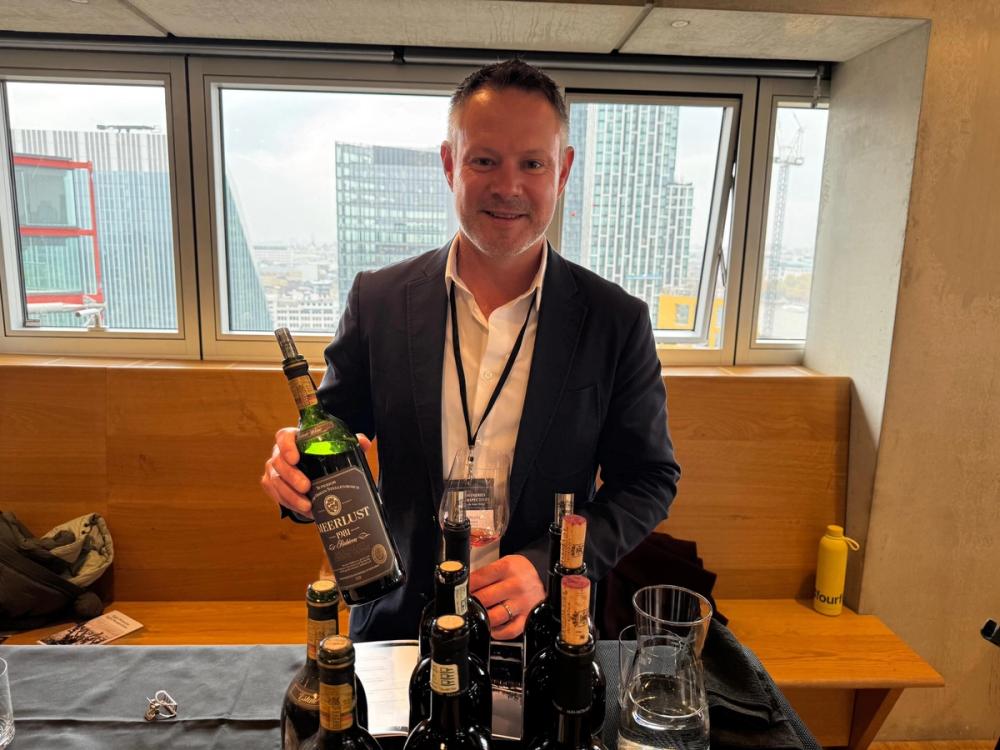
Meerlust winemaker Wim Truter
Rubicon 1981
70% Cabernet Sauvignon, 20% Merlot, 10% Cabernet Franc
Rubicon 2015
61% Cabernet Sauvignon, 23% Merlot, 12% Cabernet Franc, 4% Petit Verdot
Rubicon 2023
46% Cabernet Sauvignon, 36% Merlot, 11% Cabernet Franc, 7% Petit Verdot
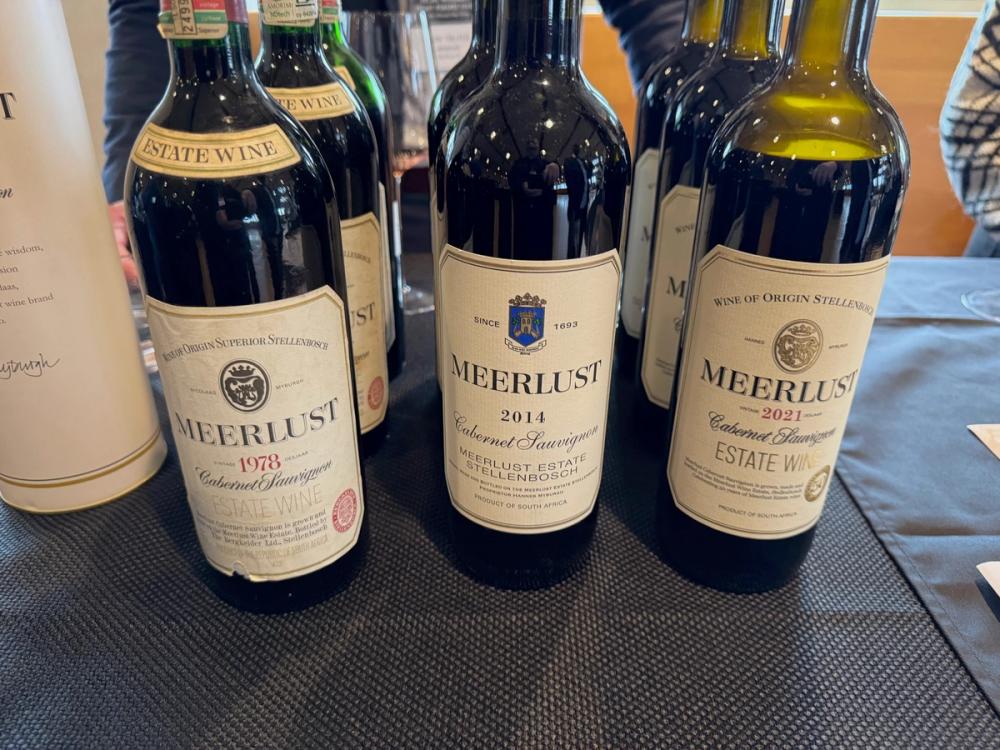
100% Cabernet Sauvignon 1978
100% Cabernet Sauvignon 2014
100% Cabernet Sauvignon 2021
Kanonkop
Estate 100% Cabernet Sauvignon 2005
Estate 100% Cabernet Sauvignon 2011
Estate 100% Cabernet Sauvignon 2014
Estate 100% Cabernet Sauvignon 2019
Estate 100% Cabernet Sauvignon 2021
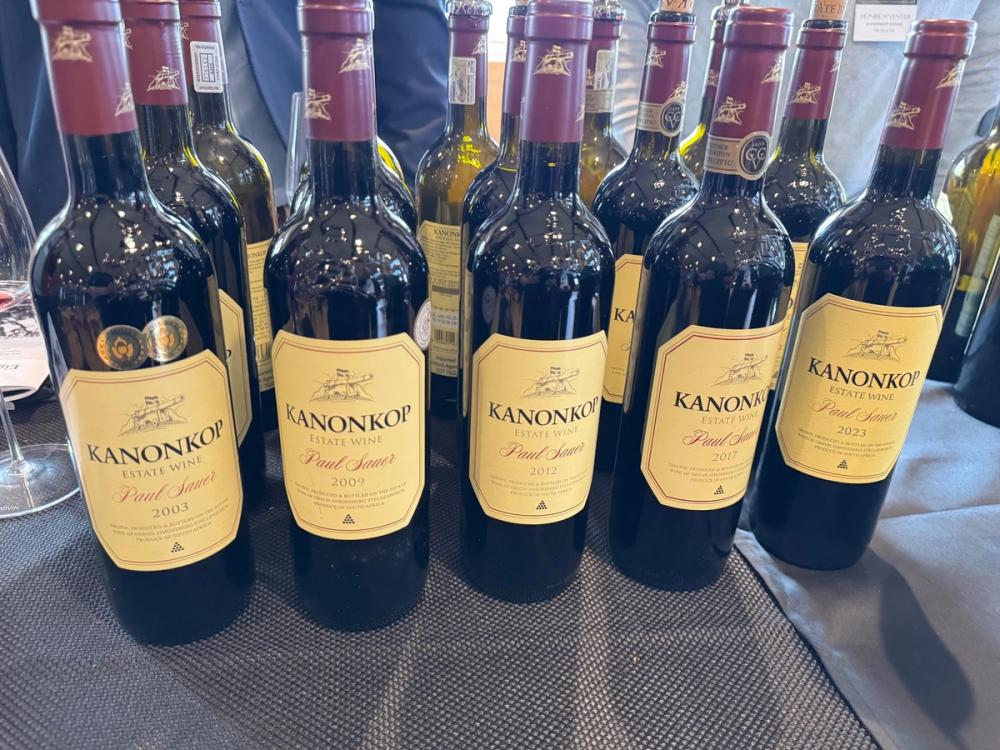
Paul Sauer 2003
63% Cabernet Sauvignon, 31% Cabernet Franc, 6% Merlot
Paul Sauer 2009
69% Cabernet Sauvignon, 12% Cabernet Franc, 19% Merlot
Paul Sauer 2012
70% Cabernet Sauvignon, 18% Cabernet Franc, 12% Merlot
Paul Sauer 2017
76% Cabernet Sauvignon, 17% Cabernet Franc, 7% Merlot
Paul Sauer 2023
62% Cabernet Sauvignon, 23% Cabernet Franc, 15% Merlot
Vilafonté
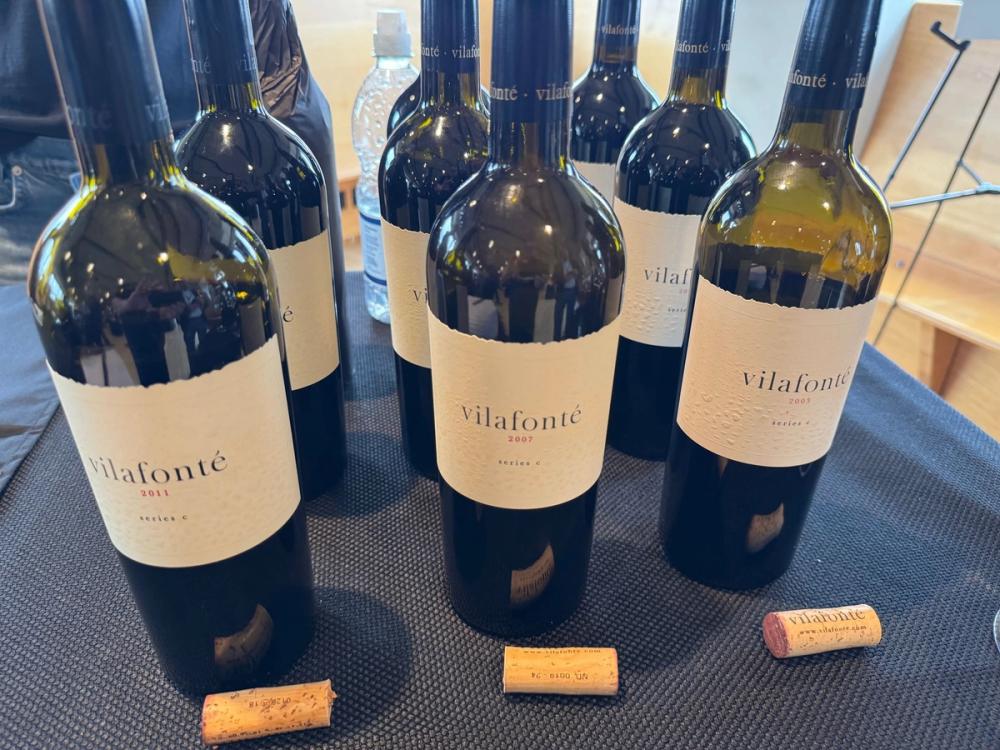
Series C 2003
82% Cabernet Sauvignon, 7% Cabernet Franc, 9% Merlot, 2% Malbec
Series C 2007
74% Cabernet Sauvignon, 9% Cabernet Franc, 11% Merlot, 6% Malbec
Series C 2011
51% Cabernet Sauvignon, 9% Cabernet Franc, 26% Merlot, 14% Malbec
Series C 2016
62% Cabernet Sauvignon, 11% Cabernet Franc, 15% Merlot, 12% Malbec
Series C 2020
58% Cabernet Sauvignon, 8% Cabernet Franc, 24% Merlot, 10% Malbec
Series C 2022
56% Cabernet Sauvignon, 10% Cabernet Franc, 24% Merlot. 10% Malbec