
It still seems somehow remarkable to me that Greek wine – which ten years ago was absolutely nowhere in the UK wine trade – is now, alongside sparkling wine and rosé, one of the few really bright spots. And not just for the pioneers like Hallgarten & Novum Wines, Amathus Drinks, Cava Spiliadis and Clark Foyster who put Greek producers onto the UK trade map.
Any importer worth their salt, now has at least one agency in their portfolio or is in the process of finding one. The ‘must-have’ varieties are white Assyrtiko and red Xinomavro, although others including white Moschofilero and Malagouzia and red Agiorgitiko and Limniona are now being more widely produced and increasingly seen here.
Knowing all this, I really shouldn’t have been surprised when I rocked up at OXO2 on London’s South Bank, to find quite so many wines. Well over 40 tables including producer tables and various themed tables and lots of attendees, many of whom looked as stunned as I felt at the sheer size of this tasting, featuring, by my calculation, getting on for 400 wines.

Great Greek Wines - a tasting beyond expectations
Wines from all over the Greek mainland were featured, as well as across its islands, most notably Santorini, Crete, Tinos and Kefalonia but also Cyprus too, suggesting a viticultural enosis (although that island’s varieties are completely distinct). Themed tables included ‘the importance of place in Greek wine’ and ‘really obscure varieties’.
Great Greek Wines (GGW) is a fully independent platform whose aim is to present as much of the Greek wine industry as possible. Wines are purchased anonymously from the open market and tasted blind by international panels of Masters of Wine and leading wine experts and each year, only the highest-performing wines –around 10% of all entries – earn a place on The List. Annual tastings, dinners and masterclasses are then set up in key such as the UK, Germany, Poland, Netherlands and Belgium.
GGW was founded by Yiannis Karakasis MW, who organises the events with Gregory Michailos.
“We felt a lot of the producers need more recognition. We’ve travelled extensively to find the best of the best,” Michailos says. “Greek wine today is in a fascinating place – for the consumer it represents something new, fascinating grapes and terroirs. This tasting – our second big London event - is a great opportunity to get a look at what is happening in the industry, and to discover something new.”
So which producers and wines stood out?
Based in Macedonia, this highly regarded winery in the Amyndeon region, has become renowned for its quality Xinomavaro – all of which were showing well – but its other wines are also well worth a look. I really loved the single vineyard Turtles Malagouzia 2025 (Florina), a rich, sensuous take on the variety, showing honeysuckle and apricot on a long floral palate. Quite high in alcohol at 13.5% but showing good weight, structure and balance. The other star here was Barba Yannis 2022 Reserve Old Vines Single Block (PDO Amyndeon), a top class Xinomavro: single vineyard, made from grapes grown on 100-year-old ungrafted vines, and fermented using indigenous yeasts. Complex, the wine spends two years in barrel and one in bottle before release. Drinking very well now, this will only get better.

Konstantinos Makantasis
“We’re really proud of these wines. Frankly, Turtles Malagouzia sells itself: it’s perfectly balanced, not too rich as this variety can be but very soft and generous. And the Barba Yannis? Like previous vintages, this has its own intensity which makes it a very special Xinomavro,” says export manager Konstantinos Makantasis. (Distributed in the UK by Hallgarten & Novum)
Run by Yiannis Boutaris of the famed wine family, Kir-Yianni is best known for its Xinomavro, exemplified by the iconic Raminsta: the 2021 is full on, showing lots of red fruit, amidst suggestions of tobacco and blackberry. Medium weight. KY also owns the Sigalas estate on Santorini, one of the pioneer producers on the island: the Santorini Sigalas 2025 is delicious, very fresh and saline, but at the start of what will be a long life. (Distributed in the UK by Liberty Wines)
Founded 11 years ago in Drama in north-east Greece, this low intervention winery is focused on varieties including Limniona, Xinomavro, Assyrtiko and Kidonitsa. The Limniona 2023 is a lovely textured wine having spent ten months on its lees and fermenting in amphorae. Very elegant. Equally worthwhile is Vindiano 2025, a 100% Vidiano produced in conjunction with growers in Crete: very textured and quite full on, the unfiltered wine undergoes spontaneous fermentation in a combination of large oak barrels, stainless steel, clay amphorae and concrete tanks, very textured, mineral with a nice floral finish. (Distributed in the UK by Hallgarten & Novum)
Two very different showings of the pink-skinned, aromatic grape Moschofilero from this winery in Arcadia-Mantineia. one of the highest regions in the Peloponnese. Ekato is Greek for 100 which is how many days the wine was fermented on the skins with indigenous yeasts, to make this moreish, characterful, dark orange wine. The 2025 vintage has suggestions of wild thyme, strawberry, honey and damson on the palate. Very different is the more conventional Tomi 2025 which is rich, opulent, elegant and food friendly. (Distributed in the UK by Bancroft Wines)
This Thessaloniki based producer has helped completely redefine Retsina using varieties such as Xinomavro and Assyrtiko alongside the more usual Roditis which, with Savatiano, is the usual variety used. These are very modern and approachable retsina, the focus of Kechris since its foundation back in 1911. I really like Roza NV, 100% Xinomavro, quite spicy but with an alluring, lightly herbal nose. Pick of the bunch is the amazing, award-winning Tear of the Pine NV, an elegant, complex retsina made from Assyrtiko, and the rightful winner of many international awards. Retsina yes, but definitely not as we know it. (Distributed in the UK by The Jolly Merchants)
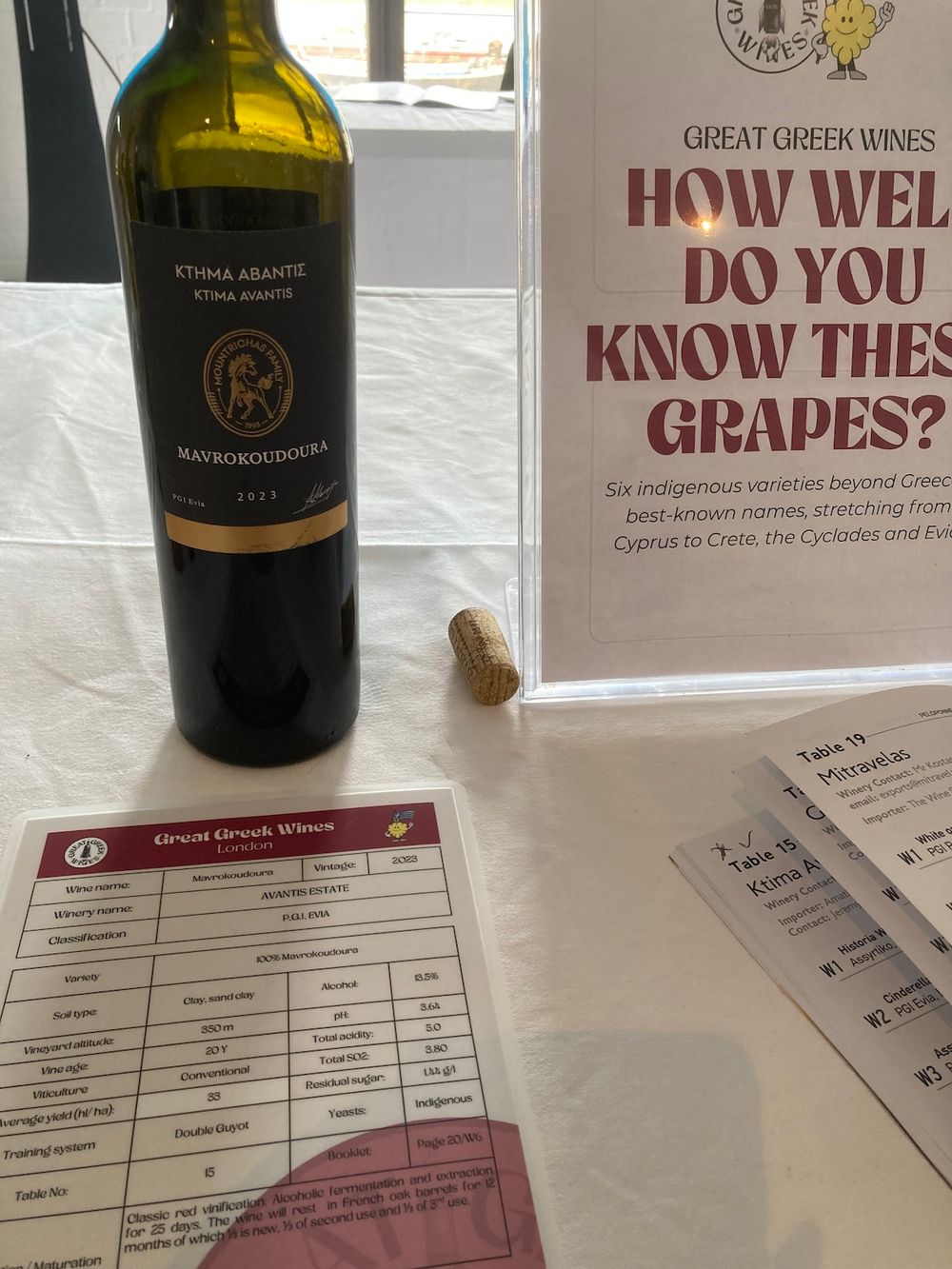
This Evia-based family producer focuses on Greek and international varieties and offers a good, well-priced range the pick of which is the red Mavrokoudoura 2023, a rare clone of Mandilaria which originates here. This is a lovely, rounded wine –light oaking, lots of toasty cassis notes, medium weight with vanilla and coffee on the finish. (Distributed in the UK by Amathus Drinks)
For anyone remotely into Greek wine this iconic producer – founded in 1994 by Yiannis Paraskevopoulos and Leon Karatasalos – will need no introduction: classy wines from both Santorini and Nemea in the Peloponnese. From the former the Assyrtiko Wild Ferment 2025 is showing well with juicy salinity and great complexity on a long palate, whilst from Nemea the Moschofilero Wild Ferment 2025 is a great take on the variety – rounded but showing good fruit tones and bracing acidity. (Distributed in the UK by Hallgarten & Novum)
Elevation is the thing at this Peloponnese-based winery, with vines planted at between 300-1000m. It produces some decent, well priced Moschofilero and Assyrtiko and some good, full-on Agiorgitiko but the outstanding wine was the classic method sparkler Fleur d’Amour Brut NV Blanc de Blancs. Made from Assyrtiko, unusually, this is spritzy, uncomplicated but with great character and good value too. (Looking for an UK importer)
Yet another Peloponnese-based winery making wines from a range of local varieties including Roditis (regular and skin contact), red Mavrodaphne and the very rare Santameriana, rediscovered and planted here back in 2007. Sant’Or was showing the Santameriana Nature 2025 and the very different Santameriana Skin Contact Nature 2025, both low alcohol (12% and 11%) and biodynamic with suggestions of wild herbs and bergamot in the first, and warm tannins and good grip in the second. (Looking for an UK importer)
This family-owned Peloponnese winery started almost 50 years ago and focuses on a range of local varieties including Santameriana and the equally rare Avgoustiatis, an early ripening red variety which tends to produce light to medium bodied wines. The two wines that stood out for me here were the Kryfia Odi 2025, a dry, quite dark rosé made from Mavrodaphne (richly flavoured with suggestions of blackcurrant and mountain herbs) and the joyful Taksidiaris 2025, a dry but flavourful white made from Muscat of Rio – bright golden yellow, very aromatic with a long finish. (Looking for an UK importer)
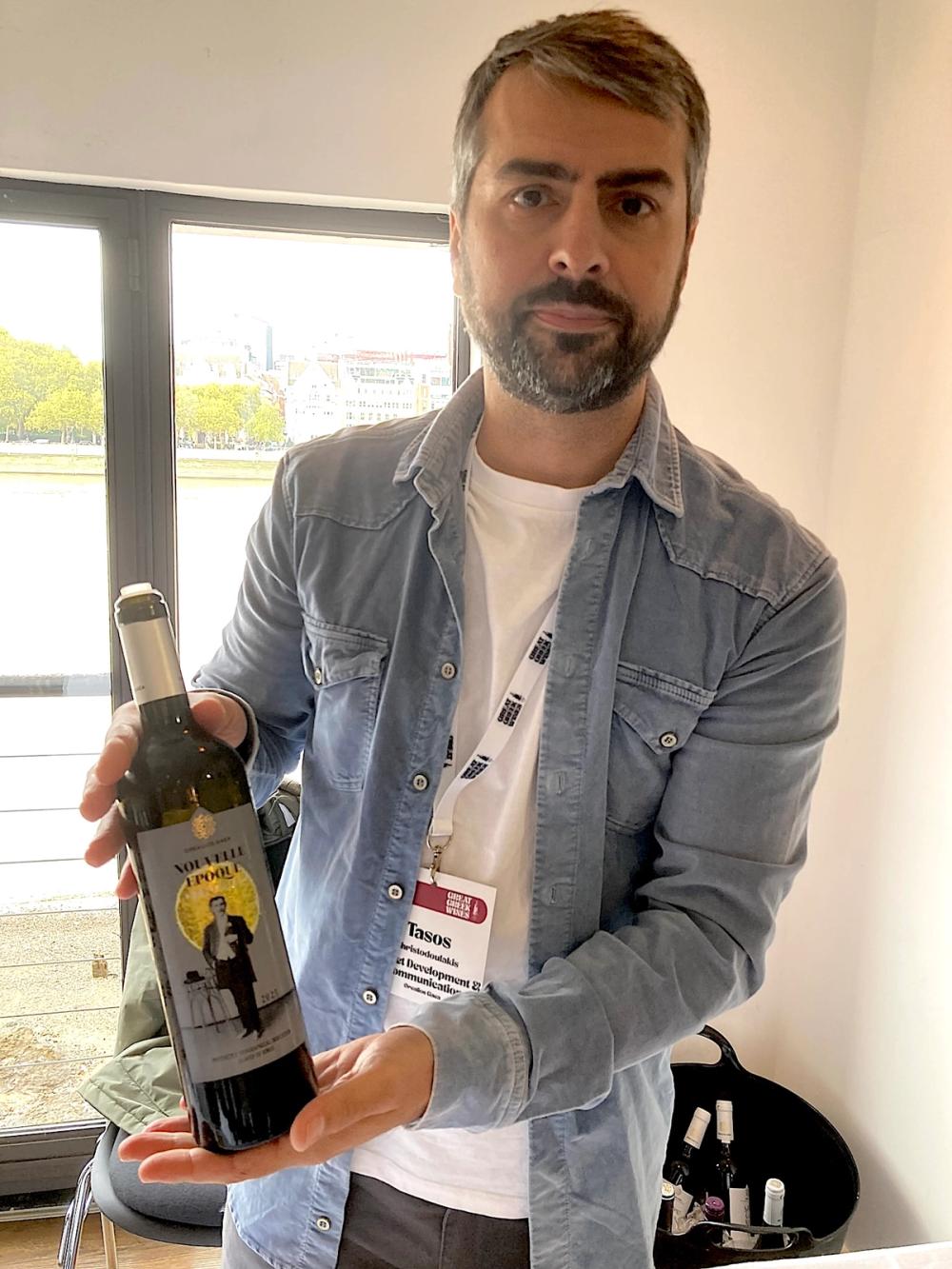
Kefalonia, the large Ionian island adjacent to Corfu, is best known viticulturally for the very decent Robola variety but it also grows Vostilidi a rare variety rescued from extinction some 20 years ago. Fuller bodied it generally shows in a bigger richer style as in Nouvelle Epoque 2025; one of my favourite wines of the day, this comes from the Slopes of Enos PGI and is tank and barrel aged for over a year before bottling. Almost creamy on the palate, with vanilla and strong honey tones, there are suggestions of mountain herbs and quince, all supported by fine acidity. (Distributed in the UK by Maltby & Greek)
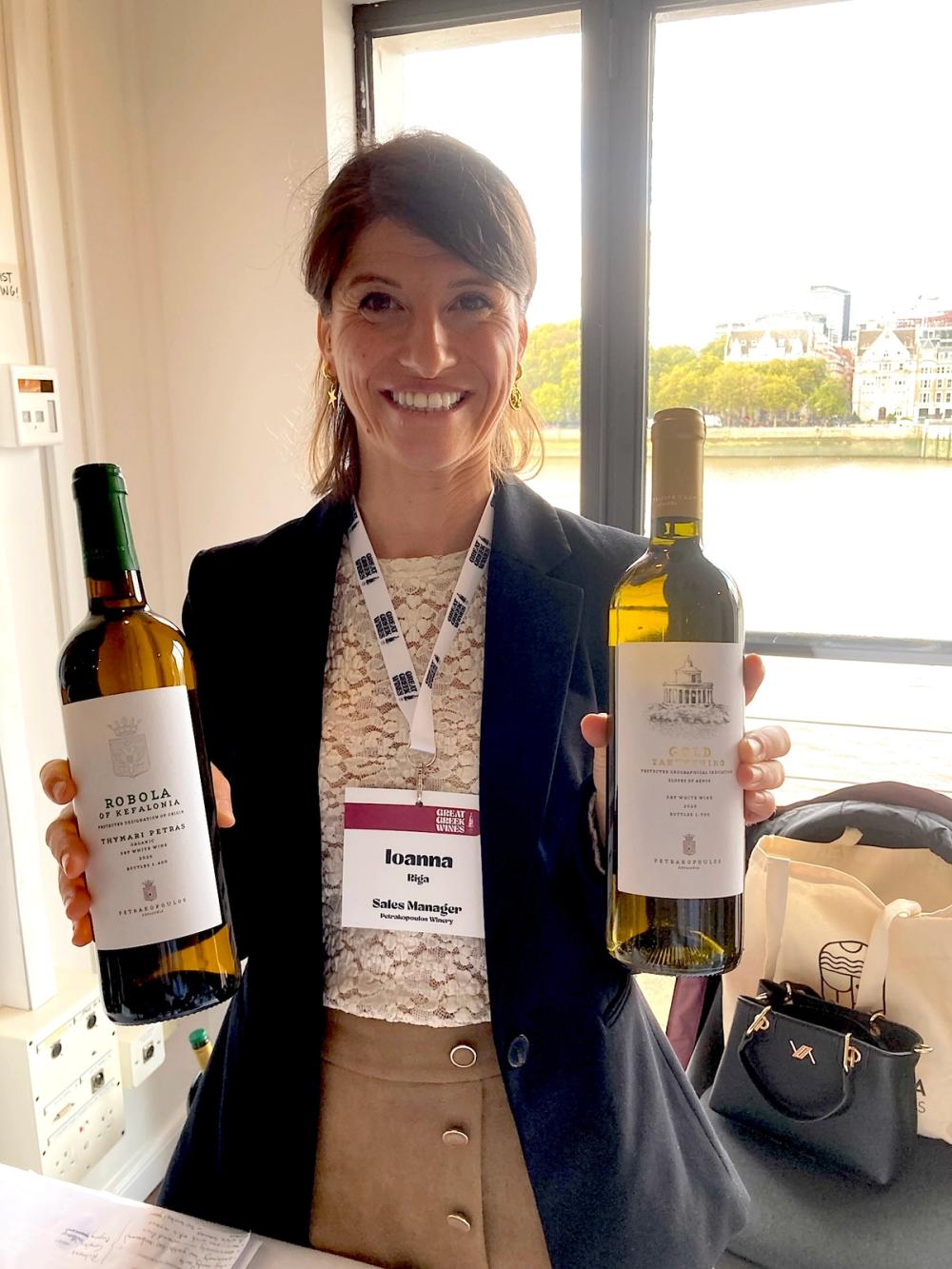
Staying in beautiful Kefalonia, this small historic winery focuses on old vine Robola, Mavrodaphne and another rare white variety, the thick-skinned Zakynthino, which originated from the island of Zante/Zakinthos, all grown on pre-phylloxera vines up to 60 years old. I loved the Palia Armakia 2025 Robola, which is very rich and expressive, made in tiny quantities and the full-on Gold 2025, made from 100% Zakynthino – very saline, with hints of apricot and quince on the palate. (Distributed in the UK by Cava Spiliadis)
Tselepos Wines/ Canava Chrissou Tselepos

This producer, which makes wines in the Peloponnese and on Santorini, takes some beating for sheer excellence and quality. The two PDO Mantinia Moschofilero from the former are very distinct: the Mantinia 2025 is generous, showing jasmine and peach on a soft palate and the skin contact single vineyard Blanc de Gris 2024 is complex, reflecting vinification in amphora, oak and concrete.
For Agiorgitiko made in a full-on, Shiraz style, Driopi Nemea Reserve 2021 from PDO Nemea is impressive – blackberry-charged with a very long velvet finish. But it’s the three Canava Chrissou Tselepos Santorini wines, which are made through a collaboration between Yannis Tsepolos and the Chrissou family that most impress: Santorini Vielles Vignes Assyrtiko 2024, is a decent introduction, the Nykteri 2023 (made from grapes gathered and rapidly pressed which is very rich, saline and moreish) and last, but not least, my wine of the tasting – the Laoudia 2024, which is a single vineyard wine made from grapes grown on terraced old vines and then aged in amphora on fine lees for eight months. Simply…spectacular. A wine I returned to, twice, before leaving the tasting. (Distributed in the UK by Cava Spiliadis)
Rounding up
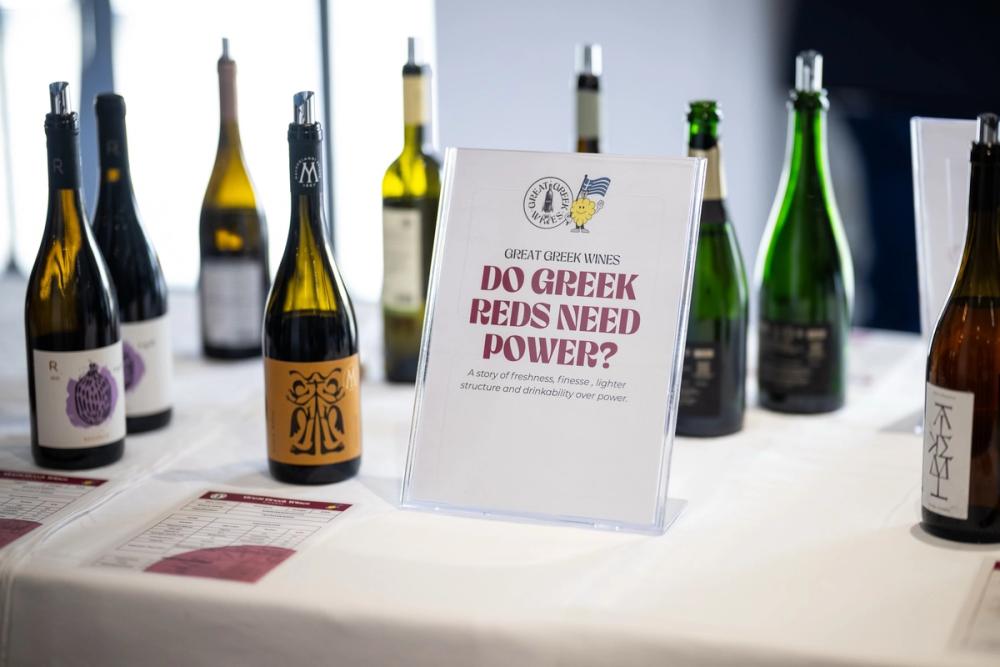
Next edition of Great Greek Wines could feature more themed tables perhaps?
Given the success of this event, it seems almost certain we will see a third edition next year: there are simply too many great Greek wines out there, and importers seem keen to add more to their portfolios. However, I would hope next time that things are arranged more thematically focusing say on region – including the islands whose wines are all very distinct – or on varieties, or styles. Frankly, there’s so much happening in the world of Greek wine these days that the risk of being overwhelmed is very real.