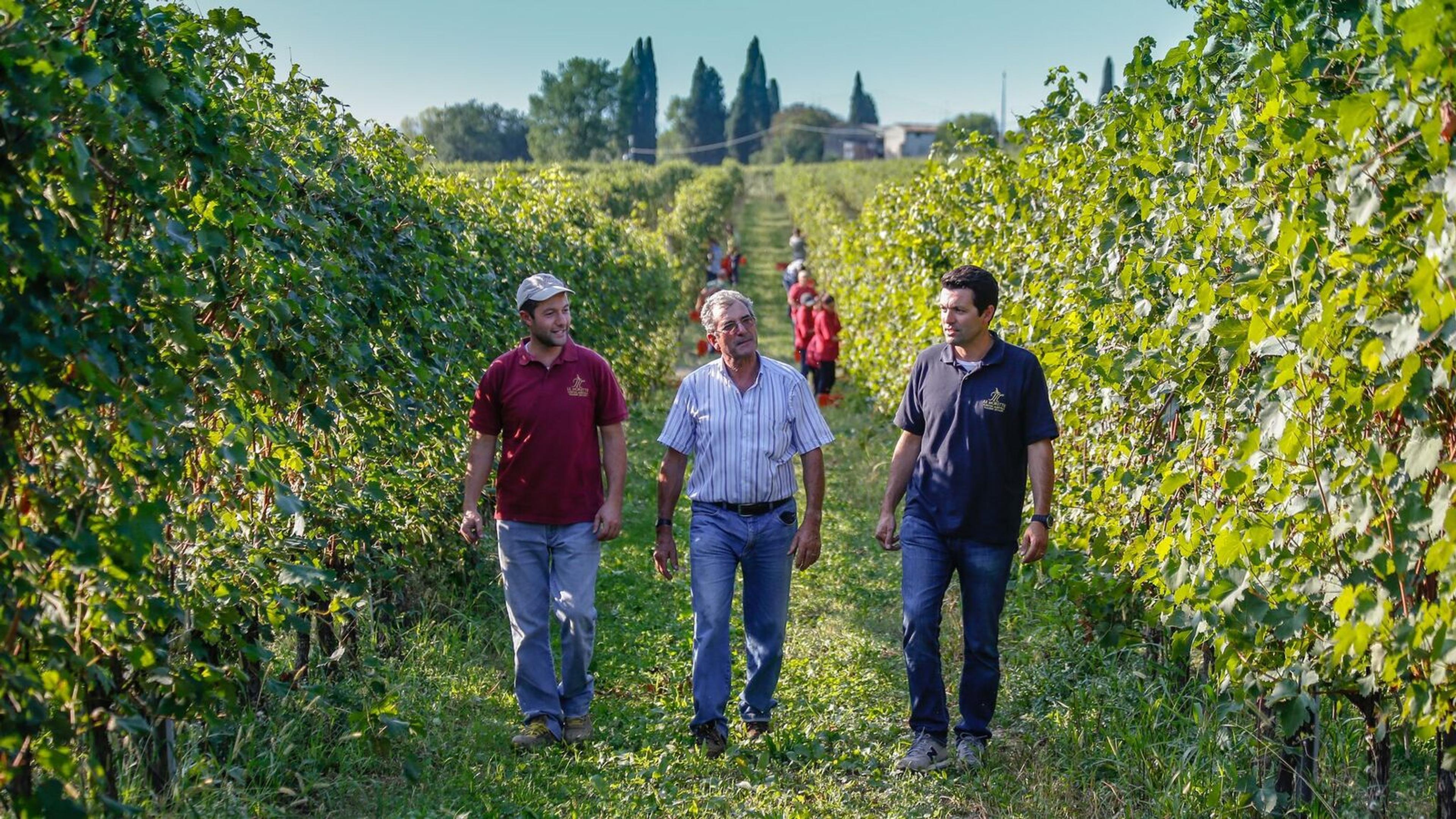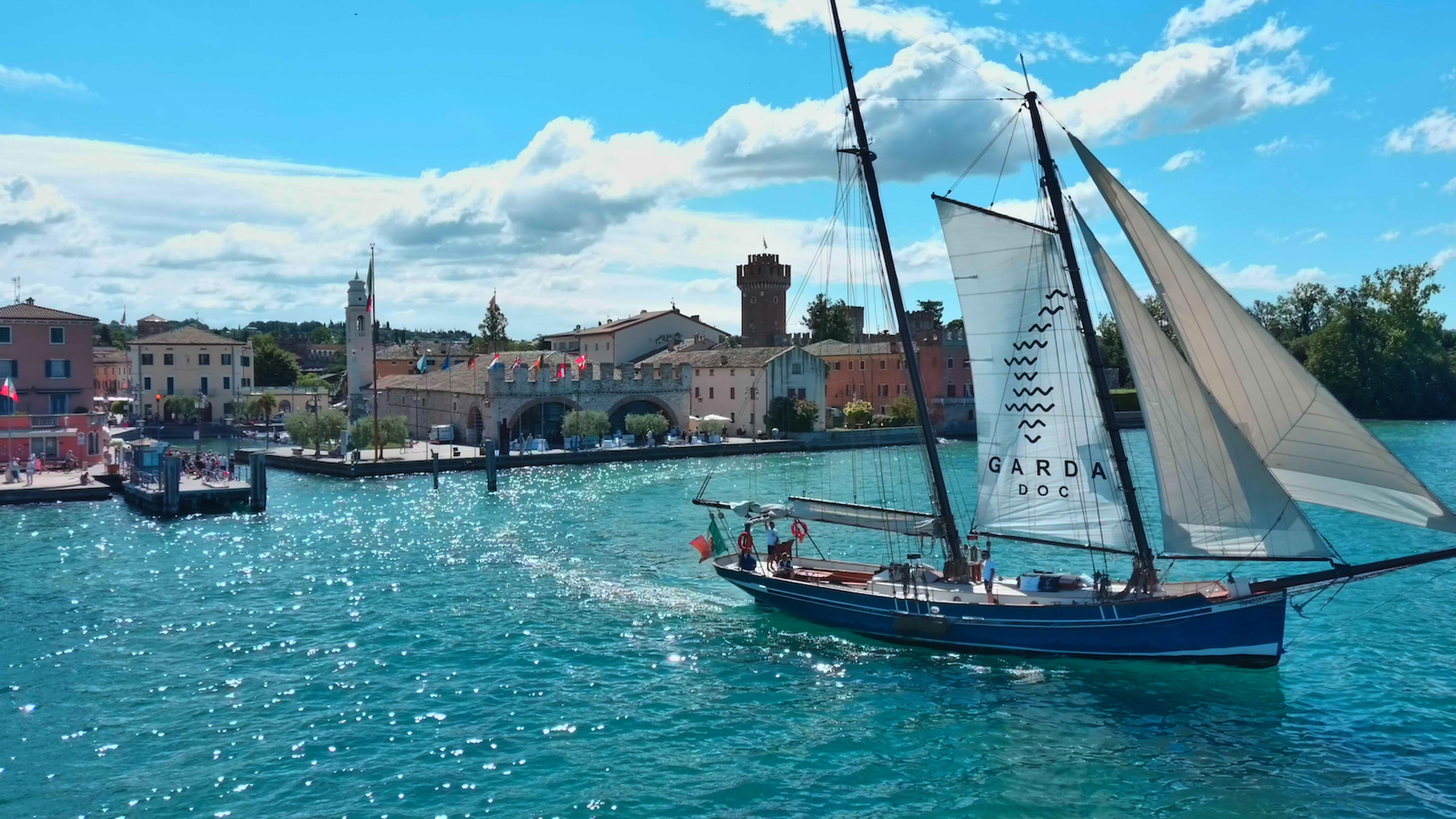

Lugana wines, made on slopes of the southern tongue of Lake Garda, straddling Veneto and Lombardy, owe their attractively fresh style to the lake's trademark cooling winds. Lake Garda is Italy’s largest freshwater lake and provides an ameliorating influence on temperature range and also provides the Lugana clay/limestone stone soil deposited by glaciers which melted forming the lake eons ago.
The wines are made more or less exclusively from the Turbiana grape that has historically thrived in the region. We discover there are light styles to drink with a picnic on the beach or in a bar as an apéro, wines with ageing potential and wines with more complexity suitable for gastronomy.
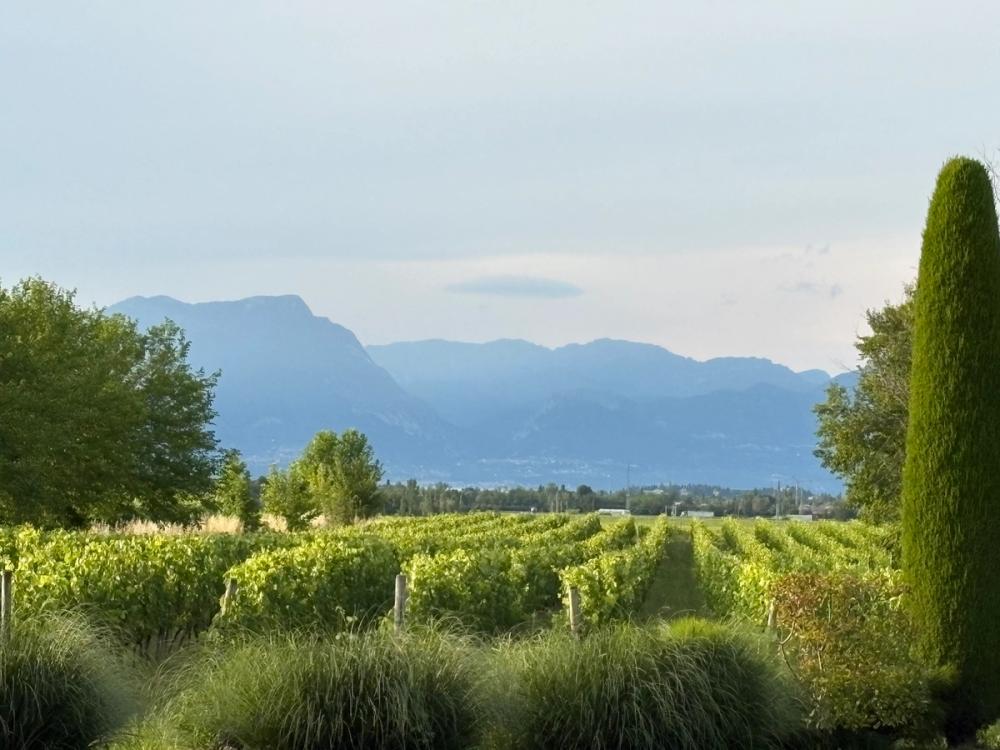
St. Christina Zenato Estate vineyard Peshiera del Garda
Diversity of expression
I’ve been a long-term fan of Lugana wines and so I’m keen to learn more about the diversity of wines now on offer.
The Consorzio Tutela Lugana recognises five distinct styles: Young Lugana is the driving force and accounts for almost 90% of the DOC’s production; Lugana Superiore requires a minimum of one year maturation; while Lugana Riserva is the category recognised for wine ageing. Then there is Vendemmia Tardiva – late harvesting for a more ‘experimental’ Lugana style – and, finally, Spumante sparkling wine.
We start our trip at the long-established Cantina Zeni 1870 in Veneto which makes a wide variety of wines, including Lugana. The winery houses a wine museum and ‘GO’, the first olfactory gallery in Italy to be dedicated to wines. In the museum, carefully composed music is played designed to desensitise the senses before ‘sniffing’ out wine aromas.
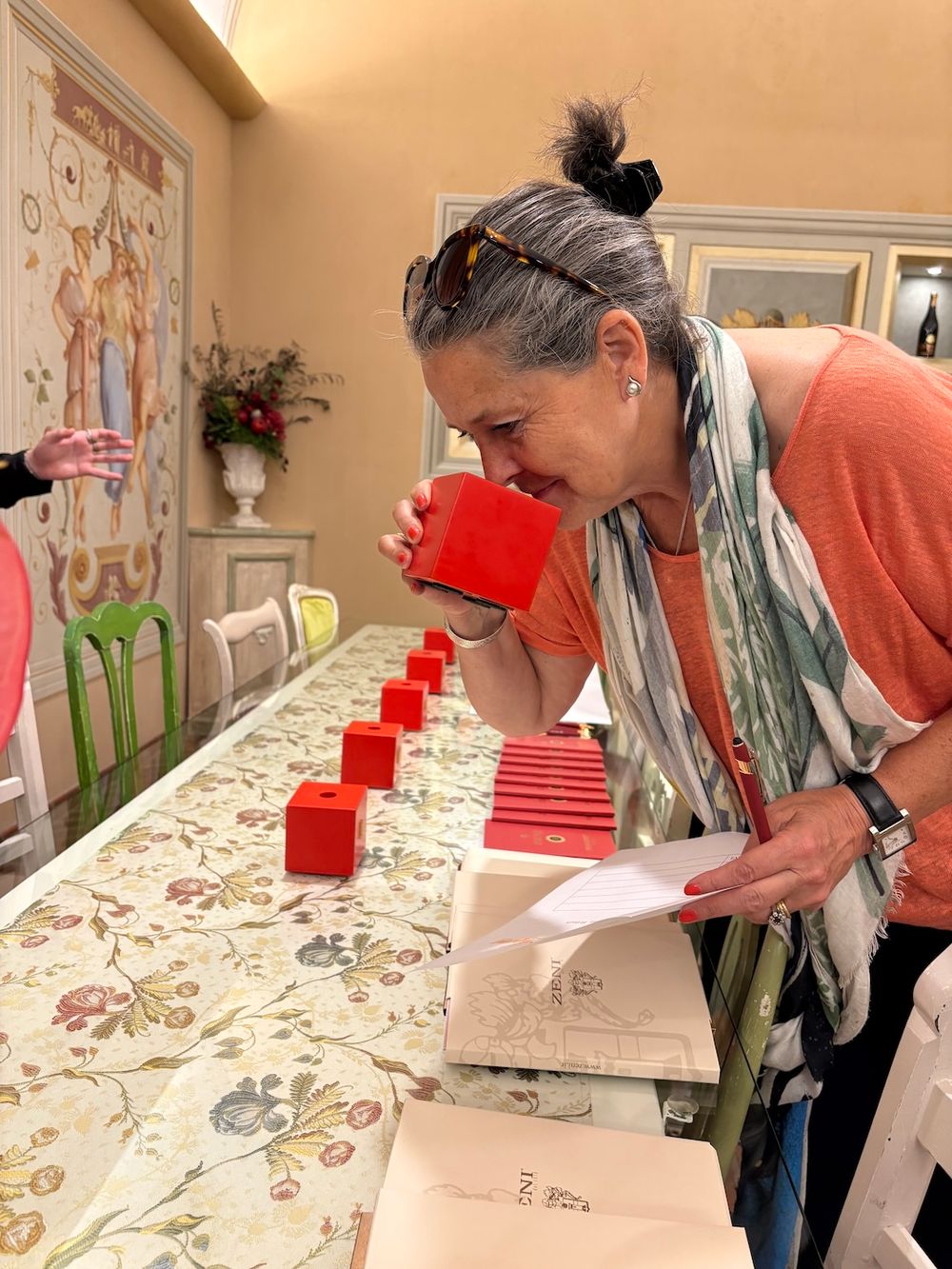
Wisteria?! The challenge to identify the aromas of Lugana wine at Zeni 1870.
We are challenged to identify the six different perfumes found in Lugana wines. Aromas revealed are bergamot, jasmine, lily of the valley, honey, wisteria and green apple. No-one gets all the answers. “Wisteria?”, we gasp. I make a mental note to be more alert when I pass houses festooned with wisteria next time!
Our first wine is a Spumante, a delicious light sparkling wine.
Visits are organised to six very different wineries which illustrates not just variety of production techniques but also how the region has embraced agro-tourism.
Food pairing
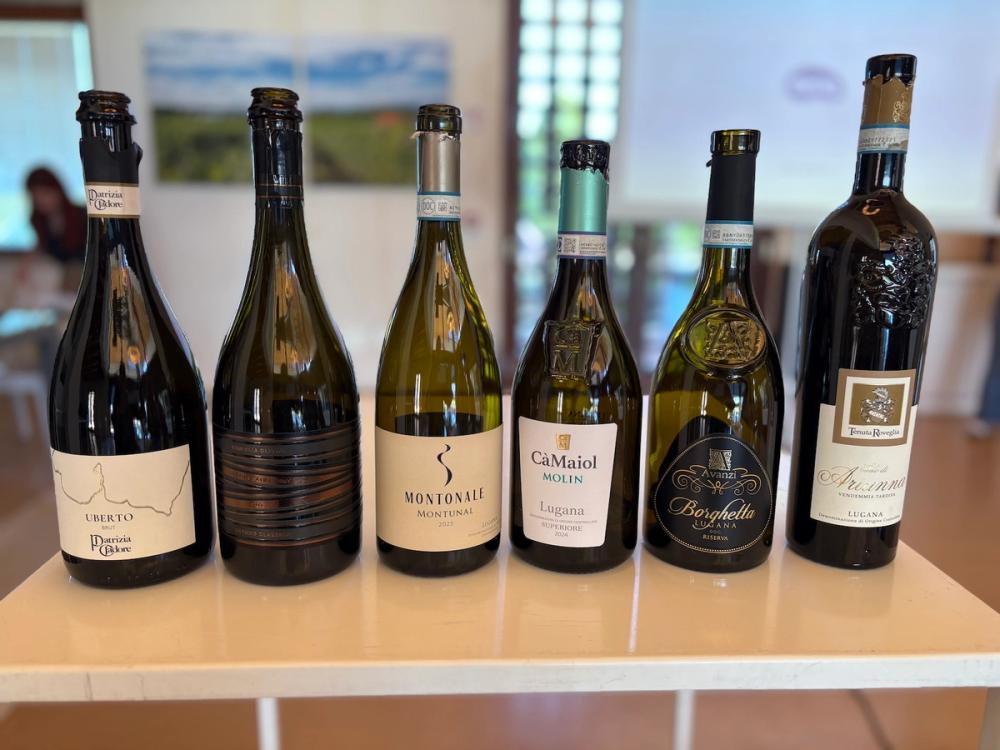
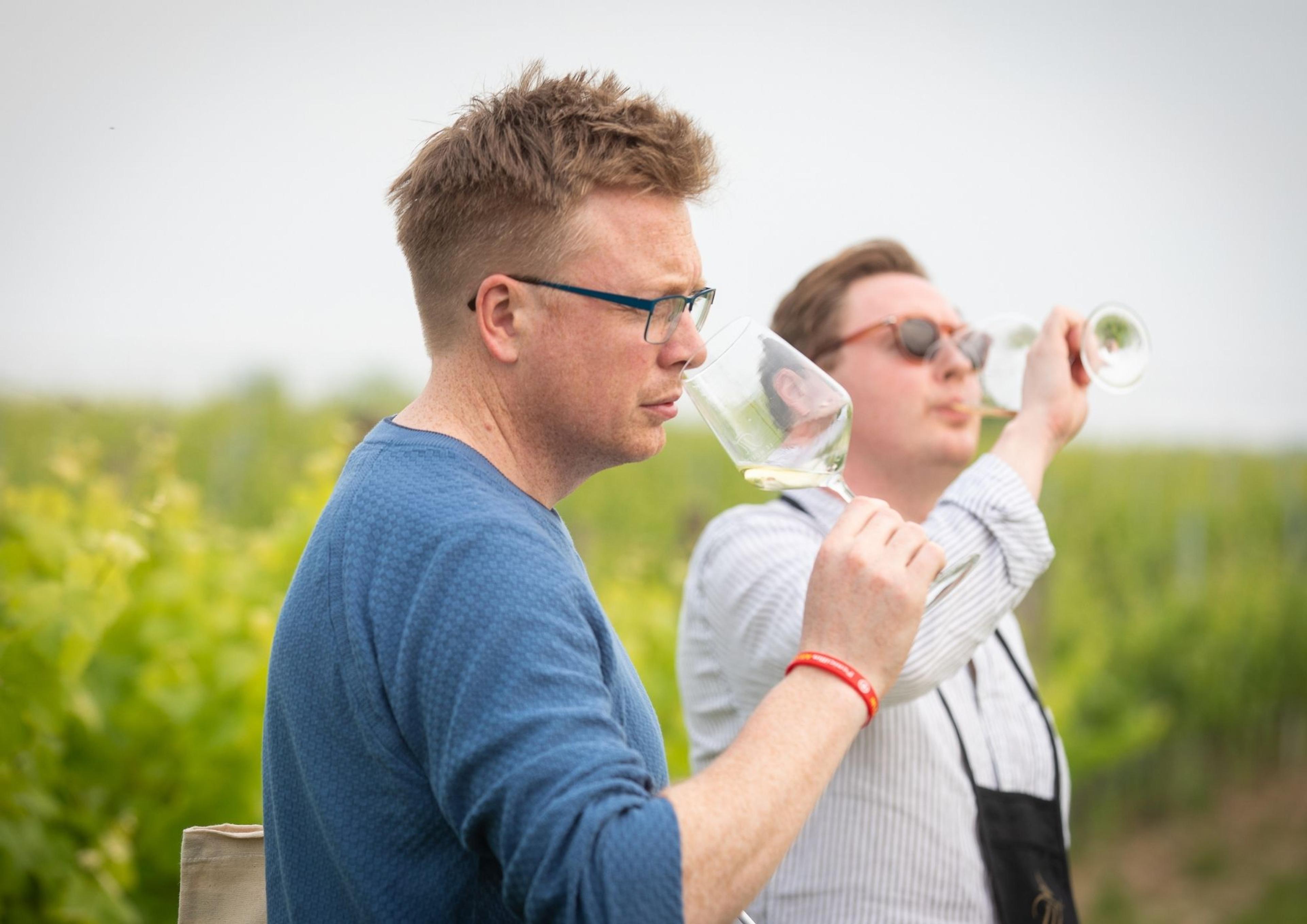
Masterclass Lugana wines illustrating the diversity of expressions
The region offers Italian hospitality at its best. We see how well the wines pair with wonderful cheese and charcuterie that the area boasts – and the more gastronomic wines pair beautifully with seafood. On our first night, we dine at the upmarket MoS Ristorante on the lakeside – every dish except dessert is made with seafood from the lake. Lugana wine is the perfect accompaniment to light dishes such as asparagus, risotto, and ravioli as well as fish.
Beyond fermentation in stainless steel tanks, we discover producers use a range of techniques to create the higher-priced more elegant styles which are akin to a premier cru Chablis in flavour profile. Some use batonage, cold temperatures before fermentation, or experiment with the use of different ceramic or concrete vessels while others blend a small proportion aged in oak.
Many are low intervention – indeed some 80% per cent of the vineyards are organic, or in the process of being certified. In all, the region has 2,600 hectares of land with 215 companies producing 28 million bottles a year. There are five municipalities: Peschiera del Garda, Desenzano del Garda (where we are based), Lonato del Garda, Sirmione and Pozzolengo.
Dispelling myths
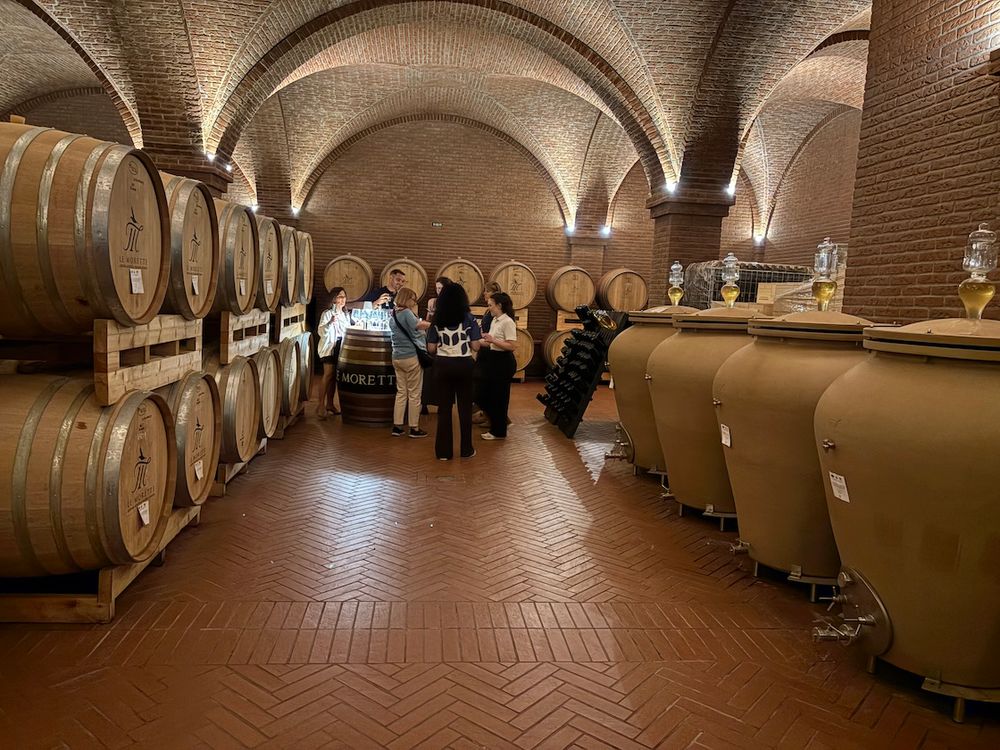
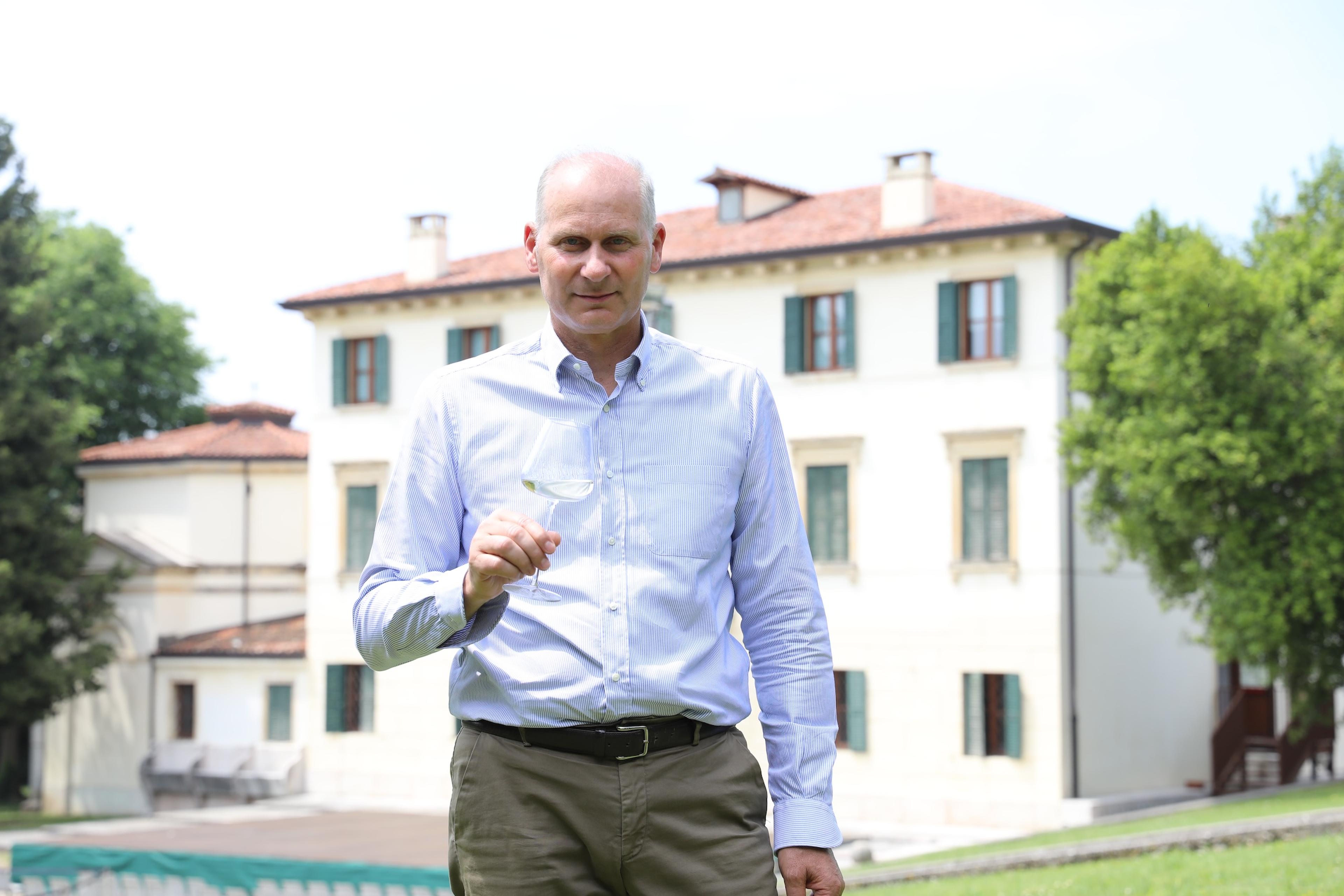
A very insightful masterclass at the Le Morette winery dispels the myth that Turbiana is a strain of Trebbiano. It is not, it is a biotype and has its own profile, presenter JC Viens insists. Character notes are citrus, delicate white flowers and hints of almond on the finish.
“Sapidity” is the key word, he explains. And he purses his lips, clicking them rapidly together to demonstrate that feeling of sapidity that makes you to want to taste more. We learn that Spumante, albeit it is a very small part of total Lugana production, is available both by Charmat method as well as traditional method.
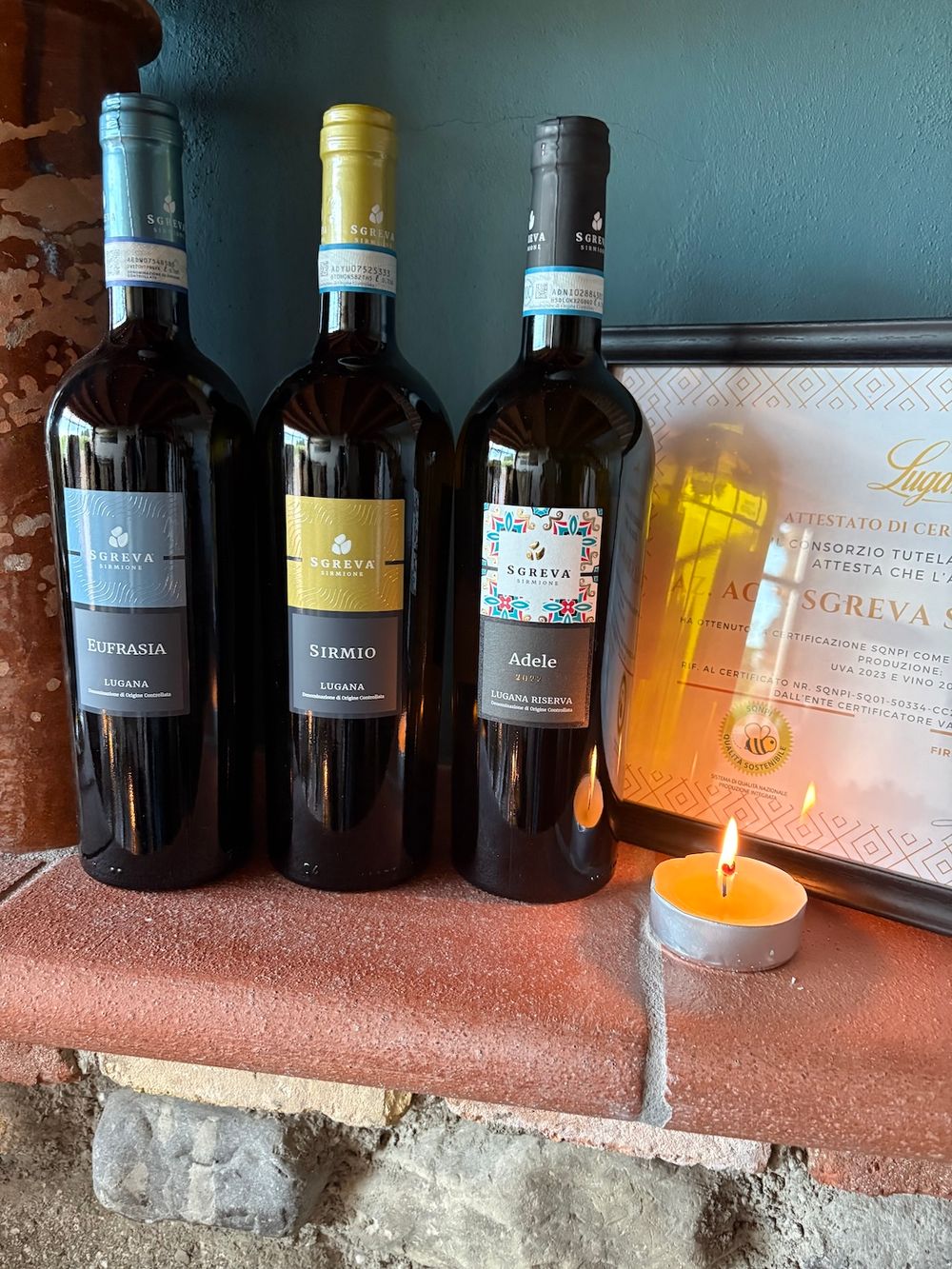
Turbiana proves to be an historically resilient grape variety but the soils often need turning to prevent them getting caked in hot weather, or flooded in rain. Winemakers are very mindful of climate change and mother nature unexpectedly gives us visitors a demonstration of the area’s now more unpredictable seasons. We witness in June a heavy storm, rapidly moving across the area, with outsized hailstones the size of walnuts falling from the sky. This results in a power cut at the Cantina Sgreva where the tasting, delightfully, takes place by candlelight. Sgreva is a charming, newer and smaller artisanal producer.
Gastronomic wine pairing
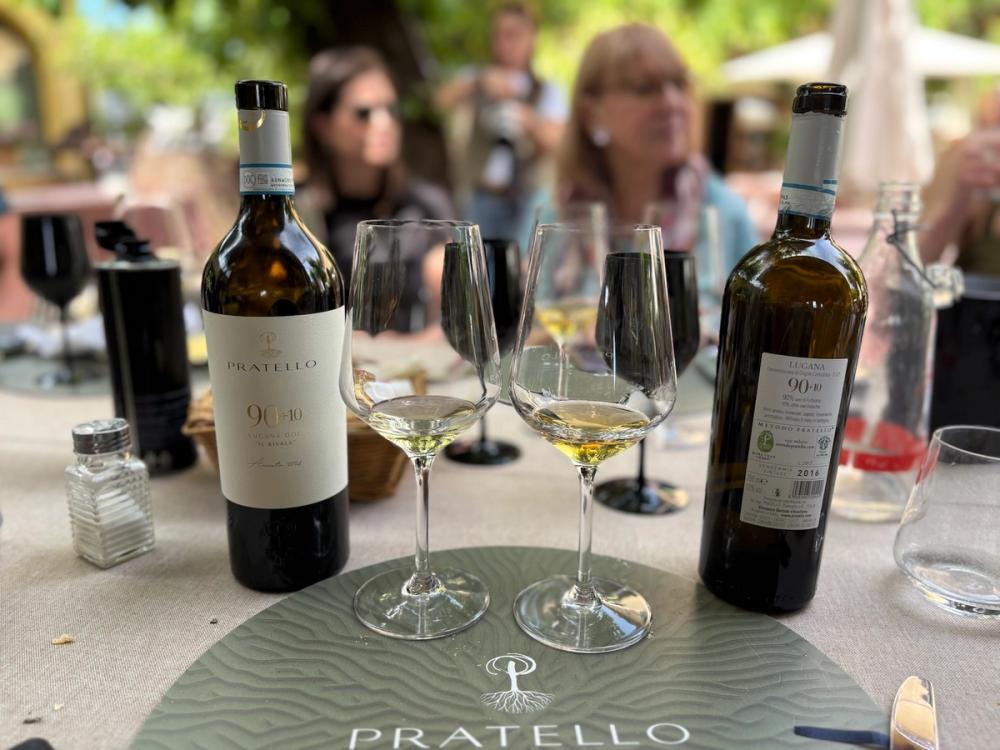
The visits to different wineries not only show the variety of techniques of production but the focus on agro-tourism. The region offers Italian hospitality at its best.
We see how well the wines pair with fish (of course, those we tasted were from the lake) and seafood. All five of the Lugana styles are delightful with cheese and charcuterie – the region boasts the top quality which we find irresistible. Azienda Agricola Pratello has accommodation and also boasts an organic farm - producing olive oil, raising its own livestock and growing its own vegetables.
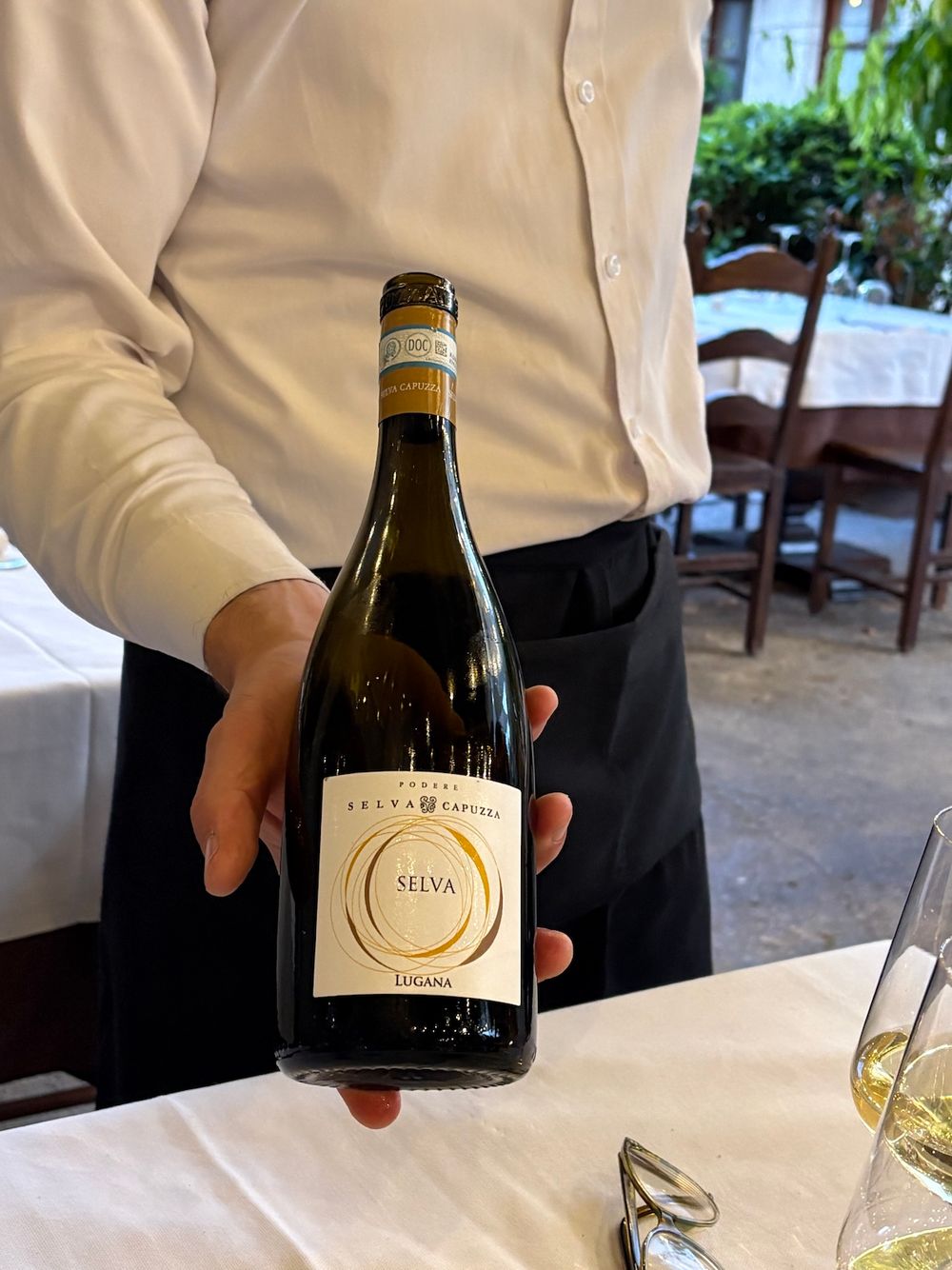
Podere Selva Capuzza produces one of Lugana’s earliest recognised single vineyard crus. It is in a delightful setting in a forested landscape, with accommodation and a beautiful restaurant. Devotedly organic, its top Lugana wines are hand-harvested, fermented in stainless steel and spend extended time on lees. The aim is to express salinity, minerality and terroir rather than any oak influence.
Lugana Riserva
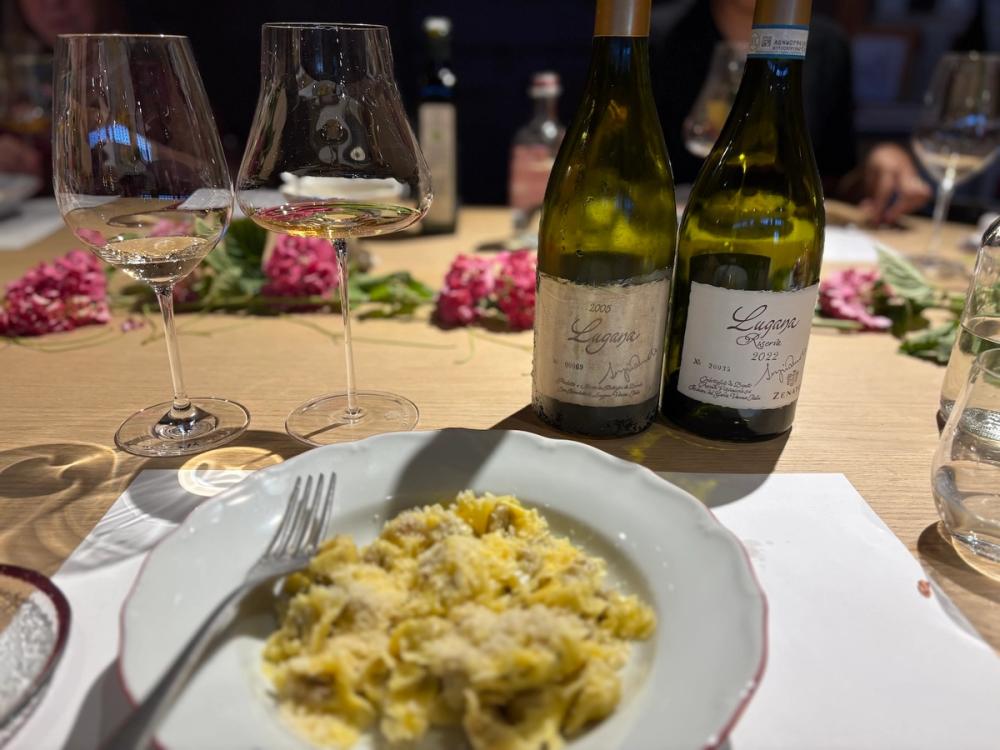
It was not until 2011 that Riservas became a recognised category by the Conzorzio (although they have been made since 1993) and many producers have discovered gems in their cellars. The oldest we savour is the 2005 vintage which initially we almost mistake for a fortified wine. It has notes of candied fruits, butterscotch, maple leaf, walnuts and honey. We also savour wines from 2013, 2016, 2017 and the most recent 2020 vintage.
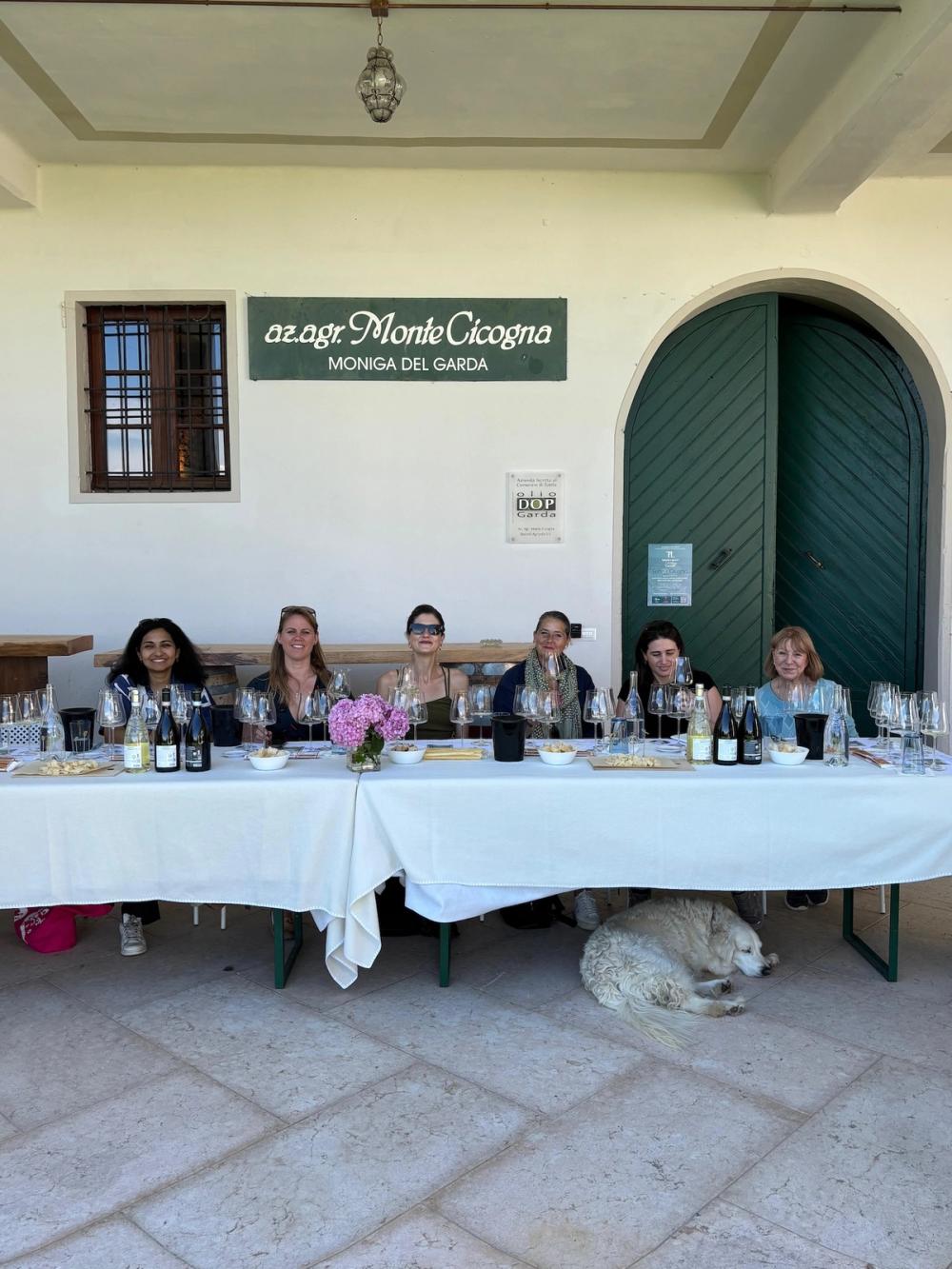
On the shores on the southern end of Lake Garda we visit the charming Monte Cicogna, whose cellars are an extension of those built in the 17th century with vineyards overlooking the lake. Aged vines produce superior quality Lugana with crisp acidity, minerality and freshness.
Date-wine?
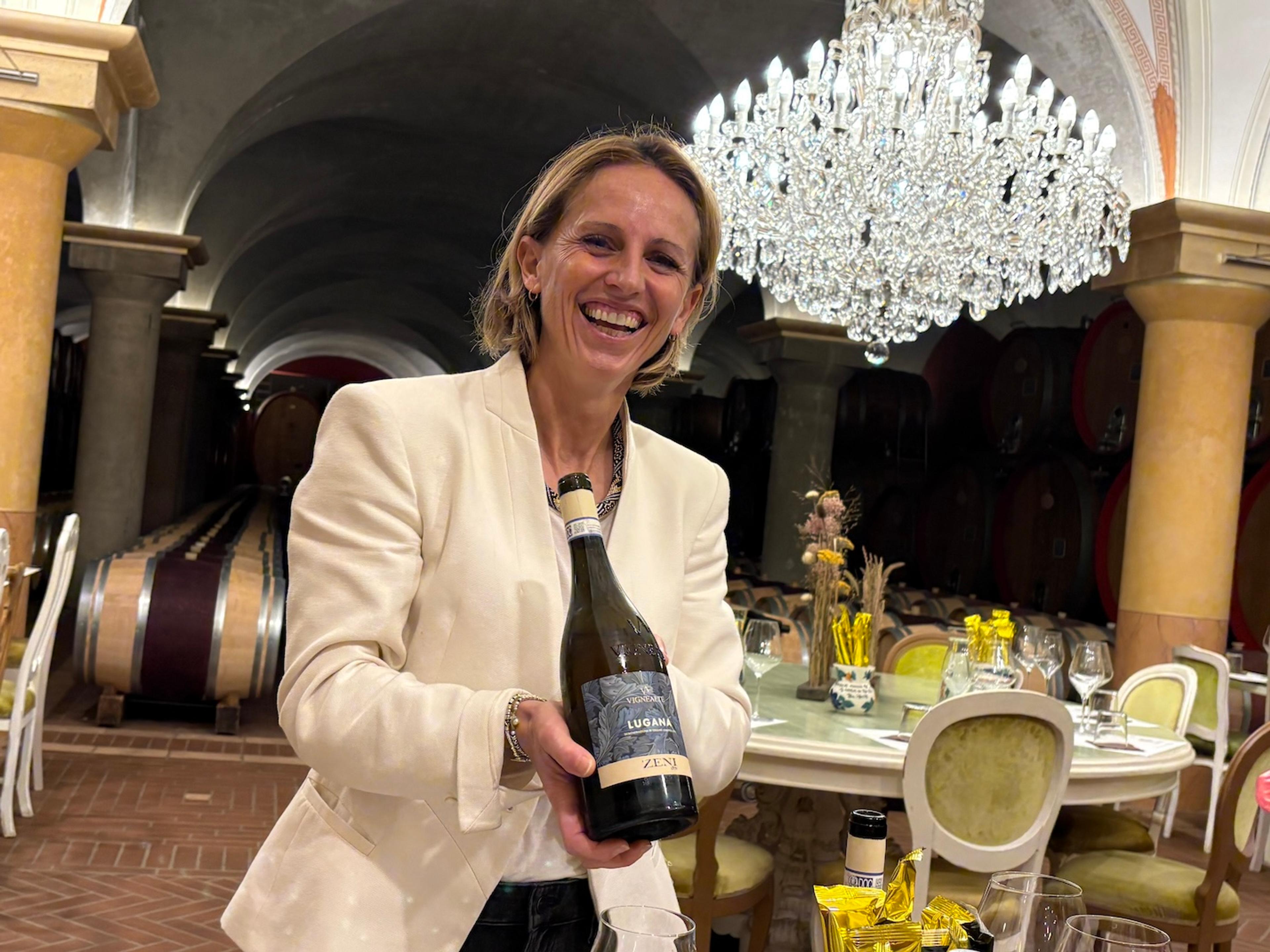
Zenato is a major wine producer and we are taken to its most prized single-vineyard plot in the S.Cristina estate and treated to all the different expressions of Lugana, starting with traditional method Spumante and finishing with a rare 2005 Riserva vintage. We’re told that “Riserva is a special wine, it’s not a wine for everybody, or everyday – but the height of acidity with Lugana is its passport for the future and generations to come.”
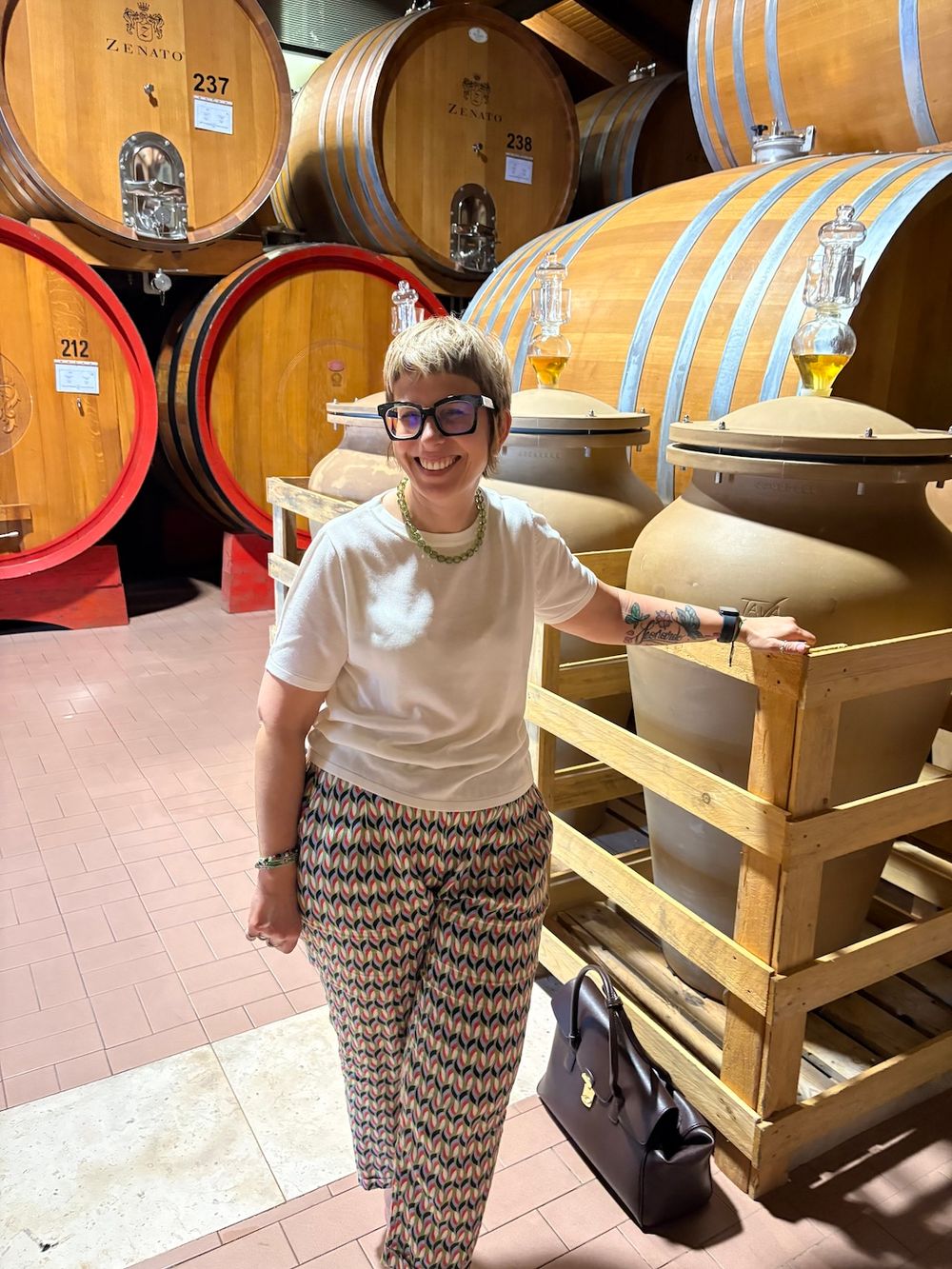
Chiara Corsini, export manager Zenato Winery
The third wine S.Cristina is well known, apparently locals sometimes just order a “Santa Cristina”, rather than a Lugana. Some call it ‘date wine’ and ‘sexy’ as it has a more savoury aroma and notes of green apple. Zenato is experimenting with different styles of fermentation too – bio-vinification and the use of different vessels such as amphora. The wines are not yet ready to taste.
We assess to what degree Lugana Riserva could have a place as a fine wine?
Certainly, for curious Italian somms it is something relatively new to explore and Lugana has delicious ageability. But with prices up to £45 at the cellar door it may not necessarily be an easy sell. Production is still low but is set to grow.
Merits more attention
We come away with the sense that overall the authenticity, quality and diversity of Lugana wines merit more attention in the UK whose mass consumers may otherwise just associate Italian wines with Prosecco, Pinot Grigio, Gavi, Soave and Chianti. It is ripe for discovery and for those diners looking to explore the wider quality offerings from Italy.
Lake Garda is a stunningly beautiful area to visit. Perhaps Lugana could be the new disrupter in the UK and Italian wine markets? The authenticity of the wines gives somms the chance to bring to the UK (and more widely) an irresistible taste of lakeside dolce vita. I’m booking up my next trip!